












Die’ced: Reloaded is a film that announces its intentions with a splash of crimson. It is an unapologetic and gory slasher, a cinematic tradition as ritualized in America as the folkloric horror tales of other cultures. The premise is elegantly simple: on Halloween night in 1987 Seattle, a hulking killer named Benny escapes from a psychiatric institution to begin a rampage. His target is Cassandra, a young woman living an ordinary life, unaware she is the object of his violent fixation.
Director Jeremy Rudd, expanding on his own short film, displays a focused vision. He understands the texture of the genre, prioritizing a menacing atmosphere and visceral kills above any complex narrative. The film sets a clear expectation from its opening minutes. This is a work built with practical gore and an affection for old-school horror sensibilities, designed to satisfy a very specific appetite for terror.
An Artist of Atrocity
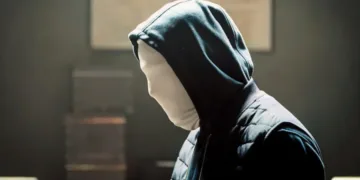
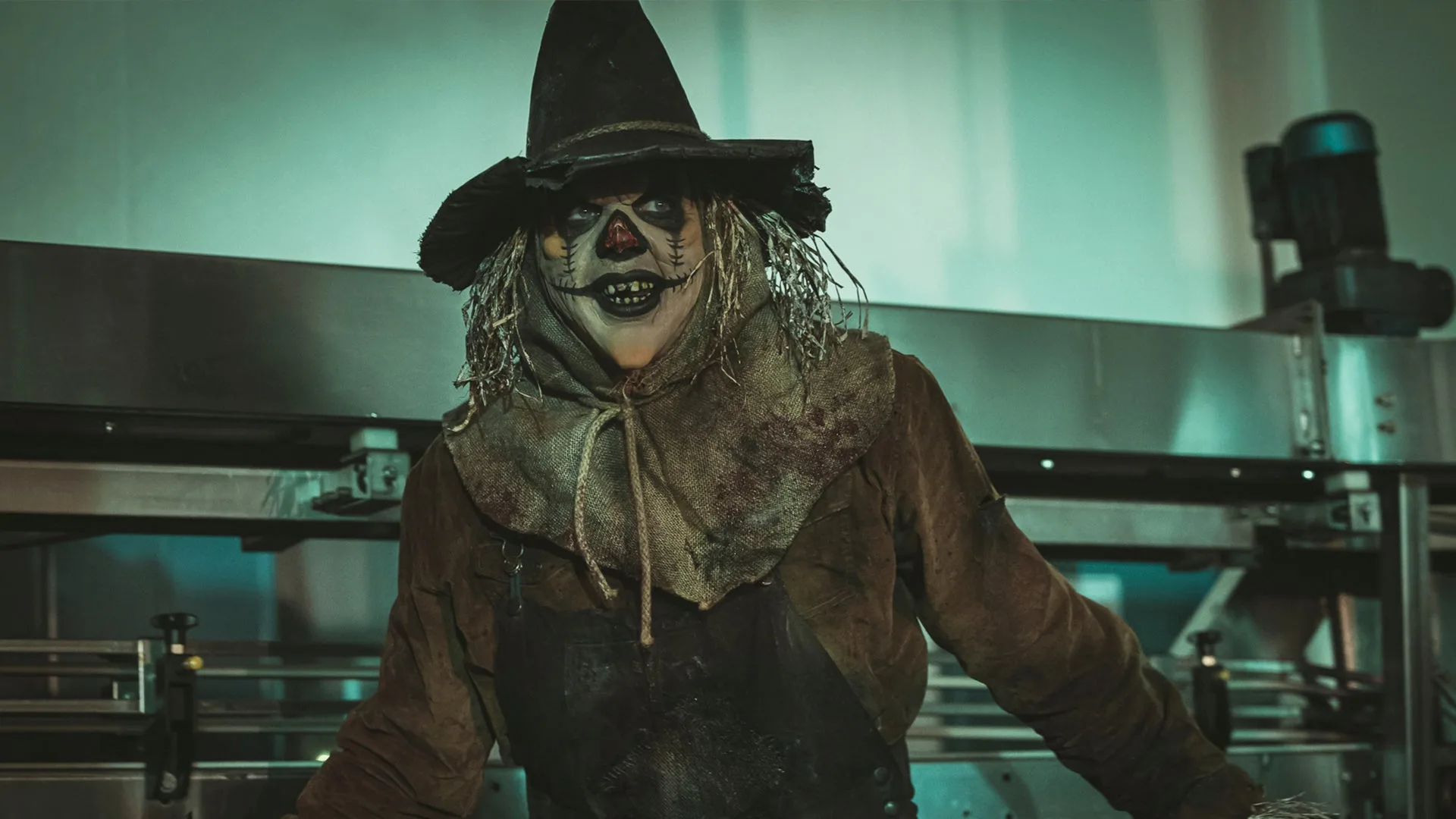
The film’s antagonist, Benny, is a creature of pure physical expression, a choice that makes him a fascinating figure. Actor Jason Brooks uses his lanky, imposing frame to create a silhouette of dread, yet his power comes from a silent, mime-like performance that is both disturbing and strangely playful. His gestures are deliberate, from a curious head tilt before a strike to the almost gentle way he arranges his victims post-mortem.
This physicality recalls the monstrous entities of Indian horror, like the rakshasa, whose terror stems from inhuman action rather than psychological motivation, a stark contrast to the dialogue-heavy villains of mainstream cinema. His scarecrow costume is a simple but effective piece of design, inverting a symbol of protection into one of predation.
The film’s approach to violence is equally direct. The opening asylum sequence, featuring a particularly nasty kill with a crayon driven into an ear canal, serves as a statement of purpose. The gore is scrappy and tangible, favoring practical effects that feel more personal than slick digital blood.
This DIY aesthetic has a raw quality that links the film to low-budget genre traditions worldwide, from American grindhouse to early Indian horror. The frequent and graphic kills are the main attraction, and they are staged with a grim creativity. Benny’s presence during these moments is strong, yet his limited screen time between attacks leaves his mythology underdeveloped. His appearances are impactful, but the film offers little about his origin, a common challenge for the first entry in a potential series.
The Sound of an Era, The Look of a Replica
A film’s atmosphere often rests on its score, a principle understood equally in Hollywood and Mumbai. Die’ced: Reloaded has a powerful asset in its synth-heavy soundtrack. The music functions as more than background noise; it is a driving force that gives the movie a pulsing, dangerous energy. The electronic themes act as a time machine, successfully capturing the intended 1980s feeling and generating dread even in quiet scenes.
Its propulsive beats recall the work of Bappi Lahiri in 1980s Hindi films, whose synth-pop created a specific auditory texture for an era. Here, the score provides an authenticity that the visuals fail to match. A successful period piece understands that a past era is defined by its texture, its grime, and its lived-in quality. This film’s version of 1987 feels superficial.
The clothes look like they came from a modern store’s retro collection, too new and neat to be believable. The cinematography is crisp and digital, lacking the film grain that would sell the illusion. Beyond a Walkman or some lightly teased hair, the world does not feel genuinely of its time.
This lack of a fully realized setting makes the film’s slower moments more apparent. Between the brutal kills, the story meanders through generic party scenes where teenage conversations feel like they are marking time. This shallow depiction of the characters’ world makes it difficult to invest in their lives, causing the audience to simply wait for the next burst of horror instead of fearing for the people in it.
A Heroine’s Anchor in a Sea of Inconsistency
A horror film needs an emotional anchor to prevent its violence from becoming meaningless, and Eden Campbell provides that anchor with her performance as Cassandra. Her portrayal is natural, avoiding the clichés of the genre. She presents Cassandra as a normal teenager concerned with friends and parties, and her line delivery and reactions feel genuine.
This grounding makes her eventual transformation into a resourceful survivor more effective. The “final girl” is a distinctly American archetype, and Campbell embodies her journey from ordinary to extraordinary with skill. Her strength is discovered through trauma, not inherent from the start, which makes her a relatable center for the chaos.
Unfortunately, her strong work exists in a vacuum. The acting from the supporting cast is uneven, frequently appearing theatrical or stilted and creating an awkward tone. The family dynamic between Cassandra, her father, and her brother is particularly weak. Their interactions lack the casual intimacy of a real family, with dialogue delivered without conviction.
This failure to build a believable social world around Cassandra weakens the stakes; if her world feels artificial, its destruction carries less weight. The film’s brisk 81-minute runtime also contributes to a rushed ending. The climax arrives abruptly, cutting off just as the final confrontation builds momentum. It sacrifices a satisfying third act for a “to be continued” feeling, leaving character arcs unresolved in a clear setup for a sequel.
Full Credits
Director: Jeremy Rudd
Writers: Jeremy Rudd
Producers and Executive Producers: Tylor Jones, Jeremy Rudd, Louis C. Gallegos, Nathan Rudd, Jeffrey Decker, Chad Ferrin
Cast: Eden Campbell, Jason Brooks, Nigel Vonas, Collin Fischer, Esha More, Ryan Chen, Nika Kleiman, Mahsa Shokri
The Review
Die'ced: Reloaded
Die'ced: Reloaded delivers on its promise of brutal, practical horror, powered by a memorable new killer and a strong lead performance. Its synth score creates a fantastic atmosphere that the film's superficial period details cannot match. While a weak supporting cast and a meandering script prevent it from reaching its full potential, fans of graphic slashers will find plenty of visceral thrills to appreciate in this bloody throwback. It succeeds in its primary goal of being a vehicle for carnage, even if the machinery around it is faulty.
PROS
- Creative and brutal practical gore effects.
- Memorable villain design and a strong physical performance for Benny.
- A grounding and natural lead performance from Eden Campbell.
- An excellent, atmospheric synth soundtrack that drives the film's tone.
CONS
- An inauthentic and superficial 1980s period setting.
- Weak and unconvincing performances from the supporting cast.
- A meandering plot with significant pacing issues between kill scenes.
- A rushed ending that sacrifices a satisfying conclusion for a sequel setup.