














The camera shakes, a frantic scramble of motion. Then, a gunshot. This jarring image, captured on a simple video camera, is the violent heart of Lucrecia Martel’s first documentary, Landmarks. The event is the 2009 murder of Javier Chocobar, an Indigenous leader of the Chuschagasta community in Argentina’s Tucumán province. Martel uses this raw footage not to solve a crime, but to unravel a history.
The film presents this modern act of aggression as an echo of a colonial past that never ended. In leaving her celebrated fictional work behind, Martel confronts the tangible scars on her nation’s landscape and people. She places the viewer directly into a conflict where a single death is a symptom of a deep, systemic wound, and the fight for a piece of earth is a fight for the soul of a country.
The Trial as Theater
Martel portrays the subsequent legal proceedings as a grim performance of established power. Her camera denies the audience conventional courtroom drama, often positioning itself behind a speaker or capturing a witness in detached profile. This choice forces a listener’s concentration, stripping away emotional cues to leave only the weight and texture of words.
The sounds of the room, the manic tapping of a stenographer or the rustle of papers, become part of the tense soundscape. The testimony reveals a system steeped in absurdity. Defendants, who shot a man on camera, are treated with a strange deference, brought coffee in saucers while they act like neutral observers. Indigenous witnesses, by contrast, are met with visible impatience, their deep connection to the events dismissed as inconvenient.
At one point, a defendant is permitted to directly confront and aggressively question a Chuschagasta man, an exchange that crystallizes the abusive entitlement at the core of the dispute. The judge does not intervene. This moment is not an anomaly but the logical extension of a process designed to protect property claims over human rights.
The shaky video of Chocobar’s death, replayed in court, offers no simple clarity. Its chaotic frames mirror the moral and legal confusion of a state failing its own people. The footage is horrifying and hard to parse, obscured by the sounds of running and screaming.
The trial itself feels kafkaesque, a bureaucratic ritual where the apparatus of the state is weaponized against the very people it should protect. The proceedings are less a search for truth and more a clear demonstration of which lives and which histories are valued by the law.
Portrait of a People, A Map of Resistance
The film moves from the claustrophobic courtroom to the open terrain of the Chuschagasta community. Here, Landmarks becomes a patient act of preservation, a portrait of a people refusing erasure. Martel builds this picture through interviews with Chocobar’s family and neighbors.
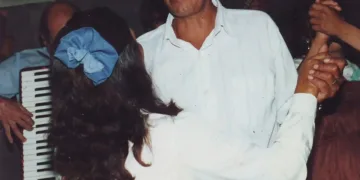
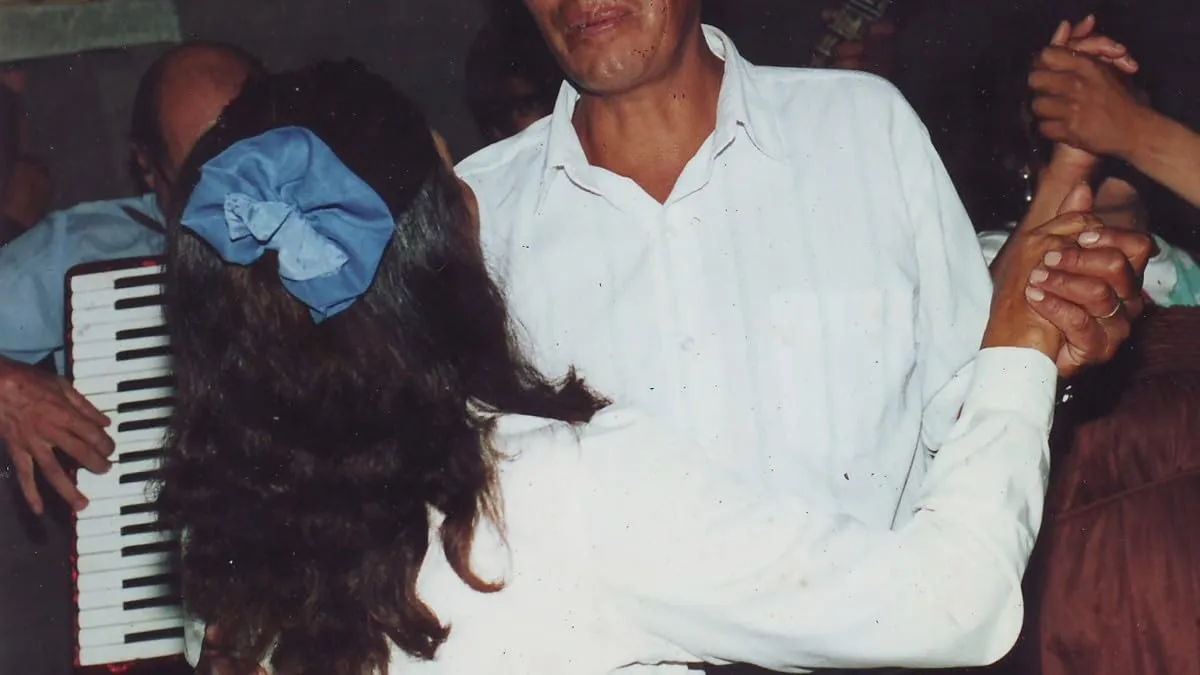
Their testimonies are woven with archival photographs and old home videos, creating a living repository of cultural memory. These sepia-toned pictures show generations tied to a place, a visual record that powerfully refutes legal arguments designed to sever that connection.
This collage of personal history is a direct counterargument to the official narrative that the Chuschagasta have no true identity or claim to their ancestral home, a narrative reinforced by historical demonization, such as church murals depicting Indigenous people as a bloodthirsty horde.
By centering the voices of the community, the film honors its Spanish title, Nuestra Tierra (Our Land). It makes clear that this story is not about one martyred man. It is the story of a collective identity inextricably bound to the territory they inhabit. We learn of the daily mechanisms of dispossession, how new landowners impose grazing fees and confiscate animals, turning ancestral rights into transactional debts.
A community member explains that for them, “dialogue means giving up something,” a quiet summation of centuries of broken promises. The film constructs a mosaic of a people who have endured, their resilience embedded in the rugged landscape itself. Their struggle is presented not as a historical artifact but as a present and continuing reality.
The Director’s Gaze
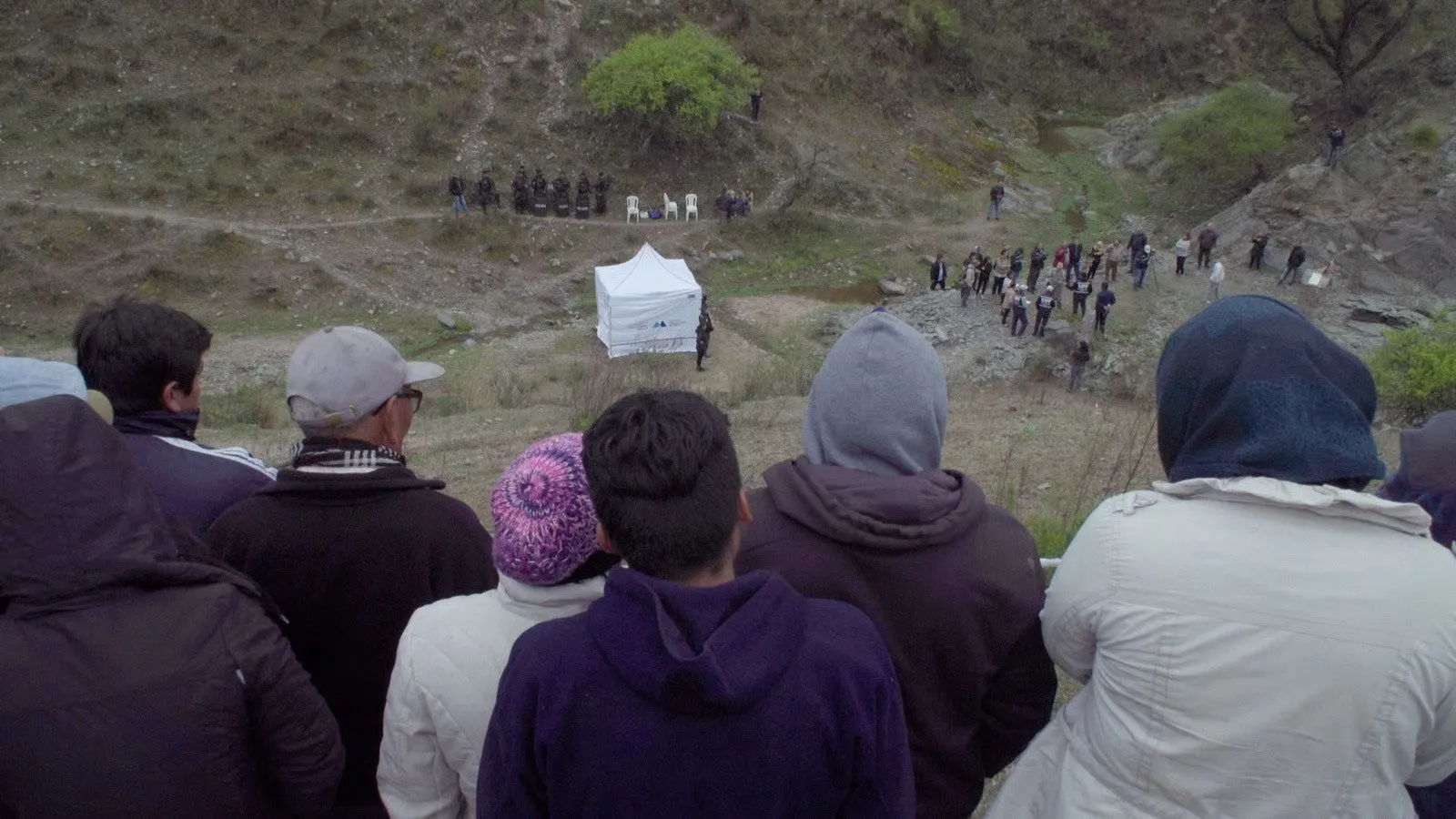
Martel’s cinematic language is as vital as the testimony she records. The film is defined by its use of drone footage, a technological eye that sweeps over the mountainous landscape. The drone’s movement varies, sometimes offering a majestic, soaring view, and other times becoming a jerky, menacing tool of surveillance.
Martel does not hide the machinery of her gaze; she shows the drones, acknowledging her role as an outside observer and implicating the technology of filmmaking in the very act of surveillance. The film opens from the cold distance of space, slowly descending to this specific piece of contested ground, a choice that suggests the universal nature of this small, violent conflict over property. It frames the struggle as a microcosm of a planetary condition.
In a startling moment, a bird collides with a drone, sending the machine spiraling to the earth. The image is potent: nature itself attacking the intrusive mechanical gaze, a physical rejection of the external frame being imposed upon it. This visual strategy is paired with a rich soundscape, where the clatter of shovels on dirt is layered over historical photos.
The sounds of labor and exploitation echo through time, connecting past injustices to the present moment. Martel’s formal choices make the viewer conscious of the act of watching. She questions the power inherent in any camera’s lens and forces a recognition that to witness is to be involved. The film becomes a document of a crime and a reflection on the ethics of documentation itself.
The documentary film Landmarks (Spanish title: Nuestra Tierra) premiered out of competition at the 82nd Venice International Film Festival on August 31, 2025. It follows the murder of indigenous leader Javier Chocobar and the legacy of colonialism on Latin America. The movie runs for 1 hour and 59 minutes. It is not currently available on streaming platforms and there is no U.S. distribution at this time.
Full Credits
Director: Lucrecia Martel
Writers: Lucrecia Martel, María Alché
Producers and Executive Producers: Benjamin Domenech, Joslyn Barnes, Santiago Gallelli, Matías Roveda
Cast: Not specified in the provided search results.
Director of Photography (Cinematographer): Ernesto De Carvalho
Editors: Jerónimo Pérez Rioja, Miguel Schverdfinger
Composer: Alfonso Olguín
The Review
Landmarks
Landmarks is a demanding and essential work of political cinema. Lucrecia Martel abandons documentary convention to craft a searing examination of a single murder that contains centuries of Argentine history. Through a radical use of sound and perspective, the film challenges the viewer to look beyond the crime and see the deep structural injustices that made it inevitable. It is a dense, difficult, and profoundly affecting piece of filmmaking that serves as both a historical document and an act of resistance.
PROS
- Masterful and formally inventive direction.
- Powerful examination of Indigenous rights and colonial history.
- Innovative use of sound design and cinematography.
- Effectively gives voice to the Chuschagasta community's struggle.
CONS
- Its unconventional, non-linear structure can be challenging for some viewers.
- The dense subject matter requires sustained audience attention.
- The detached, observational style might create an emotional distance.