
























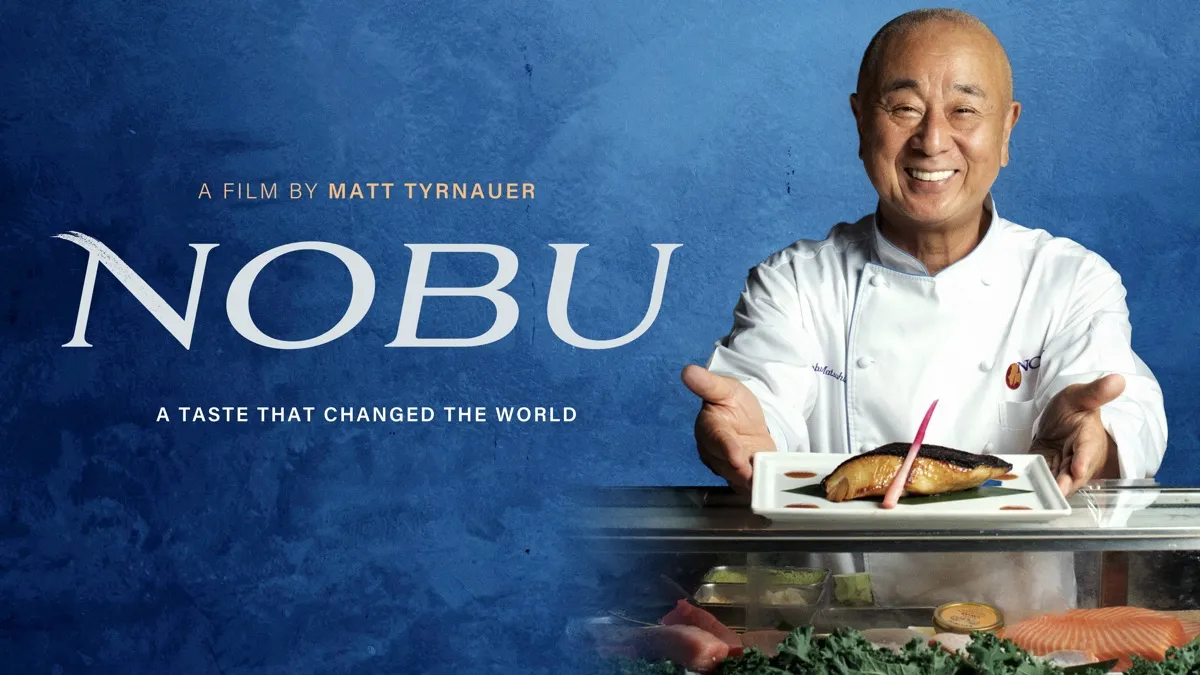

Few chefs become cultural ambassadors, their names transcending the kitchen to become global symbols. Nobu Matsuhisa is one such figure. The documentary Nobu sets out to chronicle the life of the man who introduced the West to a revolutionary style of Japanese cuisine, daringly infused with the vibrant, zesty flavors of Peru.
The film promises a look at the artist behind iconic dishes like the sublime black cod with miso and the crisp yellowtail jalapeño. It opens with luscious shots of perfectly sliced fish, preparing us for an intimate culinary portrait. The film charts his path from a young apprentice in Japan to the patriarch of a sprawling luxury empire of restaurants and hotels.
It attempts to answer a fundamental question: what happens when a man’s passion becomes a billion dollar brand, and his personal story becomes the company’s origin myth? The narrative that unfolds is one of immense ambition, profound setbacks, and the creation of a legend.
The Chef’s Journey: A Story of Failure and Fortitude
The film’s biographical arc feels deeply familiar to anyone acquainted with the classic diaspora narratives that form a cornerstone of Indian cinema. It is the story of leaving one’s homeland not just for opportunity, but to forge a new identity. We follow Nobu’s formative years in postwar Japan, an environment of reconstruction where dreaming of becoming a chef was a humble aspiration.
The documentary effectively captures the economic push that sent many Japanese youths abroad. His journey takes a pivotal turn in Lima, Peru, a land that the film portrays as a sensory explosion. It was there he first encountered cilantro and citrus used in ways previously unknown to his traditional training. The film visually captures his discovery of ceviche as a true moment of revelation, sparking the innovative spirit that would later define his cooking.
This creative awakening, however, is followed by a period of intense hardship. The narrative powerfully recounts the devastating fire that completely destroyed his first independent restaurant in Anchorage, Alaska, erasing years of work overnight. In a moment of stark vulnerability, Nobu recounts contemplating suicide, a dark turning point that adds significant emotional weight to his story.
Here, the film leans into a theme deeply resonant in South Asian storytelling: the steadfast, unwavering support of family as the ultimate safety net. His wife, Yoko, is presented not as a passive spouse but as an active partner in his ambition, moving across continents with him and their young children. Her resilience becomes his own, a foundation that allows him to recover and eventually find triumphant success in America, fulfilling a rags-to-riches arc worthy of any Bollywood epic.
The Duality of Nobu: Artistry and Enterprise
The documentary finds its most engaging tension in the perpetual conflict between art and commerce, a dilemma that echoes the long-standing divide between India’s fiercely independent parallel cinema and the spectacle of mainstream Bollywood. On one side is Nobu the artist, a master demanding absolute, uncompromising perfection.
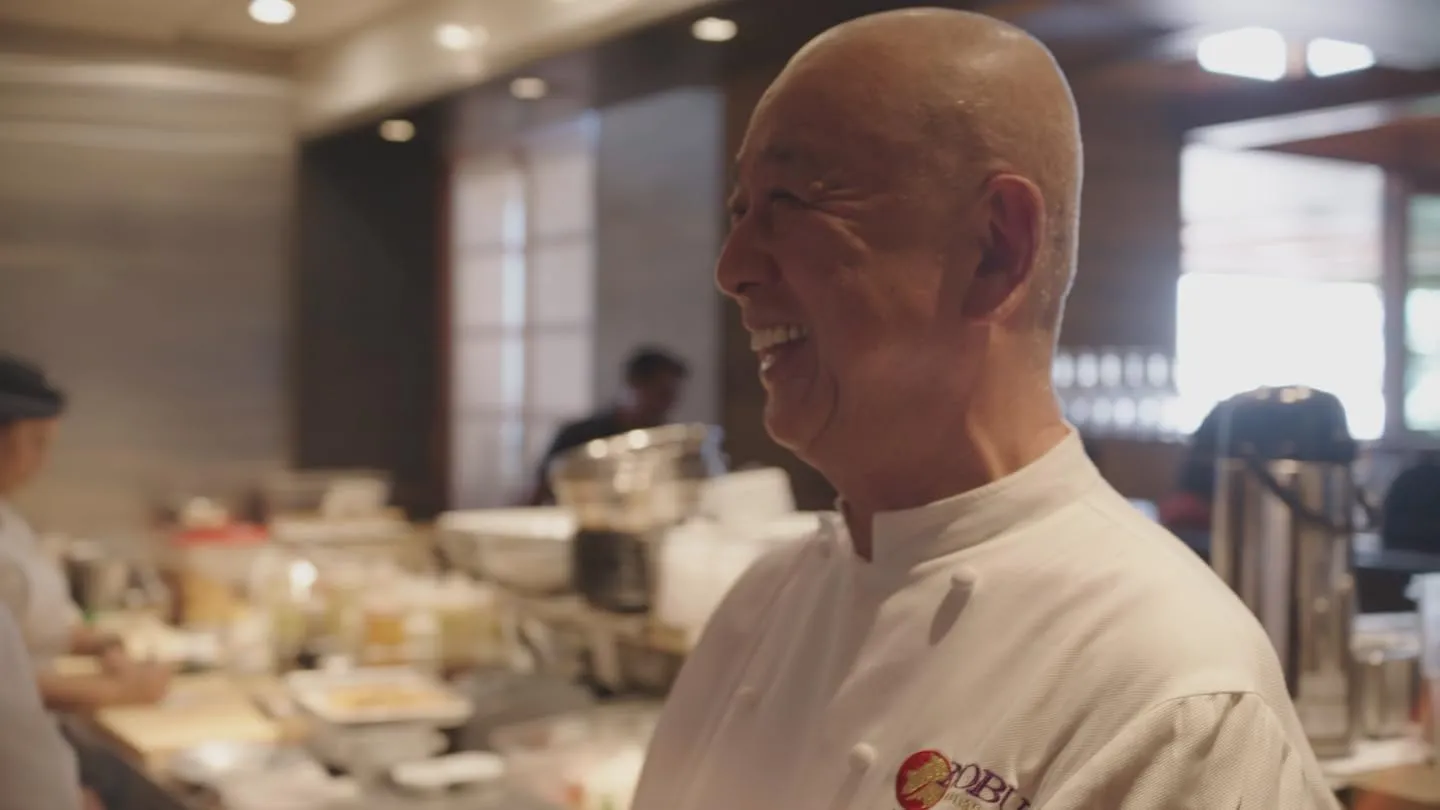
This is most palpable in a riveting sequence where he tests a senior chef. The camera lingers on the nervous sweat of the subordinate as Nobu, with a calm but intense focus, critiques the fineness of chopped chives and the precise shape of a sauce dot.
His approach reflects the guru-shishya (master-disciple) tradition, a philosophy where the guru imparts not just a skill but a legacy of quality that must be upheld. This intimate vision of craft is starkly contrasted with Nobu the corporate figurehead.
The film’s focus later shifts to slick boardrooms and high-stakes negotiations alongside his sharp business partner, Robert De Niro. De Niro’s on-screen presence is commanding; he shreds a multimillion-dollar deal with the same intensity he brings to his film roles. During one heated debate about the pace of expansion, the camera finds Nobu sitting perfectly still, a quiet, polite observer as others chart the course of his empire. His silence is deeply symbolic and intentionally ambiguous.
Is it the quiet confidence of a man who trusts his team, or the resignation of an artist who has become a figurehead for a machine too large to control? The documentary presents this duality but hesitates to probe deeper, leaving the audience to ponder whether the brand has finally consumed its creator.
A Polished but Flavorless Portrait
For a film about a culinary revolutionary, Nobu is stylistically conventional and surprisingly safe. Its reliance on a standard documentary template—talking heads of celebrity chefs like Wolfgang Puck, slow-motion food shots, and archival newspaper headlines—feels rote. There is a great irony in its form; the filmmaking lacks the very boldness and innovation that defines its subject’s cuisine.
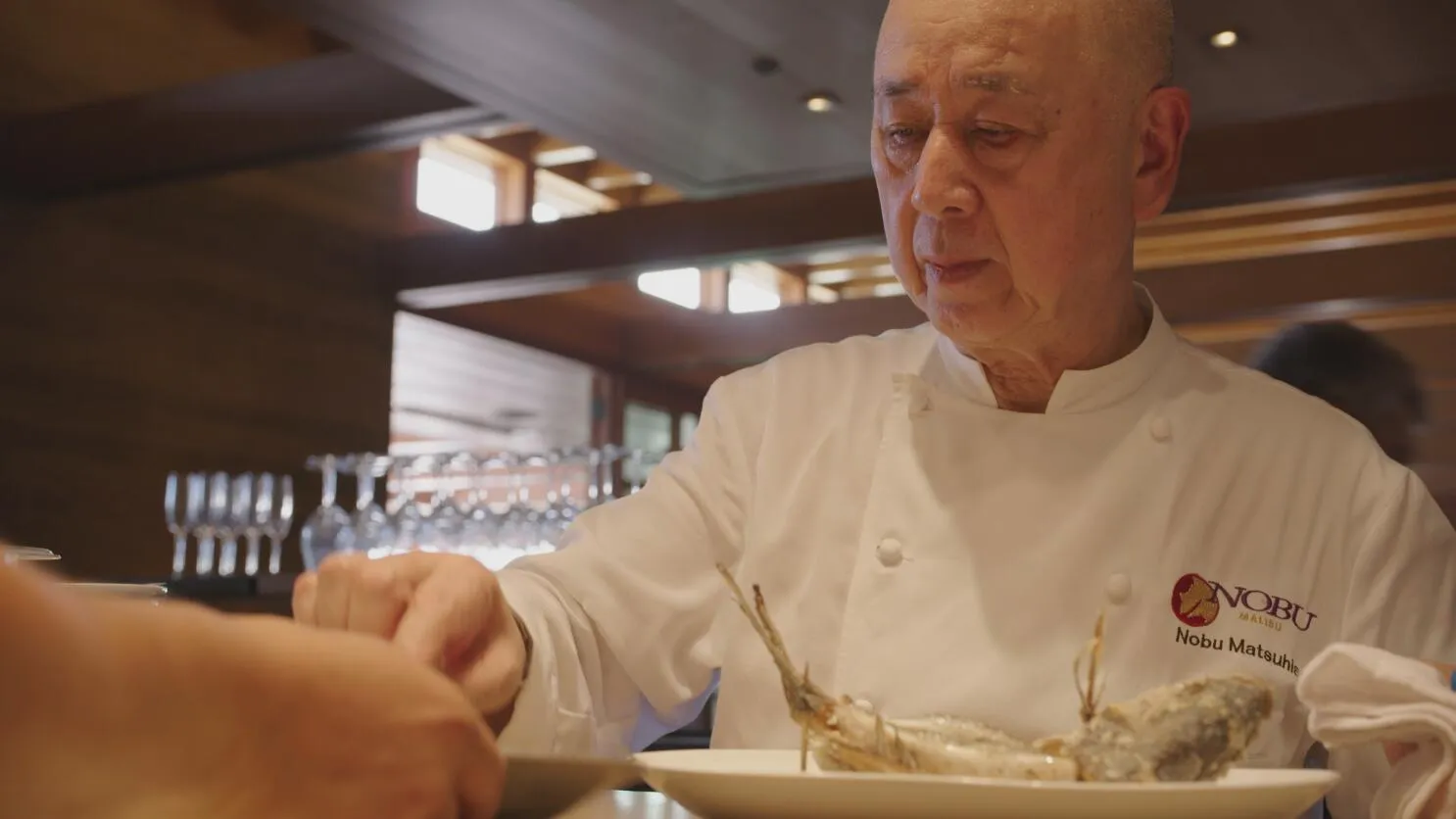
The documentary presents a polished, celebratory narrative that feels tonally closer to the gloss of a big-budget Bollywood production than the raw, questioning truth of parallel cinema. A director like Satyajit Ray might have explored the quiet anxieties of a man whose name is no longer his own. Instead, this film introduces deeply complex themes only to abandon them.
The brief mention of a friend’s suicide is treated with a frustrating superficiality, a missed opportunity to explore the personal cost of Nobu’s relentless globetrotting lifestyle. It promises intimacy but delivers a curated, public-relations-friendly version of a man’s life.
The result is a flattering portrait that functions more as an advertisement for the brand than a revealing documentary. It is a meal made with the finest ingredients but lacking the essential kokoro—the heart and spirit—that Nobu himself insists is the key to all great food.
Nobu is a documentary film directed by Matt Tyrnauer. It premiered at the Telluride Film Festival in August 2024. It had a limited theatrical release in the US on June 27, 2025, followed by a wider video-on-demand and digital streaming release on July 11, 2025.
Full Credits
Director: Matt Tyrnauer
Producers: Matt Tyrnauer, Gianni Nunnari, Corey Reeser, Jeffrey Soros, Simon Horsman, Charlie Cohen, Andrea Lewis, Graham High
Executive Producers: Stuart Ford, Ally Gipps, Luke Rodgers, Andrew Blau
Cast: Nobu Matsuhisa, Robert De Niro, Meir Teper, Cindy Crawford, Wolfgang Puck, Jean-Georges Vongerichten, Ruth Reichl
Director of Photography (Cinematographer): Toby Thiermann, Nick Albert, Axel Baumann, Adrian Cannatello
Editors: Andrea Lewis
Composer: Lorne Balfe
The Review
Nobu
Nobu chronicles the undeniably fascinating life of a culinary giant, tracing his journey from devastating failure to global superstardom. While the story of Nobu Matsuhisa's artistry and perseverance is compelling, the documentary itself plays it too safe. Its conventional, polished style feels more like a feature-length advertisement for the brand than a revealing character study. The film shies away from difficult questions and emotional depth, ultimately serving up a pleasant but superficial portrait that lacks the very spice and complexity that made its subject a legend.
PROS
- Effectively chronicles the compelling rags-to-riches story of a culinary icon.
- Captures Nobu's personal struggles and moments of human vulnerability.
- Highlights the fascinating creation of his unique Japanese-Peruvian cuisine.
- Features an engaging central subject whose charm carries much of the film.
CONS
- The filmmaking style is conventional and lacks originality.
- Often feels like a promotional piece for the Nobu brand rather than a critical documentary.
- Avoids deep exploration of complex emotional and business conflicts.
- The narrative remains too superficial to offer a truly insightful portrait.