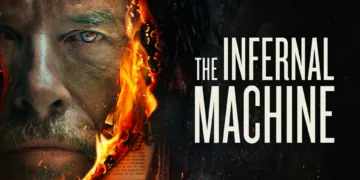



























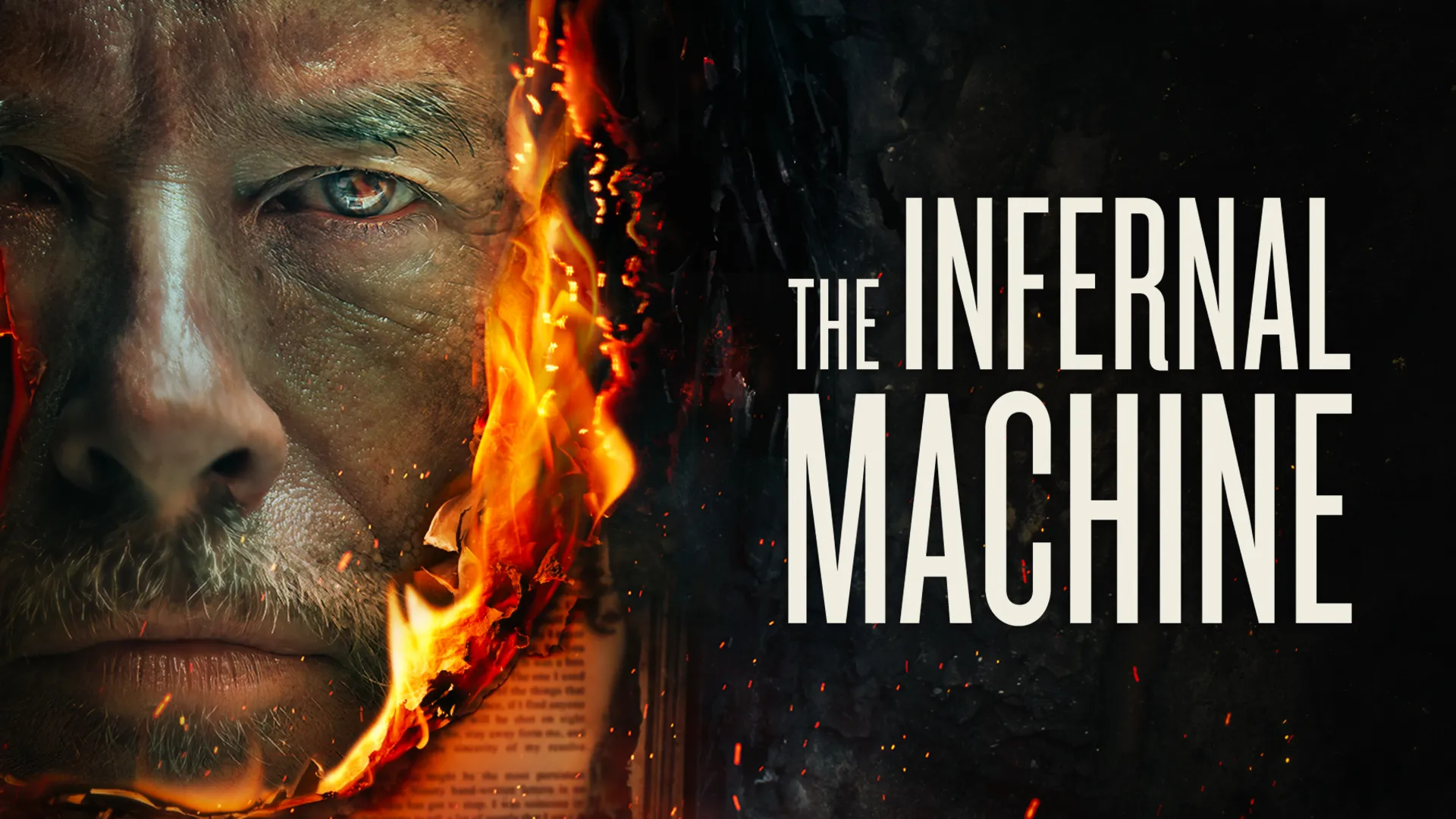

Some stories begin not with a bang, but with the subtle tear of an envelope. In The Infernal Machine, we meet Bruce Cogburn, a man who has effectively deleted himself from the world. Once a celebrated author, he now lives in a sun-bleached desert home, his days measured in glasses of liquor.
His self-imposed exile is penance; his controversial novel was co-opted by a killer two decades ago, and the guilt has been his only companion since. This quiet, decaying existence is shattered when letters from a persistent, obsessive fan begin to appear. The unwelcome correspondence acts as a narrative hook, pulling Cogburn into a psychological mystery that forces him to confront the very story he tried to bury.
The Anchor in the Storm
The film’s unshakeable foundation is Guy Pearce, whose performance is not just the movie’s strongest asset but its very soul. His portrayal of Bruce Cogburn is a masterful study in decay and paranoia, a deep dive into the kind of character who could easily become a cliché.
He looks the part of a desert hermit, with lank hair and a thousand-yard stare that speaks to years of isolation and self-inflicted punishment. Yet, when he speaks, the choice of a sharp Northern English accent is a disarming and brilliant touch.
It’s a deliberate dislocation, immediately creating a question for the viewer: why does this man, surrounded by the iconography of the American West, sound like he’s from Yorkshire? This detail adds a rich, unspoken history to Cogburn, suggesting a life left behind and making his predicament feel more specific and real.
Pearce charts the author’s descent with incredible precision. His early interactions are cranky voicemails left for his unseen tormentor, but these one-sided conversations slowly become a vessel for his entire psychological collapse. He transitions from irritation to genuine fear with a commitment that sells every moment.
We see not just anger, but profound vulnerability, especially in a scene where he, in a moment of desperate loneliness, invites the fan for a drink only to be stood up. The raw disappointment Pearce conveys in that moment is heartbreaking. He provides a magnetic center, a believable human core that holds our attention even when the narrative mechanics around him begin to creak and strain.
A Perfectly Wound Mechanism
For its first two acts, The Infernal Machine operates with the precision of a well-designed puzzle box. The pacing is a deliberate slow burn, expertly building an atmosphere of creeping dread that feels earned. Much like the experience of exploring an abandoned house in a game like What Remains of Edith Finch, where each new discovery adds another layer of unease, each letter Cogburn receives tightens the screw of his paranoia.
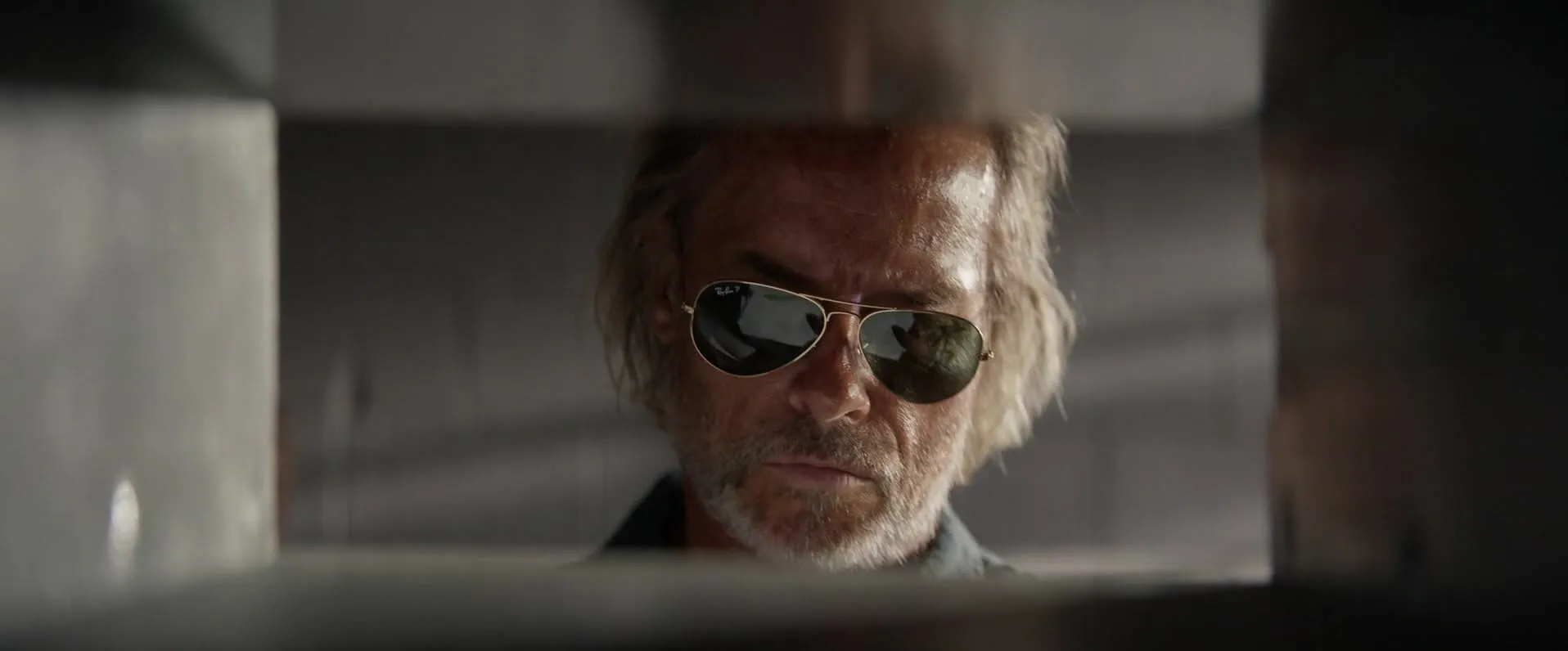
Director Andrew Hunt uses the sparseness of the desert landscape to amplify Cogburn’s isolation. Sweeping shots of the empty horizon contrast sharply with the claustrophobic interiors of his home, visually trapping him between an agoraphobic exterior and a suffocating interior.
The narrative structure, heavily reliant on the answering machine messages, is a fantastic storytelling device. This one-way communication becomes Cogburn’s confessional, a place where his carefully constructed walls begin to crumble. The audience, like Cogburn, is left to imagine the silent figure on the other end, turning the unseen fan into a potent symbol of his past sins.
This technique builds a unique form of tension rooted in the unknown. Alice Eve provides a crucial counterpoint as a local cop. Her character, while not deeply written, serves as a necessary anchor to reality. Her calm, procedural approach to the mystery makes Cogburn’s spiraling perspective feel even more intense and erratic by comparison. This solid foundation is enhanced by an off-kilter musical score, which uses strange chimes and unsettling tones to keep the audience permanently on edge.
A Machine That Breaks Itself
A story’s ending is its promise fulfilled, and this is where the machine truly breaks down. After meticulously building suspense, the film’s final act discards its psychological depth for a series of messy, convoluted twists. The grounded, character-driven tension that made the first two acts so compelling gives way to a plot that strains credibility to its breaking point.
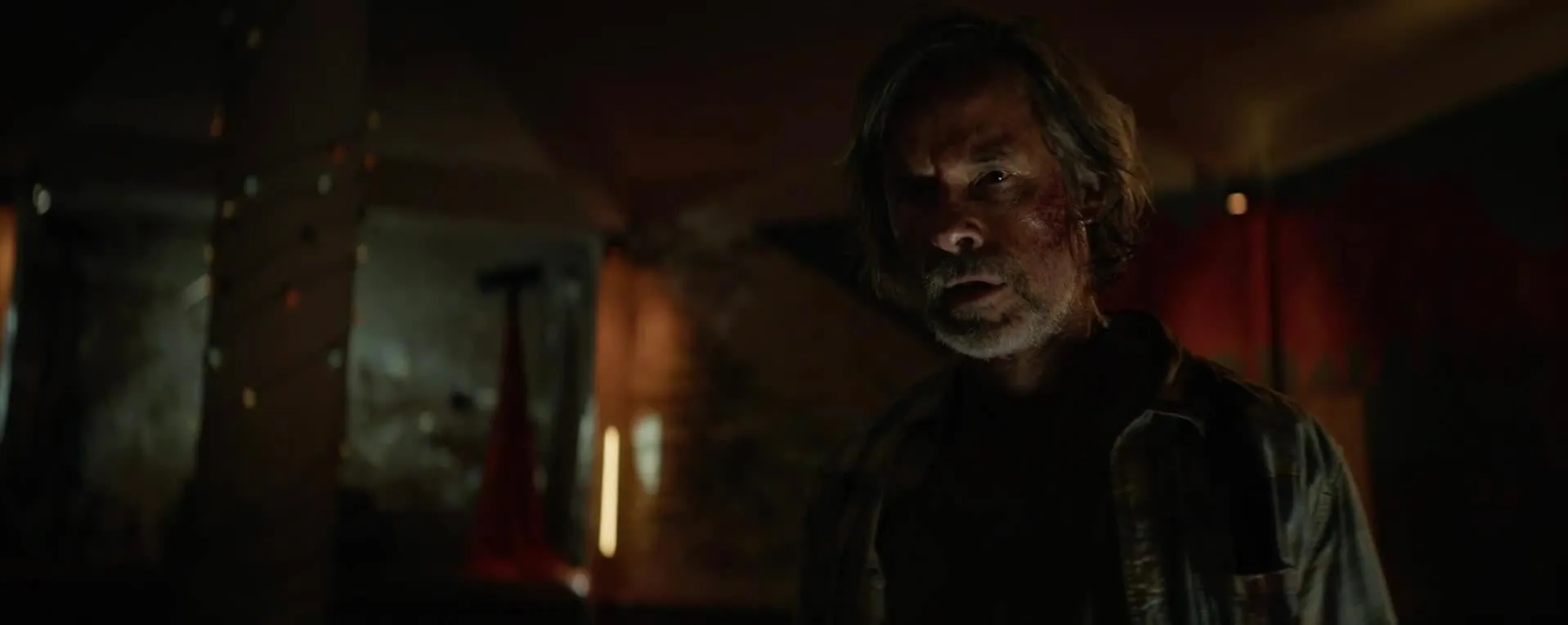
The tonal shift is jarring; what was a tense thriller about guilt and obsession morphs into something far more outlandish, betraying the established mood. The resolution to the mystery feels both rushed and strangely hollow.
The complex questions raised about authorial responsibility and the nature of infamy are swept aside for a plot-focused reveal that lacks emotional resonance. It’s the narrative equivalent of a game promising a deep moral choice system, only to reveal that none of your decisions actually mattered.
The script even includes a moment of self-aware dialogue where a character warns about a story having a terrible finale. Instead of feeling clever, the line lands as an unfortunate and accurate piece of self-criticism.
It’s a move that breaks the fourth wall not with confidence, but with what feels like an apology, pulling the viewer out of the experience to see the writer’s anxious hand. The emotional investment we built in Cogburn’s journey feels squandered, sacrificed for a “gotcha” moment that is neither surprising nor satisfying. The experience is deeply frustrating, leaving a sense that a fascinating character study was dismantled to make way for a much simpler, and far less interesting, conclusion.
The Infernal Machine is a psychological mystery thriller film released in the United States on September 23, 2022. It was distributed by Paramount Pictures. The film is available to stream on Paramount+.
Full Credits
Director: Andrew Hunt
Writers: Andrew Hunt, Louis Kornfeld
Producers: Spencer McLaren, Julian Hicks, Lionel Hicks
Executive Producers: Richard S. Guardian, Michael Favelle, Jack Christian, DJ McPherson, Vanda Everke, Steve Jaggi, Alan Latham, Andrew Hunt, Alex Pettyfer, Charles Dorfman, Marlon Vogelgesang, James Ireland, Jonathan Mitchell
Cast: Guy Pearce, Alice Eve, Jeremy Davies, Alex Pettyfer, Iris Cayatte, Rachel De Fontes, Ana Lopes, Georgia Goodman, Bella Alexandras, Gary Anthony Stennette, Ben Temple, Oliver Ritchie, Maria de Sá, Paula Lobo Antunes, Rocco Salata, Joel Abadal
Director of Photography (Cinematographer): Sara Deane
Editors: Jeremy Wanek
Composer: Nathaniel Levisay
The Review
The Infernal Machine
While The Infernal Machine starts as a masterfully tense psychological thriller anchored by a phenomenal and deeply committed performance from Guy Pearce, it ultimately self-destructs. The film’s ambitious and atmospheric setup promises a profound character study, but a convoluted and unsatisfying final act unravels all the carefully built tension, leaving a frustrating sense of wasted potential.
PROS
- A powerful, nuanced, and captivating lead performance from Guy Pearce.
- An expertly paced and atmospheric first two-thirds that builds genuine suspense.
- A clever narrative premise centered on one-sided answering machine messages.
- An unsettling and effective musical score.
CONS
- A messy, contrived, and disappointing final act that undermines the story.
- The resolution to the central mystery is unsatisfying and lacks emotional weight.
- The film abandons its grounded psychological tension for less believable twists.