

























![Kingdom Hearts Collection [I-III] Review](https://gazettely.com/wp-content/uploads/2026/10/Kingdom-Hearts-Collection-I-III-1-360x180.webp "Kingdom Hearts Collection [I-III] Review: KHII Holds Steady as Newer Entries Fluctuate 37")



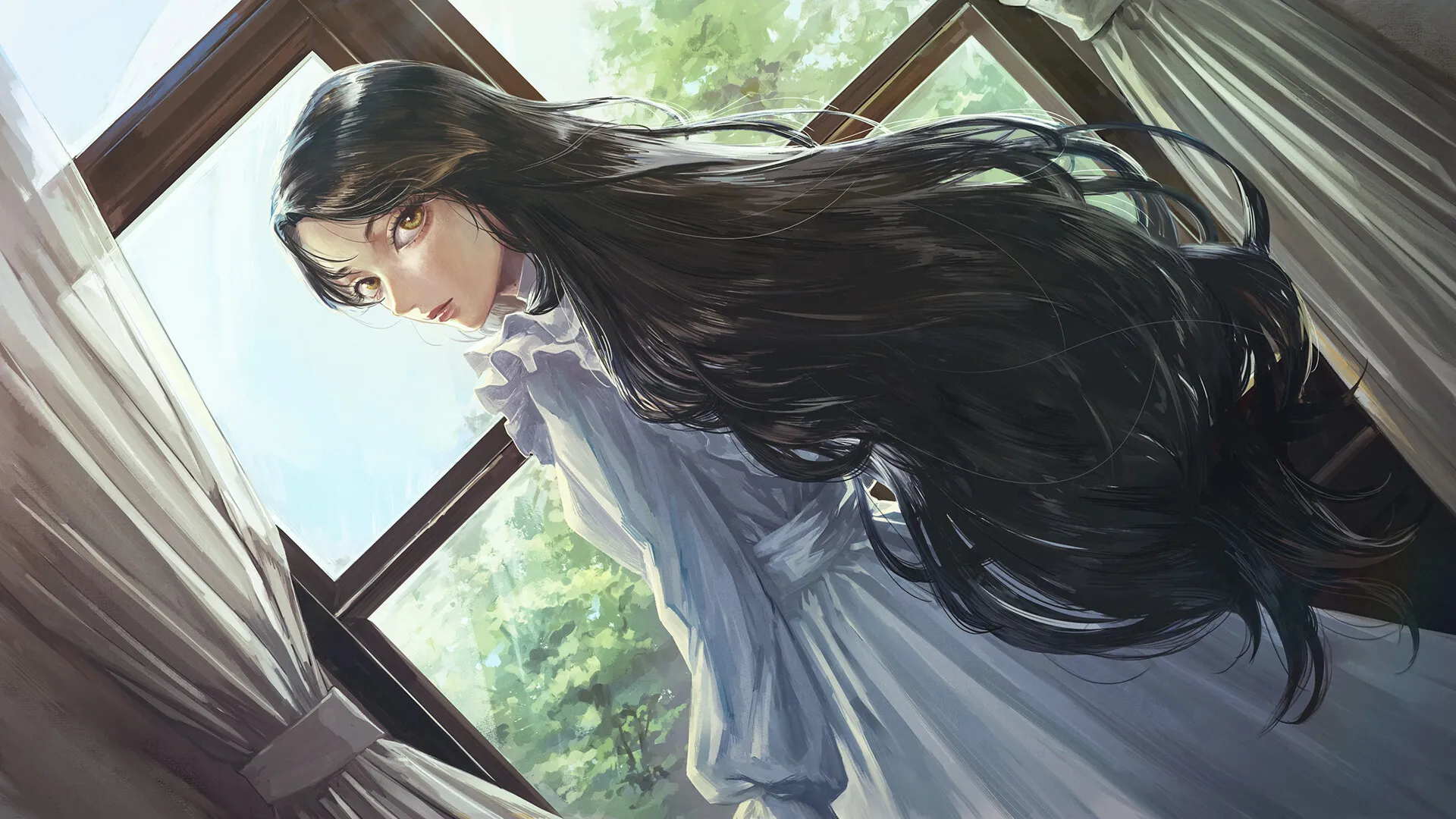

In the summer of 1966, Japan was a nation undergoing immense economic transformation, looking toward a modern future. Yet some places remained insulated from this progress, preserving the secrets of a different era. Iwakura Aria places us in one such location through the eyes of Ichiko Kitagawa, a young orphan whose artistic talent is her only possession.
Her life changes when Amane Iwakura, a wealthy patriarch, sees her work and offers her a position as a live-in maid at his family’s stately home. This sudden fortune seems to be a new beginning, a path away from poverty.
Inside the estate, she meets Amane’s daughter, Aria, a beautiful and ethereal young woman who seems as delicate as a porcelain doll. Ichiko is immediately drawn to her. The opulent Iwakura mansion, however, holds a palpable tension beneath its polished surface. This is a story about the intense, difficult bond that grows between two young women trapped in a house of unspoken horrors.
Echoes in a Silent Hall
The game’s narrative structure is a masterclass in slow-burn suspense, eschewing the overt shocks common in Western horror for a more patient and deeply unsettling approach. This pacing has strong parallels with the atmospheric dread found in Japanese horror cinema, where the terror comes not from what is seen but from what is felt.
The story builds its oppressive atmosphere through quiet moments, loaded pauses in dialogue, and the unnerving stillness of the mansion itself. Every creak of a floorboard and rustle of leaves outside feels significant. This deliberate pacing can be a challenging adjustment for audiences accustomed to more immediate action, yet it rewards the patient player with a more profound sense of psychological dread.
The plot is cleverly framed as a flashback, a recollection from an older Ichiko looking back decades later on the summer that irrevocately shaped her. This narrative device fundamentally alters the nature of the suspense. The question for the player shifts from a simple “Will she survive?”
to the more haunting inquiries of “How was she changed?” and “What ultimately became of Aria?” We know our narrator escapes, but the tension lies in discovering the price of that escape. It transforms the experience into a somber reflection on memory, trauma, and fate, much like a literary confession.
The story uses this structure to explore profoundly dark and mature themes, examining the lines between love and obsession, the crushing weight of family secrets, and the subtle mechanics of psychological entrapment. It portrays a world where power dynamics, rooted in class and gender, create an invisible but inescapable prison.
The Iwakura mansion is more than a setting; it is a key antagonist, a physical manifestation of generational decay. Like the great houses of gothic fiction, from the titular estate in The House of Fata Morgana to the decaying manors of Edgar Allan Poe, the mansion is a place where the past refuses to stay buried. Its beautiful, sunlit rooms hide rot and despair, its elegant architecture concealing a sinister history that poisons everyone within its walls.
A Frail and Frightening Love
The emotional core of the game is the intricate and deeply troubled relationship between Ichiko and Aria. Their bond resists simple categorization, evolving from an innocent, class-crossing curiosity into a potent mix of queer romance, codependent fixation, and a shared sense of entrapment.
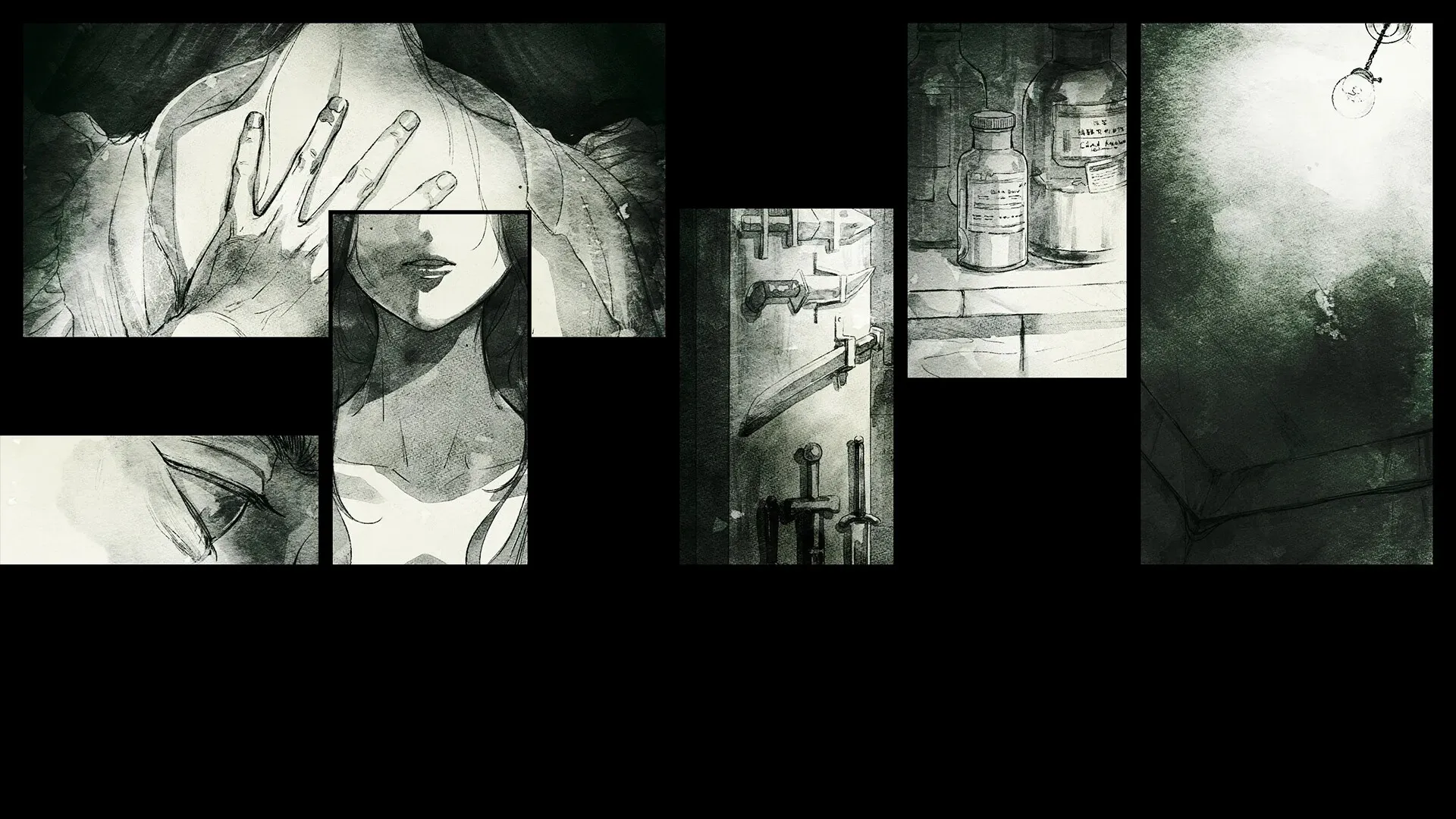
Set against the socially conservative backdrop of 1960s Japan, their feelings are necessarily expressed in a language of stolen glances, quiet gestures, and unspoken understanding. This constrained expression intensifies their connection, making every small moment of intimacy feel both precious and perilous. Aria herself is a fascinating figure, built upon the archetype of the fragile, doll-like beauty common in some Japanese fiction.
She is the “caged bird,” a tragic heiress whose mysterious physical frailty is a direct manifestation of her family’s psychological sickness. The game treats her not as a passive object of pity but as a complex character whose aloofness is a defense mechanism against a world that has caused her immense pain. The player experiences this world through Ichiko’s perspective, and her role is multifaceted. She is an investigator, piecing together the mansion’s dark history.
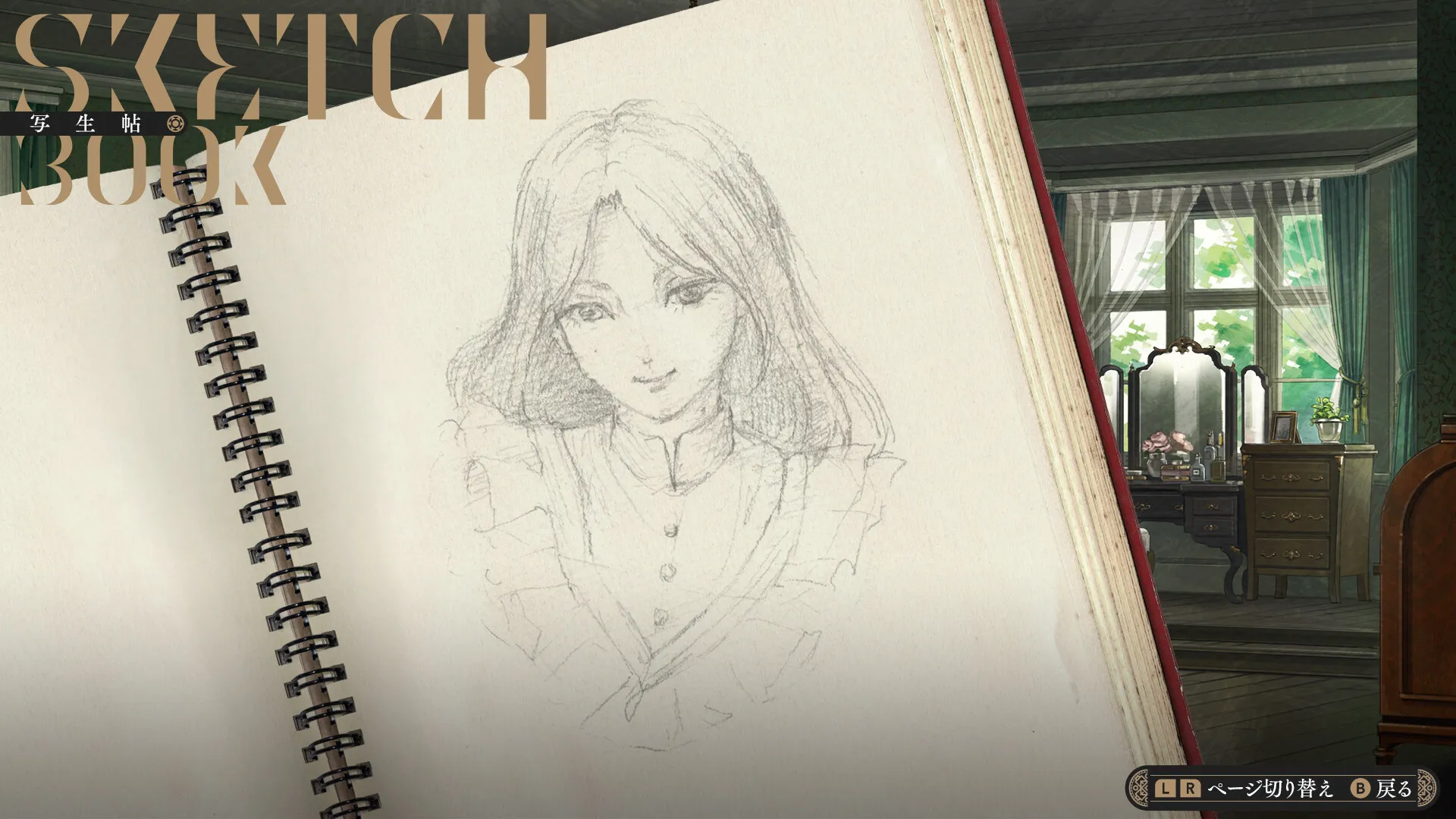
She is a caretaker, drawn to Aria’s vulnerability. She is also a flawed individual whose own trauma and deep-seated desires color her actions. Her identity as an artist is central; her sketchbook becomes a diegetic tool for processing the surreal and horrific events she witnesses, making her an active interpreter of her reality.
The supporting characters deepen the sense of isolation. Amane Iwakura embodies a particularly insidious form of patriarchal control, using a veneer of soft-spoken kindness and sophisticated charm to manipulate and gaslight those around him.
His politeness is a weapon, more chilling than overt cruelty. In contrast, Sui, the kitchen chef, represents a link to a world of normalcy and simple friendship. Her pragmatic concerns and bits of gossip provide a crucial, if temporary, anchor for Ichiko, highlighting just how far she is drifting from ordinary life as she is pulled deeper into the Iwakura family’s toxic orbit.
Threads of Fate
Iwakura Aria utilizes the visual novel format to create a story where player interaction is deliberate and meaningful. The game’s design philosophy hinges on infrequent but highly impactful choices. This stands in contrast to many Western role-playing games that offer a constant stream of minor decisions.
Here, the narrative structure suggests a more deterministic worldview, where an entire life can pivot on a handful of critical moments. This approach forces the player to consider the weight and consequence of each choice, creating a palpable tension around every decision point. Each path leads to one of approximately ten distinct endings, which function as thematic explorations rather than simple win-or-lose states.
The numerous “bad ends” are not mere failure screens; they are fully realized narrative vignettes that explore the tragic possibilities of a single misstep, reinforcing the story’s fatalistic tone. The most effective endings are those that employ a time-skip, flashing forward to show the characters decades later.
These epilogues powerfully illustrate how the events of one brief summer can cast a long shadow over an entire lifetime, a narrative technique that gives the player’s choices a profound sense of permanence. This intricate branching structure is made navigable by excellent quality-of-life features.
The game automatically creates a quick-save before every choice, a design sensibility that removes the friction of manual save management. This allows the player to freely explore the story’s darkest corners and pursue different outcomes without the tedious need to replay long sections.
It is a system that prioritizes narrative immersion over mechanical challenge, treating the game as an interactive literary experience. The brief exploration segments further enhance this, allowing Ichiko to wander parts of the mansion and uncover optional details that enrich the world and its characters.
The Uncanny Canvas
The game’s aesthetic is one of its most powerful assets, defined by a painterly art style that gives its characters the look of classical portraits. This approach, drawing from a Western artistic tradition as much as a Japanese one, immediately establishes a unique and memorable visual identity.
An unsettling effect is achieved by placing these beautifully stylized, almost static character models against hyper-realistic and deeply shadowed backgrounds. The resulting contrast creates a subtle uncanny valley, making the characters seem detached from their own world, as if they are ghosts haunting the mansion. This visual dissonance mirrors the psychological state of the inhabitants, whose placid exteriors hide immense turmoil.
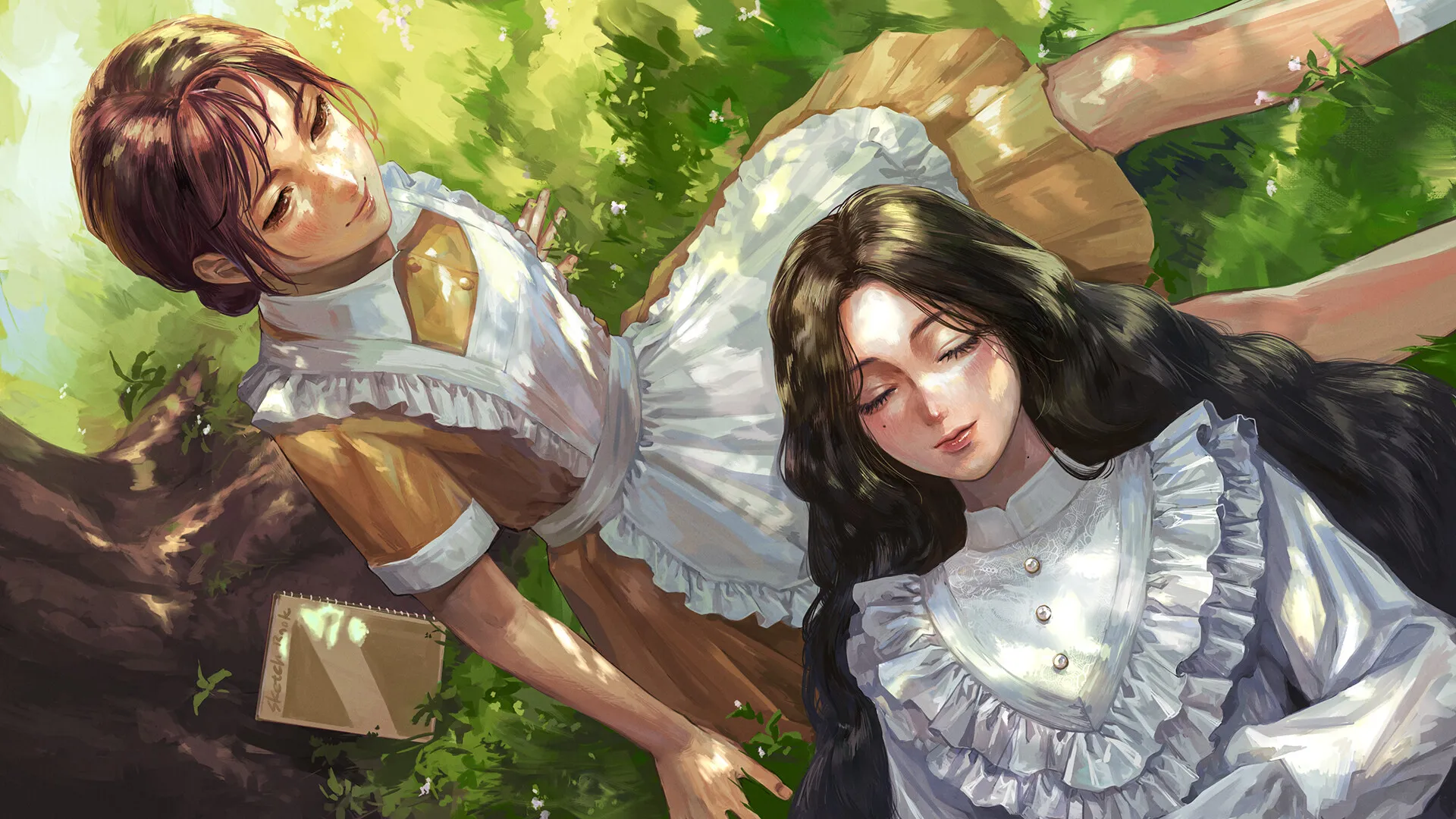
The presentation brilliantly synergizes with the narrative through the use of rough pencil sketches. At moments of intense horror or emotional revelation, the game’s primary art style falls away, replaced by stark, black-and-white drawings that reflect Ichiko’s own sketchbook. This is a masterful stroke, functioning as both a diegetic look through the protagonist’s eyes and a meta-narrative break that signals a shift into raw, unfiltered truth.
The auditory experience is equally deliberate. The choice to include full Japanese voice acting for Ichiko, barring her internal monologues, is significant. It moves away from the silent protagonist trope often used for player immersion, instead cementing Ichiko as a distinct individual whose story we are being told. Her performance adds layers of emotion that text alone cannot convey.
The presentation is not without its weaknesses. The musical score, while tonally appropriate, relies on short, repetitive loops that can become noticeable during the game’s long, quiet stretches, occasionally undermining the carefully constructed atmosphere.
A more jarring issue is the complete lack of character sprites for several recurring secondary figures, whose dialogue appears over a static background image. This decision can momentarily break the player’s immersion in an otherwise visually cohesive and deliberate world.
The Review
Iwakura Aria
Iwakura Aria is a masterfully crafted psychological horror visual novel. It trades cheap scares for a deep, slow-burn dread built on its unsettling atmosphere and the complex, obsessive relationship at its center. Its beautiful, painterly art and strong voice acting create a haunting experience. While minor presentation issues exist, this is a sophisticated narrative that rewards patience with a truly memorable story of love, trauma, and secrets.
PROS
- A deep and atmospheric slow-burn psychological narrative.
- A complex and compelling central character relationship.
- Stunning painterly art style that creates an uncanny mood.
- Exceptional Japanese voice acting that enhances the drama.
- Player-friendly features like automatic saving before choices.
CONS
- The musical score can become repetitive.
- Some secondary characters lack on-screen character models.
- The deliberate pacing may not suit all tastes.







