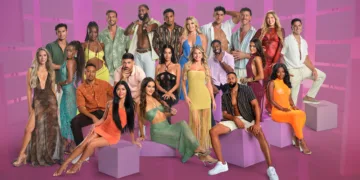






















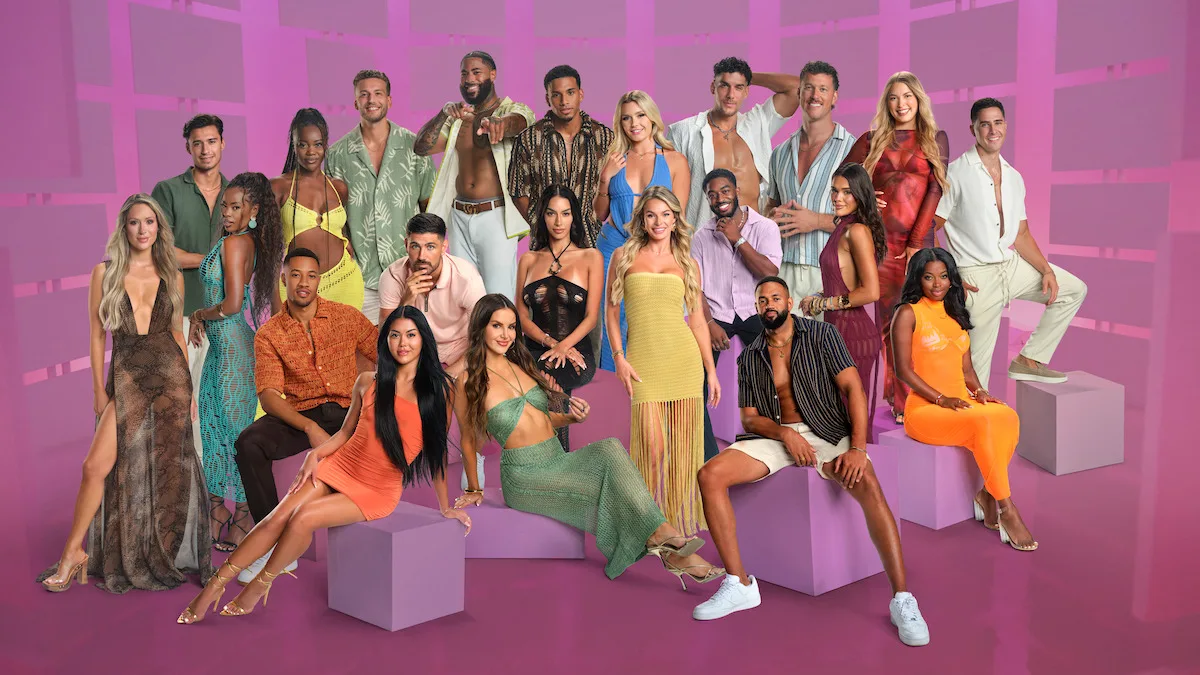

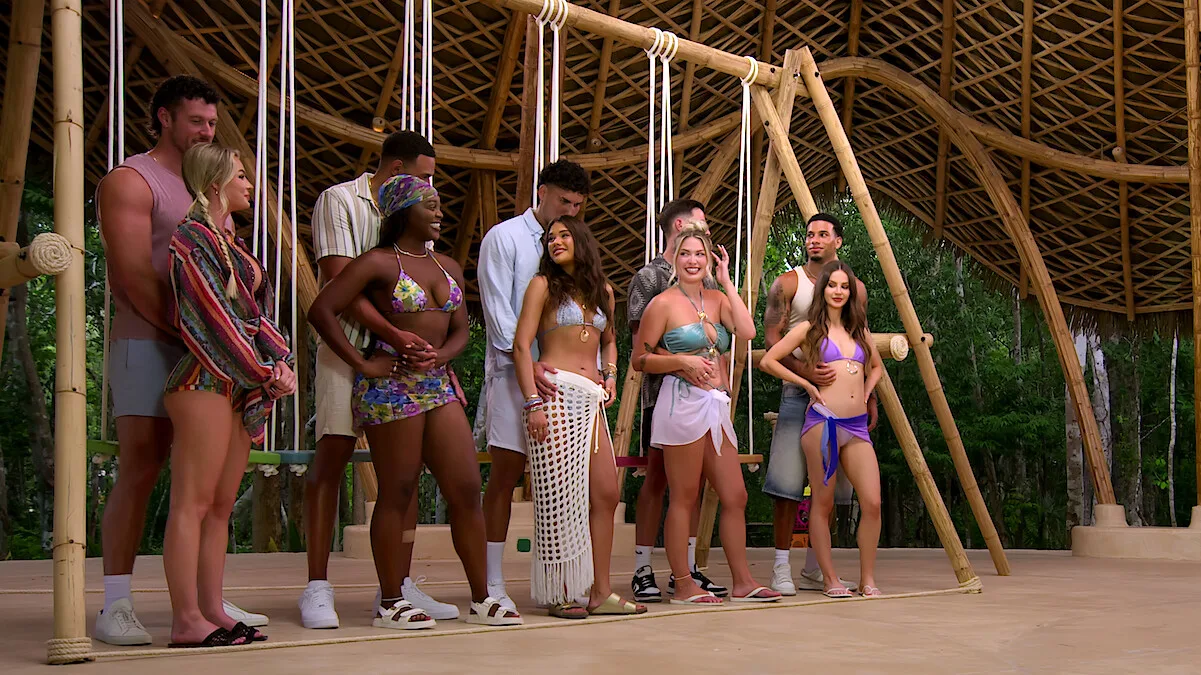
In the ever-expanding universe of streaming reality television, a new class of celebrity has emerged: the multi-franchise veteran. The third season of Perfect Match capitalizes on this phenomenon, assembling a cast of familiar faces in a luxurious Tulum villa. Hosted by Nick Lachey, the series brings together personalities from shows like Love Is Blind and Too Hot to Handle for another opportunity to find a partner, or at least, extend their screen careers.
The premise is straightforward: singles must pair up or face elimination. This creates a high-stakes mix of attraction and calculation, where established reality stars must form new connections under the constant threat of being replaced. The show immediately establishes a tone of playful chaos, with contestants engaging in risqué challenges designed to accelerate intimacy.
It becomes clear that alliances will be temporary and affections will be tested. The series positions itself not as a simple dating experiment, but as a strategic battleground where popularity, physical chemistry, and screen presence determine survival. The pursuit of a “perfect match” is secondary to the immediate need to stay in the game.
The Gamification of Intimacy
The daily survival of contestants hinges on a simple imperative: form a couple or be sent home. This foundational rule sets the stage for a structure built on performance, a reflection of modern romance as a curated public activity. The show’s “compatibility challenges” are less about discovering genuine connection and more about producing public displays of chemistry.
Events like the “Let’s Puck” game, which involves body shots and suggestive yoga, are engineered to create sexually charged television, conflating physical spectacle with emotional bonding. These challenges value brief, high-impact moments over any slow development of feeling.
The true center of power is the “boardroom,” a space where the winning couple of a challenge assumes a producer-like role, blurring the line between participant and creator. Here, they can invite new singles into the villa, a power they wield with surgical precision. This mechanic’s primary function is to destabilize existing relationships by forcing dates between established partners and tempting newcomers.
This transforms romance into a strategic exercise, rewarding the contestants who best understand how to create compelling television. The stated goal, a final vote on the most compatible pair, feels like a flimsy justification for the preceding chaos, a tacked-on ending that does little to hide the show’s primary interest in disruption.
A Catalog of Televised Relationship Styles
The season’s relationships offer a study in the archetypes that thrive within this engineered chaos, each one a reflection of what audiences have been trained to expect from the genre. The arc of AD and Ollie begins with the kind of immediate, intense connection that reality television loves to script, a supposed “love at first sight” moment perfect for a promotional clip.
Their dynamic, however, quickly deteriorates into a contentious and difficult partnership, filled with arguments that expose the fragility of a bond formed under immense pressure. Their story follows the genre’s frequent pattern of celebrating initial sparks before meticulously documenting the ensuing fire, suggesting that conflict is more valuable for airtime than harmony.
Elsewhere, Daniel and Lucy provide a portrait of endurance as a form of dysfunction. Paired from the first day, their longevity becomes a performance of its own, masking a deeply troubled dynamic. Daniel’s manipulative behavior, particularly his tendency to victim-blame Lucy after making her cry, is presented without censure.
The show simply airs the drama, allowing a toxic model of communication to be normalized as a passionate, if difficult, relationship. Their persistence suggests that in the world of Perfect Match, staying together is a victory, regardless of the emotional cost. In stark contrast, Freddie and Madison are positioned as the genuine article, a fan-favorite couple whose stability feels refreshingly authentic.
Their bond is systematically tested, first by Madison’s strategic decision to date Freddie and later by Freddie’s undeniable chemistry with newcomer Rachel. Their story questions whether a real connection can withstand a format designed to break it.
When Producer Craft Becomes the Plot
The show’s most telling moments are when its structural interventions become the main narrative, peeling back the curtain on its own construction. The arrival of Rachel, the former partner of fellow contestant Clayton from The Bachelor, reinforces the idea of an enclosed reality television ecosystem.
This is brand synergy disguised as happenstance, rewarding viewers who are deeply invested in the platform’s entire catalog of reality content. The producers’ hand is even more visible during the painting date between Rachel and Freddie. This activity was chosen with the specific knowledge that Freddie’s partner, Madison, is a painter, turning the romantic outing into a subtle act of psychological warfare.
It is a prime example of soft scripting, where creating a specific scenario guarantees a dramatic outcome. The season’s most audacious move is a late-game twist that forces the two strongest couples, AD/Ollie and Freddie/Madison, to separate.
The rule sends them on dates with new singles while their original partners are ejected from the villa. The immediate result, Ollie coupling with Justine, a friend of AD, lays bare the show’s core interest. This is the peak of its manufactured drama, an open admission that the game’s mechanics will always supersede the human connections it claims to foster.
Perfect Match is a reality dating television series created by Chris Coelen. Season 3 of the show premiered on Netflix on August 1, 2025, with Nick Lachey returning as the host. The series brings together single stars from other Netflix reality shows to a tropical location to find love.
Full Credits
Producers and Executive Producers: Chris Coelen, Eric Detwiler, Sarah Dillistone, Heather Crowe, Sharyn Mills
Cast: Nick Lachey, Daniel Perfetto, Lucy Syed, Amber Desiree “AD” Smith, Ollie Sutherland, Freddie Powell, Louis Russell, Rachel Recchia, Ray Gantt, Sandy Gallagher, Clayton Echard
The Review
Perfect Match Season 3
Perfect Match Season 3 is a transparently cynical machine, prioritizing producer-driven chaos over any genuine search for love. The series is a fascinating, if hollow, study in the gamification of romance, where familiar reality stars perform relationships for survival. While effective in manufacturing high-stakes drama, its cold reflection of a genre more interested in strategic disruption than human connection leaves a vacant impression. It is the perfect artifact of its time.
PROS
- Features a compelling cast of well-known personalities from other reality shows.
- The strategic "boardroom" mechanic creates constant, unpredictable drama.
- Bold structural twists keep the format from becoming stale.
- Effectively showcases the modern, interconnected "universe" of streaming reality TV.
CONS
- The premise of finding a "perfect match" feels secondary to creating conflict.
- Platforms and normalizes manipulative and toxic relationship dynamics without critique.
- The emotional stakes feel manufactured and often hollow.
- Its cynical approach leaves little room for authentic connection to develop.