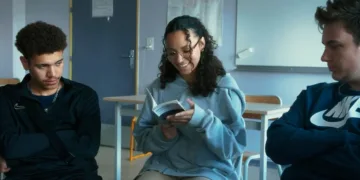















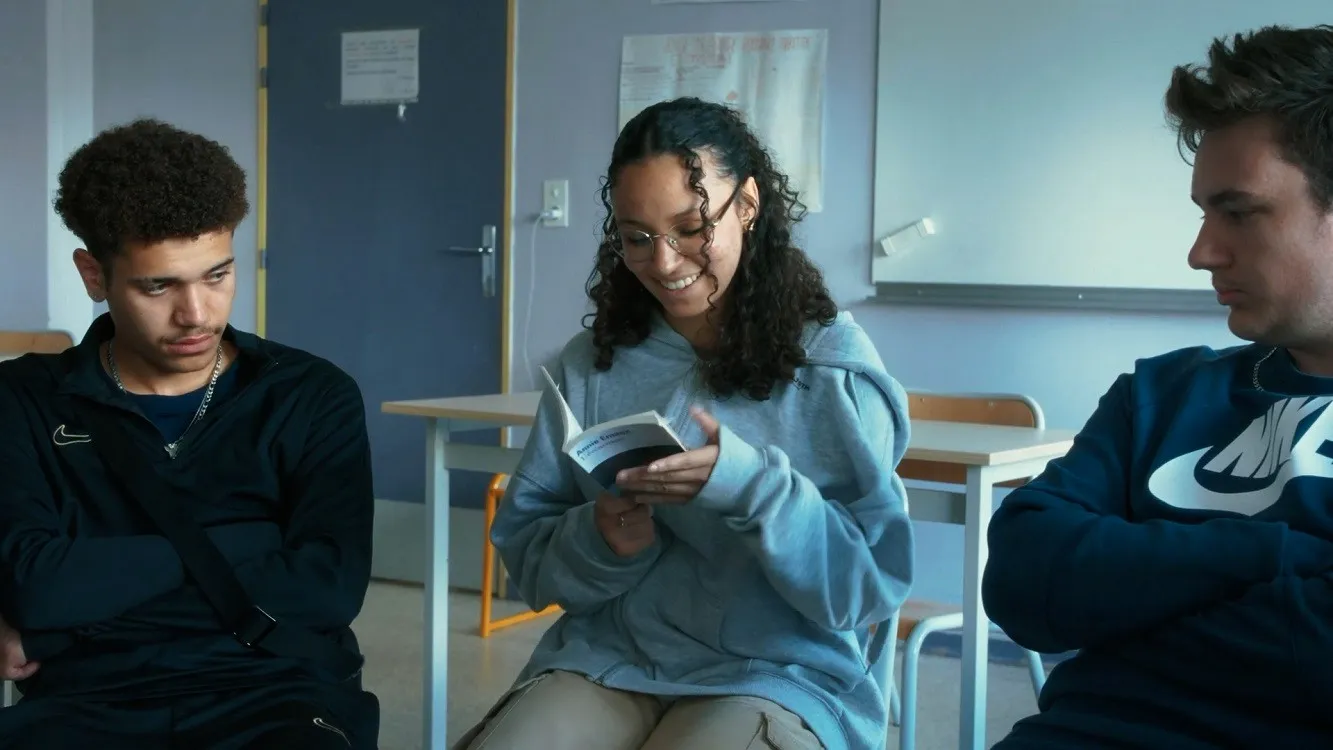

Claire Simon’s documentary, Writing Life: Annie Ernaux Through The Eyes Of High School Students, studies literary engagement with a calm, inviting gaze. The film centers on Nobel Laureate Annie Ernaux’s work. Simon watches French teenagers read and discuss the author’s autobiographical texts in high school classrooms.
Ernaux’s prose has a direct, unadorned “flat” style that recounts personal experiences tied to social class, abortion, relationships, and family history. Simon mirrors that clarity through an observational approach that keeps the frame open and the tone steady. Sessions unfold across varied educational settings, from mainland France to Cayenne in French Guiana. The result is a quiet reflection on reading, conversation, and the social life of literature.
Direct Language, Resonant Truths
Ernaux describes her practice as autofiction, a mode that draws strength from the specific to reach the shared. Her writing addresses “sensitive truths” that many recognize in their own lives. Simon records classroom debates that arise from explicit, adult themes in the books, including loss of virginity, sexual consent, abortion, obsessive love, and complex family ties.
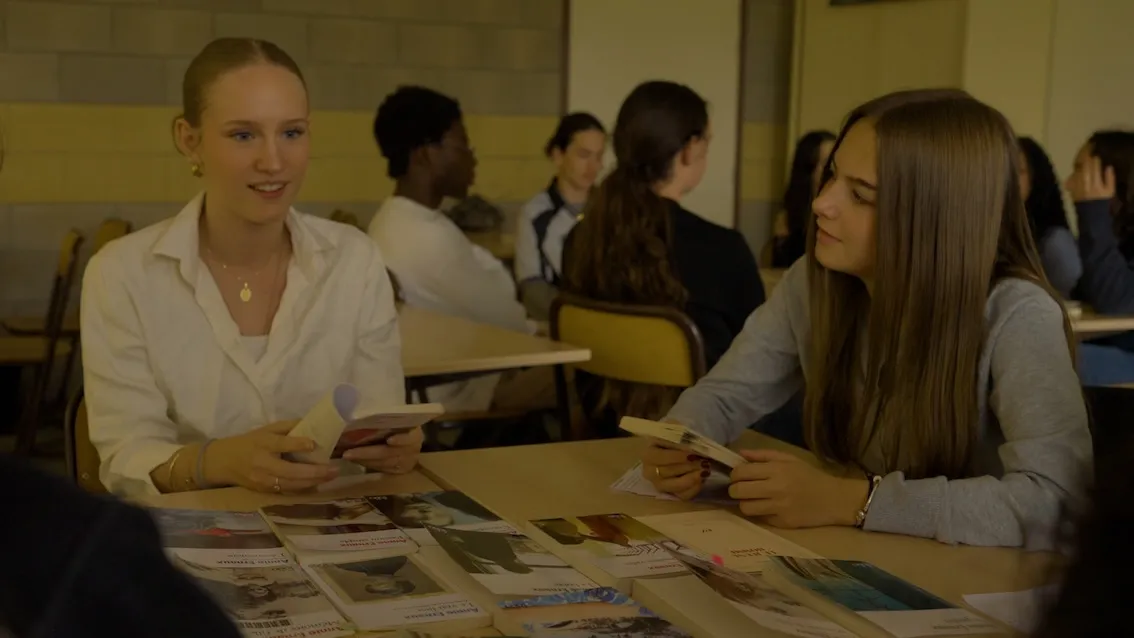
The students speak with plain candor, linking passages to their own backgrounds and daily realities. A boy connects Ernaux’s social mobility to stories from his immigrant parents. A group reaches for street language to pin down a concept. These exchanges feel open and alert, even when the conversation turns to graphic scenes in Happening or A Simple Passion.
One sharp moment lands with particular force when students read a passage about Ernaux’s first sexual experience as sexual assault, a sign of a generational shift in how consent is framed. The teenagers also discuss the “flat writing” itself and describe how the style lets the facts carry a sense of violence without rhetorical flare. As a viewer, I hear the cadence in those lines like a steady metronome in a jazz exercise, each beat controlled so emotion rises from timing and restraint.
Also Read




Filmmaking as Observational Art
Simon leans fully into observational cinema. There is no cross-cutting between groups, no voice-over, and no talking-head structure. The vignettes arrive without overt guidance, so the audience meets the material with the fresh curiosity of an eavesdropper.
Editing shapes the experience. Long stretches of raw discussion become a series of intact exchanges, each given space to breathe before the next takes hold. The range of locations and student backgrounds, from Parisian suburbs to French Guiana, builds a composite sketch of French youth in the present. Simon stays off-screen, a steady listener. One choice breaks that pattern.
She follows a group of young women beyond school grounds, and the camera carries the classroom’s energy into the street. The moment shows how reading does not stop at the bell. Ideas move with the students, and the film captures that motion with a light touch.
The Necessity of Critical Engagement
The documentary honors education and the habit of sustained engagement with art. The French school system appears open to difficult material in a classroom setting, and the film records that openness in practice. Ernaux’s books speak to new readers who bring a contemporary lens to decades-old prose.
Young participants reinterpret the texts through their current moment, which keeps the work alive and present. The film values this democratic approach to reading. Every contribution matters. The tone stays energetic and clear, with no dense jargon.
That atmosphere matches how many independent classrooms feel at their best, where conversation flows and the art on the table invites ownership. I kept thinking about first encounters with spare, unembellished writing and how style can shape conversation as much as content. The students’ connection to Ernaux’s voice sends a simple message. Literature sparks future expression, and it keeps dialogue going about truths that return across generations.
Writing Life: Annie Ernaux Through the Eyes of High School Students is a French documentary that observes high school students across various regions as they engage with the autobiographical and often explicit works of Nobel Prize-winning author Annie Ernaux. The film premiered as a Special Event screening at the Venice Film Festival in August 2025 and has since been featured at several international festivals like the International Documentary Film Festival Amsterdam (IDFA). Being a documentary that mainly screens at film festivals and specialty theaters, the distribution and accessibility may vary by region. Viewers may be able to find it on platforms like MUBI or at curated film festivals. The film has a runtime of approximately 90 minutes.
Credits
Title: Writing Life: Annie Ernaux Through the Eyes of High School Students
Distributor: Be For Films (International Sales), Rosebud Productions (Production Company)
Release date: August 29, 2025 (Venice Film Festival Premiere)
Running time: 90 minutes
Director: Claire Simon
Writers: Claire Simon
Producers and Executive Producers: Emmanuel Perreau, Michel Klein (Executive Producer)
Cast: Annie Ernaux, various French High School Students
Director of Photography (Cinematographer): Claire Simon
Editors: Luc Forveille
The Review
Writing Life Annie Ernaux Through The Eyes Of High School Students Review
This documentary is a powerful, deeply insightful examination of the enduring relevance of literature. Claire Simon masterfully steps back, allowing the honest, frank voices of high school students to explore complex, adult themes in Ernaux’s unflinching work. The film affirms the vital value of critical education and proves that challenging art can speak profoundly to a new generation. It is highly recommended viewing for anyone interested in pedagogy, cultural reflection, or the mechanics of artistic influence.
PROS
- Exceptional Honesty Students provide genuine, unfiltered, and often mature responses to challenging literature.
- Pure Observational Style Claire Simon's directorial approach is clean and unobtrusive, enhancing the film's thematic power.
- Cultural Relevance It serves as a strong case for open, critical education and artistic freedom in school settings.
- Technical Merit The editing is masterful, structuring disparate classroom sessions into a coherent, compelling whole.
CONS
- Specialized Subject The heavy reliance on literary discussion makes this a niche offering.
- Slow Pacing The deliberate, vignette-based structure may feel slow for viewers accustomed to faster-paced documentaries.
- Lack of Context Simon avoids providing external commentary or biographical context, which might leave some viewers wanting more background.