










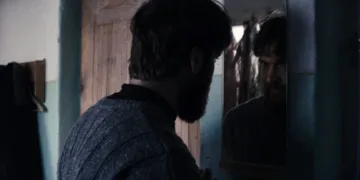

















Malice, a six-episode psychological thriller on Amazon Prime Video, opens with a clear sense that things will go very wrong. The series introduces Adam Healey, a seemingly affable tutor whose quiet infiltration of the wealthy Tanner family begins during a lavish holiday on the Greek island of Paros. From the start, the show signals disaster ahead, since its flash-forward structure places Adam in custody early in the narrative and hints at a grim fate for his former employer.
The drama follows the steady unravelling of the Tanners’ lives as Adam turns their picture-perfect surroundings into a tense battleground. Patriarch Jamie Tanner (David Duchovny) and his wife Nat (Carice van Houten) slip under his influence. The series joins the current television wave of stories about “rich people in peril,” presenting a revenge plot that favors a slow-burn pace and a consistently shadowy tone.
The Art of the Extended Scheme
Malice treats its six-hour runtime as a chance to stretch out the scheme with care. The first meeting in Greece, where Adam forms a disarming bond with the Tanners’ youngest son, Dexter, lays the groundwork for a calculated plan. Movie entries in the “family infiltrator” subgenre often sprint toward an explosive finale; this show opts for a deliberate march. The longer format allows tension to build steadily, with scattered glimpses of Adam’s malicious intent placed throughout the episodes. This measured rhythm keeps the viewer in prolonged suspense.
Adam’s sabotage gains force from the way he targets flaws that already sit inside the household. The Tanner structure shows cracks before he arrives. Jamie, a venture capitalist, appears with clear chauvinistic traits and a distant relationship with his children.
Nat struggles with a sense of being undervalued, which gives Adam an obvious opening. The eldest son, Kit, needs very little encouragement for his rebellious streak to slide into dangerous territory. Conflict lives inside this family from the outset; Adam’s presence magnifies it.
The story leans into a “whydunit” frame. The audience sees Adam’s destructive nature early, while his specific reason for singling out Jamie remains hidden. This choice aims to create dramatic pull. The long delay can also sap momentum. The payoff lands heavily in the finale, which works to wrap up a large number of loose threads at speed. The closing stretch feels rushed and trims away some of the depth that the earlier slow build had created, even as it offers a tidy and satisfying resolution.
Persona and Casting Choices
Casting comedian Jack Whitehall as the quietly menacing Adam Healey feels designed to split opinion. Whitehall bends his familiar comic persona into a role that relies on rapid shifts, playing an antagonist who can slide into a polished mask of competence and kindness with ease.
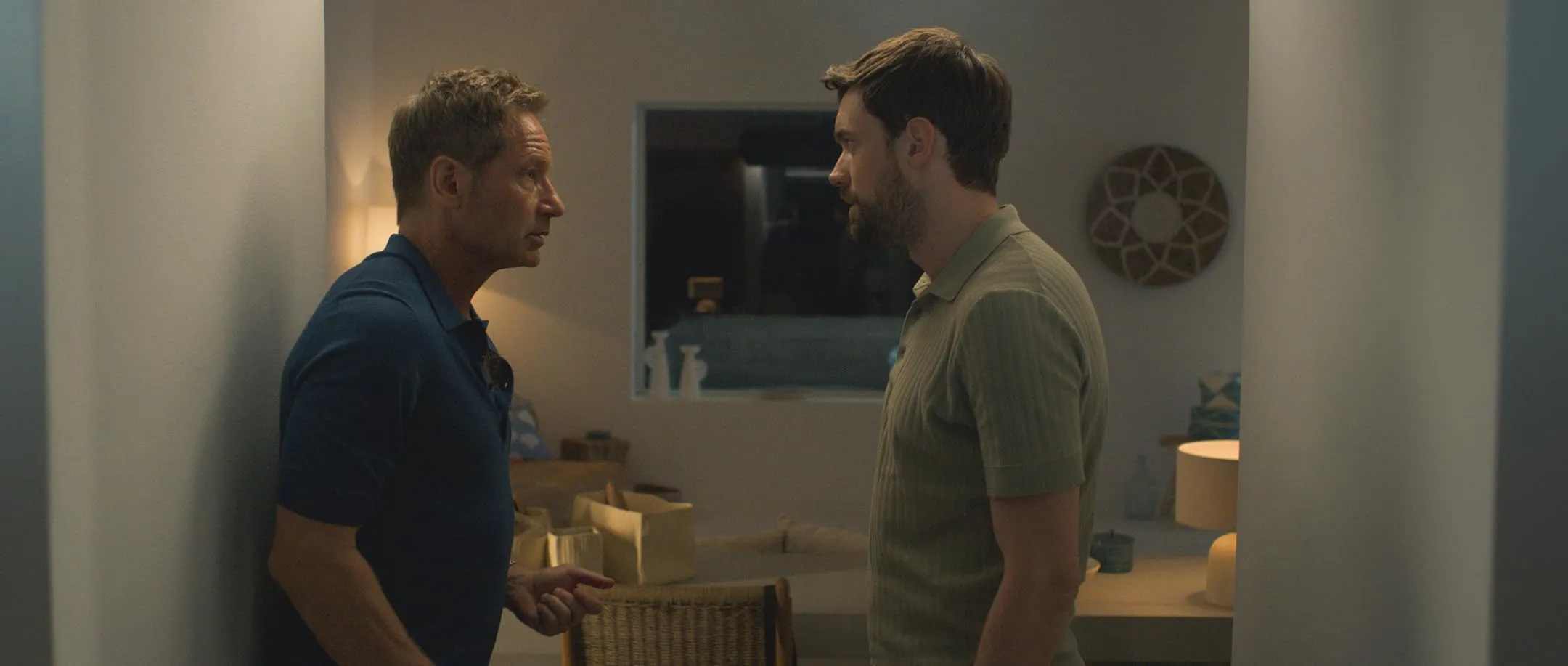
When Adam leans into outright malice, especially in the bizarre scenes with a cat or an octopus, the tonal swing can feel jarring and tip toward pantomime-style absurdity. The choice of lead either lands as a clever way to underline how misplaced Adam seems, like a “man in a penguin suit,” or it pulls energy away from the thriller elements.
David Duchovny thrives as Jamie Tanner. The character arrives as a “mildly terrible” father and a ruthless businessman who uses his wealth as a tool. Duchovny supplies an essential dimension to Jamie, suggesting deeper hurt beneath the swagger and sharpening the character’s seedier qualities with precise line readings. He adds a dry sense of humor that occasionally shifts the show’s tonal balance.
Opposite him, Carice van Houten plays Nat Tanner, both wife and business owner. Van Houten gives the role a strong undercurrent of sadness and internal conflict. Nat feels undervalued and carries regret for sacrifices made for the marriage. Her work presents Nat as active within the story, and her internal struggle becomes a rich source of vulnerability for Adam to work with.
These lead turns keep the series grounded, while figures outside the core family receive far less development by the time the six episodes end. Some of this stasis preserves a degree of unpredictability, yet it also leaves the wider cast less fully shaped than this format might allow.
Aesthetic Ambition and Tonal Drift
The series arrives with clear production ambition, shifting from the “lush vistas” of Paros to the sealed-off wealth of London. The show openly chases the glossy “wealth porn” look associated with titles like The White Lotus and relies on visual polish as a hook.

The tone, however, wobbles. The psychological thriller frame continually collides with flashes of comedy or outright absurdity, often tied to Whitehall’s performance choices. James Wood’s scripts at times lean on plot contrivances and stiff lines of dialogue. The writing folds in hints of symbolism and details such as a Greek wedding dance for local flavor, yet the finished product feels uncertain. The series drifts between the idea of genuine menace and the pull of breezy escapism.
The narrative touches on revenge, class, and family dysfunction, but the long delay before revealing Adam’s core motivation makes it harder for the show to shape a clear statement about those elements. The story piles up scenes of destruction and manipulation without fully spelling out what they represent. Is the cost of wealth here simply the occasional encounter with a scheming tutor?
The TV series Malice premiered with all six episodes on November 14, 2025, and is available to stream exclusively on Prime Video globally. It is a British psychological thriller created by James Wood, starring Jack Whitehall as a charismatic tutor who orchestrates his way into the lives of the wealthy Tanner family—headed by David Duchovny and Carice van Houten—while they are vacationing in Greece, with the true intent of revenge. The story follows Adam as he systematically works to turn the family against each other and bring them down.
Credits
Title: Malice
Distributor: Prime Video (Amazon MGM Studios)
Release date: November 14, 2025
Rating: TV-MA
Running time: 6 episodes, approximately 50 minutes each
Director: Mike Barker, Leonora Lonsdale
Writers: James Wood
Producers and Executive Producers: Georgina Lowe (Producer), James Wood, Imogen Cooper, Tim Hincks, Mike Barker (Executive Producers)
Cast: Jack Whitehall, David Duchovny, Carice van Houten, Christine Adams, Raza Jaffrey, Harry Gilby, Teddie Allen, Phoenix Laroche
Director of Photography (Cinematographer): John Pardue, James Rhodes
Editors: Helen Chapman, Simone Nesti, Fiona Starogardzki, Patrick Rolfe
Composer: Alexis Grapsas
The Review
Malice
Malice offers an engaging premise, successfully using a six-episode run to execute a patient, slow-burn thriller. The series is elevated by the strong lead performances from David Duchovny and Carice van Houten. However, the show is plagued by a mixed tone, struggling to reconcile psychological tension with the subtle absurdity introduced by its main antagonist's casting. The narrative delay in revealing motivation and a rushed finale prevent this visually polished series from achieving the high standard of its genre peers. It is entertaining viewing, but inconsistent.
PROS
- Effectively uses a six-episode structure for a deliberate, satisfyingly slow build of tension and dread.
- Strong, nuanced portrayals by David Duchovny (Jamie Tanner) and Carice van Houten (Nat Tanner).
- Sumptuous setting and aesthetic, aligning with the "wealth porn" genre trend.
- Jack Whitehall's unconventional casting brings an unexpected, polarizing element to the antagonist role.
CONS
- Struggles to balance genuine menace with moments of comedy, resulting in an uncertain feel.
- The last episode attempts to resolve too many plot threads quickly, disrupting the earlier measured pacing.
- Withholding the villain’s key motivation for too long frustrates dramatic momentum.
- Most characters, beyond the antagonist’s influence, see little development by the series end.