


























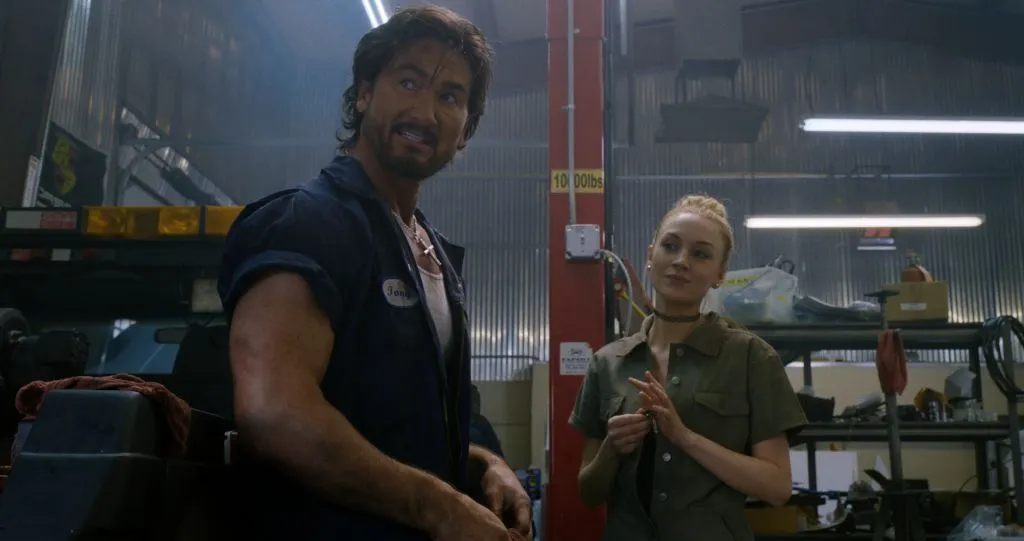

The Wrecker, directed by Art Camacho, arrives as a self-aware vehicle meant to position Niko Foster as a contemporary action lead. Foster takes on three roles as star, producer, and co-writer, a clear signal of intent within the B-movie action-thriller lane. From its first scenes, the film draws heavily on action staples from the ’80s and ’90s, staging a world of pumped physiques and righteous anger.
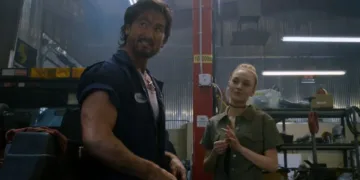
The story follows Tony Minetti (Foster), a former Marine who runs an auto garage in Las Vegas and raises his daughters as a single parent. Trouble starts when his brother Bobby steals a car owned by crime boss Dante (Harvey Keitel). Tony ends up bound to Dante through a forced arrangement that drags him into mob work and payback. A defining character trait is Tony’s refusal to use guns, rooted in a childhood tragedy. He fights with a large monkey wrench, a memorable detail within familiar genre business. Las Vegas provides a bright, gaudy canvas for a one-man crusade.
A Script Built on Borrowed Parts
The script by Foster, Sophia Louisa Lee, and James Dean Simington feels assembled from familiar action pieces. The structure follows a well-worn path and rarely surprises. Logic lapses pull focus from the set pieces. Tony’s stance against firearms hooks attention, yet the childhood flashback that explains it never leads to a meaningful adult reckoning.
The backstory also collides with his Marine past and leads to a dishonorable discharge that plays as unconvincing. Plot turns stack up with shaky motivation. Dante orders a shooting at Tony’s house while demanding that his family remain unharmed, a choice that strains belief. During heightened family scenes, the film even loses track of one of Tony’s two daughters.
These gaps suggest a careless approach that weakens the stakes. Scene flow falters, with disconnected beats and montages that drop in characters such as Detective Boswell (Tyrese Gibson) without firm grounding. Name actors Tyrese Gibson, Mena Suvari, and Danny Trejo appear, yet thin roles limit their impact.
Action and the Aesthetics of Excess
simple jolt and a brief rush. The fights move quickly and keep the camera busy, yet the editing cuts too often and undercuts the weight of the hits. The attempt to create momentum through speed reads as effortful and reduces clarity.
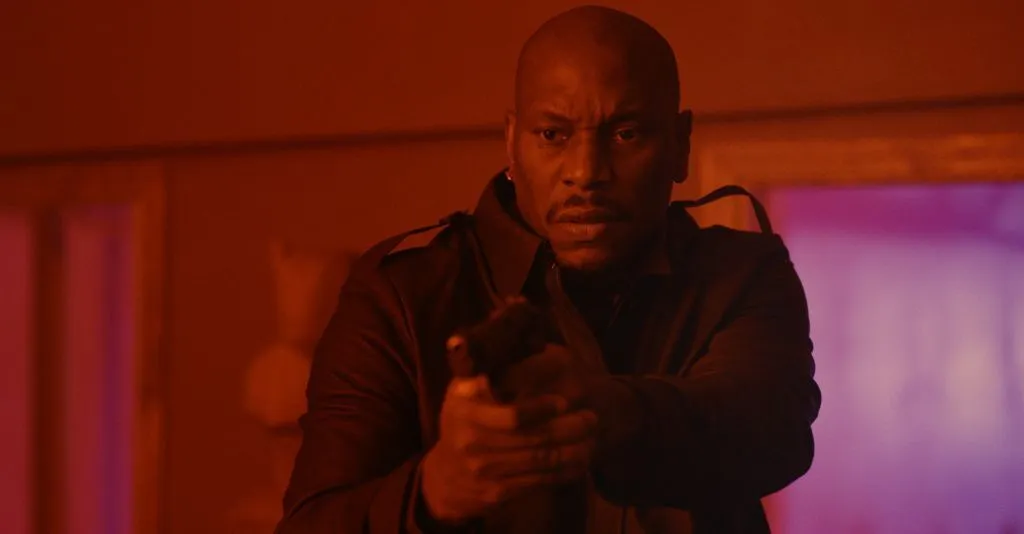
Stefan Colson’s cinematography frames a handsome widescreen image that fits a modest B-movie package, though the visual choices return to predictable tricks. The film reaches its wild apex when Tony’s garage crew outfits a tow truck named Black Betty with armor and a flamethrower, turning it into a bulletproof rig straight out of a scrapyard war story.
The sequence lands as gleeful trash cinema and delivers pure B-movie fun. The score punches every beat in the final stretch, hammering home each impact and leaning into the cartoon flavor of the violence. The craft works overtime to give familiar material a fresh sheen.
Performance, Tone, and Cultural Echoes
Foster brings the required build and a gravelly voice that fits the scowling avenger. As Tony Minetti he looks the part, yet the character never gathers much personality beyond surface cool. In family moments his line readings feel stiff, which points to greater comfort with the physical side than the emotional one.
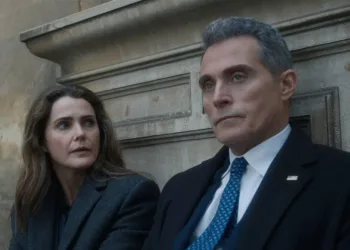
Harvey Keitel and Tyrese Gibson lend marquee presence, yet both glide through limited material and leave only faint impressions. The film’s tone invites the most discussion. The armored tow truck detour is so outlandish that I wondered if a genre send-up was the real aim.
The production plays it straight. The result is a throwback that never embraces self-mockery. The Wrecker mirrors a continued cultural appetite for revenge stories, yet it holds to a fixed formula and offers no new angle on it. Viewers who want a plate of deep-fried ’80s action flavor may have a decent time, while others will run into the same issues of repetition and shaky writing.
The Wrecker is an American action thriller film released in the United States on October 31, 2025, through Quiver Distribution. The film, directed by Art Camacho and co-written by its star Niko Foster, centers on an ex-Marine car mechanic forced into service for a ruthless crime boss after his brother steals an expensive car. It features a recognizable cast including Foster, Tyrese Gibson, and Harvey Keitel. As of the current date, specific information about the film’s content rating and running time are not widely available, and its streaming availability will likely be determined following its theatrical release.
Credits
Title: The Wrecker
Distributor: Quiver Distribution
Release date: October 31, 2025 (United States)
Director: Art Camacho
Writers: Niko Foster, Sophia Louisa Lee, James Dean Simington
Producers and Executive Producers: Niko Foster, Al Bravo, Colin Bates, Eduard Osipov, Michael Pizzimenti, HemDee Kiwanuka
Cast: Tyrese Gibson, Harvey Keitel, Mena Suvari, Niko Foster, Danny Trejo, Chad Michael Collins, Rebekah Samuel, London Dee Falcon
Director of Photography (Cinematographer): Stefan Colson
Editors: Tomer Almagor, Rylan Rafferty
Composer: Mauricio Trabanino
The Review
The Wrecker
The Wrecker is a predictable action vehicle attempting to introduce Niko Foster as a star, but its efforts are undermined by a heavily flawed and often illogical screenplay. While Foster brings the necessary physical presence, the script is burdened by narrative inconsistencies, plot holes, and vapid character development. The film’s action is generally unremarkable, save for a moment of glorious, over-the-top excess involving a weaponized tow truck. This brief flash of fun cannot rescue the picture from its commitment to formula. It is a messy throwback that is too messy to be truly enjoyable.
PROS
- The bizarre, over-the-top weaponized tow truck sequence provides a moment of genuine, absurd spectacle.
- The use of a wrench as the protagonist's primary weapon adds a brief, unique flavor to the combat.
- Niko Foster possesses the appropriate physical presence for the action hero archetype.
- The cinematography offers an attractive look for a film of its modest B-movie scale.
CONS
- The screenplay is heavily derivative of '80s and '90s action movie conventions.
- The character logic is flawed and illogical, specifically regarding the protagonist's gun aversion and military service.
- The narrative contains major script oversights, including forgetting one of the protagonist's children at key moments.
- Established supporting actors appear underutilized due to vapid character writing.
- Excessive use of jump-cut editing diminishes the physical impact of the fight scenes.