















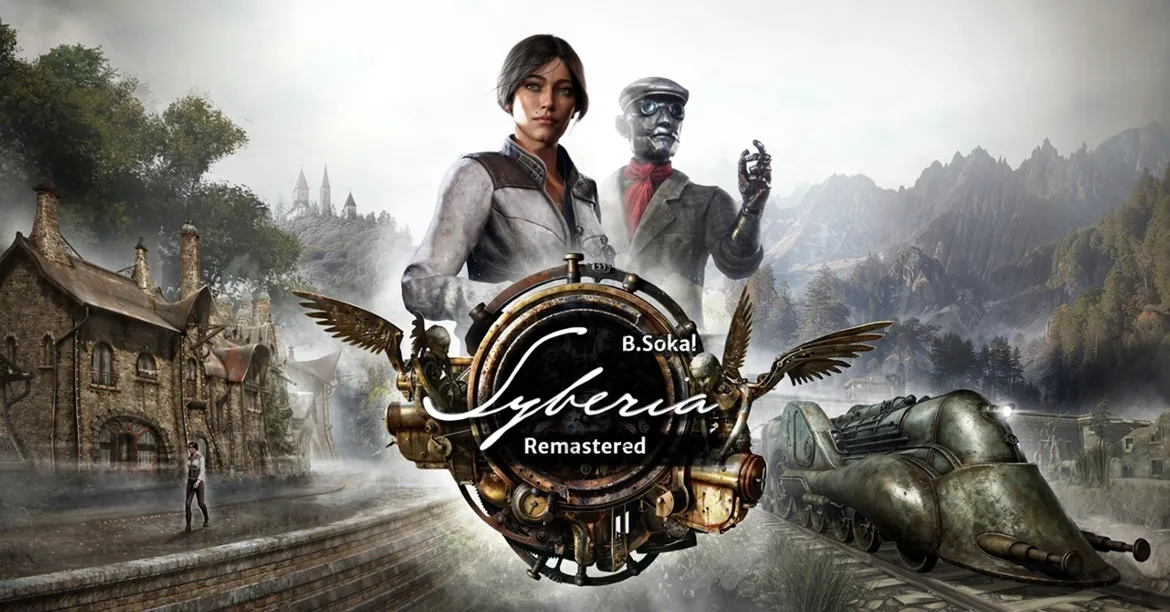

Syberia – Remastered restores a foundational adventure classic that first won players over more than twenty years ago. The rework preserves the clockpunk aesthetic and the somber, atmospheric world imagined by Benoît Sokal. The story opens with Kate Walker, a composed American lawyer assigned to Valadilène in the French Alps.
Her assignment is clear: oversee the acquisition of the Voralberg automaton factory. The plan falters after the death of Anna Voralberg reveals a complication. Hans Voralberg, her brother and the rightful heir, is alive. Kate’s corporate task becomes a continent-spanning search for this elusive inventor, which shifts her predictable life into unfamiliar territory.
Character, Contemplation, and World Design
Syberia builds itself around Kate’s personal change. Her arc moves from contract work and office certainty to curiosity shaped by Hans’s machines and the game’s reflective tone. The structure favors quiet emotional beats rather than the high-stakes moral showdowns common in many contemporary adventure games. The pacing leaves room for mood, theme, and setting to register.
World-building relies on focused spaces and a small cast of NPCs. The design encourages careful observation, concise dialogue, and steady environmental study. Melancholy and mystery saturate each stop, and that tone shapes the questions the game raises: what remains when comfort recedes, and what a dream costs when routine is secure.
The effect resembles a classic literary or cinematic trip in which the route reshapes the traveler. Relative to sprawling open-world approaches in the genre, Syberia favors intimacy, a contained scope, and detail-forward exploration that supports its reflective frame.
Mechanics and The Remastered Flow
The game presents a third-person point-and-click adventure. Progress comes from inspecting objects, collecting items, and advancing conversations. The remaster updates inputs with analog stick movement and a run option that removes the stiffness associated with tank-style movement. Hint markers identify interactable points in the environment, a helpful addition given the sharper visual detail that can conceal small objects.

Organization improves through a redesigned diary that replaces the original notebook. Objectives, documents, and plot state are easier to review, which keeps moment-to-moment play clear. Puzzles follow logical chains rooted in setting, like repairing clockwork mechanisms in the factory. Problem spots from the classic version receive tweaks that reduce vagueness and smooth difficulty spikes.
Newcomers can select Story mode for added guidance and highlighted choices. Adventure mode preserves the classic feel for players who want the traditional level of direction. In the genre landscape, that two-mode structure mirrors how many modern remasters address different experience levels while keeping legacy logic intact.
Visual Overhaul and Technical Polish
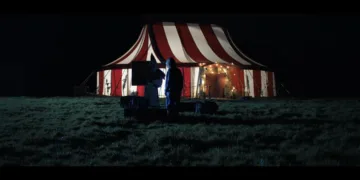
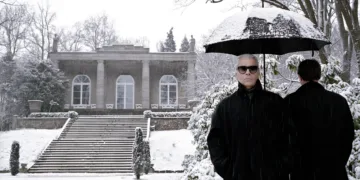
Visual work sits at the center of this remaster. Character models, locations, textures, and lighting receive substantial upgrades while respecting the original art direction. The result aligns what long-time players remember with what they see, which reinforces nostalgia without discarding identity.

A major system change shifts static camera angles to a dynamic camera that follows Kate. Movement through spaces becomes continuous rather than screen-by-screen. Valadilène’s main street illustrates this flow, since the camera tracks motion through a single, uninterrupted path.
The camera can falter in wide areas. It occasionally slips into awkward angles that interrupt traversal. Animation presents a separate set of issues. The team retained original animations and mapped them onto new models. That choice preserves timing and staging from the classic release, yet it produces stiff movement that clashes with higher fidelity assets. Kate’s walk and gestures can read as rigid.
The approach suits Oscar, the automaton, because mechanical precision matches his nature, but it makes human characters feel less lifelike. Visual artifacts appear at times, including clipping, stretched textures, and upscaled pre-rendered cutscenes that sit below the quality of in-engine scenes. Performance stays steady even on modest machines, which keeps input response and scene loading consistent.
Audio stays close to the classic version. Voice performances and music return to support the intended tone and memory for long-time players. Mixing can lean heavy on the score in places, so a small volume adjustment helps keep NPC dialogue clear. For an adventure audience used to remasters that refresh controls and presentation while retaining core logic and narrative, Syberia – Remastered fits that model with a focus on atmosphere, careful puzzle chains, and a protagonist whose path reshapes her priorities.
The Review
Syberia - Remastered
Syberia - Remastered successfully resurrects a genre classic, delivering the contemplative atmosphere and deep character arc of Kate Walker with stunning, revitalized visuals. The artistic overhaul is impressive, visually matching the nostalgic memory of the original. However, the experience is hindered by the faithful preservation of its dated character animations and technical polish issues like an occasionally awkward dynamic camera. It is a worthy return for fans and a charming introduction for new players, provided they appreciate its slow, methodical pacing.
PROS
- Atmospheric story depth
- Beautiful visual fidelity
- Seamless world exploration
- Effective UI/diary update
CONS
- Rigid character animations
- Dynamic camera instability
- Inconsistent sound balance
- Occasional visual glitches