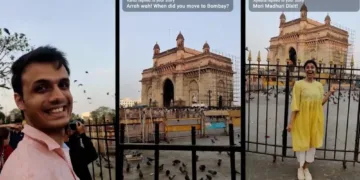














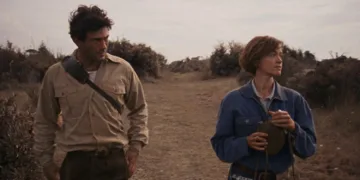

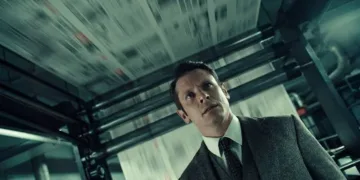








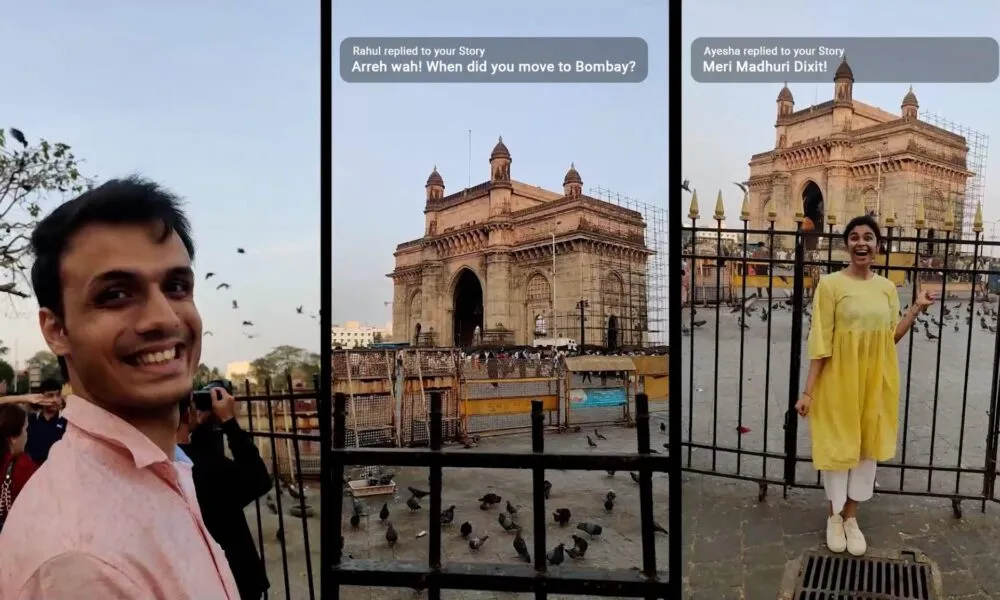

Early Days peers into the digital epoch through Preeti and Samrat, a young couple building a life in Mumbai. Priyankar Patra frames them as people craving stability after Preeti walks away from a medical career in pursuit of autonomy. Their first habitat is a modest flat, filmed as a pocket of quiet intimacy: shared routines, soft pauses, the kind of domestic calm that feels earned.
That calm mutates once their daily check-ins shift toward a social-media career branded PriSm. Money starts flowing. Their bond starts cracking. Preeti begins treating follower metrics as a vital sign. The warmth in the apartment thins out until it feels like a memory. Patra catches a specific Mumbai texture by stripping away gloss, keeping the surfaces plain and the air slightly rough.
The film tracks the abrasion between lived life and the images polished for public consumption. External approval becomes a solvent, dissolving private closeness and reshaping identity in the same motion. Ambition becomes camouflage for desperation. The stakes stay intimate, then turn apocalyptic for the two people trapped inside them.
The Scripted Demise of PriSm
Patra structures the story in three chapters, charting hope as it leaks out scene by scene. Preeti and Samrat arrive at their Mumbai flat with the wide-eyed optimism of transplants, as if the city might reward sincerity. Preeti’s rejection of medicine carries a psychological debt that follows her from room to room. Her family’s judgment sits in the background, demanding an explanation for the deviation. Medicine pays the bills; influencing pays for the ring light. The line lands as a joke, then curdles into a thesis.
The creation of the PriSm account signals the end of privacy as a practice. Preeti recasts Samrat into crew. Romance becomes logistics. She choreographs his movements, calibrates his smiles, and directs him toward the lens like a prop that keeps missing its mark. Sonam, a childhood rival, hovers as a ghost in the machine. Her online success triggers Preeti’s competitive anxieties, the sort that feel irrational until the algorithm starts keeping score.
Samrat registers as the film’s tragic constant. He holds onto a traditional job to support his family, even as his home becomes a set dressed for content. He watches his own relationship from the sidelines, present in body and absent in power. The camera keeps recording their performance, and the distance between them keeps growing. Authenticity becomes a liability that threatens the brand.
Their dialogue starts sounding like copy drafted for deals, each sentence shaped for an audience that never shows up in the room. Samrat finally confronts what he has become: a supporting object inside someone else’s success story. Patra refuses grand melodrama. The film commits to a slow, agonizing death by a thousand clicks.
Chiaroscuro of the Algorithm
Patra shoots with a visual grammar of scarcity. Grainy, handheld images dominate, and artificial light stays largely out of the frame. The apartment reads as mundane and unadorned, a space with corners, shadows, and the faint fatigue of real living. That rough texture sets up the film’s key visual split: the high-definition bursts used for PriSm content. Those HD flashes feel sterile, clinically clean, and emotionally dishonest, like a bright surface that refuses to hold a human fingerprint.
In the early passages, the camera stays close to the leads, compressing space until intimacy starts to feel claustrophobic. Later, as the emotional chasm widens, the framing loosens and retreats. The camera pulls back, watching them the way an audience watches a feed: from a safer distance, with fewer chances to touch anything real. The noir lineage shows up in the shadows and the sense of enclosure, a chiaroscuro of domestic life where light rarely behaves like comfort.
Sound design does quiet damage. One key argument plays out across a busy street, their voices swallowed by traffic. Patra forces the viewer into a particular kind perspective: you study gestures, posture, and facial strain without the relief of clean dialogue. It becomes an expressionistic use of environment, turning the city’s noise into a censor and a judge.
The handheld shakiness mirrors the instability of their situation, each tremor a small signal of a life refusing to stay steady. This is a low-ISO world of shadow and noise, a noir in which the villain fits in a pocket and vibrates. The influencer gloss never wins the frame. Patra keeps returning to the gritty truth of a dim room. If the images sank any deeper into darkness, night-vision goggles would start feeling like practical viewer equipment.
The High Cost of Easy Validation
Early Days treats digital dependency like a contemporary addiction, with social media offering escapism that hardens into a prison. Patra keeps the bargain in view: easy income arrives alongside the loss of emotional autonomy. Private moments become potential inventory. The couple slips into perpetual performance, living as if every breath might be monetized if it catches the right angle.
Preeti’s physical evolution works as a visible marker of self-erasure. She adopts a stylized brand look, wavy hair and trendy clothes, signaling allegiance to the image and a growing estrangement from her own history. The hunt for validation starts displacing honest speech. Meaningful interaction withers under the pressure of likes. Communication breaks down, and that rupture becomes the primary engine of their separation. Their private life ends up laid on the altar of the algorithm, a sacrifice offered in exchange for numbers that never feel like enough.
Patra pushes the material into psychological-thriller territory, with the threat rising from inside the characters. They barter their souls for a higher follower count and wake up alone in a room full of data. The final chill comes from how cleanly it all resolves: their story ends exactly where the dialogue stops.
The film Early Days had its global premiere in December 2025 at the 5th Red Sea International Film Festival in Jeddah, Saudi Arabia, where it was featured in the New Visions competition segment. Set in contemporary Mumbai, this independent drama explores the intersection of young love and the socio-economic pressures of influencer culture. Currently, the film is primarily being showcased on the international film festival circuit, with its distribution handled by Four Films in India and Hazelnut Media in Singapore. As of late 2025, wide streaming or theatrical release dates beyond festival screenings have not been broadly announced, though it is expected to gain further traction following its positive critical reception.
Full Credits
Title: Early Days
Distributor: Four Films, Hazelnut Media
Release date: December 2025
Running time: 100 minutes
Director: Priyankar Patra
Writers: Priyankar Patra
Producers and Executive Producers: Priyankar Patra, Anupam Sinha Roy, Isabella Sreyashii Sen, Olivier Dock, Aditya Vikram Sengupta
Cast: Manasi Kaushik, Sarthak Sharma
Director of Photography (Cinematographer): Priyankar Patra
Editors: Anupam Sinha Roy
Composer: Shibasish Banerjee
The Review
Early Days
Early Days is a stark, unblinking portrait of the cost of digital visibility. By stripping away the glamour typically associated with Mumbai and social media, Patra reveals a harrowing psychological toll. The performances are raw and grounded, making the slow collapse of the central relationship feel inevitable and deeply personal. While the technical limitations are apparent, they reinforce the film's commitment to a gritty, anti-aesthetic truth. It is a haunting debut that prioritizes human frailty over cinematic artifice.
PROS
- Naturalistic and compelling performances by Manasi Kaushik and Sarthak Sharma.
- A brave, handheld visual style that captures the authenticity of urban life.
- Sharp, judgment-free commentary on the addictive nature of influencer culture.
- Effective use of environmental sound to emphasize character alienation.
CONS
- Occasional audio clarity issues that may distract some viewers.
- Low-light cinematography that can feel visually exhausting during long stretches.
- An understated ending that might feel underwhelming for those seeking high drama.