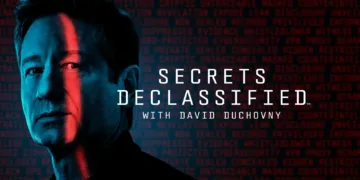
















Secrets Declassified with David Duchovny is a 10-episode documentary series that first aired on the History Channel and now appears on streaming platforms such as Disney+. The premise is plain: the series examines previously hidden government operations, covert missions, and shadowy historical events spanning the Cold War era up to more recent programs. Its scope includes technical development of spy aircraft like the U-2 and the origin story of Area 51.
The episodes also address unsettling subjects such as mind control experiments, secret weapons efforts, and questionable scientific projects, including reported attempts at human-ape super armies and the creation of hidden bioweapon laboratories. Casting David Duchovny as the host functions as a piece of meta-casting.
His long association with fictional conspiracy investigation gives the program an immediate subtext when it turns to real-world secrets. The series’ style blends the careful tone of a historical documentary with the tension of an investigative mystery, using archival footage, dramatized sequences, and expert interviews.
The Narrator and the Narrative Subtext
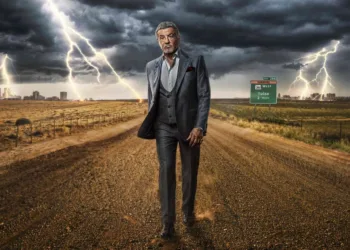
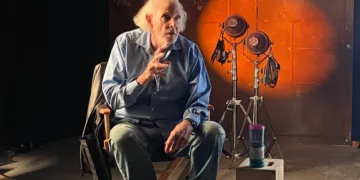
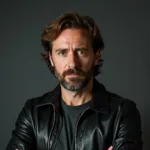
Duchovny occupies a guiding role that remains deliberately limited. He serves as narrator and primary presenter, appearing on camera to introduce segments and to offer closing commentary. Those on-set moments are typically shot against a studio backdrop that evokes an archive or a cold-case file room, complete with stacks of banker’s boxes and historical files. He does not perform on-site reporting or lead original field investigations in the way a conventional journalistic host would.
That choice keeps the program’s factual material at a remove from the performative elements of investigative television. His delivery is distinctive and shapes the series’ tone. He speaks with a steady, dry register and a controlled, slightly detached cadence. That coolness functions narratively. For many viewers, the measured voice lends gravitas and an air of authenticity to dense historical material.
The cadence intentionally recalls the solemn style of classic mystery narrators, which gives the series a mildly nostalgic feel aligned with earlier cable history fare. For viewers accustomed to faster documentary pacing, that calm tempo can feel slow and may reduce engagement for some, prompting suggestions that a quicker pace might suit modern viewing habits.
Casting Duchovny is also a structural choice that affects the show’s relationship to its subject matter. His history playing a skeptic obsessed with institutional deception creates layered resonance when he presents documented events. The meta-level where a familiar fictional investigator frames real records helps establish an atmosphere of institutional mystery and government concealment. Audiences familiar with his previous roles will find that connection a useful shorthand. His presence gives the series a steady, charismatic center that frames the historical material and affirms the program’s investigative intent.
Structure, Pacing, and Archival Storytelling
The series follows a competent documentary architecture common to cable history programming. Episodes rely on expert interviews, commonly labeled “talking heads,” intercut with archival footage, graphic overlays, and short dramatic reconstructions that visualize key moments. The production values are polished and episodes run about 40 minutes, which allows a tidy pacing across each installment.
A recurring visual device is the dramatic treatment of government documents. The program often shows redacted papers and uses an effect in which the blackout marks are removed to reveal text. The device functions as a piece of presentation design that reinforces the theme of previously concealed information being made visible.
The roster of experts includes recognizable contributors with backgrounds in history, aviation, and science communication, such as Hakeem Oluseyi, Garret M. Graff, and Amy Shira Teitel. These participants bring academic and professional context to the material and add factual rigor. Their testimony helps keep the series anchored in documented evidence and limits drift into speculative territory, which separates the series from programming that foregrounds sensational or conspiratorial claims.
A central tension runs through the series between the promise implied by the title “declassified secrets” and how revelatory the material proves to be. The program assembles a well-produced, organized collection of established historical episodes. Many of those stories are accessible to an interested viewer via public research.
The series functions effectively as a concise, grounded historical primer that packages and delivers existing material with clarity. Its focus stays serious and educational; it treats the stranger-than-fiction elements of Cold War and governmental activity without veering into the kinds of alien-focused or wildly speculative theories seen elsewhere. Episodes cover a broad set of government actions and succeed at synthesizing scattered documents and long-standing narratives into coherent segments.
Positioning in the Documentary Landscape
The intended audience for Secrets Declassified is clear. It targets viewers interested in modern history, government intrigue, spy operations, and established Cold War facts. The series also appeals to viewers drawn to David Duchovny’s body of work. It addresses an audience seeking documented history presented with straightforward clarity.
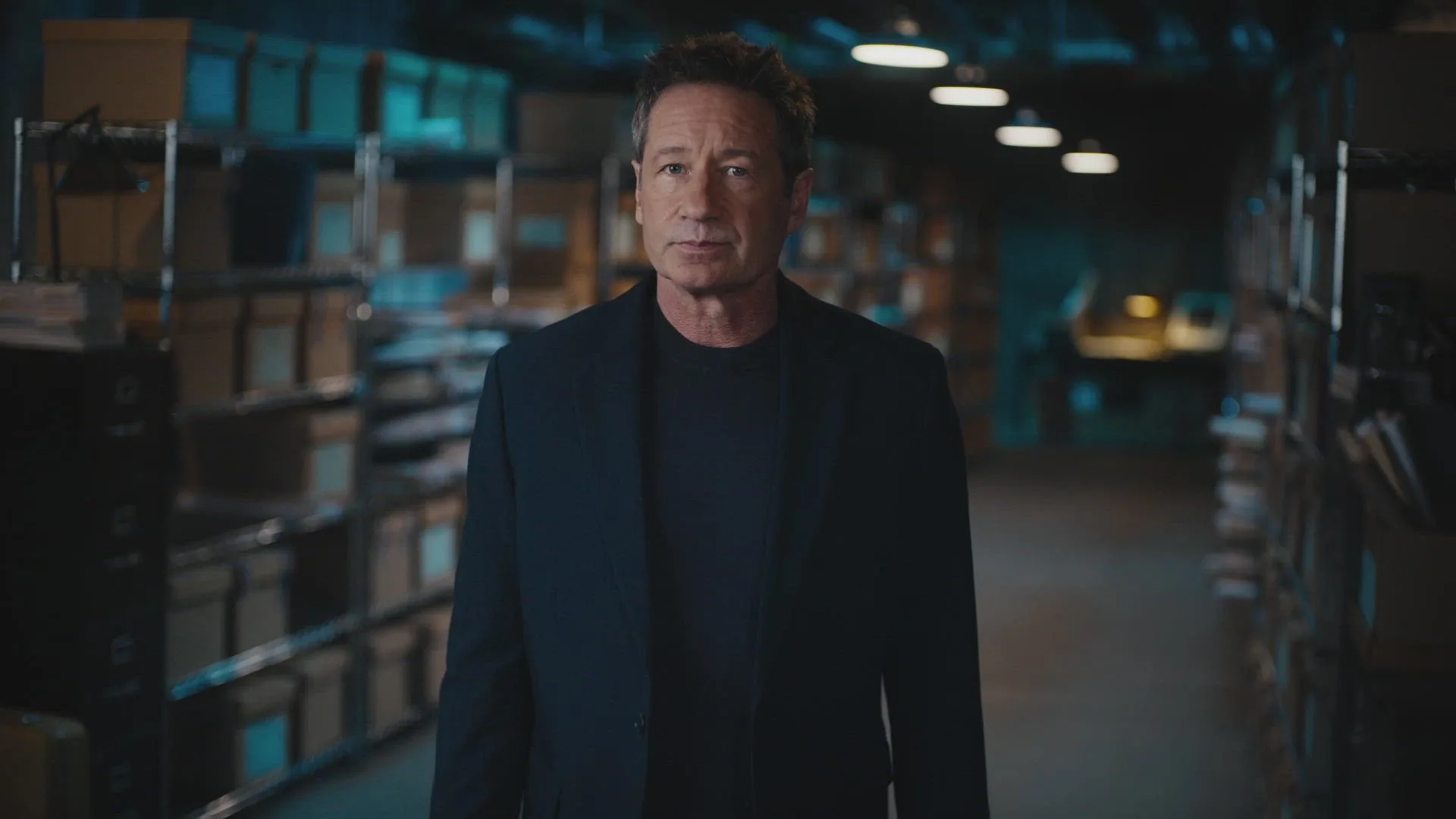
Within the contemporary documentary field, the program occupies a steady, fact-based position. It is more grounded and less sensational than much paranormal-focused cable programming. The methodology centers on verified facts and expert historical analysis and avoids speculative “what if” scenarios that rest on conjecture. That emphasis on documented material makes the series suitable for viewers who want mystery elements without sacrificing credibility.
The series’ practical value lies in its methodical presentation and its capacity to arrange disparate historical material into a digestible 10-episode format. It translates complex archival sources into a clear structure and tells compelling true stories that are narrated with care. By prioritizing production competence and reliable sourcing, the show delivers a consistently interesting piece of historical television that serves a general audience well.
Secrets Declassified with David Duchovny is a 10-episode nonfiction series that premiered on the History Channel on Friday, April 4, 2025. The series explores and investigates newly declassified documents to reveal evidence behind various top-secret government activities throughout modern history, covering everything from spy missions and black sites to mind control experiments and bizarre weapons programs. It is hosted and executive produced by David Duchovny, whose long association with the mystery genre lends a distinct, knowing tone to the historical facts presented. Episodes are available for streaming on platforms such as Disney+, and on the History Channel app, with full episodes typically streaming the day after their initial broadcast.
Full Credits
Title: Secrets Declassified with David Duchovny
Distributor: A+E Networks, History Channel, Disney+ (Streaming)
Release Date: April 4, 2025
Rating: TV-14 / TV-PG (Varies by source/episode)
Running Time: Approximately 40–41 minutes per episode (10 Episodes)
Director: Nick Green, Elliot Goldner
Producers and Executive Producers: David Duchovny, Peter Lovering, Jane Root, Simon Willgoss
Cast: David Duchovny, Hakeem Oluseyi, Martin K. A. Morgan, Don Wildman, Nehemiah Mabry, Amy Shira Teitel, Garret M. Graff, Sami Jarroush
The Review
Secrets Declassified with David Duchovny
Secrets Declassified with David Duchovny is a successful historical anthology that packages well-documented government secrets with competent production values. While it offers few genuine bombshells that cannot be found elsewhere, it provides a thoughtful, organized, and engaging survey of covert history. David Duchovny’s dry, self-aware narration serves as the perfect anchor, lending the show an undeniable sense of genre heritage and gravitas. It delivers solid historical storytelling without resorting to sensationalism.
PROS
- David Duchovny's dry wit and established persona provide effective, self-aware framing.
- Relies on credible experts and documented history, avoiding rampant speculation.
- Slicks presentation, strong use of archival footage, and effective visuals.
- Organizes complex, disparate facts into cohesive, easy-to-follow episodes.
CONS
- The content is largely a curated collection of known historical events.
- The methodical, deliberate narrative pace can feel slow at times.
- Duchovny is a presenter, not an active investigator.