
























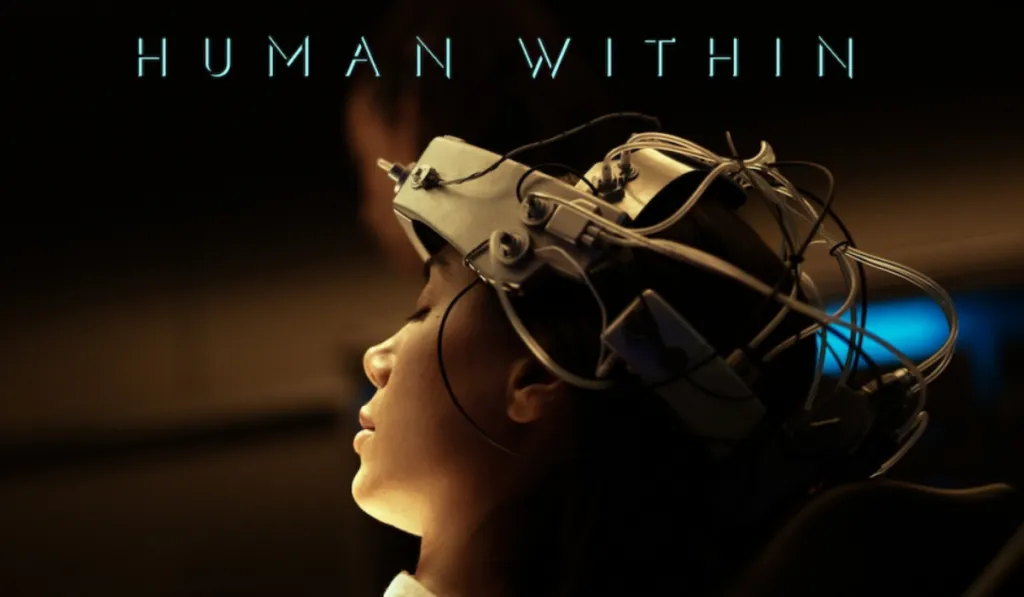

Human Within sketches a near-future scenario where the line between biological consciousness and artificial intelligence fades into something porous. Developed by Signal Space Lab, this Virtual Reality title plays as a sci-fi thriller focused on two sisters, Nyla and Linh.
They are cyber engineers who built Pasithea, a device meant to join the human brain with computer hardware. That ambition backfires catastrophically. Linh ends up in a coma, her consciousness cut loose from her body and lodged inside the digital realm.
The story picks up with Nyla held captive by Blake, their financier, who insists she keep the project moving forward regardless of the danger. The player takes on the role of Linh’s digital consciousness, a “ghost in the machine” guiding Nyla from inside the system. By pairing familiar VR puzzle play with Full Motion Video (FMV) storytelling, the experience frames itself as a cautionary tale about corporate greed and the ethical peril of technological progress left unchecked.
The Corporate Panopticon and Familial Bonds
Human Within builds its narrative around a split perspective: physical survival on one side, digital observation on the other. Nyla operates as the grounded figure, living through confinement and immediate threat, while Linh persists as a disembodied witness who can still intervene.
That arrangement creates a relationship defined by distance, with the player protecting the protagonist through intervention and oversight, not embodiment. Blake fits a widely recognized figure across global media, the wealthy investor chasing profit while dismissing the damaging side effects of innovation. His indifference to the human cost of Pasithea echoes current anxieties about technology accelerating faster than ethics can keep up.
As the plot moves forward, it takes on the shape of a heist as Nyla gathers help to break free of Blake’s control and rescue Linh. The shift into escape-driven action gives the high-concept premise an immediate momentum. Human Within also operates as a warning about transhumanism, tying the corruption of AI technology to human intent and the purposes encoded into systems. The tone stays cold and tense, matching the sisters’ situation and draining the sheen that futuristic stories often apply to high-tech spaces. What remains is a stark, hazardous reality built from locked rooms, leverage, and fear.
Digital Voyeurism and the 360-Degree Gaze
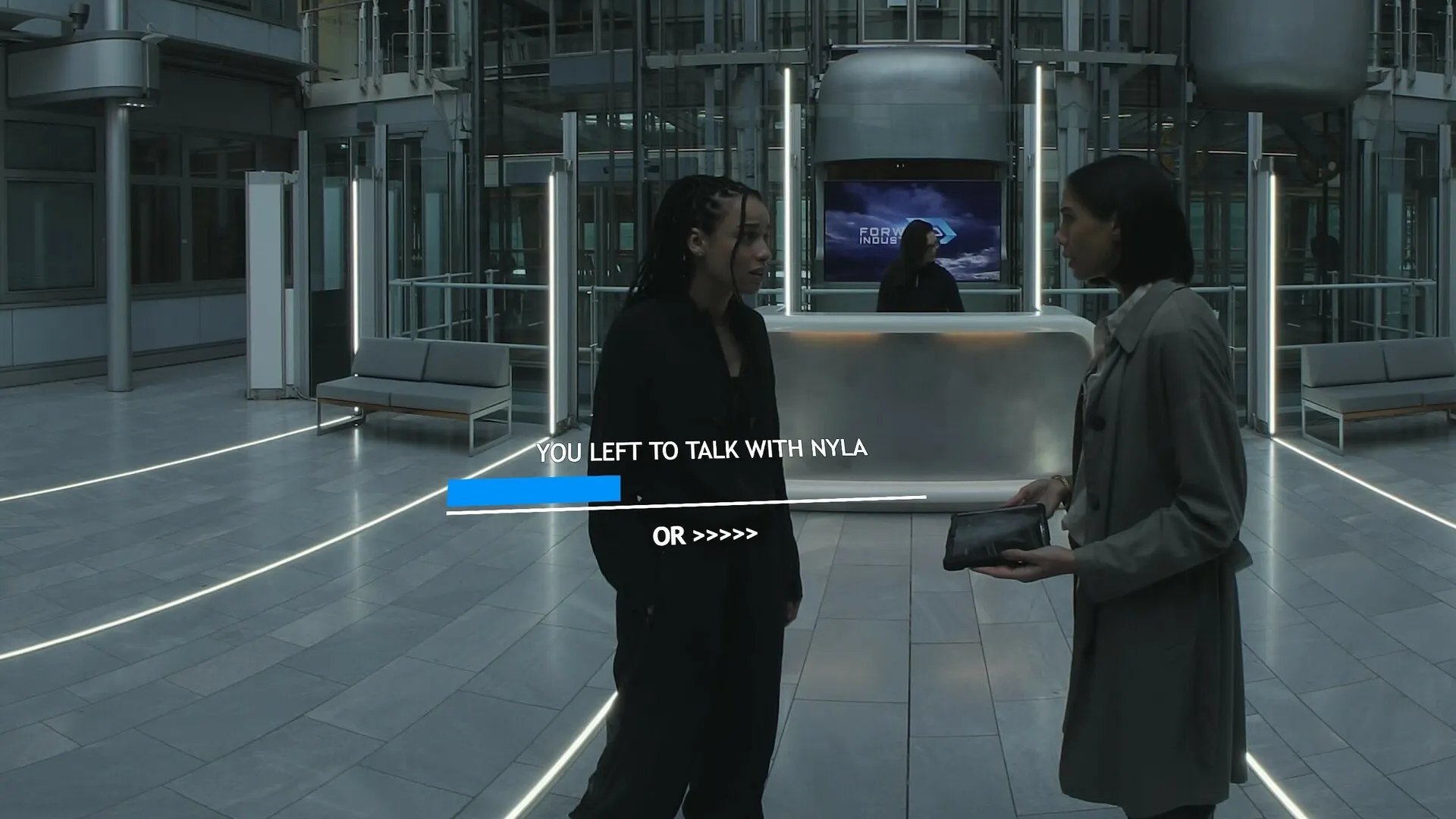
Aesthetic duality drives the presentation. The developers use FMV captured with 360-degree cameras to portray the physical world, and those sequences frequently resemble security feeds or broken-up memory shards. The effect produces detachment.
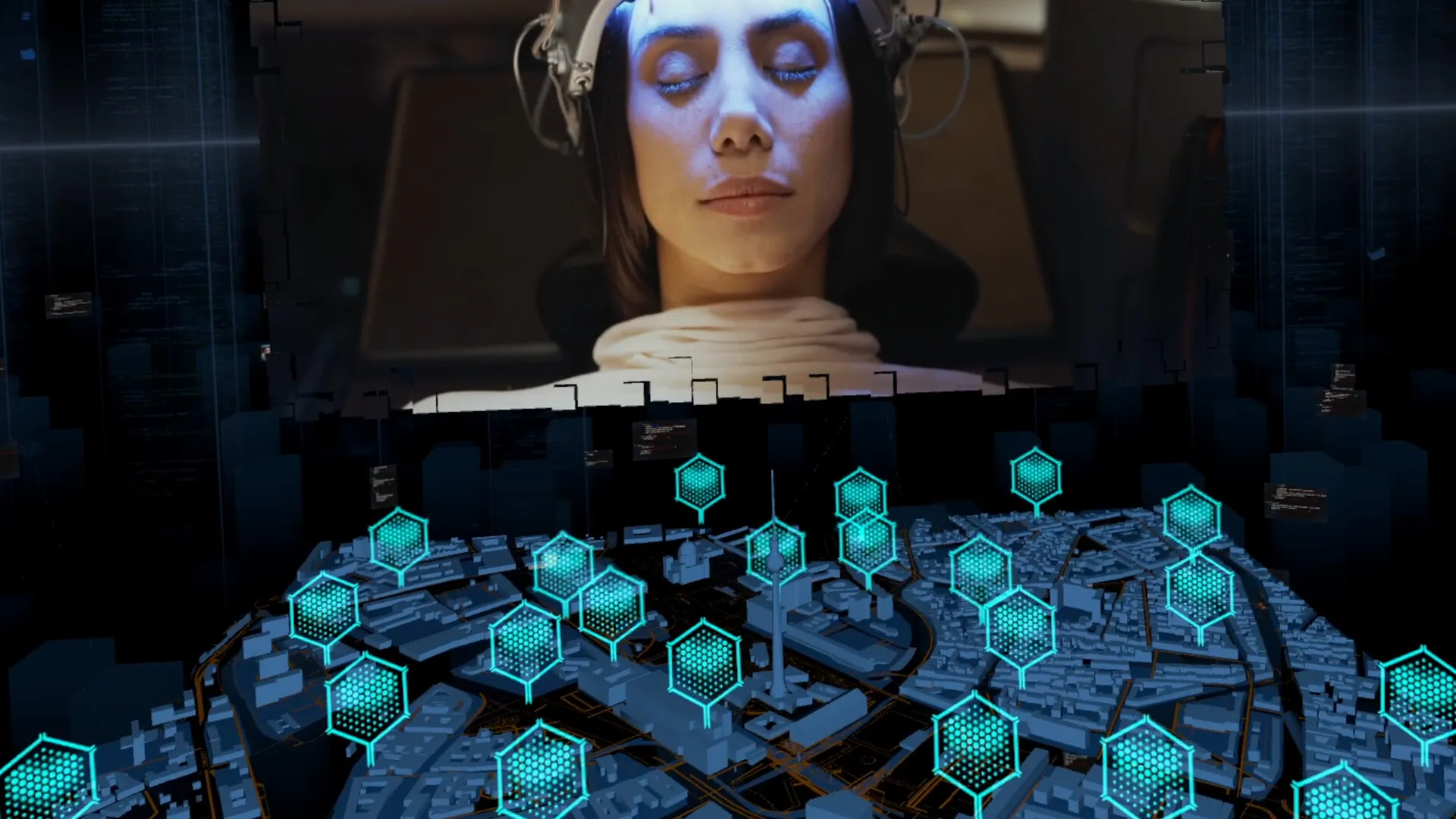
The player watches events unfold like a quiet observer, stationed behind a surveillance viewpoint. That framing strengthens the story’s core premise of existing as a digital entity: present inside the moment, separated by code and mediation.
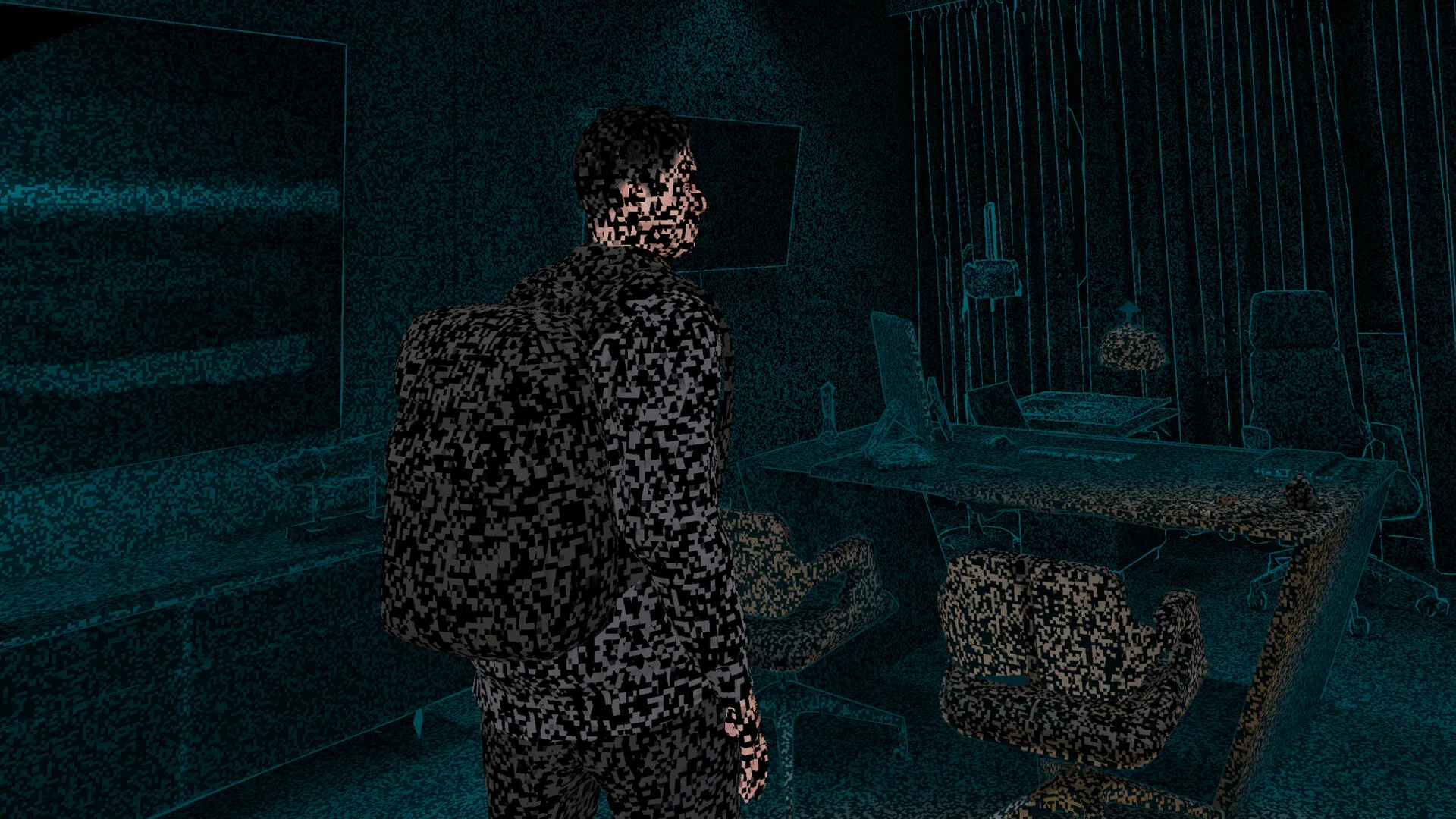
A different visual language appears in the “point cloud” space that represents Linh’s consciousness. Here, the world becomes data streams and abstract geometry, with reality rendered as interpretation. Moving between high-definition footage and the digital void creates a sharp shift in perception that asks the player to recalibrate constantly.
Strong voice acting holds the experience together, giving emotional continuity to a format that depends on filmed performances while asking the player to think and act inside an interactive abstraction. The acting becomes the bridge that keeps the illusion intact when the imagery changes so radically.
Algorithmic Hands
Mechanically, the game casts the player as a supercomputer, manipulating environments and systems to clear a path for Nyla. The form of agency is specific. The player engages through processing and intervention, treating obstacles as problems to decode and reconfigure.
Puzzles work as the connective tissue between story beats, representing Linh’s attempts to read the architecture of the trap surrounding her sister. Node-selection tasks ask the player to scan through cityscapes for particular individuals or data points, evoking the reach and awareness of networked intelligence.
Other segments focus on repairing corrupted data. Players place digital blocks to match patterns, turning the idea of code into something tactile. Reconstruction puzzles shift the task again, asking the player to rebuild muddled data clouds that resemble three-dimensional QR codes.
Solving them lets Linh map physical spaces for Nyla, translating digital clarity into real-world movement. The controls rely on physical motion to sort and align information, and that precision can sometimes feel sensitive and finicky. These interactions matter because they turn “hacking” into work performed by hand and body, grounding the fantasy of omniscient computing in strain, repetition, and careful placement.
The Architecture of Consequence
With a runtime of about three hours, Human Within sits closer to a feature film than a sprawling RPG, and that scale supports its branching structure. The game expects replay. Across the story, especially in flashbacks and pivotal moments, the player makes choices that steer the path forward. Those choices accumulate over time and lead to one of five endings, inviting players to return to earlier divergence points and see how alternate decisions reshape what follows.
The structure frames the final stretch through the total weight of prior actions. The ending reflects the ethical stance the player has built across the playthrough, with consequences tied to decisions made along the way.
The shorter length helps because it reduces the friction of repeating the experience, making it easier to trace the narrative’s possibility space without an exhausting time commitment. The branching paths also encourage comparison, showing how small shifts in choice ripple outward and alter the sisters’ fate.
The Review
Signal Space Lab
Human Within succeeds as a narrative experiment, merging VR immersion with cinema to question the ethics of AI. While the puzzle controls occasionally falter, the story remains the driving force. The contrast between physical and digital perspectives offers a distinct view on the techno-thriller genre. Its short runtime benefits the branching paths, revealing the true weight of player choice. It stands as a compelling, if imperfect, fusion of medium and message.
PROS
- Compelling sci-fi narrative exploring transhumanism.
- Innovative integration of 360-degree FMV within VR.
- High replay value due to branching paths and five endings.
- Strong voice acting anchors the emotional stakes.
CONS
- Puzzle controls can feel sensitive and imprecise.
- Visual quality shifts unevenly between video and digital assets.
- Short runtime may leave some players wanting more depth.