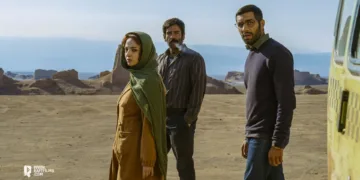

























The Lut Desert in Ali Zarnegar’s directorial debut behaves like a character: silent, oppressive, and quietly in control. This vast, arid stretch of central Iran frames Cause of Death: Unknown, a film that locks seven strangers inside a taxi van and keeps tightening the space around them. The setup sounds plain on paper. A group travels from Shahdad to Kerman before sunrise.
One passenger dies in his seat without a sound. What follows turns grimly practical. The driver and remaining travelers hit a bureaucratic wall when the hospital refuses to send an ambulance without a doctor’s verification. An administrative problem becomes a moral emergency the moment they find a vest on the corpse, packed with American dollars.
Zarnegar, a veteran screenwriter stepping behind the camera for the first time, builds the story like a controlled experiment in conscience. The film served as Iran’s official submission for the international feature film category, a vote of confidence even with its absence from the shortlist.
The dilemma is blunt and immediate. Report the death and invite police involvement, or bury the body in the sand and split the fortune. The desert sharpens every edge of that choice. The heat presses down, the isolation cuts off easy exits, and the cash sits there like a dare. The film uses the road-movie frame as a psychological study of ordinary people forced to measure their decency against a life-changing windfall.
A Fractured Ensemble
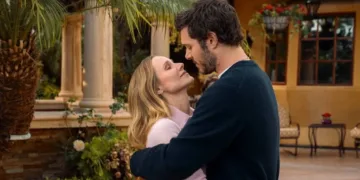
The tension lives in the van’s social wiring, and that wiring comes loose fast. These passengers share a destination, not a bond. Circumstance throws them together, then the death tests how quickly strangers start treating each other like suspects. Ali Mohammad Radmanesh plays Majid, the driver, whose romantic fixation on his deaf co-pilot, Najveh (Zakieh Behbahani), threads a note of unrequited longing through the cramped interior.
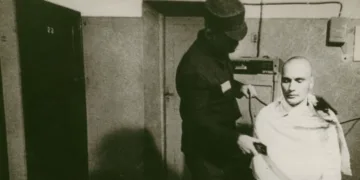
Najveh registers as a tragic presence, caught in a relationship with an abusive man; her silence inside the van communicates vulnerability with unsettling clarity. Banipal Shoomoon provides the standout work as Ahmad, a stern mustached man with a prison record. His performance is built on precision, every look and gesture carrying the careful weight of someone who already understands the price of a wrong move.
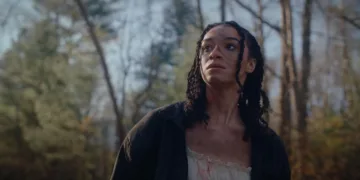
The group’s chemistry keeps shifting as they form short-term alliances that dissolve as quickly as they appear. Distrust saturates the air. Every glance feels like a charge. Alireza Sani Far plays Naser, a mortician’s son clinging to a suitcase he hopes to sell, while the young couple in the back, Peyman and Bahar, are fleeing political persecution. Esmaeil, in tattered clothes, embodies the desperation of extreme poverty.
The film shows how fast solidarity crumbles once greed enters the conversation. Lies come easily. A racial bias surfaces when they label the dead man as Afghan, a move that turns the body into an outsider and lowers the emotional cost of theft. The acting stays grounded through these pivots. With no major celebrities pulling focus, the characters read as people first, trapped in a situation that keeps getting worse.
Ethics in a Vacuum
The thriller mechanics carry a sharp critique of sociopolitical reality in Iran. The characters share a paralyzing fear of authority, and that fear dictates the plot as strongly as the desert does. They refuse to call the police because they assume any contact with law enforcement ends in disaster.

Their innocence does not reassure them. The story supplies a concrete reason: police officers stop the van and humiliate the student passenger, a moment that clarifies exactly what kind of power the travelers expect to face. In this world, authority reads as danger, and the safest strategy becomes avoidance at any cost.
The American cash signals greed, then expands into something harsher: survival inside an economy crushed by inflation and sanctions. Naser needs money for his wife’s medical bills. The couple needs it to purchase a way out of a system that persecutes them. The desert strengthens the film’s theme of moral erosion. “Lut” translates to emptiness, and the characters end up in an ethical void where principles start looking like luxuries.
The film argues that this environment pushes decent people toward terrible choices, and it underlines the point with blunt symbolic touches. At one moment they use tea to wash blood from a face because there is no water. Water carries the meaning of spiritual brightness or purity, and its absence carries its own verdict. The ending points toward continuity, not relief. Getting the money means stepping on someone else, and the prize carries its stain from the first moment it appears.
Visuals and the Slow Burn
Cinematographer Davood Malek Hosseini turns the desert into a blank canvas that emphasizes isolation and exposure. The imagery feels tactile. You can almost feel heat radiating off the sand and smell dust trapped inside the van. The sun-drenched look generates dread without the usual cover of darkness.
Bright light becomes its own kind of threat, leaving the characters nowhere to hide while the camera catches their sweat and their guilt. The script parcels out information gradually, building mystery with a methodical, controlled release that suits the film’s pressure-cooker design.
That control falters in the pacing. The middle stretch drags as the characters circle the same arguments about the money, repeating debates and delaying action. The first act builds tension, and these loops let some of it leak away. Thrillers depend on momentum, and the film slows at the moment it needs forward drive. In those scenes, the dialogue keeps turning back on itself while the story holds its position.
The finale strengthens what the middle weakens. The resolution lands with a genuine shock that re-frames the entire drive, and specific camera angles in the final sequence sharpen the impact. The last moments hit with the force of a physical blow, leaving an unease that fits a story where the desert keeps its own record of what people try to bury.
Cause of Death: Unknown premiered on June 13, 2023, at the Shanghai International Film Festival, where it garnered critical acclaim for its cinematography. As of 2025, it has been showcased at various global festivals, including the Iranian Film Festival New York and the Asian World Film Festival, serving as Iran’s official submission for the 2026 Academy Awards. The film is primarily available through select boutique cinema screenings and specialized international film platforms, with distribution handled by Raft Films.
Full Credits
Title: Cause of Death: Unknown
Distributor: Raft Films, Daricheh Cinema
Release date: June 13, 2023
Rating: +12
Running time: 104 minutes
Director: Ali Zarnegar
Writers: Ali Zarnegar
Producers and Executive Producers: Majid Barzegar, Pouyan Sadeghi, Mehdi Barzegar
Cast: Banipal Shoomoon, Alireza Sani Far, Neda Jebraeili, Ali Mohammad Radmanesh, Zakieh Behbahani, Reza Amouzad, Soheil Bavi, Saeed Rezaeikia
Director of Photography (Cinematographer): Davood Malek Hosseini
Editors: Hamid Najafirad
Composer: Easa Habibzadeh
The Review
Cause of Death: Unknown
Ali Zarnegar’s debut is a tense, claustrophobic thriller that uses a simple premise to expose deep sociopolitical fractures. The ensemble cast delivers grounded performances that anchor the high-stakes moral dilemma. While the pacing suffers from repetitive dialogue in the middle act, the strong visual language and a gut-punch ending make the trip worthwhile. It stands as a sharp critique of survival under pressure, even if the momentum occasionally stalls.
PROS
- Strong ensemble performances
- Atmospheric cinematography
- Sharp sociopolitical subtext
- Impactful ending
CONS
- Slow pacing in the middle
- Repetitive dialogue
- Occasional melodrama