

















![Kingdom Hearts Collection [I-III] Review](https://gazettely.com/wp-content/uploads/2026/10/Kingdom-Hearts-Collection-I-III-1-360x180.webp "Kingdom Hearts Collection [I-III] Review: KHII Holds Steady as Newer Entries Fluctuate 37")



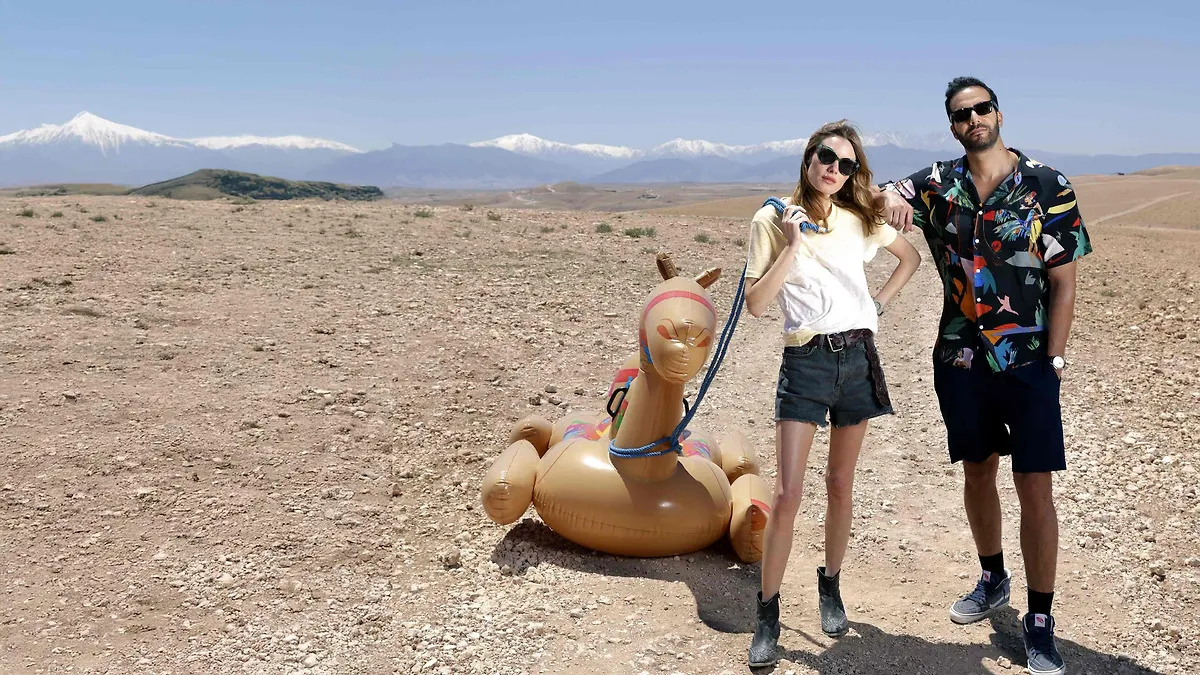

An Endless Wedding frames human connection through a supernatural trap that turns a wedding day into a repeating system. Louna, a cynical guest at her sister’s Moroccan wedding, lands in an impossible situation. She feels out of place among cheering guests and the luxury of a remote hotel. She crosses paths with Paul, another attendee who looks bored by the event.
They try to escape the noise and wander into a cave, where a mysterious light changes their lives. Louna wakes the next morning and realizes the day is repeating. She hears the same songs and sees the same faces every time she opens her eyes.
Paul reveals that he has been in this cycle for thousands of iterations. The film keeps its attention on the shared existence of these two people. The arid Moroccan desert creates a sense of total isolation from the rest of the world, pushing the characters from initial despair toward a search for meaning inside their recurring hours.
The Architecture of a Moroccan Loop
This time loop runs on the tension between a chaotic celebration and the stillness of the desert. Each morning arrives with the same sensory triggers. Louna hears the discordant notes of her sister’s rehearsed song and watches the father of the bride question Paul’s presence for the thousandth time. The supernatural element comes from the cave incident, where that strange light binds the characters to this specific day.
Paul has learned the rules of this reality and uses his knowledge in small, practical ways. He can win the lottery. He can befriend wait staff who never remember him. Louna, newly trapped, has to face the shock of repetition before she can do anything with it, and the film treats that adjustment as part of the story’s emotional engine.
Traditional Moroccan decor and ululating dances give the hotel a rich texture that starts to feel claustrophobic as the day resets. Hakim, a man with a crossbow, adds a thread of tension that cuts into the comedy. The desert environment works as both resort and mental prison, forcing the characters to relive the same faces and conversations until the landscape itself feels tied to their entrapment. The sun rises over the dunes and sets behind the hotel in a circle that offers no escape.
Redefining the Cynical Archetype
Camille Rowe brings grounded vulnerability to Louna. She begins from a place of coldness and gradually shifts as the loop’s reality sinks in. Rowe portrays a woman who uses alcohol and poor romantic choices as a shield against her family. Repetition wears that shield down, and her move toward seeking a genuine connection feels earned because it happens through slow erosion, reset after reset.

Tarek Boudali takes a different lane from his usual high energy comedy roles. His Paul is shaped by deep existential weariness, and his jaded humor suggests he has seen every possible version of this wedding day. His familiarity with the loop comes through in how he moves through scenes, speaking like someone who already knows what is coming.
Rowe and Boudali build chemistry out of shared exhaustion with the world around them. Supporting players, including Bertrand Usclat as the groom and Claire Chust as the tone-deaf fiancée, fill the hotel with frantic energy, yet the performances stay restrained. That restraint keeps the focus on Louna and Paul as they handle their strange, shared fate. Louna’s specific traits, from drinking like a fish to her history with unavailable men, keep her flawed and recognizable.
Finding Meaning in Repetition
The humor leans toward whimsy and the absurd, keeping a lighter touch than the cruder jokes used in some other time loop films. Each iteration still feels distinct because the editing follows the emotional state of the leads. The reset becomes a way to track how their feelings change, even when the schedule stays fixed.
The structure opens questions about the value of routine and the strain of living in a present that has no future. Paul argues that nothing matters except the current moment. The film presses on that idea by asking what happiness looks like without the risk of change. The loop locks the day in place, so any growth has to come from how the characters respond to it.
Moral complexity hangs over Louna’s actions before the loop began. She wakes up every day after having slept with her sister’s husband-to-be, and repetition forces her to face that choice again and again. The narrative treats love as a choice about who you are willing to endure eternity with. By balancing lighthearted wedding festivities with the despair of being trapped, the story shifts attention from escape to the quality of time spent inside the loop. The characters learn that change has to come from within because their external world stays frozen in place.
Technical Precision and Cultural Adaptation
Patrick Cassir keeps a brisk pace and makes the 80-minute runtime feel dense and purposeful. Yannick Ressigeac’s cinematography carries much of the film’s atmosphere. Wide shots of the desert expanse create scale, and natural lighting emphasizes the heat and the hotel’s isolation. Editing by Riwanon Le Beller and Gopal Puntos becomes the technical engine that keeps repetition readable, shaping scenes so the narrative continues to feel like it is moving forward even as the clock resets.
The soundtrack stays subtle, mirroring the internal shifts of the characters without becoming intrusive. The dialogue can feel occasionally detached, reflecting the disorienting nature of a life measured in resets. The film plays as a cultural reimagining of a familiar trope, using the specific beauty of Morocco to ground the fantastical elements. Specific directorial choices and a strong sense of atmosphere help the concept feel refreshed. The desert functions as a character that defines the limits of their world and the depth of their psychological transformation.
An Endless Wedding premiered on Prime Video on May 30, 2025. This French romantic comedy serves as a reimagining of the time-loop concept, following two wedding guests who find themselves reliving the same ceremony in Morocco. You can currently stream the film exclusively on the Prime Video platform.
Full Credits
Title: An Endless Wedding (Un mariage sans fin)
Distributor: Prime Video
Release date: May 30, 2025
Rating: 15
Running time: 80 minutes
Director: Patrick Cassir
Writers: Patrick Cassir, Jim Birmant, Andy Siara, Max Barbakow
Producers and Executive Producers: Antoine Gandaubert, Antoine Rein, Priscilla Siney, Nathalie Toulza Madar, Emilie Pegurier
Cast: Tarek Boudali, Camille Rowe, Bertrand Usclat, Youssef Hadji, Claire Chust, Marie Papillon, Nicolas Berno
Director of Photography (Cinematographer): Yannick Ressigeac
Editors: Riwanon Le Beller, Gopal Puntos
Composer: Low Entertainment
The Review
An Endless Wedding
An Endless Wedding is a thoughtful reimagining of the time loop subgenre that trades crude humor for atmospheric depth. While the premise is familiar, the Moroccan setting and the grounded performances by Camille Rowe and Tarek Boudali offer a refreshing perspective on human stagnation. It succeeds as a character study of two disillusioned souls finding purpose in a world without a tomorrow. Though it lacks the explosive laughs of its predecessors, its brisk pacing and sincerity make it a worthwhile watch for those who appreciate a more romantic, whimsical approach to supernatural storytelling.
PROS
- Strong chemistry between the lead actors Camille Rowe and Tarek Boudali.
- Beautiful cinematography that utilizes the Moroccan desert to highlight isolation.
- Brisk 80-minute runtime ensures the story never feels stagnant.
- A mature, less carnal take on the romantic comedy genre.
CONS
- The core narrative beats feel very similar to previous time loop films.
- A lack of high-stakes comedy for viewers expecting a laugh-out-loud experience.
- Some supporting characters remain underdeveloped due to the short duration.