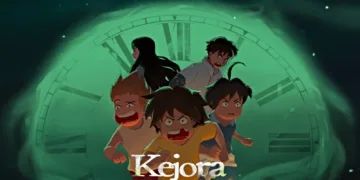
























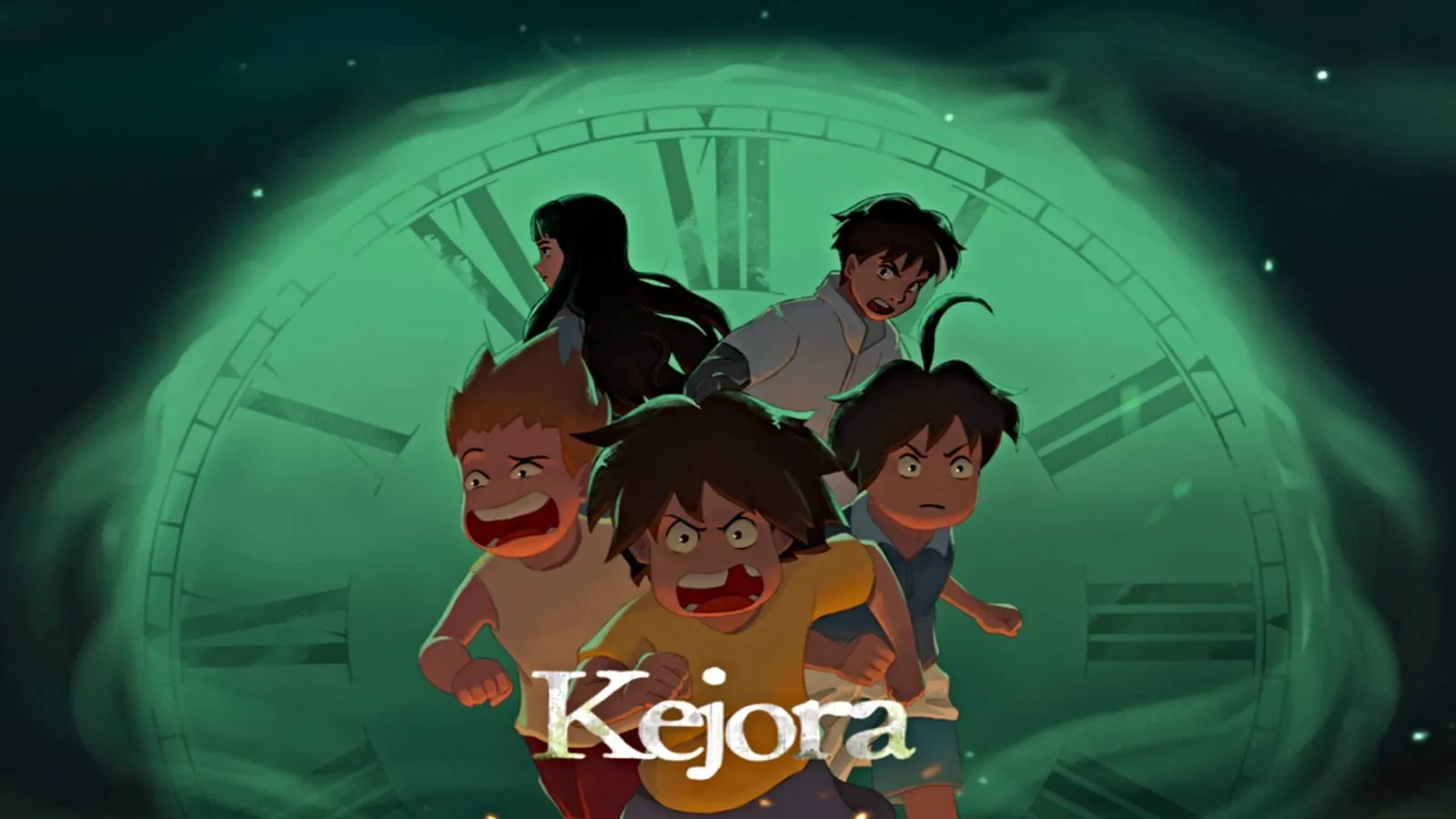

Mid-1990s rural Indonesia starts out calm, then time fractures. Kejora lives with her mother, who deals with a persistent illness. They talk about traveling to a city doctor. The trip never comes. Each sunrise resets the day: the same breakfast, the same walk to the rice fields, the same familiar exchanges with Jaka and Guntur. Small changes creep in. The children hear the music drop an octave.
Blood appears on the trees. The village stays trapped in a repeating day, and the calendar outside that loop has reached 2024. As the pattern becomes impossible to ignore, the mood turns from childhood curiosity into something heavier. The experience runs about four hours, with much of that time spent feeling the weight of a community held in place while everything beyond it keeps moving forward.
Adhitya fills the role of a guide toward what is true, nudging Kejora closer to an explanation. The opening hours move the player through a bright, friendly tutorial rhythm, then shift into a more suspenseful hunt for the source of the magic that is holding the village in place. The story keeps returning to the same core pressure: what happens to people when the future gets taken away from them, and the days stop adding up.
Visual Style and Static Environments
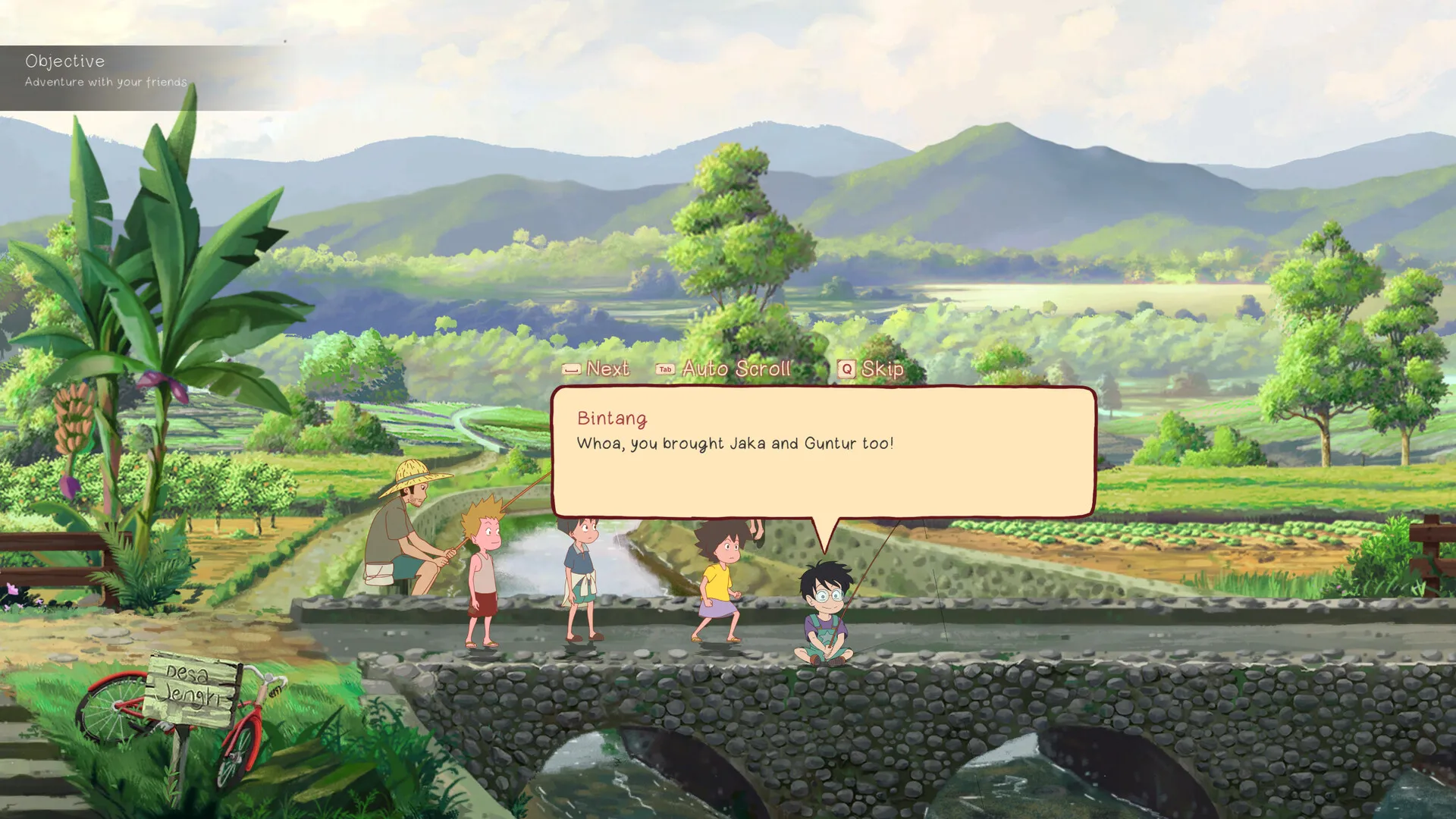
The project’s visual identity leans on the hand-painted warmth associated with Studio Ghibli. Backgrounds present rural spaces with the careful detail of a classic picture book, making each rice field and village home read like a still frame from an 80s or 90s anime. Cutscenes mark a clear change in presentation, with higher frame rates and smoother character movement.
During active play, the sprites drop to a lower resolution to keep performance steady. The jump is noticeable. The shared art direction still keeps locations feeling cohesive, even as the setting shifts from sunlit village streets to darker forests and abandoned mines.
Dark areas introduce a practical problem that undercuts that beautiful work. Some stretches are so dim that it becomes hard to separate floor edges from background art. Black textures sit on top of slightly darker black textures, turning navigation into trial and error as the player tries to spot paths or items.
The soundscape follows a restrained approach. A piano-and-strings score supplies a gentle base that grows heavier in tense moments. Ambient sound feels thin in key places. The village lacks the kind of environmental texture many narrative adventures rely on, like wind through trees or birds in the distance. The woods carry the same emptiness, with no footsteps or leaf rustle to sell movement through space.
Animation issues add to that sense of disconnect. At times, Kejora’s motions do not match the surfaces around her. She can appear to climb without making contact with a ledge, with her hands floating where a platform edge should be. These gaps in lighting clarity, ambient audio, and animation feedback keep the world from landing as fully lived-in as the backgrounds suggest.
Collaborative Puzzles and Linear Constraints
Mechanically, the game sits in familiar territory for the genre, using point-and-click logic inside a 2D space. The player gathers items and applies them to environmental problems. Puzzle solutions usually come down to finding a key item or the right tool to open a route forward, which will feel recognizable to anyone who has played a straightforward adventure built around inventory use and gated progression.
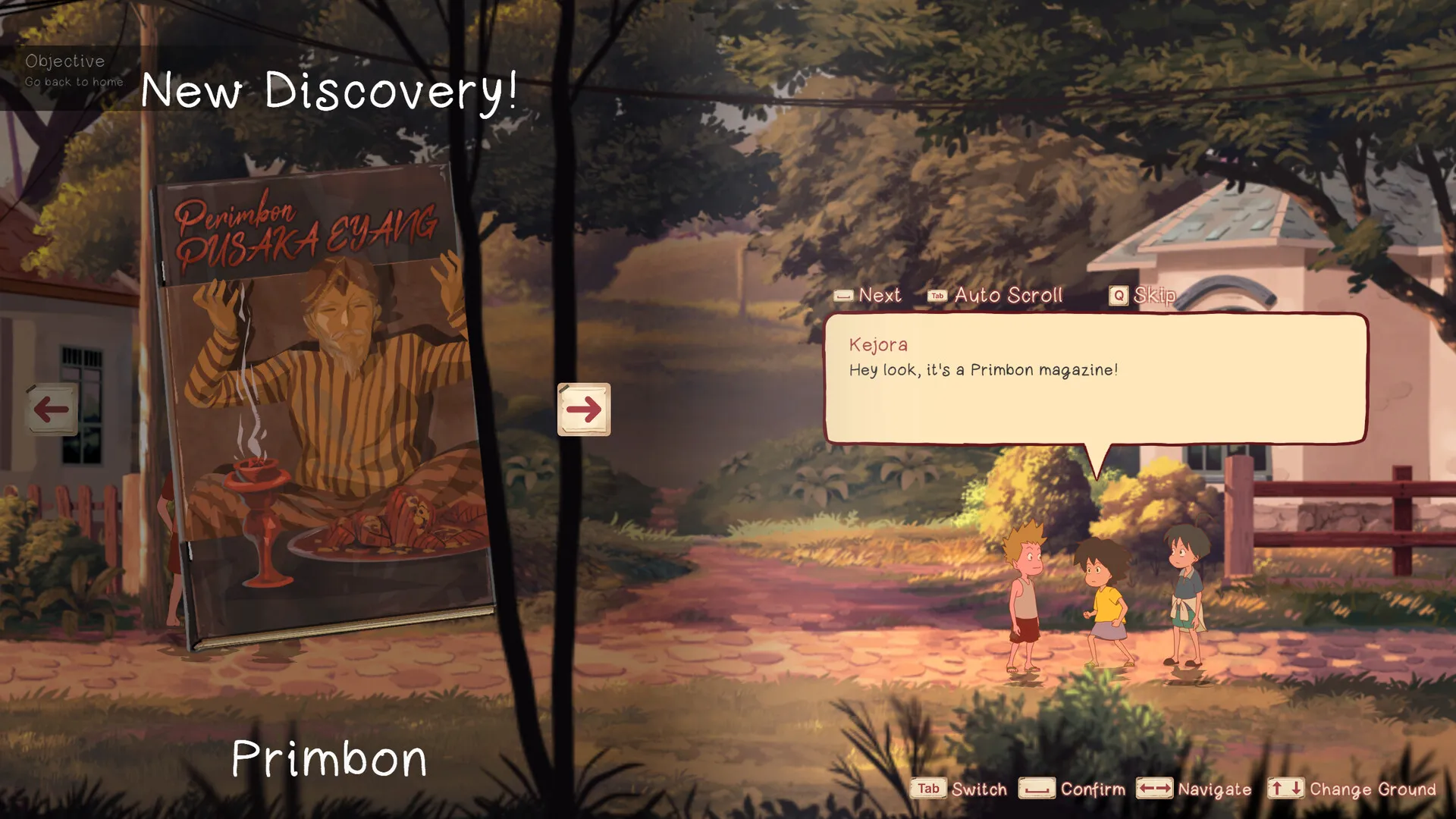
One design choice shapes the pace more than the puzzle logic itself. Kejora can carry only one item at a time. When a puzzle needs multiple parts, the player ends up walking back and forth across the same screen repeatedly to shuttle components one by one. The result stretches moments that could have stayed brisk, and it can read like padding during a story that already has a fixed, linear spine.
To add variety, the game builds in a companion system tied to Jaka and Guntur. Each friend covers a specific set of interactions. Jaka can throw rocks at objects positioned high above Kejora and can shift heavy crates. Guntur supports movement and force-based obstacles, giving Kejora a boost to reach higher ledges and breaking through wooden barriers with punches. These abilities create a cleaner division of labor than a single-character toolkit, and they offer a simple way to change how the player approaches the same kind of locked-path problem.
That system comes with friction through how it is activated. Bringing a companion into play requires opening a menu and summoning them to Kejora’s location through a teleportation feature. The interaction feels awkward in practice because it asks for exact positioning before an action will trigger. If Kejora stands a step too far from a ledge, Guntur will not lift her. The same strictness shows up across other sequences.
Stealth sections ask the player to crouch behind bushes to avoid tall, inky monsters that drift slowly through the space. Their movement patterns are easy to read, and their speed keeps the pressure low. A fishing mini-game shows up as a short diversion, giving a brief change of rhythm inside the otherwise linear forward push.
The supernatural time loop stays primarily in the narrative lane. The story uses it to set tone and stakes, yet the puzzles rarely treat the loop or the strange symptoms of the village as tools for gameplay logic. The result is a split where the themes carry the plot momentum, and the puzzle structure stays grounded in standard item-and-companion interactions.
Interface Friction and Tactical Delays
A constant layer of friction comes from performance issues and interface decisions. The game relies on auto-save and offers no manual saving option. The interface provides no save icon and no clear notification to confirm when progress has been recorded. Quitting can feel like a gamble because the player has no reliable way to verify what the game captured. In a narrative-driven experience that invites long stretches of reading and quiet exploration, that uncertainty creates anxiety around stopping, especially when a player needs to step away quickly.
Controls add another problem through responsiveness. After many actions, there is a small delay that locks out immediate movement or character switching. In slower puzzle scenes, that pause reads as irritation. In sequences that demand quick reactions, it becomes a mechanical obstacle.
That timing becomes most damaging in the final boss encounter. Winning requires quick movement and active coordination with Jaka and Guntur. Companions remain where they are summoned. If the boss targets the area where Jaka is standing, the player has to switch to him and move, or summon him to a safer spot. The summoning process moves too slowly for the speed this fight expects, and Jaka often ends up getting hit or crushed in the scramble. The encounter feels under-tested next to the calmer, methodical pacing of earlier puzzles.
Dialogue presentation adds to the same strain. Cutscenes and conversations cannot be skipped. A death during a sequence means sitting through the same lengthy text again before getting another attempt. Visual navigation problems also persist deeper into the game.
Background art can hide exits so effectively that a player may stand in front of what looks like a simple stretch of road for minutes, unaware it functions as an interactable path forward. These usability problems keep interrupting the flow, and they repeatedly pull attention away from the story’s strongest hook: the slow, unsettling realization that time has moved on without this village.
The Review
Kejora
Kejora succeeds as a visual experience while struggling as a functional game. The hand-painted world and time loop narrative offer a strong emotional hook. Technical flaws hinder the enjoyment. Clunky companion controls and silent environments create a disconnect between the beauty on screen and the player's frustration. The short length keeps the repetition from becoming unbearable. It remains a beautiful but flawed debut. Players who value art and atmosphere will find this experience worthwhile. The mechanical friction and lighting issues remain present throughout the adventure.
PROS
- Beautiful hand-painted art
- Strong time loop narrative
- Emotional character development
- Relaxing instrumental score
CONS
- Clunky teleportation mechanics
- Frustratingly dark lighting
- Lack of ambient sound
- Unskippable dialogue scenes