





























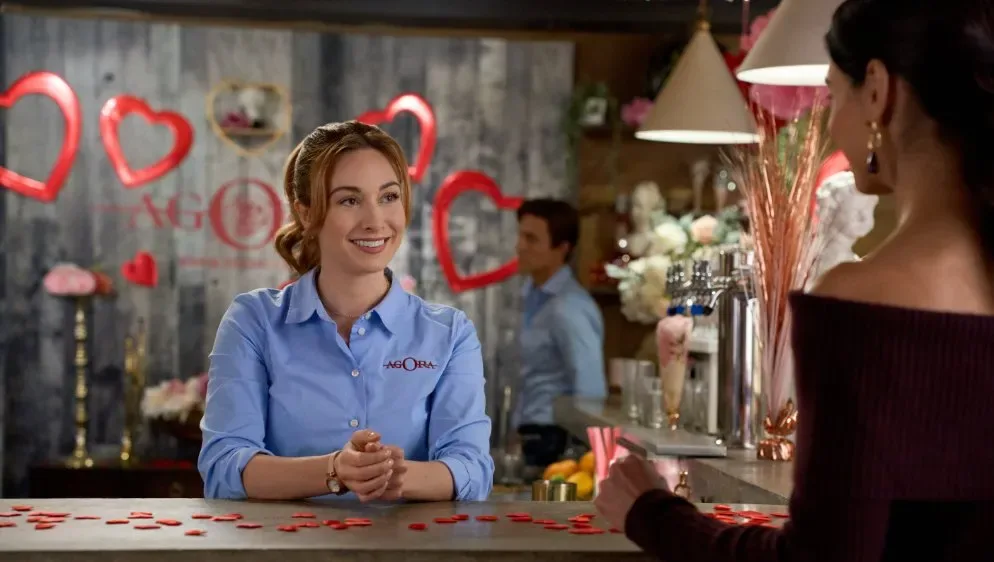

“Because of Cupid” sets its romance in the biting cold of Buffalo, New York, using the city’s snow and sharp air as a clean frame for a story about keeping your footing at work. Naomi and Marcus anchor the film as a tightly coordinated duo at the Agora wine bar, a partnership that fits the “work spouse” shorthand familiar in modern urban cinema.
Trouble arrives when their boss, Lisa, gets ready to sell the business, putting their stability at risk along with a shared dream of one day owning the place themselves. They pin that future on a high-stakes Valentine’s Day mocktail competition, where a win promises money and the kind of local credibility that could help them secure the venue.
Their preparation brings Hal into their orbit, a mysterious patron who offers Naomi a special elixir for her menu. The moment plays like the entrance of a sutradhar, a divine messenger figure in classical Indian drama, the kind of presence that signals a turn from everyday routine into something charged with myth. The competition becomes the engine for their ambition and the pressure test for their bond, tightening the space where career goals and long-suppressed personal feelings start to collide.
Archetypal Friction: The Chemist and the Retriever
The film leans hard on the specific spark between Naomi and Marcus, and it gives each of them a clear governing logic. Naomi has a biochemistry background, and she approaches life through empirical proof. Romance, for her, triggers skepticism; she keeps faith in logic and measurable outcomes. That characterization gives her a steadier footing than many genre heroines who drift through love stories on impulse.
Marcus works as her emotional counterweight. The script describes him as having the spirit of two golden retrievers in a trench coat, and it plays out in how open, warm, and readable he is. He carries deep feelings that stay unspoken because protecting the friendship feels safer than risking it.
The push and pull fits the familiar “friends to lovers” track in Hollywood romance, while the emphasis on lived-in companionship and daily labor also recalls the grounded relationship storytelling associated with parallel Indian cinema. Their scenes together suggest years of shared rhythm: quick communication, practiced teamwork, and a comfort that makes the bar feel like a second home.
Uncle Richard enters as the mentor who refuses to let Marcus hide behind habit. He offers a blunt older perspective that nudges Marcus toward action, adding a layer of familial accountability and the authority of experience. His presence helps Naomi and Marcus face what the sale means in practical terms, and it also forces Marcus to name what he has been avoiding. The screenplay builds tension from their differing worldviews, and it keeps those differences tied to who they are, not to a checklist of romantic comedy beats.
Mythic Intervention and Chemical Chaos
The story tips into full chaos when Naomi, without realizing it, pours Hal’s elixir into a large batch of drinks at a singles mixer. The elixir functions as a powerful love potion, and the reactions hit fast. Guests fall into sudden, intense romantic urges, and the film uses a roster of secondary pairings to show how attraction can flare across social lines.

A yoga instructor connects with a competition sponsor. A restaurant owner finds herself drawn to a fantasy novelist. These side stories land as comic release, and they also underline the potion’s effect on inhibition, turning polite distance into impulsive confession.
Marcus drinks it too, and his shift is immediate: he drops his usual caution and declares his love for Naomi in public. That moment becomes the film’s key rupture. Naomi hears his confession and suspects chemistry, not sincerity; she treats his words as a symptom of the cocktail and refuses to accept them as truth. The emotional problem is simple and sharp: a profession built on precision has left Naomi wary of anything that cannot be verified, and now her closest partner is offering the one thing she cannot test in a lab.
Naomi and Marcus go looking for Hal, and they learn their benefactor is Cupid from myth. The quest turns practical as well as emotional, because they need an antidote before people make irreversible choices under the potion’s spell.
The stakes widen as some newly paired couples begin planning dramatic life changes, including moves to far-off places like Costa Rica. The ticking-clock structure gives the film urgency and asks the characters to separate manufactured intensity from earned connection, even while their own relationship sits under a microscope Naomi cannot stop adjusting.
Literary Allusion and Visual Sentiment
The film pulls from the myth of Eros and Psyche, using that ancient template to speak to modern fear around intimacy. The mythic framing keeps returning in small gestures, including a playful homage to the pottery scene from Ghost. The reference lightens the tone and keeps the magic from turning ponderous, letting the romance stay airy while the plot still carries consequence.
The climax lands at a wedding, where Naomi sings a song for Marcus. The performance works as a public declaration of feeling and marks a real shift in her behavior: the woman defined by analysis steps into vulnerability in front of an audience.
The resolution rests on a twist tied to the placebo effect. The potion needs both partners to drink it for the magic to take hold. Naomi never drank it, so the spell never applied to her and Marcus. The reveal reframes their story in plain terms: what they feel comes from themselves, not from Hal’s chemistry.
The visuals support that movement from guardedness to openness. Saturated reds and pinks fill the frame, and the décor builds a cozy, festive atmosphere that reinforces the holiday setting. That warmth plays against Buffalo’s icy exterior, keeping the romance bright even while the world outside stays frozen.
Whimsy and professional anxiety run side by side, and the film keeps returning to one central challenge: finding the nerve to choose love while everything else, including your job and your future, feels unstable.
Because of Cupid premiered as a centerpiece of the 2026 “Loveuary” lineup on the Hallmark Channel on February 14, 2026. This whimsical romantic comedy follows best friends and bartenders Naomi and Marcus as they enter a high-stakes mocktail competition to save their beloved local bar. The story takes a magical turn when a literal love potion, gifted by a mysterious customer who is actually Cupid in disguise, causes chaos among the contestants and forces the leads to confront their true feelings. Viewers can currently stream the film exclusively on Hallmark+ or catch encore presentations on the Hallmark Channel.
Full Credits
Title: Because of Cupid
Distributor: Hallmark Channel, Hallmark+
Release date: February 14, 2026
Rating: TV-G
Running time: 84 minutes
Director: Liz Farrer
Writers: Amy Meyerson, Kevin Duda
Producers and Executive Producers: Jordana Aarons, Vanessa Aprile-Wefle, Klaudia Rekas, Vinuja Shanthasoruban, Suzanne Berger, Kevin Duda, Mitch Geddes, Larry Grimaldi, Hannah Pillemer, Ashley Squires, Fernando Szew, Arnie Zipursky, Dayna Zipursky
Cast: Amy Groening, Evan Roderick, Tennille Read, Richard Waugh, Adam Tsekhman, Sarah Booth, Jonathan Maxwell Silver, Miguel Rivas, Sanda Flores
Director of Photography (Cinematographer): Kam Sylvestre
The Review
Because of Cupid
Because of Cupid offers a refreshing departure from standard romantic tropes by integrating whimsical mythology with a grounded professional struggle. The film relies on the genuine connection between Amy Groening and Evan Roderick to make its magical premise believable. It balances comedic subplots with a sincere exploration of vulnerability. While the pacing occasionally slows, the overall execution remains charming and heartening. This movie serves as an ideal choice for viewers seeking a lighthearted yet emotionally resonant story.
PROS
- Authentic and comfortable chemistry between the lead actors.
- Creative integration of the Eros and Psyche myth into a modern setting.
- Delightful ensemble cast that provides consistent comedic relief.
- Cozy visual atmosphere that captures the essence of a Buffalo winter.
CONS
- Narrative beats remain fairly predictable within the Hallmark framework.
- Pacing occasionally lulls during the middle act.
- Magical elements may feel too whimsical for viewers preferring strict realism.