























![Kingdom Hearts Collection [I-III] Review](https://gazettely.com/wp-content/uploads/2026/10/Kingdom-Hearts-Collection-I-III-1-360x180.webp "Kingdom Hearts Collection [I-III] Review: KHII Holds Steady as Newer Entries Fluctuate 37")



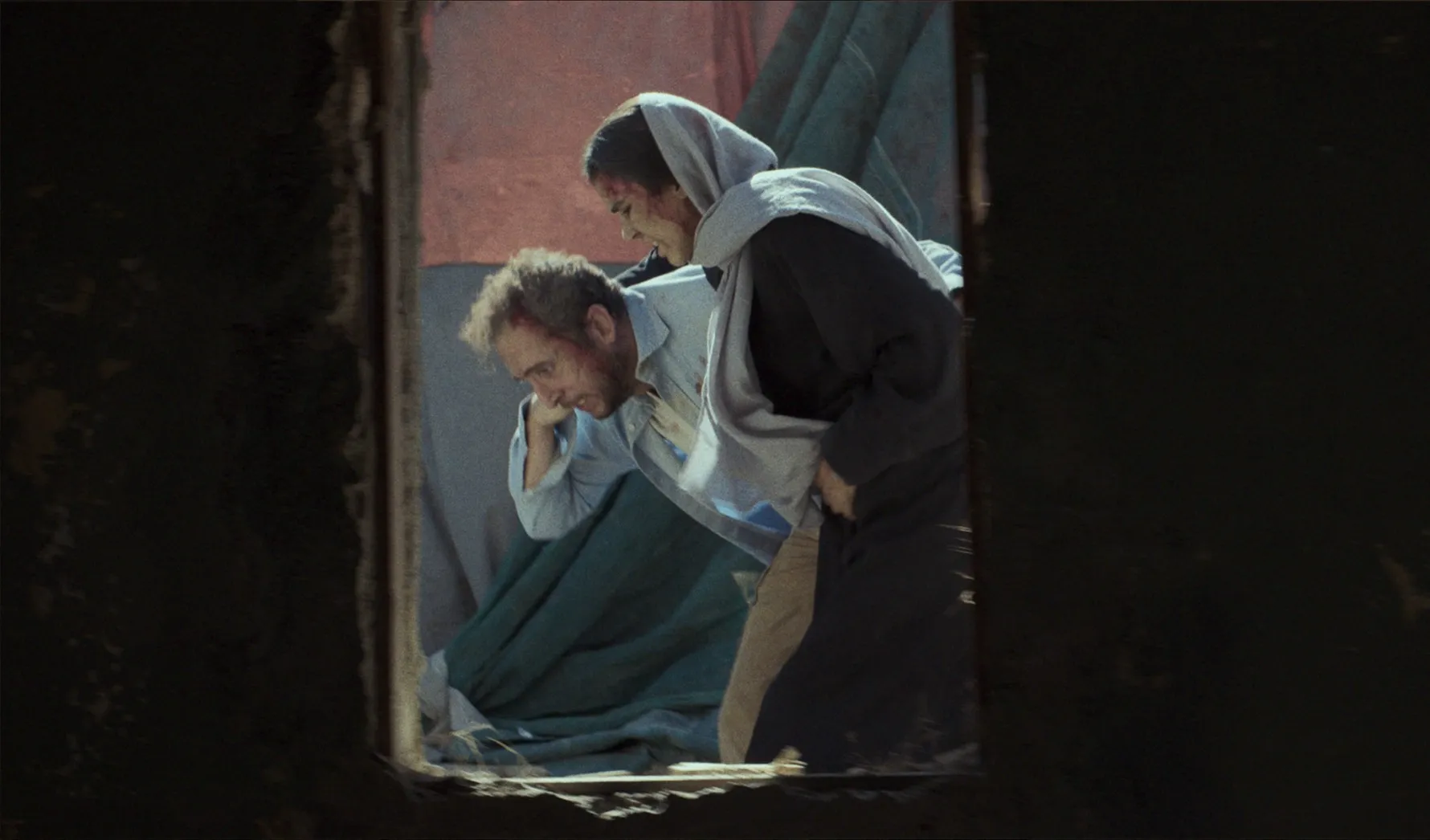

Abdallah Alkhatib shifts from the documentary rigor of Little Palestine to the narrative looseness of Chronicles From the Siege. His first dramatic feature refuses to pin itself to one city and works with a composite reality. The rubble reads as Gaza, Beirut, and the Yarmouk refugee camp at once. That geographic smearing turns a specific catastrophe into a meditation on the Palestinian diaspora and the way displacement compresses places into one continuous emergency.
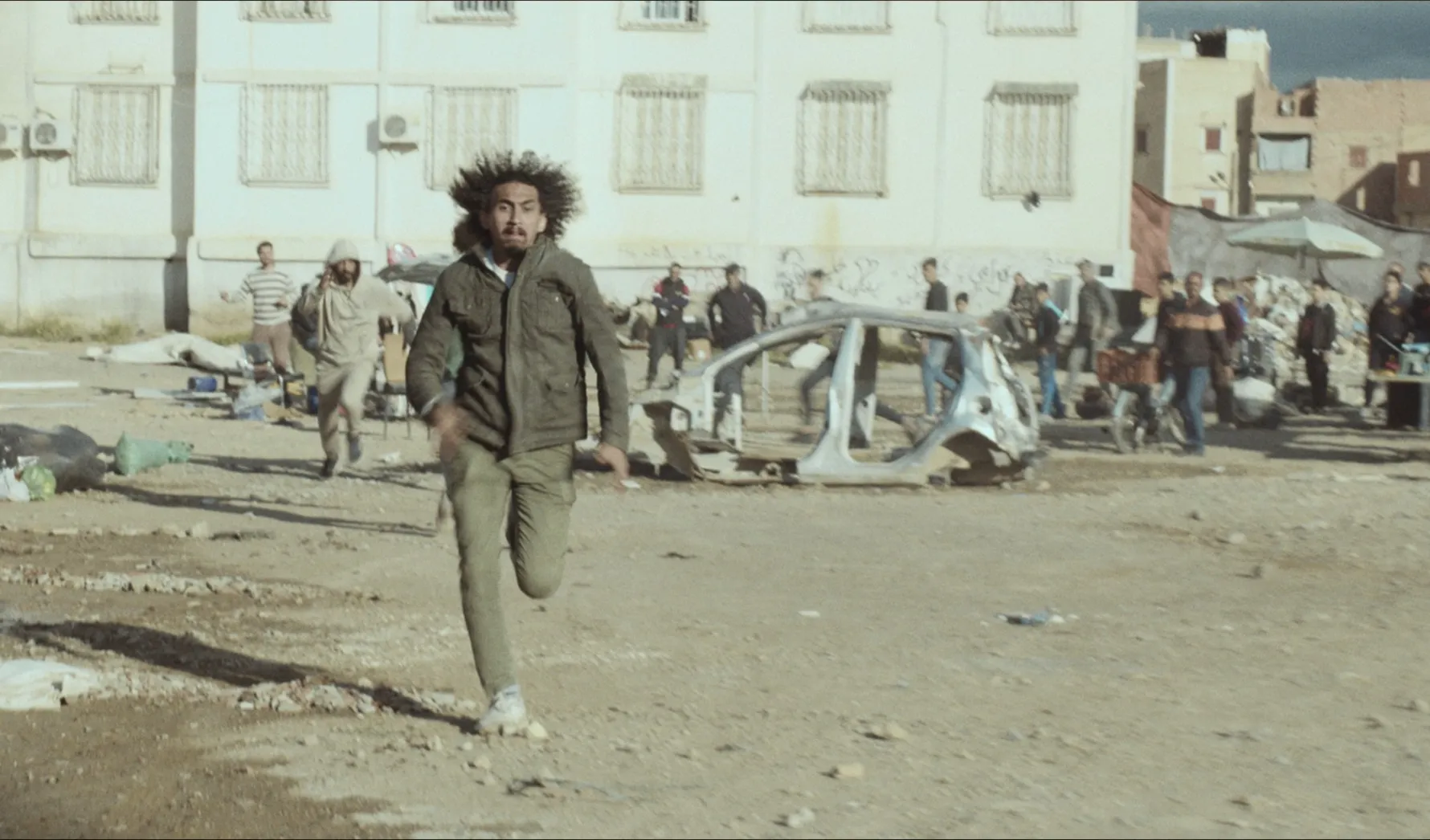
The film begins with grainy handheld images: a crowd lunging for ration packages thrown from a truck. The look is rough, immediate, and bodily. It plays like a survival reflex captured by a sensor. A camcorder hangs over the film like a metronome with mortality. It starts fully charged and drains as the story advances.
The device carries a blunt reminder: documentation runs out. People watch through lenses, then the power cuts. Alkhatib leans on this “chronodigital” decay to plant the film in a realism that keeps scraping at the viewer’s comfort.
Survival and the Farcical Mundane
War films can sink into a single-note misery. Alkhatib goes searching for the absurdity of the “siege-scape,” and he builds a portrait of what I’d call “ordinary longing.” The need for tiny comforts becomes frantic, embarrassing, and frequently funny in the middle of destruction.
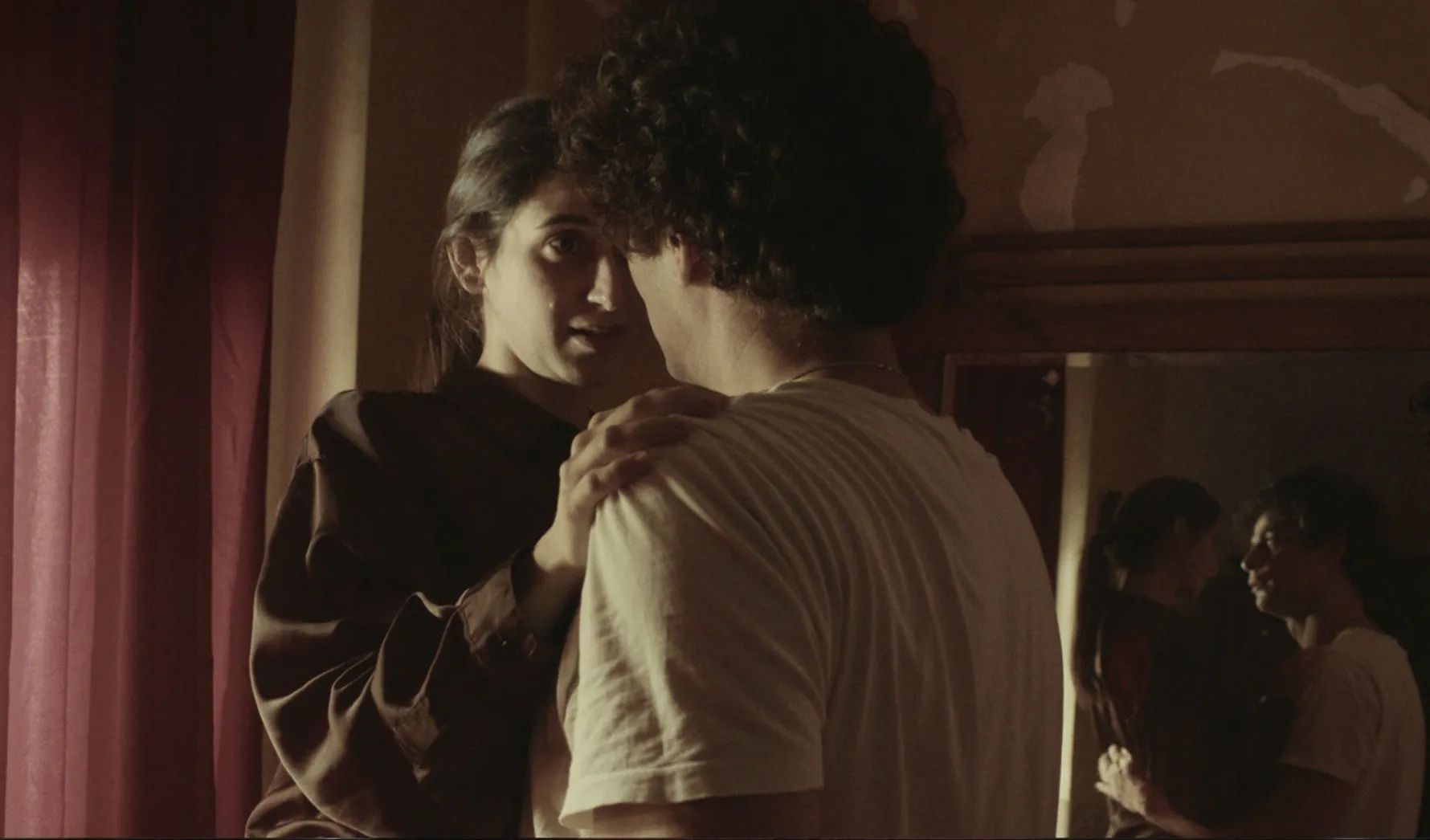
Fares and Huda try to carve out a sexual tryst and end up trapped in slapstick logistics. Their attempt keeps getting derailed by blood-donation calls and neighbors hunting for food. It plays as a sex comedy staged in a graveyard, which is a sentence that should not exist, yet the film makes it feel grimly coherent.
That levity matters. It returns human scale to people who too often get filed away as numbers. Comedy works here as psychological armor, a way to keep the mind from collapsing under daily alarm bells. Walid’s vignette carries the same logic in a different key.
He drags a heavy refrigerator through streets choked with debris. Money holds no appeal to him. He wants a single puff of a cigarette from a local smuggler. Alkhatib even slips in as a thief for a cameo, a small jab of self-critique (directors do make a living stealing private moments and selling them back with nicer lighting). The episode sketches a hunger-born “hustle culture” and lands on a cold principle: morality depends on calories.
Burning the Archive for Warmth
The film’s intellectual pressure point sits inside the husk of an abandoned video store. A circle of young friends shelters among posters of Chaplin and Truffaut, surrounded by relics of movie history that suddenly have a second purpose.
They face a brutal choice between keeping film culture intact and feeding it to a fire so their bodies can keep producing heat. The scene is dense with cinephile irony. They argue about classics while eyeing them as tinder, turning film talk into a survival calculation.
The sequence pushes a question about art under active genocide without dressing it up as a classroom exercise. Cinema offers memory, witness, and language. It also burns. The story makes that exchange literal: warmth arrives through destruction. Arafat, the former filmmaker and video-store owner, drifts through these passages like a living phantom.
He embodies a psyche shredded by the systematic erasure of cultural memory. A poster for The 400 Blows gets torn down so the wall can be repurposed, and the image stings as metaphor in motion. Cinema can record struggle, then still lose its footing against the blunt force of a blitz.
Static Shrines in the Chaos
Visually, the film commits to a “lo-fi” grammar. Digital noise and dim light echo the mental haze of living under constant fire. Time itself behaves like damaged equipment. Clocks appear again and again with their hands fixed at 7:30, as if history has jammed in place for people trapped under siege.
The film tightens toward a final, visceral sequence in a depleted hospital. Alkhatib uses long takes that hold too long and handheld movement that refuses stability. The camera stops feeling like an observer and starts acting like one more panicked body in the room.
Doctors draw blood from the recently dead to keep the living going. The sequence is punishing, close to unbearable, and the horror comes from procedure, not spectacle. Then the film pivots into something startlingly still: the frenzy gives way to an elegant, static tableau. That final image creates a pocket of silence and insists on a different way of looking. The survivors register as people with an inherent right to exist, with dignity that persists even after the noise has done its worst. The film travels from the crackle of survival into the quiet weight of presence.
Chronicles From the Siege made its world premiere in the Perspectives section of the 76th Berlin International Film Festival on February 15, 2026. This feature fiction debut from filmmaker Abdallah Alkhatib is currently completing its festival run and is expected to be picked up for wider digital and theatrical distribution through Loco Films later this year.
Full Credits
Title: Chronicles From the Siege
Distributor: Loco Films, Issaad Film Productions
Release date: February 15, 2026
Running time: 98 minutes
Director: Abdallah Alkhatib
Writers: Abdallah Alkhatib
Producers and Executive Producers: Taqiyeddine Issaad, Salah Issaad, Sofiane Zermani
Cast: Nadeem Rimawi, Saja Kilani, Ahmad Kontar, Samer Bisharat, Ahmed Zitouni, Wassim Fedriche, Idir Benaibouche, Emad Azmi, Maria Zreik, Nour Seraj
Director of Photography (Cinematographer): Talal Khoury
Editors: Alex Bakri
Composer: Nicolas Montaigne
The Review
Chronicles From the Siege
Chronicles From the Siege is a startling act of cinematic resistance that refuses to flatten the Palestinian experience into a mere portrait of misery. By injecting farce and cinephilia into the heart of a blitz, Abdallah Alkhatib captures the "ordinary longing" that survives when infrastructure fails. While the vignette structure occasionally sacrifices emotional continuity for breadth, the film’s raw energy and moral complexity are undeniable. It is a vital, messy, and deeply human dispatch that finds dignity in the rubble.
PROS
- Masterful blending of harrowing war drama with dark, "farcical" comedy.
- Innovative use of a dying camcorder battery as a narrative pacing device.
- Deeply intellectual exploration of the utility of art during crisis.
- Visceral, high-stakes hospital finale captured in enrapturing long takes.
CONS
- Fragmented portmanteau structure can make it difficult to maintain a single emotional thread.
- The lo-fi, "noisy" digital aesthetic may be visually jarring for some viewers.
- Brief screen time for certain characters limits deep personal connection.