
















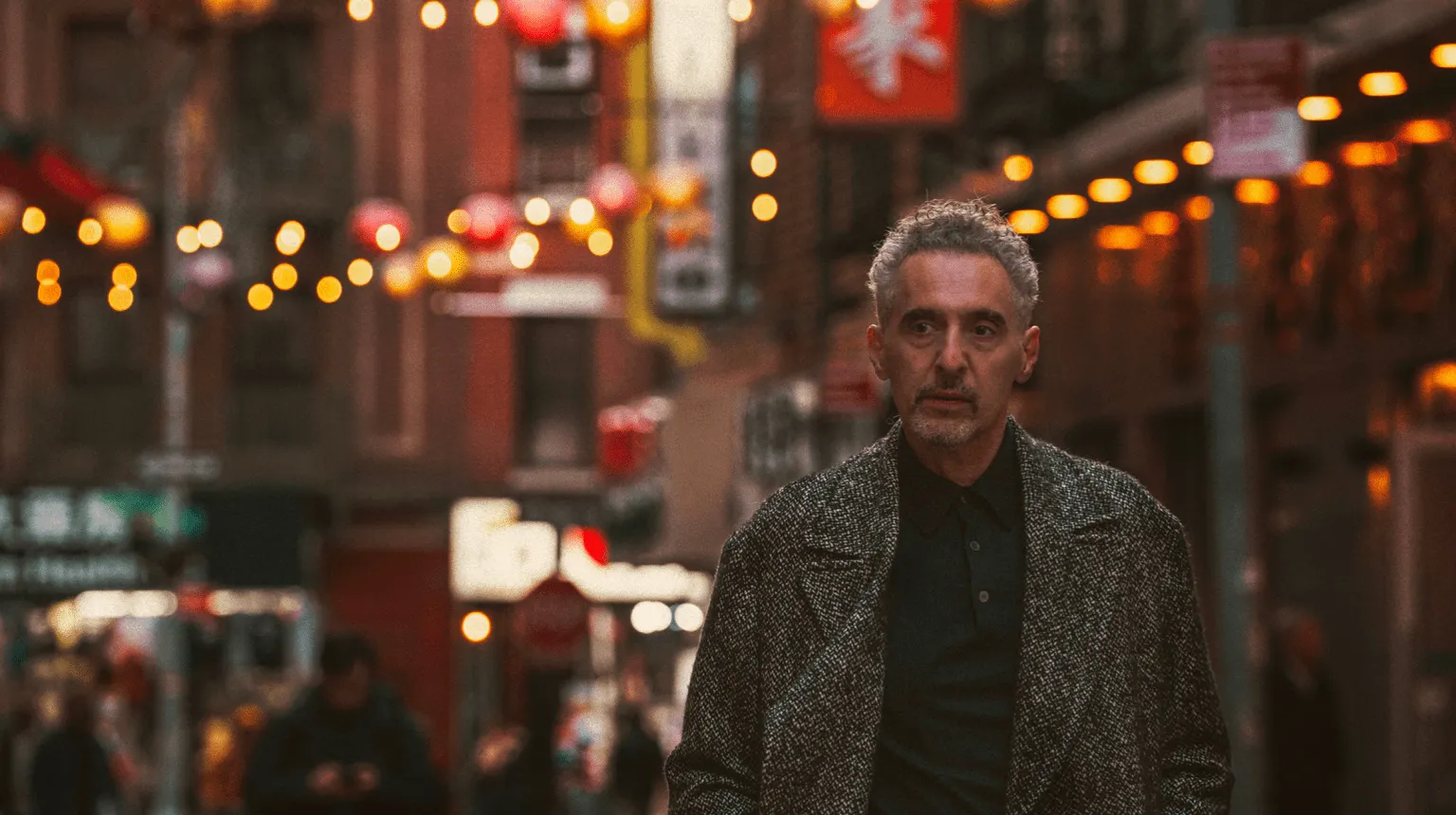

Noah Segan frames a grounded feature around Harry Lehman, a man keeping a disappearing craft alive. Harry is a veteran pickpocket in a city that swipes, taps, and scans far more often than it opens a leather wallet. He moves with quiet routine through subway crowds, staying alert to the constant watchfulness of a modern metropolis. His days revolve around caring for his disabled wife, Rosie, and that responsibility demands every dollar he can lift.
The plot catches fire when Harry accidentally takes a cryptocurrency USB drive from Dylan, the volatile heir of a criminal organization. That single mistake sets off a high-stakes hunt across the five boroughs. Harry has to get the device back before Dylan follows through on threats against Rosie.
The film holds to a melancholic mood, pairing the honest grit of the sidewalks with the sterile feel of a tech-heavy economy. It plays as a portrait of someone whose manual skill has become his last line of defense. By spreading the action through everyday locations, the production lands with an authentic texture, skipping postcard landmarks in favor of a street-level view.
Stillness and the Professional Uniform
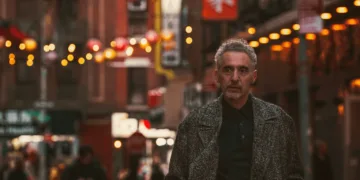
John Turturro gives Harry a striking technical clarity. He leans on physical stillness that suggests decades of street experience, then breaks it with movements that stay small, efficient, and purposeful. Harry’s Zegna overcoat reads like working gear rather than fashion, and its hidden pockets carry the same importance as his fingers.
A veteran supporting cast builds the sense of a long, worn-in history. Steve Buscemi plays Ben, a pawn shop owner who understands the codes of the older world, and their scenes play like two men speaking a shared language shaped by survival. Giancarlo Esposito shows up as Detective Warren, and the mutual respect between him and Harry points to a repeating pattern of arrest and release. The connection feels defined by professional limits and a kind of personal recognition that comes from years of crossing paths.
The film’s emotional weight rests on Harry’s time with Rosie, played by Karina Arroyave. Her nonverbal work sharpens Harry’s devotion, especially in moments where he brushes her hair and carries her up the stairs with steady tenderness. A brief encounter with his daughter, Kelly, played by Tatiana Maslany, opens a window onto older failures and regrets. Dylan, the antagonist, enters with a very different temperature. Will Price plays him with loud, erratic force, the kind of presence that disrupts a room. Putting Dylan’s chaos next to Harry’s controlled, near-invisible craft highlights the grace Harry brings to his illegal trade.
A Penny for an Encryption Key
The movie’s central conflict comes from the clash between a manual past and a digital present. Harry represents a world of tangible objects and learned touch. He uses a penny as a lock-picking tool, turning a simple piece of copper into a relic set against encrypted hardware. The script even pulls humor out of how far behind the old tools have fallen. There’s a scene where Ben tries to load a modern USB drive onto a desktop computer that looks like it belongs in a museum, and the machine cannot read the data at all.
That technological gap reflects the social shifts around them. New York appears increasingly sanitized for the wealthy, and the film shows how that clean, managed surface leaves working-class people like Harry and Ben behind. They come across as residents of a city that no longer has patience for their pace. Victoria Moroles plays Eve, a figure who connects generations. She belongs to a younger group that understands the digital world Harry fears, and she offers help without turning his lack of tech literacy into a punchline.
As the city moves toward cashless living, Harry’s expertise starts to look obsolete. People carry trackable cards and rely on phone apps. The crime family pressing in on him uses surveillance and crypto as tools of power, presenting a screen-driven kind of criminal operation that displaces the street rules Harry follows. Harry’s fight to keep Rosie safe reads as a response to a society that prizes speed and security, even as human touch slips further out of view.
The Grit of the Five Boroughs
The visual and sound design lock the story into a tough, lived-in register. Sam Levy’s cinematography reaches back to 1970s New York crime cinema, treating the city like a pressure cooker. I’m reminded of how older films let New York press in from every side, and Levy captures that unvarnished look across the Bronx, Queens, and Brooklyn. Walking through neighborhoods like these myself, I recognize the brick texture and that particular gray pavement that seems to hold the day’s grime in its pores.
The camera uses snap zooms that echo the quick, precise movements of a thief, and the effect creates real immediacy. Violence stays grounded, with the film building its pressure through suspense and tight plotting. That choice keeps the danger close to the characters instead of drifting into spectacle. Gary Lionelli’s jazz-funk score adds a driving pulse to the street scenes, like a heartbeat pushing Harry forward.
Harry also works by a code that keeps firearms out of his life. When he finds a gun during a haul, he throws it away, a small detail that reinforces his self-image as a tradesman. The film runs under 90 minutes, giving the story a lean pace that moves cleanly from beat to beat. In the final images, the harbor skyline avoids postcard shine and settles into something somber and real, a quiet farewell to a city that keeps changing shape.
The Only Living Pickpocket in New York is a sharp crime drama that premiered at the Sundance Film Festival on January 27, 2026. The film explores the life of a veteran thief in a city that is moving toward a completely cashless future. While the movie has gained immediate critical praise at Sundance and is scheduled to screen at the Berlin International Film Festival, it is currently limited to the festival circuit. A wide release date for theaters or streaming services has not been announced. Audiences can expect more information on where to watch the film once a major distributor secures the domestic rights later this year.
Full Credits
Title: The Only Living Pickpocket in New York
Distributor: MRC, T-Street Productions
Release date: January 27, 2026
Rating: R
Running time: 88 minutes
Director: Noah Segan
Writers: Noah Segan
Producers and Executive Producers: Leopold Hughes, Ben LeClair, Katie McNeill, Rian Johnson, Ram Bergman
Cast: John Turturro, Giancarlo Esposito, Tatiana Maslany, Steve Buscemi, Karina Arroyave, Victoria Moroles, Will Price, Jamie Lee Curtis, John Gallagher Jr., Lori Tan Chinn
Director of Photography (Cinematographer): Sam Levy
Editors: Hilda Rasula
Composer: Gary Lionelli
The Review
The Only Living Pickpocket In New York
Noah Segan delivers a soulful, street-level character study that prizes human connection over digital perfection. By focusing on the tactile reality of a fading trade, the film captures a side of New York rarely seen in modern cinema. John Turturro is captivating, anchoring the narrative with a performance defined by quiet dignity and physical grace. While the tech-based plot elements occasionally feel thin, the emotional weight of Harry’s devotion to Rosie provides a powerful resonance. It is a lean, rhythmic, and deeply felt tribute to the people and places that the modern world risks leaving behind.
PROS
- John Turturro delivers a masterful, understated performance.
- Authentic five-borough locations create a genuine sense of place.
- The 1970s-inspired jazz-funk score perfectly complements the street-level pacing.
- Strong supporting turns from Steve Buscemi and Giancarlo Esposito.
CONS
- The cryptocurrency plot points can feel a bit conventional.
- Some secondary characters lean toward being archetypes.