
























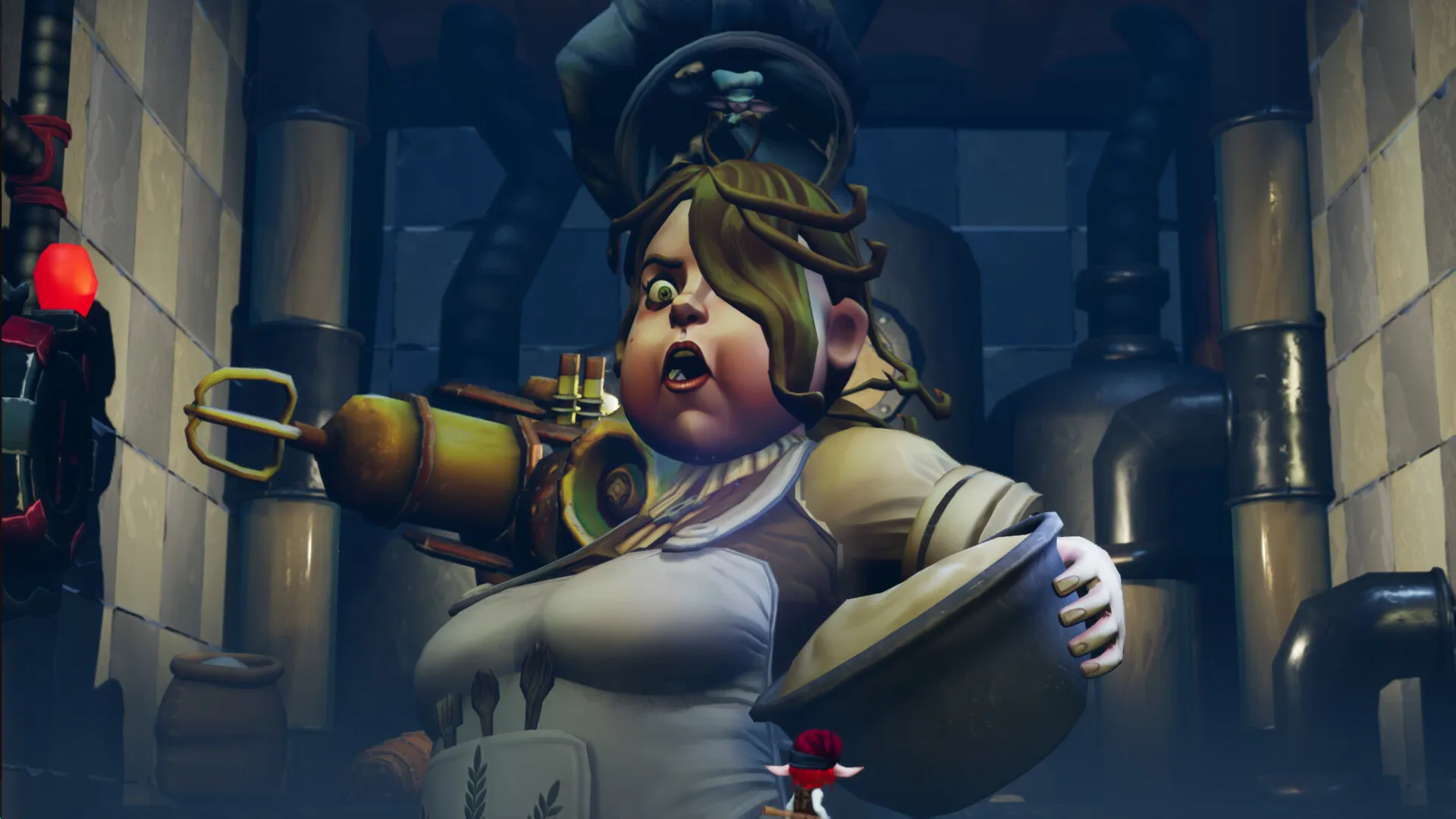

Vilamont rests in the Pyrenees, shaped by slow living and long-held traditions. That calm breaks apart with Llorenc’s arrival. He is driven by industry and carries a magical artifact called the Canut. With that power, he enslaves the Manairons, local spirits he forces into harsh labor to serve his plans for profit. You step into this setting as Nai, a small elf linked to you through a magical essence. After escaping a powerful spell, Nai sets out to free her family and return the village to its natural state.
The visual style commits to a miniature viewpoint. Everyday furniture, including chairs and tables, rises above Nai like huge structures. That scale shift turns a simple house into a large, threatening space. The effect carries the feel of classic stories built around small figures facing enormous obstacles. The stakes stay intimate because the player serves as Nai’s spiritual anchor. Her progress is tied to the survival of a culture under pressure from forced modernization.
The Song of the Flute
Nai engages with the world through a magical flute, and this instrument drives the core puzzle design. Learning specific melodies lets you activate machinery and alter the environment. Each song works only at certain points, so puzzle spaces stay focused and clearly framed.
Physical play uses melee attacks, projectile shots, and a blocking move. The block asks for exact positioning because Nai must face an attacker at a precise angle. A slight mistake in alignment still lets the enemy connect. Movement across levels includes jumping and vaulting, with a double jump for higher ledges. Climbing has weaker polish and can feel finicky during attempts to grab particular edges.
The developers add a smart visual aid for 3D movement by placing a shadow circle under Nai. It shows where she will land after a jump, which helps a lot with the fixed camera setup. Keyboard controls are available, though a gamepad makes the action feel much better during precise movement. Analog sticks give finer control over Nai’s momentum, and that extra control makes platforming inputs feel tighter and easier to trust.
Oversized Hazards and Hidden Secrets
The game’s best ideas come through its use of scale. Ordinary rooms turn into hazardous spaces because Nai is so small. A bakery sequence has you jumping across sponges to avoid hot ovens. Stove plates cast heat into the space and raise tension during movement. In the chicken coop, the threat changes shape. Huge hens dominate the path, and large metal traps wait on the ground. When those traps snap shut, they produce a loud sound that gives the area a sharp jolt of danger.
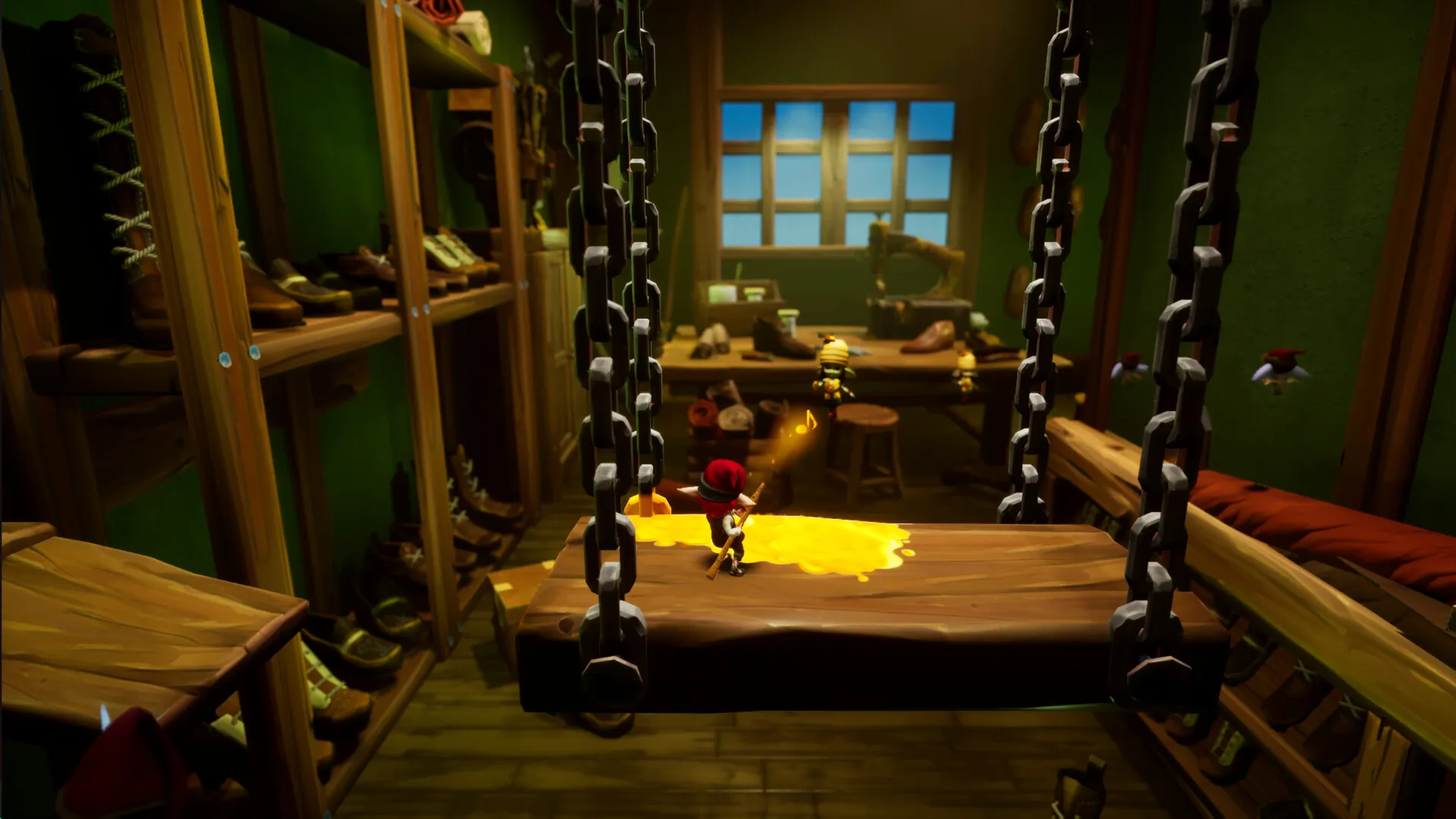
The toy store is a standout section because it shifts the rhythm of play. Progress depends on mini-games, including a chess match and a box-shuffling challenge where you must locate a hidden coin. These sections break up the standard platforming pattern and help the game vary its pacing.
The atmosphere benefits from careful lighting and strong environmental detail. Cobwebs and soft shadows give the rooms a lived-in quality with a faint eerie tone. Enemy variety is a weak point. The same goblin designs appear across multiple zones, and repeated encounters start to feel familiar. Combat loses some surprise as those patterns repeat.
Hidden objects sit off the main route for players who explore. These collectibles feed into an inventory system that tracks progress across the game world. Finding them asks for close attention to oversized furniture and side spaces, which ties exploration back into the miniature premise.
Technical Precision and Boss Encounters
Technical performance introduces the main friction points. Fixed camera angles can make depth hard to read, and some jumps fail because the perspective hides the true distance. Those moments can leave success feeling inconsistent.

Boss fights follow a straightforward structure. Direct damage does not work at first. You need to break a shield or create a stun window before attacks can land. Most bosses are readable and rely on a small set of predictable moves, so their patterns become clear quickly. The final boss breaks from that pattern with a much sharper difficulty spike and a heavier demand for precision.
A few technical issues appear during the adventure. Moving platforms sometimes glitch and shift out of place, which can block progress and force a restart. Combat audio cues also cut out at times, so hits may connect with no sound feedback.
Puzzle design often uses battery circuits. You match colors and patterns to restore power to a machine or door. These logic sequences provide a solid mental challenge between combat and platforming stretches. Progress management uses lounge chairs as checkpoints. Sitting in one saves the game and restores health, creating a brief rest point inside a game that spends much of its time asking for careful movement and timing.
The Review
Manairons
This adventure offers a charming look at local folklore through creative level design and a miniature perspective. The visual atmosphere and clever settings provide a cozy experience. Technical glitches and clunky combat mechanics hinder the flow of the journey. The fixed camera makes platforming frustrating in specific sections. While the narrative is predictable, the world building remains strong. It is a solid choice for fans of classic platformers who appreciate artistic environments over mechanical perfection.
PROS
- Creative use of scale in levels.
- Atmospheric lighting and environmental props.
- Engaging variety in toy store mini games.
- Helpful landing circle mechanic for jumps.
CONS
- Frustrating fixed camera angles.
- Inconsistent combat audio and feedback.
- Repetitive enemy designs across worlds.
- Occasional glitches that block progress.