





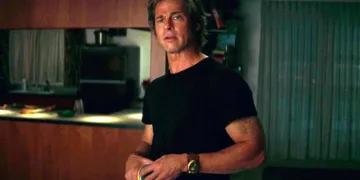

















The Pacific horizon implies an infinity the human heart can barely endure. In Malibu, light offers little comfort. It performs an autopsy. It strips the beach house of charm and turns luxury into a sterile chamber for the soul. Paul enters this space like a curator of ghosts. He brings the heavy relics of a planned perfection into the white silence of the rental. Grocery bags. Flowers. Howard Jones on the speakers.
The song carries the residue of a period when optimism still seemed attainable, yet here it sounds like a funeral hymn for youth. He shaves and prepares a surprise for a woman he has known across a lifetime. He performs for an audience of one, trying to purchase from the universe a brief instant of perfect meaning.
Leah arrives. Their bond sparks like electricity in sealed air. For a moment, they return to their high school selves, released from the gravity of their present lives. They share cake. They trade touches heavy with decades. This reunion belongs to old flames searching for shelter from the dull terror of routine.
The air thickens with frantic nostalgia. The film studies adult choices with a mature eye, especially the moment when history turns from comfort into weight. Paul and Leah try to breathe life into a memory. The beauty around them distracts from the truth that this weekend is a dream on borrowed time. They are ghosts attempting residence among the living.
The Digital Fracture of the Soul
The rupture arrives at the thirteen minute mark. A phone rings. The idyllic bubble disappears. Paul and Leah withdraw to separate rooms and begin the labor of deception. Leah speaks to a sick daughter, her voice softened into a lie. Paul speaks to a wife, his words tense and impatient. Their business trip is a fabricated structure. They are married to other people. This weekend is a final tryst. They have agreed to end the affair.
That deadline gives the film its nervous pulse. Jeffrey Ruggles resists turning them into villains. They are tired people, flawed and worn down, trying to manage a passion that has survived past its proper season. The tone moves from light romance into dense, secret-ridden drama.
The sun becomes a merciless witness to infidelity. The film asks if a person can shut down a hunger that has lasted for decades. Paul and Leah are bargaining with time. The morality stays clouded. The film seeks no approval. It asks us to recognize the disorder.
Their lies feel like small deaths. Each check-in with the real world recalls the wreckage waiting outside the rental. They remain caught inside desire and the punishment their choices keep producing. The tension carries the sound of a clock ticking toward vacancy. They are trying to settle a debt with no accepted currency. The pain lands differently in each of them as the reservation clock drains away. Their slide into fast food and extra booze can feel weak, yet it reflects the sorry truth of their condition.
Bodies in Arrears
Emmanuelle Chriqui and Hayes MacArthur give performances that feel carved into bone. Their chemistry has physical weight, shaped by shared history and present regret. MacArthur plays Paul as a man losing his grip. He moves from romantic sweetness into jagged, desperate anger. He sheds the comic surface and becomes a man staring at the death of his favorite fiction.
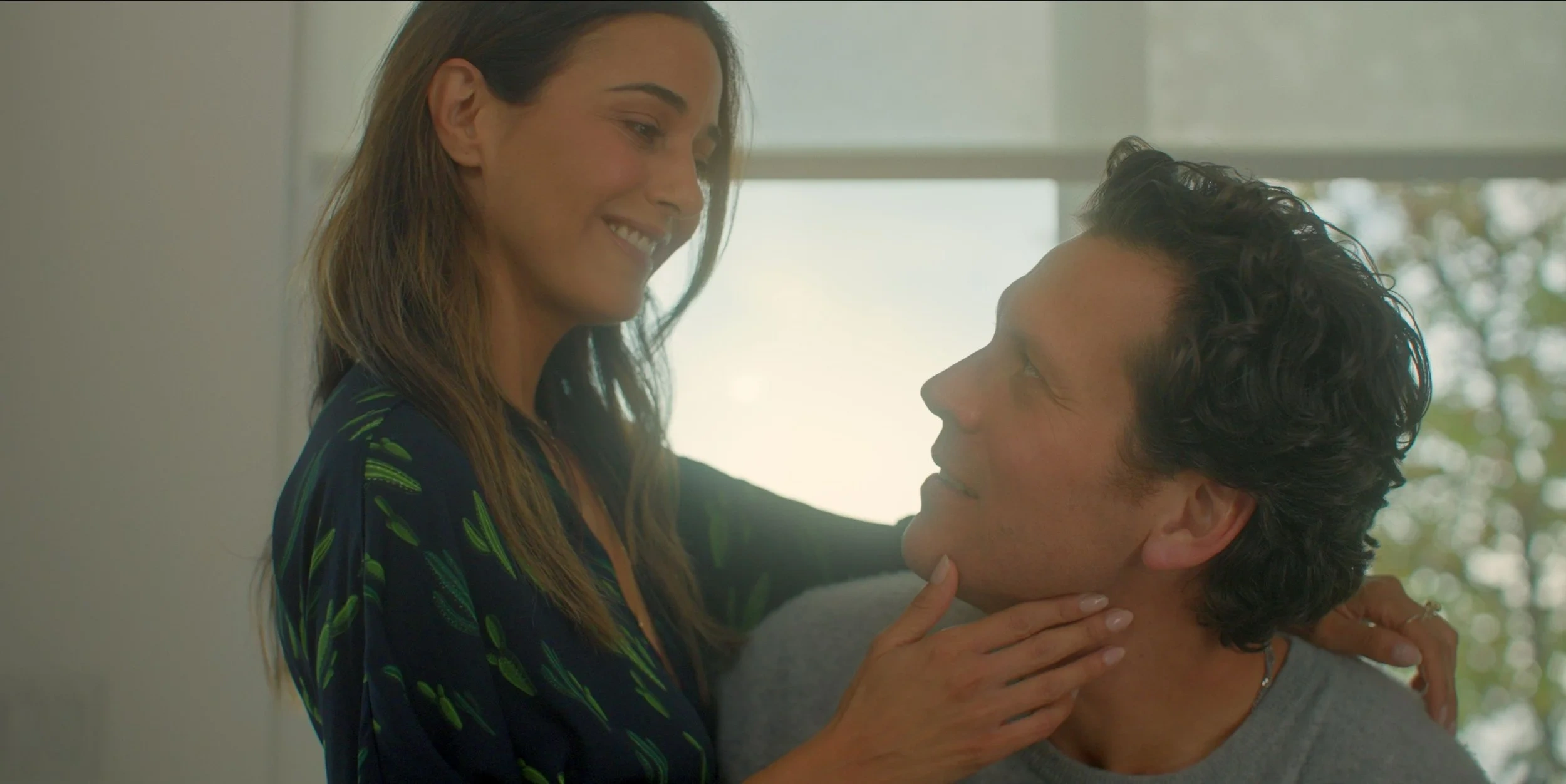
Leah supplies the emotional anchor. Chriqui gives her a painful intelligence. She understands the impossibility of what they have made. She is caught between pulse and duty. Their connection feels lived-in and credible. The film withholds deep backstories and keeps them inside the friction of the present. That choice has an existential sharpness. It concentrates on the immediate burden of being.
They do not collapse into melodrama. Their pain stays quiet, grounded, almost domestic in its precision. Their arguments feel like minor bodily adjustments made by two people trying to fit into a space that has already narrowed. Chriqui’s face carries an exhausting push and pull. She wants a world that cannot exist. MacArthur’s volatility comes from the sound of a door closing. They are two spirits trying to touch through the glass of separate lives.
Their performances keep the story from hardening into cliché. They locate truth in the silences between words. The actors lean into vulnerability, letting us see the cost of a secret life. They refuse the easy histrionics of television drama and find something quieter, sadder, and harder to dismiss.
Glass Walls and Reflective Sins
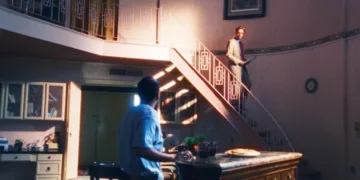
John Asher and Graham Futerfas treat the Malibu house as a cold witness. It is built from transparency and open air. Its architecture lies. It suggests clarity, a quality the characters do not possess. The white interiors feel sterile, reflecting the emptiness of the romantic fantasy. Light becomes forensic. It exposes fissures in their connection.
Reflections in the glass suggest constant concealment. They keep looking through surfaces. They rarely seem fully together. A later scene in a dark bar gives the film a needed shadow. Dark wood and dim light feel closer to truth. Sarah Trevino’s score pulses with rhythmic anxiety. The eighties music becomes a haunting, a reminder of a past that has turned burdensome.
Small moments keep the drama bodily and immediate. The fast food scene recalls the plain needs of the flesh. Ray Abruzzo and Joyce Bulifant appear as echoes from the real world. Bulifant receives a brief, lovely scene that leaves warmth behind.
The film refuses clean resolution. It rests in the gray weather of human error. We are left looking through the windows of a house that never became a home. The California coast wears beauty like a mask. Beneath it lies the instability of the heart. The ending’s ambiguity feels like the film’s honest gesture. It trusts silence. This is a story about the impossibility of returning to grace. The glass stays between them.
Released on April 3, 2026, A Love Like This is an intimate romantic drama that explores the complexities of long-term infidelity and the weight of past decisions. Directed by John Asher, the film follows former high school sweethearts Paul and Leah as they reunite for a secret weekend getaway in a luxury Malibu beach house. What begins as a nostalgic and passionate escape quickly fractures as the reality of their separate lives—including spouses and children—intrudes upon their idyllic bubble. The film is currently available for streaming on platforms such as Apple TV, Prime Video, and Fandango at Home, offering a mature and visually striking examination of whether a deep, burning passion is enough to sustain a relationship built on deception.
Where to Watch A Love Like This (2026) Online









Full Credits
Title: A Love Like This
Distributor: Quiver Distribution
Release date: April 3, 2026
Running time: 88 minutes
Director: John Asher
Writers: Jeffrey Ruggles
Producers and Executive Producers: Jordan Bogdonavage, Emmanuelle Chriqui, Brett Gursky, Lee Levin, Hayes MacArthur, Michael Manasseri, Sergey Shtern, John Asher
Cast: Emmanuelle Chriqui, Hayes MacArthur, Joyce Bulifant, Ray Abruzzo, Joel Michaely, Jason Caceres, Danny Jacobs, Jack DeCerchio, Erin Levin, Kevin McCorkle
Director of Photography (Cinematographer): Graham Futerfas
Editors: John Asher
Composer: Sarah Trevino
The Review
A Love Like This
The film operates as a clinical study of emotional entropy. It captures the exact moment where nostalgia curdles into a profound realization of loss. John Asher avoids the comfort of moral resolution, leaving the audience to sit in the sterile silence of a Malibu sunset. The performances provide a raw honesty that pierces the glossy surface of the production. While the narrative occasionally stays in the shallows of its own psychological potential, the result remains a haunting portrait of the human capacity for self deception.
PROS
- Authentic chemistry between MacArthur and Chriqui.
- Thoughtful use of Malibu architecture as a storytelling tool.
- A brave refusal to offer easy moral judgments.
- Cinematography that captures a sense of dreamy isolation.
CONS
- A lack of exploration regarding the characters' external lives.
- The narrative loses momentum in the middle.
- Adheres to some predictable dramatic patterns.