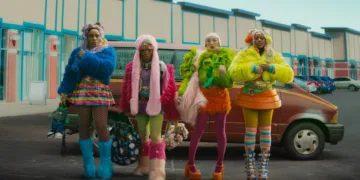

























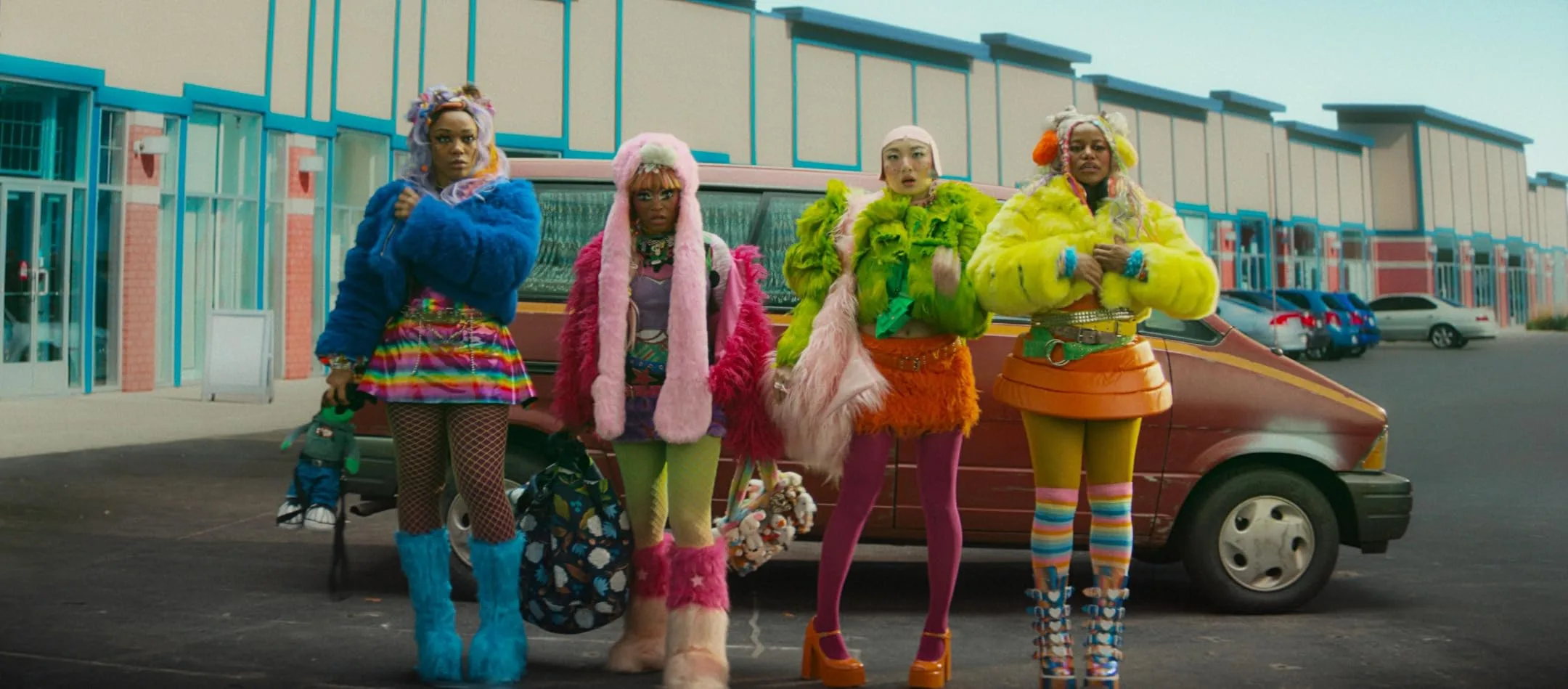

Boots Riley returns to the director’s chair after an eight year gap with a project that feels like a bold extension of the surreal social critiques found in Indian parallel cinema. The film takes place in a heightened version of the California Bay Area, specifically across cities like Oakland and San Francisco. This setting serves as a playground for a narrative that feels both futuristic and painfully current. Keke Palmer leads the story as Corvette, an aspiring fashion designer who lives inside an abandoned, repurposed fried chicken restaurant.
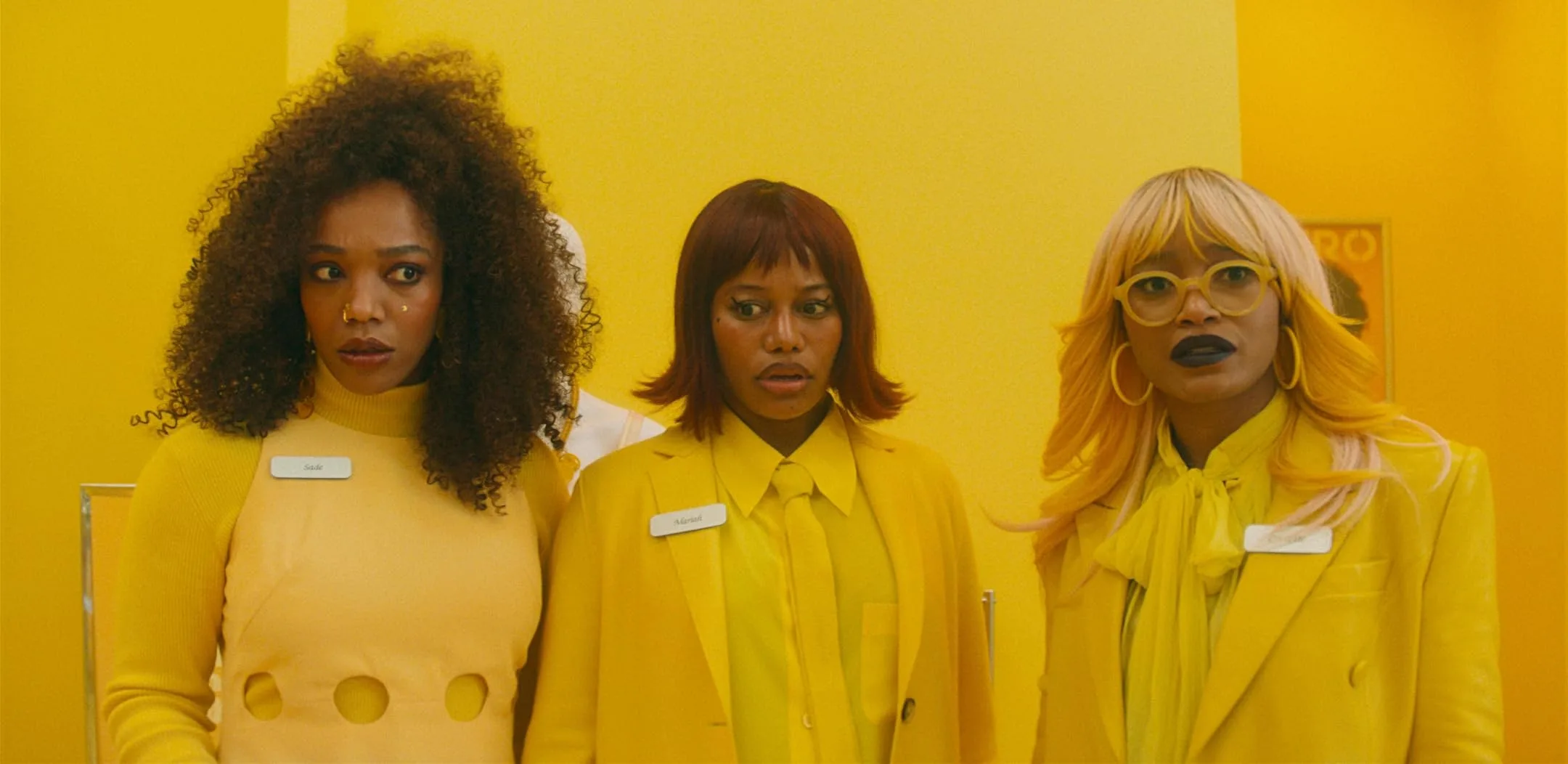
She manages a group of shoplifters known as the Velvet Gang. Alongside her partners Sade and Mariah, Corvette spends her time stealing luxury items and selling them to locals at a fraction of the cost. This operation represents their way of surviving a system that offers them very little. Their main target is the monochromatic fashion empire owned by Christie Smith, a ruthless mogul played by Demi Moore.
The conflict turns personal when Corvette discovers that Smith has stolen her original dress designs. The entry of a Chinese laborer named Jianpu introduces a science fiction element through a teleportation machine used to reclaim stolen labor. Together, the group decides to execute a massive heist to empty every store in the region.
Character Conflicts and Masala Archetypes
The cast brings a level of energy that resembles the ensemble dynamics of a classic Indian masala film, where distinct personalities clash and harmonize within a larger struggle. Keke Palmer portrays Corvette with a sense of relatable exhaustion, anchoring the movie in a human reality despite the absurd surroundings. Demi Moore plays Christie Smith as a tyrannical figure with a sharp bob and a cold, mathematical approach to exploitation.
Her performance captures a specific type of corporate villainy that feels both ridiculous and terrifying. Supporting members Sade and Mariah add layers to the group, representing the tension between immediate family needs and broader community goals.
Will Poulter gives a memorable performance as a store manager who uses the soft language of modern therapy to justify cutting the wages of his staff. LaKeith Stanfield appears as a neighborhood figure with a Prince-inspired look, hiding a supernatural secret that challenges the logic of the world.
Don Cheadle is unrecognizable under heavy prosthetics as a leader of a democracy think tank that functions like a pyramid scheme. These characters face internal friction as the heist approaches. Each person has a different motive, making the goal of working together for a common cause a central challenge for the gang.
Cartoon Physics and Sonic Discord
The visual style of the film adopts the logic of a live action cartoon, using inventive techniques to represent complex social ideas. Riley uses physical comedy to show the difficulty of living under economic pressure. One sequence features a high-rise apartment built at a forty-five degree angle, forcing characters to physically struggle against gravity.
Corvette is pursued by a massive, rolling sphere made of unpaid bills and eviction notices. This image serves as a powerful metaphor for the weight of debt in a society where housing is precarious. The director uses stop motion animation and claymation to handle action scenes, including a car chase that feels tactile and handmade.
This choice avoids the polished look of major studio productions, preferring a style that feels raw and intentional. Transitions between scenes include wipes that look like burning paper, adding to the sense of a world that is constantly being consumed. The musical score by the band Tune-Yards provides a restless, brassy atmosphere that never allows the viewer to feel comfortable.
These technical choices create a world where high fashion meets urban grit. The inventive set designs and bold costumes ensure that every frame has a specific, loud personality that reflects the director’s uncompromising creative vision.
Capitalist Satire and Collective Action
The narrative serves as a direct political missive, using the fashion industry to examine global economic structures. The Velvet Gang follows a system they call the three Fs, which stands for Fashion, Forward, and Philanthropy. This philosophy treats theft as a necessary act of community service in an unequal society.
The script addresses the difficulty of building collective power when individuals are focused on their own survival. The teleportation machine functions as a situational accelerator, a device meant to speed up the confrontation between the working class and the wealthy minority.
This plot point connects the local shoplifting in California to the labor conditions in Chinese manufacturing plants. Riley offers a critique of modern culture, mentioning the collapse of attention spans and the way people use AI chatbots to outsource their thinking. The film suggests that the wealthy one percent can collaborate easily because they share the same goal of profit, while the majority struggles to unite.
By focusing on the shared enemy of corporate greed, the story encourages a move toward genuine solidarity. The message is blunt and clear, arguing that the math of the situation favors the many if they can only find a way to act as one. The film treats the act of rebellion as a necessary step toward a more human future.
I Love Boosters premiered as the opening night film at the South by Southwest (SXSW) Film & TV Festival on March 12, 2026. This surrealist heist comedy follows a resourceful group of shoplifters, known as “boosters,” who orchestrate a massive strike against a ruthless fashion mogul. Following its successful festival run, the movie is scheduled for a wide theatrical release in the United States on May 22, 2026. Viewers can catch this vibrant, anti-capitalist satire in theaters upon its official release, with international distribution handled by Focus Features and Universal Pictures.
Where to Watch I Love Boosters (2026) Online






Full Credits
Title: I Love Boosters
Distributor: Neon, Focus Features, Universal Pictures
Release date: March 12, 2026
Rating: R
Running time: 105 minutes
Director: Boots Riley
Writers: Boots Riley
Producers and Executive Producers: Aaron Ryder, Andrew Swett, Allison Rose Carter, Jon Read, Boots Riley
Cast: Keke Palmer, Naomi Ackie, Taylour Paige, Poppy Liu, Eiza González, LaKeith Stanfield, Will Poulter, Don Cheadle, Demi Moore
Director of Photography (Cinematographer): Natasha Braier
Editors: Matthew Hannam, Terel Gibson
Composer: Tune-Yards
The Review
I Love Boosters
I Love Boosters is a vibrant, chaotic, and unapologetically radical piece of filmmaking that successfully blends high-concept science fiction with sharp social commentary. Boots Riley proves once again that he is a master of surrealist satire, using a "Looney Tunes" logic to dismantle the predatory structures of the fashion world. While the narrative occasionally buckles under the weight of its own ambition and maximalist style, the sheer creativity and a powerhouse performance by Keke Palmer keep the experience grounded. It is a messy masterpiece that demands to be seen.
PROS
- Keke Palmer delivers a career-best performance, supported by a hilariously cold Demi Moore and an unrecognizable Don Cheadle.
- The use of claymation, miniatures, and physical metaphors (like the rolling ball of debt) creates a unique, tactile aesthetic.
- The film offers a global perspective on labor, connecting local "boosting" to international manufacturing exploitation.
CONS
- The first act moves between skits rather than driving a propulsive plot, which may frustrate viewers seeking a standard heist film.
- Some subplots feel slightly underdeveloped or crowded by the film’s constant desire to introduce new, bizarre concepts.