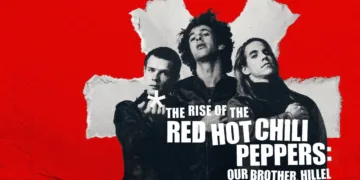




















Los Angeles at the end of the 1970s was a place where arena rock was fading and punk and early hip-hop were taking shape. That atmosphere shaped the connection between Anthony Kiedis, Flea, and Hillel Slovak at Fairfax High School. Before they operated as a band, they moved through the city as a survival unit.
Their friendship deepened through shoplifting and hitchhiking. Slovak held the group together artistically. He worked as a visual artist, and he was the person who persuaded the others to start playing instruments. The band came together by chance at a party, where Kiedis took the microphone alongside Slovak, Flea, and drummer Jack Irons.
That unplanned performance set off a meeting of funk, rock, and rap rooted in their immediate surroundings. Slovak gave shape to the volatile energy around him. Their earliest sound grew from street aggression and rhythmic looseness. This first lineup captured a precise stretch of Hollywood history before the recording business smoothed out its edges.
A Technical Rejection of the Icons
Director Ben Feldman turns away from the polished look that defines many modern music biographies. He builds the film from Super 8 footage, VHS recordings, and personal photographs. Those materials present the musicians as exposed young men long before public mythology hardened around them.
The 1983 demo for Get Up and Jump carries a frantic pulse that reveals their early technical search, with a force that recalls raw arcade soundscapes from the period before orchestral synth scores became common. The film stays with the group’s prehistory and leaves the later stadium years in the background. It follows the members through earlier projects such as Anthym and What Is This.
These pieces chart the gradual movement toward the sound that later defined them. George Clinton’s presence as a producer and Gary Allen’s role as a fashion mentor point to the varied influences that shaped the band’s identity. Allen opened up their sense of style and widened their aesthetic frame.
The archival footage records the West Hollywood club scene with a strong sense of period detail. Feldman keeps his attention on the rough surface of the early eighties and leaves aside the sheen associated with later decades. That choice exposes the visible joints in their creative development. The making of The Uplift Mofo Party Plan emerges as a key point, since it marked the moment when the original four members finally recorded together in a studio.
The Internal Record of Addiction
The film studies the damage heroin inflicted on the band’s central bond. Feldman turns to Hillel Slovak’s personal journals to create an inward view of his collapse. A digitally reconstructed version of Slovak’s voice reads the entries. The device creates a close sense of his solitude.

Kiedis and Flea speak with an unusual degree of openness for rock musicians at this stage of life. Their comments move away from the familiar language of redemption stories. Kiedis speaks plainly about the survivor’s guilt tied to his own continued life. He is still here, and his friend died at twenty-six.
The documentary also includes grim stories, including an episode in which Slovak tried to take medication intended for a dog. Details such as this give the addiction a harsh physical reality. Flea breaks down when he speaks about losing his friend. The film presents the band’s conduct during this period without softening it.
Drug use appears as a constant pressure that finally shattered their connection. Slovak’s drawings appear throughout the film and serve as a visual counterweight to that decline. They point to an artistic gift that his habits were steadily eating away. The film frames this era as a warning and keeps clear of sermonizing.
The Continuity of a Creative Ghost
Hillel Slovak’s death in 1988 altered the band’s path. His creative force continued to guide the members who remained. The film traces that influence into the group’s later phases. John Frusciante entered as a fan who had studied every detail of Slovak’s playing. Frusciante says his style operates as a tribute to the guitarist who came before him.
The passage from one player to the next reveals how an artistic vision can pass through another person and stay alive in altered form. Friendship stands as the lasting force in this story. The movie sees the band as a group of misfits who built a common musical language together. Slovak’s family and estate gave the filmmakers access to the personal material that gives the documentary its shape.
Their involvement keeps the portrait intimate and steady. The film argues that the group’s later success rests on the base Slovak created. His place as the emotional adhesive of the original quartet comes through clearly. The documentary also traces the reach of his musicality across global rock culture.
Decades later, his presence still lives inside the rhythmic design of their songs. The story shows how a bond formed in one local scene can ripple outward into international artistic traditions, much as a single new game mechanic can reshape a genre across studios around the world.
This documentary had its world premiere at the South by Southwest festival on March 13, 2026. Following this debut, Netflix released the film for global streaming on March 20, 2026. Audiences can currently find the production on the Netflix platform. The film uses personal diaries and home video to reconstruct the history of the band and its original guitarist. This release provides a historical look at the music scene in Los Angeles during the early 1980s.
Where to Watch The Rise Of The Red Hot Chili Peppers: Our Brother Hillel Slovak (2026) Online


Full Credits
Title: The Rise of the Red Hot Chili Peppers: Our Brother, Hillel
Distributor: Netflix
Release date: March 20, 2026
Rating: R
Running time: 93 minutes
Director: Ben Feldman
Writers: Ben Feldman
Producers and Executive Producers: Marc D’Agostino, Dan Braun, Josh Braun, David Blackman, James Slovak, Ben Feldman
Cast: Anthony Kiedis, Flea, Jack Irons, Alain Johannes, John Frusciante, George Clinton, Addie Brik, Michael Beinhorn
Director of Photography (Cinematographer): Jeff Powers
Editors: John Tarquinio
Composer: Zach Djanikian
The Review
The Rise Of The Red Hot Chili Peppers: Our Brother Hillel Slovak
Feldman’s film functions as a rigorous investigation into the fragile intersections of friendship and artistic obsession. It avoids the polished tropes of the genre by utilizing raw archival fragments to document a specific historical geography. The narrative captures a period where creative ambition collided with self-destruction. The result is a grounded portrait of a foundational figure whose influence still echoes in the rhythmic structures of contemporary rock. It remains a necessary piece for anyone interested in the friction between identity and legend.
PROS
- Unsanitized use of archival Super 8 and VHS footage.
- Honest inclusion of the internal journals and drawings of the subject.
- Deep emotional transparency from the surviving band members.
- Focus on the early cultural context of West Hollywood instead of later fame.
CONS
- The digital recreation of the subject's voice may feel artificial to some.
- The brief treatment of the later lineup changes lacks the depth of the early history.