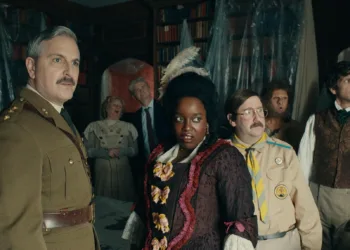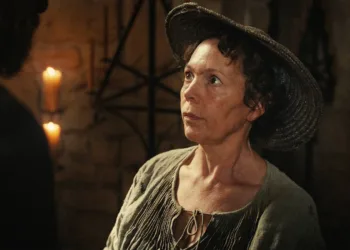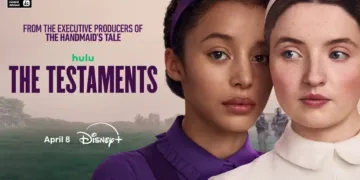


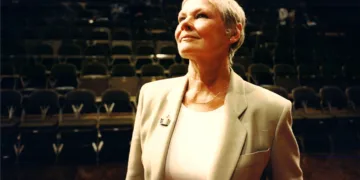





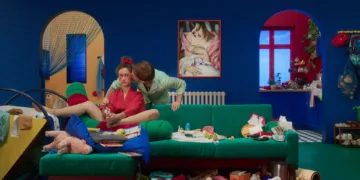


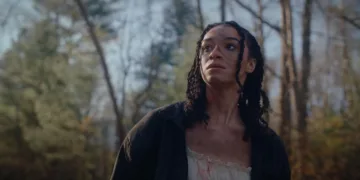







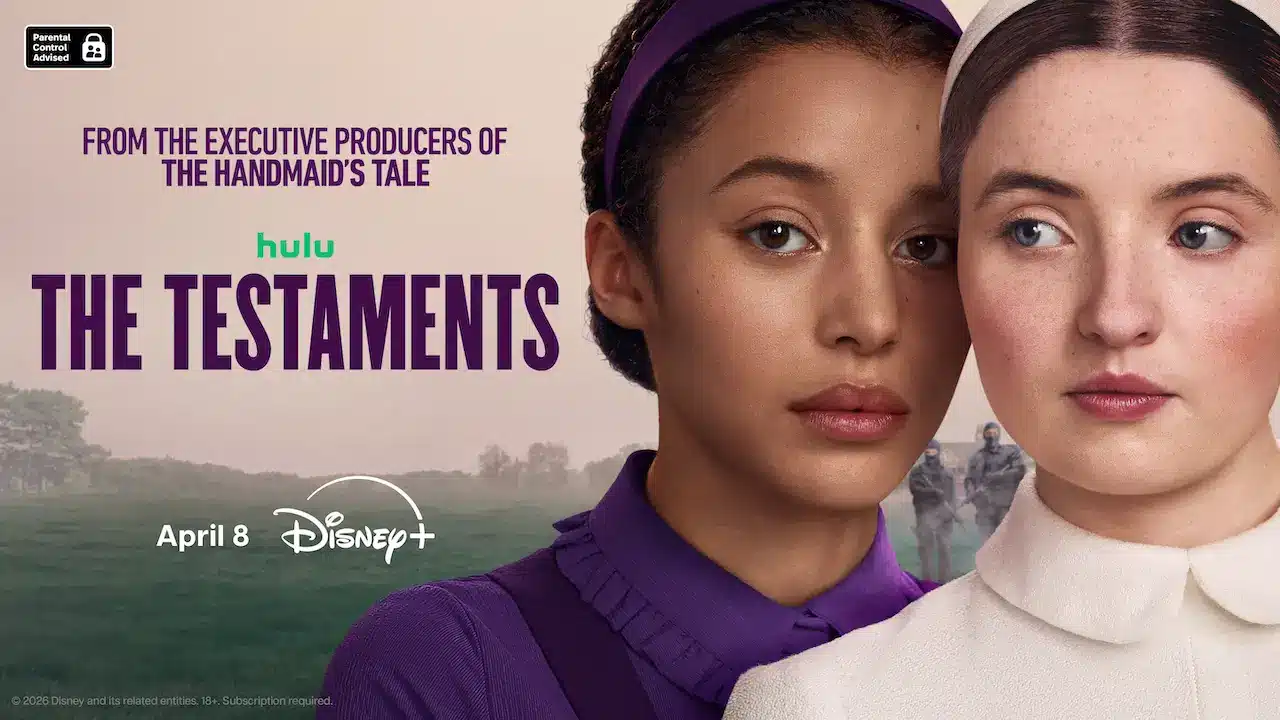

Hulu presents a new chapter in the history of Gilead through the adaptation of a major literary sequel. Set approximately four years after the events that concluded the previous narrative, the story shifts its focus from the red-clad figures of the past to the next generation of the elite. This series follows the lives of young women born or raised within the rigid confines of a totalitarian regime. These girls are shielded from the brutal realities of the labor camps and the colonies; yet they live under a different form of strict surveillance.
They are groomed from childhood to become the wives of high-ranking commanders, their lives defined by silence and domesticity. The narrative provides a look at how such a society attempts to sustain itself by indoctrinating those who have never known a world outside its borders. It highlights the experiences of characters who view the grotesque rituals of their state as mundane facts of life. Through this perspective, the series explores the fragility of a system that relies on the ignorance of its most prized citizens.
The Architecture of Obedience
The hierarchy of Gilead manifests through fabric and fiber. Little girls begin their lives in pink, a soft hue representing a curated innocence that the state plans to harvest. They transition into the “Plum” purple of adolescence, a color marking them as ripening property. Upon reaching puberty, they move into green, signaling their official availability for the marriage market. This sequence of colors strips away individual identity; it replaces a name with a functional status within the state. These young women exist as biological milestones. Their bodies are maps of political progress.
The educational framework serves as a factory for docility. The curriculum prioritizes domestic skills such as embroidery and the memorization of approved scripture. A total prohibition of reading and writing remains the foundation of this control. To look at a calendar is a criminal act; to hold a pen is an invitation for physical mutilation. The Aunts facilitate this environment through the use of “difficult tasks” and public punishments. They use these moments to desensitize the students to systemic violence. By witnessing the removal of a limb or the public shaming of a peer, the girls learn that brutality is a natural law.
Social dynamics within the school offer a distorted reflection of typical teenage behavior. Cliques and bonds form despite the restrictive environment. The tension between Agnes and traditionalist peers like Shunammite reveals the varying degrees of internalizing the regime’s ideology.
While some girls embrace their status with fervor, others harbor a quiet, unspoken friction. The Marthas and domestic workers provide the only flicker of human warmth in these sterile houses. They offer a maternal stability that the state-sanctioned mothers, often cold and adversarial, fail to provide. These women operate in the shadows of the palatial estates; they are the silent observers of the children they raise.
The Architects and the Innocents
Agnes MacKenzie represents the internal conflict of a child raised within a gilded cage. As the daughter of a high-ranking Commander, she possesses a life of perceived privilege. She is the kidnapped daughter of June Osborne; yet she lacks the memory of a life before the regime. Her existence is a battle between the desire to be a dutiful daughter and a growing realization of the cruelty surrounding her. Her relationship with her stepmother, Paula, is defined by an icy distance. Agnes maintains a facade of obedience while harboring a silent resentment of her home life. She views her future marriage with a mixture of conditioned duty and creeping dread.
Daisy enters the narrative as a destabilizing force. As a “Pearl Girl” immigrant from outside Gilead, she brings a perspective of shock to the environment. She views the hanged bodies on the wall as horrors; the locals view them as scenery. Daisy is an outsider with a free mind meeting the bars of a cage. She carries secrets from her life in Toronto and holds hidden motivations for entering the regime. Her presence challenges the assumptions of her peers. She acts as a mirror, reflecting the absurdity of Gilead to those who have become blind to it.
Aunt Lydia stands as the most complex figure in this landscape. She has evolved from the brutal disciplinarian of the past into a calculating strategist. She is weathered by the loss of her former charges; she has learned the deep hypocrisy of the Gilead patriarchy through personal loss.
Lydia operates with a long-term plan to protect her girls while maintaining her own position of power. She is a master of the system who secretly loathes the men who run it. Her power is a shield; her silence is a weapon. She moves through the halls of the school with the weight of someone who knows exactly how the world will eventually end.
The Aesthetic of Quiet Horrors
The visual style of the series marks a departure from the heavy reds of the previous era. The screen is filled with the purples, greens, and teals of the elite class. This palette shift offers a refreshing visual change; it emphasizes the sheltered nature of the characters. The cinematography relies on tight close-up shots to capture the subtle facial expressions of the girls.
A twitch of an eye or a tightened lip reveals the internal resistance that words cannot express. The beautiful, palatial homes of the Commanders provide a stark contrast to the grim public executions occurring just outside their gates. This juxtaposition highlights the desensitization required to survive in such a society.
The pacing adopts the rhythm of a slow burn. It focuses on the accumulation of psychological tension rather than immediate physical action. This deliberate speed allows the audience to feel the suffocating atmosphere of the school and the homes. The use of future narration frames these events as historical accounts. It suggests that the viewers are observing a past that has already been judged. This framing adds a layer of inevitability to the proceedings; it reminds the audience that every totalitarian system eventually becomes a relic.
An atmosphere of constant surveillance permeates every scene. The presence of Guardians and the watchful eyes of the Aunts create a world where privacy is a myth. Characters must use coded language and significant silences to communicate. A shared look during a meal carries the weight of a forbidden conversation. The show depicts the exhausting mental labor of living under a regime where every action is a performance. Security is presented as a form of imprisonment; the walls built to keep the “terrorists” out are the same ones keeping the women in.
The Frayed Threads of Control
Rebellion in this world begins with small, quiet questions. It starts when a young woman wonders why she cannot read or why her future is decided by a man she has never met. The ignorance of the youth is the state’s greatest asset; once that ignorance is corrected, it becomes the state’s greatest liability. The outside resistance, known as Mayday, infiltrates the regime through hidden channels. A secret radio under a bed or a whispered code word provides a link to the world beyond the borders. These small acts of defiance act as a slow-acting poison to the regime’s foundations.
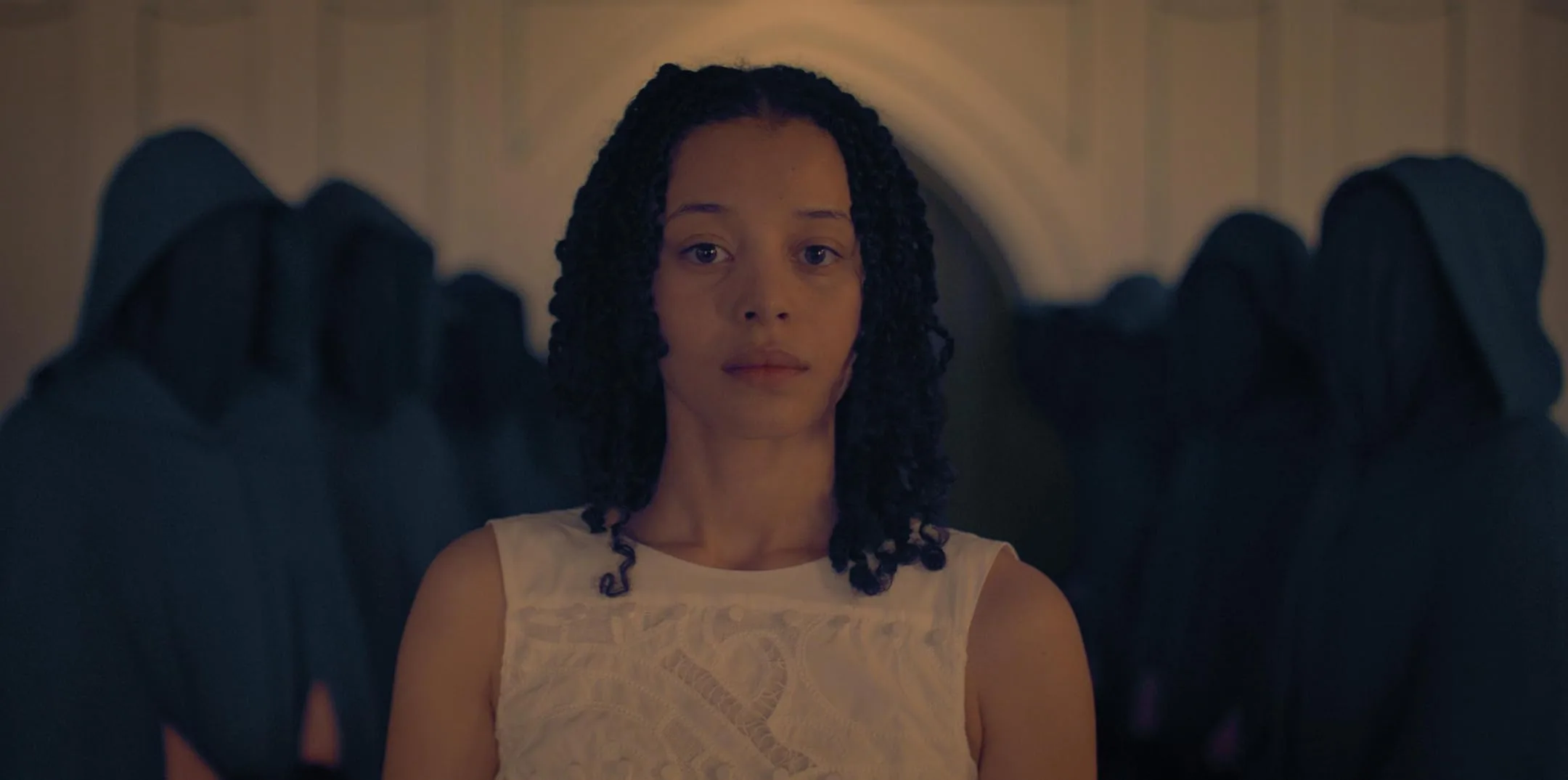
Flashbacks provide a vital link to the origins of the state. They reveal the pre-Gilead lives of the Aunts and the events that allowed the patriarchy to seize power. These memories serve as a reminder that the current social order is an artificial construct. It is a system built by people; therefore, it can be dismantled by people. These glimpses into the past strip away the regime’s claim to divine authority. They expose the mundane greed and fear that birthed the totalitarian experiment.
The connection between the women creates a network that the state cannot effectively monitor. The bond between Agnes, Daisy, and Becka is a form of sovereignty that the patriarchy underestimates. The regime relies on women to train and monitor other women; this creates a structural vulnerability. When the Aunts and the daughters begin to share secrets, the hierarchy begins to erode from within. These friendships are more than social bonds; they are the seeds of a brand-new reckoning. The power of female connection is the one variable the Commanders failed to include in their calculations.
The Testaments premiered on April 8, 2026, as a highly anticipated sequel and narrative continuation to the landmark series The Handmaid’s Tale. Based on the 2019 novel by Margaret Atwood, the drama shifted the focus away from the perspective of June Osborne toward a new generation of women raised within the Republic of Gilead. The first season is currently available for streaming exclusively on Hulu, with new episodes releasing weekly on Wednesdays.
Where to Watch The Testaments Online

Full Credits
Title: The Testaments
Distributor: Hulu
Release date: April 8, 2026
Rating: TV-MA
Running time: 52–61 minutes
Director: Mike Barker
Writers: Bruce Miller, Stuti Malhotra, Maya Goldsmith, Gianna Sobol, Nate Burke, Sam Rubinek, Bayan Wolcott, Ben Miller, Elise Brown
Producers and Executive Producers: Bruce Miller, Warren Littlefield, Elisabeth Moss, Mike Barker, Steve Stark, Shana Stein, Maya Goldsmith, John Weber, Sheila Hockin, Daniel Wilson, Fran Sears, Priscilla Poriand
Cast: Ann Dowd, Chase Infiniti, Lucy Halliday, Rowan Blanchard, Mattea Conforti, Mabel Li, Amy Seimetz, Brad Alexander, Zarrin Darnell-Martin, Eva Foote, Isolde Ardies, Shechinah Mpumlwana, Birva Pandya, Kira Guloien
Director of Photography (Cinematographer): Greta Zozula, Marc Laliberté
Editors: Wendy Hallam Martin, Ana Yavari
Composer: Adam Taylor
The Review
The Testaments
The Testaments succeeds as a technical examination of the psychological weight of state-mandated girlhood. While it occasionally walks familiar paths, the shift in perspective offers a necessary evolution of the narrative. It functions as a slow, methodical study of how resistance begins in the quietest corners of the mind. The production remains high, anchoring the subject matter in a believable, chilling reality.
PROS
- Chase Infiniti delivers a grounded, haunting performance.
- Vivid visual storytelling through a refined color palette.
- Sharp analysis of the psychological impact of indoctrination.
- Strong chemistry among the young ensemble cast.
CONS
- Deliberately slow pacing may alienate certain viewers.
- Periodic repetition of themes from the prior series.
- Narrative predictability in certain character arcs.