





























Eugene is a 40-year-old former photojournalist stuck in a midlife crisis. After a career collapse and a divorce, he returns to his childhood mountain town for his grandfather’s funeral. On the drive, he passes through a tunnel, hits a wall of thick fog, and crashes. He wakes in the Dusklands, a surreal place populated by talking animal spirits. There he meets Ren, a young girl with no memory of her past, who is trying to reach her home on the summit of Dusk Mountain.
They are soon hunted by the Shade, a destructive force that consumes anything in its path. Eugene survives with the help of the Prisma camera, a strange tool that reveals hidden truths about this world. As he helps Ren reach home and searches for a route back to his own reality, he is pushed toward the people he failed and the damage he has carried for years. The story ties memory to recognition and asks what it means to truly see another person before they disappear.
The Architecture of Empathy and Memory
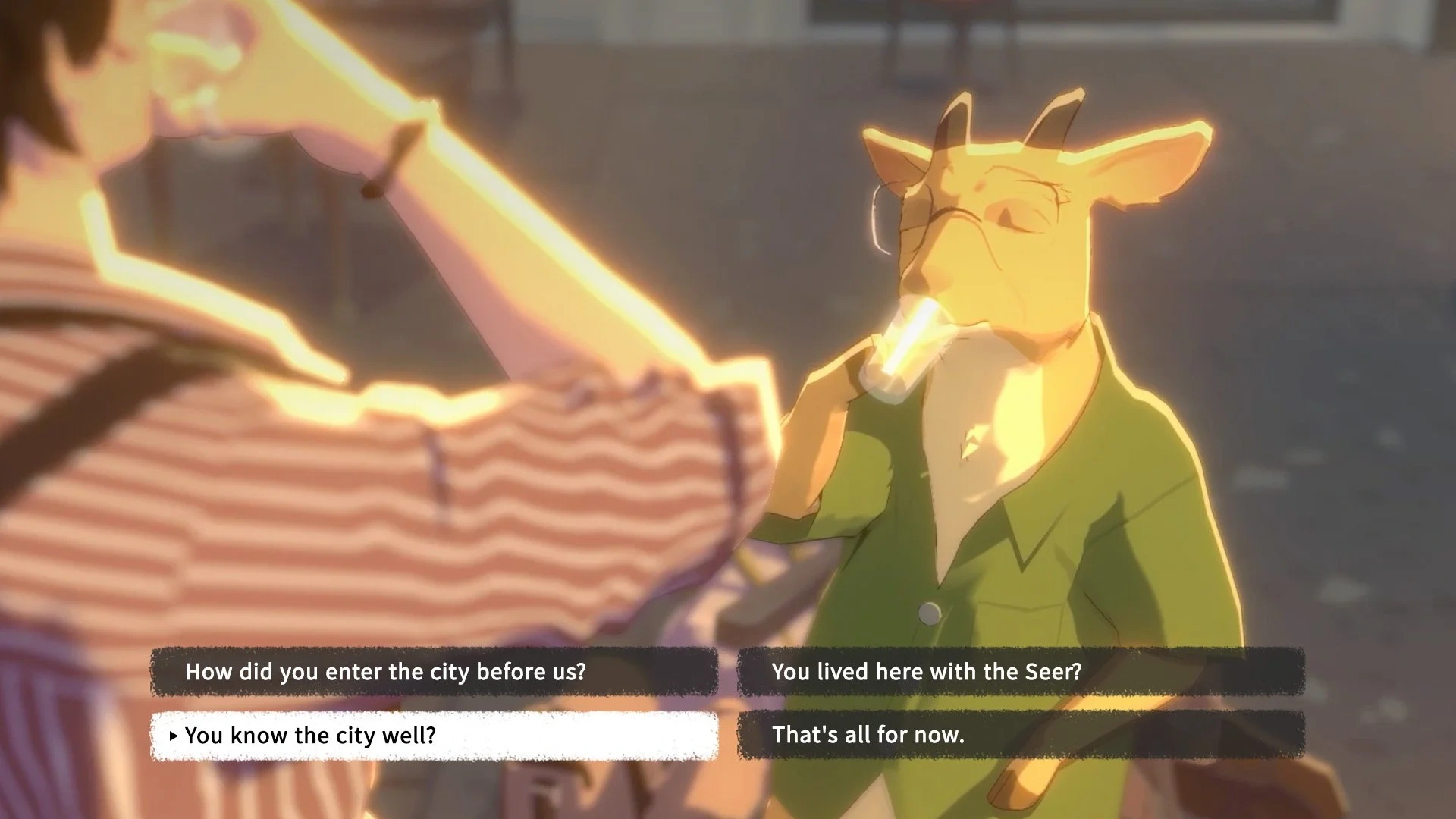
The Dusklands operate like an externalized map of Eugene’s inner life. Each animal spirit reflects someone tied to his past, either a person he harmed or someone connected to pain he never resolved. Progress depends on learning how to “see,” and the game gives that idea real mechanical weight. Seeing is not simple observation. It means reading a spirit’s emotional truth well enough to uncover its real name. That turns dialogue into a playable act of empathy.
The story keeps returning to generational trauma and the way it repeats across families. Eugene starts as a bitter pessimist and gradually shifts toward someone capable of asking for forgiveness with sincerity. That arc grows through the back-and-forth movement between the fantasy setting and the real world. Flashbacks presented in black and white lay out the history behind his fractured family life and failed business with stark clarity.
Ren carries much of the emotional pressure in these scenes. The camera cannot capture her, and she lives under the threat of vanishing altogether. Her bond with Eugene gives the game its emotional pull, framing human connection as fragile and temporary. The story’s central idea is clear: people remain present through acts of understanding.
Precision Optics and Investigative Logic
Photography works here as a disciplined investigation system. Players use the Prisma camera in first person to solve environmental puzzles, with manual control over focus, shutter speed, and exposure. Those settings are tied to the lighting conditions in each location, so taking the right picture demands attention. The game does not guide players with constant markers or heavy-handed prompts. Hidden murals and specific objects must be found through patient observation.
Each photograph feeds into the Field Guide, which serves as the main progression tool. Players place photos into the notebook and add notes that connect clues across different encounters. The system asks players to identify animal spirits through deduction, which gives the act of cataloging real dramatic value. Environmental interaction also provides context and useful resources.
Cleaning kits keep the camera operational, adding a small but effective maintenance loop that makes the tool feel physical. The Shade shifts the pace through timed action sequences. During these encounters, players must release the shutter at the precise instant it attacks. A successful shot pushes the darkness back, turning photography into a survival mechanic.
The Fire Bowl and the Economy of Offerings
Progression is organized around Fire Bowls scattered across the world. These sacred points function as checkpoints where players offer selected photographs to continue the story. Wooden totems around them act as quiet signposts, delivering riddles that send players back through their collected images or out into the world in search of a particular visual memory. That structure keeps observation active at all times.
The game’s economy runs on Embershine seeds gathered through interaction with the environment. These seeds can be traded at the bowls for new filters, lenses, and cosmetic items such as backpacks for Ren. Ash from the fires lets Eugene translate ancient runes on ruined walls, which ties exploration to narrative discovery in a satisfying way.
The reward structure favors thorough play without leaning on combat loops or level grinding. Replay value comes from the branching logic built into Eugene’s memories. Choices about which memories receive attention shape the ending you reach. With 26 possible endings, the game places heavy emphasis on interpretation. The final result feels linked to the care and detail recorded in the journal.
Cinematic Aesthetics and Technical Precision
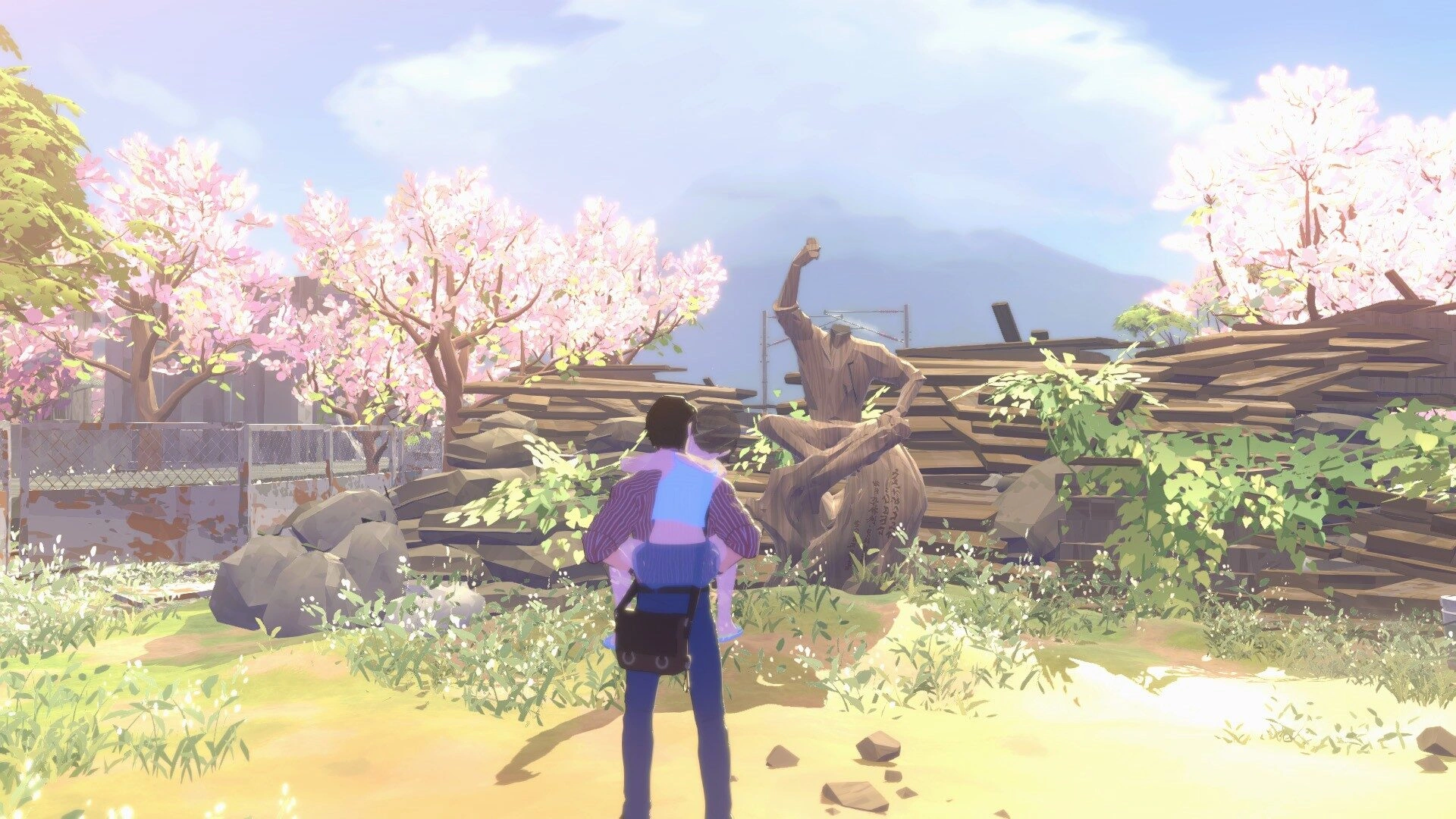
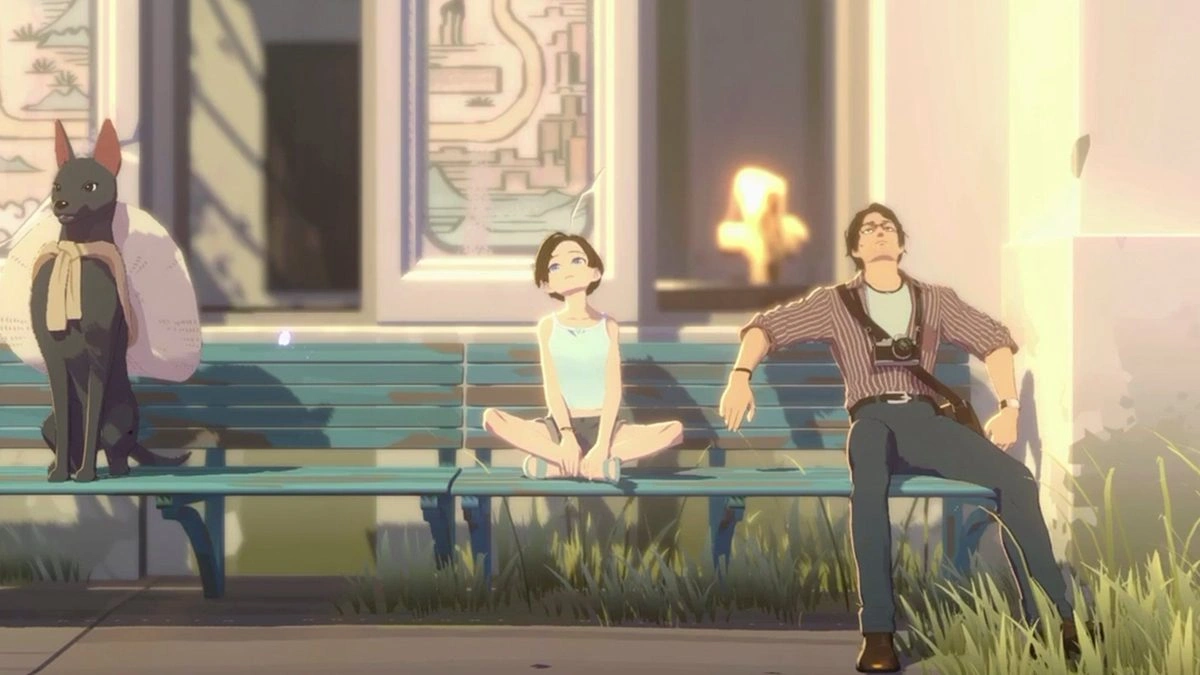
The visual design leans into a modern 3D anime style. Character models look sharp and expressive, set against soft landscapes that resemble painted backgrounds. Lighting does much of the thematic work. Fire Bowls cast a warm glow, while the Shade fills spaces with oppressive darkness. That contrast gives the game’s ideas about hope and decay a strong visual form. The spirit designs also carry clear personality, and that identity remains readable even as they begin to fade.
The sound design is handled with the same level of care. An orchestral score shapes the emotional tone, and Kevin Penkin’s music rises at key moments to strengthen the drama. The voice acting gives both leads needed presence. Eugene sounds worn down by years of disappointment, while Ren brings a lighter and more curious energy that helps offset his mood.
Performance on Steam Deck is strong, with stable frame rates maintained even during the most visually demanding Shade sequences. A few design choices create friction. The game relies on autosaves, which means sudden exits can force players to repeat sections. Cutscenes also lack a pause option, which can be irritating. Small sensory details, such as the camera shutter’s mechanical click, do a great deal to hold the player inside the experience.
The Review
Opus: Prism Peak
This work succeeds as a mechanical study of human connection. It integrates technical photography into the literal structure of its storytelling. The narrative challenges players to look past the surface of their relationships to find truth. Minor technical hurdles do little to dampen the impact of this profound experience. It stands as a high point for both the series and the narrative adventure genre.
PROS
- Tactile and purposeful photography systems.
- Emotional depth in character development.
- High replay value with numerous endings.
CONS
- Lack of a manual save system.
- Inability to pause during cutscenes.