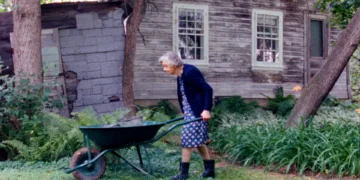

























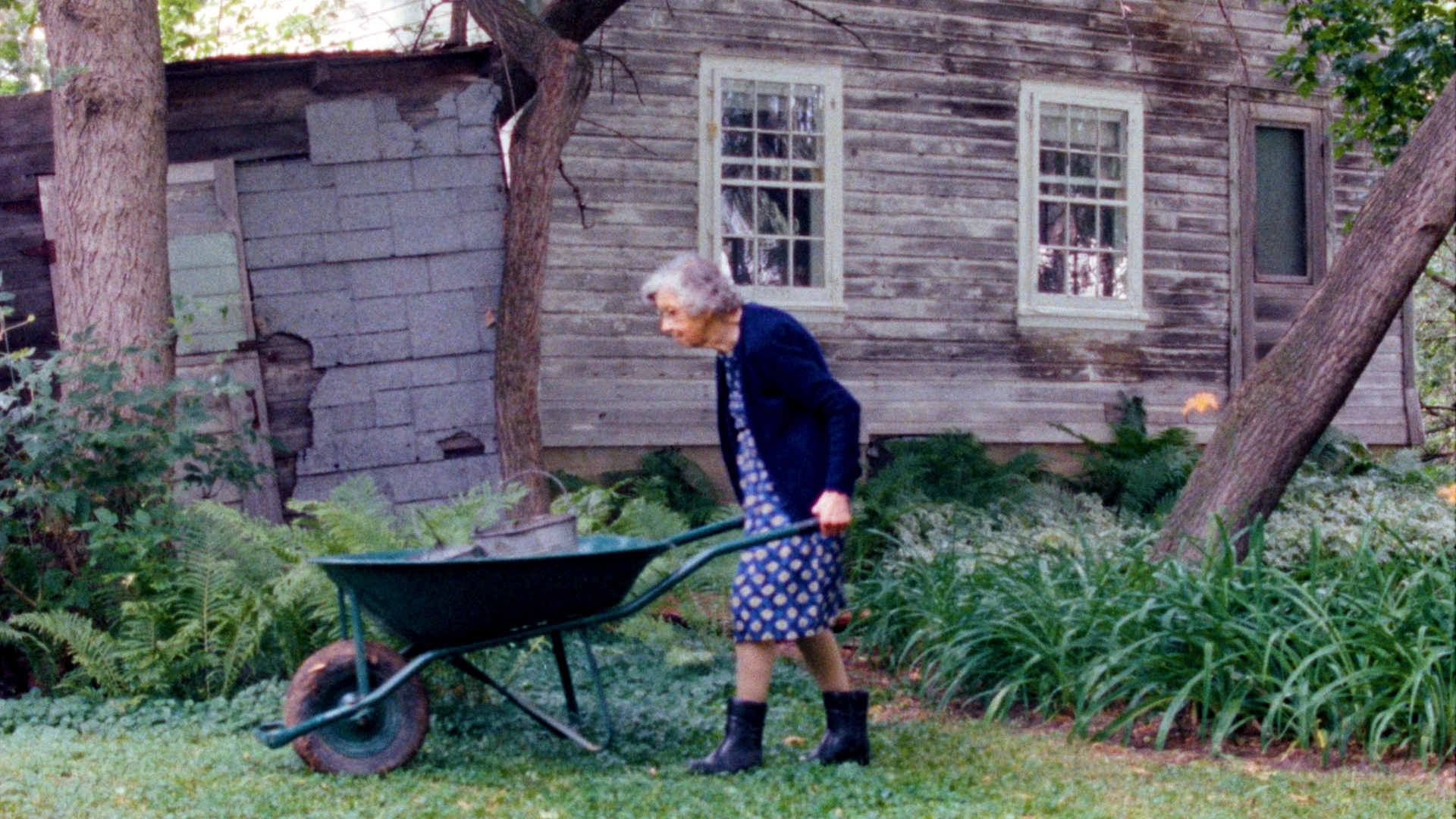

The Canadian documentary community often keeps a cold, principled distance from mainstream cinematic grammar. Amalie Atkins places her feature, Agatha’s Almanac, inside that defiant practice. The film grows from six years of intimate observation, its camera planted on an ancestral 64 acre farm in the plains of southern Manitoba. There, Atkins studies her 90 year old aunt, Agatha Bock, with the patience of someone watching a clock lose interest in clocks.
The film pares away standard non fiction rhythm and settles into a severe, alternative tempo. Hollywood plot mechanics vanish. An inciting incident never arrives to pull the material forward. Dramatic pressure comes through dawn to dusk routine, through repeated labor, through the quiet tyranny of tasks that must be done again tomorrow.
Bock exists as a self sufficient force inside this landscape, managing a sprawling homestead while lacking a car, a mobile phone, and running water. The result is an intimate portrait of aging, survival, and temporal exile, shaped through discipline and stripped of melodramatic design.
The Relic of the Self and the Sovereign Garden
Agatha Bock turns daily survival into a practical metaphysics. On her Manitoba estate, sovereignty has a tactile form: tape, jars, tools, shoes, bread, soil. Her family calls her the duct tape queen, a title with comic grandeur and genuine architectural value. Masking tape catalogs her domestic universe, from tool filled old cereal boxes to precise canning dates.
White duct tape seals windows against weather and invasive insects. This fierce organization becomes a philosophy of identity, a defense against solitude’s blank spaces. Free will here has dirt under its nails. It looks like refusing disorder with adhesive.
Her resourcefulness appears in every artifact. She glues the peeling soles of her footwear, wears mismatched shoes, and washes her hair outside with two bowls of water. She paints wooden garden tool handles a high visibility red to prevent loss, imposing a clean visual logic on a rustic field of entropy.
Her diet follows the same ritual law: supper means radish sandwiches made with one slice of artisanal brown bread and one slice of commercial white. Even traditional pierogis pass through her hands from start to finish. The body becomes archive, factory, and stubborn little parliament.
Bock rejects pity when discussing isolation, saying she has never felt lonely because she keeps busy. That statement lands with quiet force, since the busyness shields a history marked by severe grief. Multiple sisters died young. A Catholic suitor was rejected early. Her endurance nearly turns comic in its extremity.
She performs backbreaking agricultural labor in an unexplained arm cast, treating a medical history that includes hospitalization for arterial bleeding with magnificent indifference. Blood, in her logic, sits close to beet juice. Fair enough. The film lets that absurdity remain tender, presenting self determination as physical fact: labor, pain, repetition, and a refusal to fuss.
Chiaroscuro of the Soil and Temporal Audio Motifs
The craft moves the film beyond basic record keeping and into dense sensory pressure. Cinematographer Rhayne Vermette shoots the landscape on 16mm analog film, giving the farm heavy grain and saturated texture. The image recalls a discovered mid century scrapbook, half family relic, half field report.
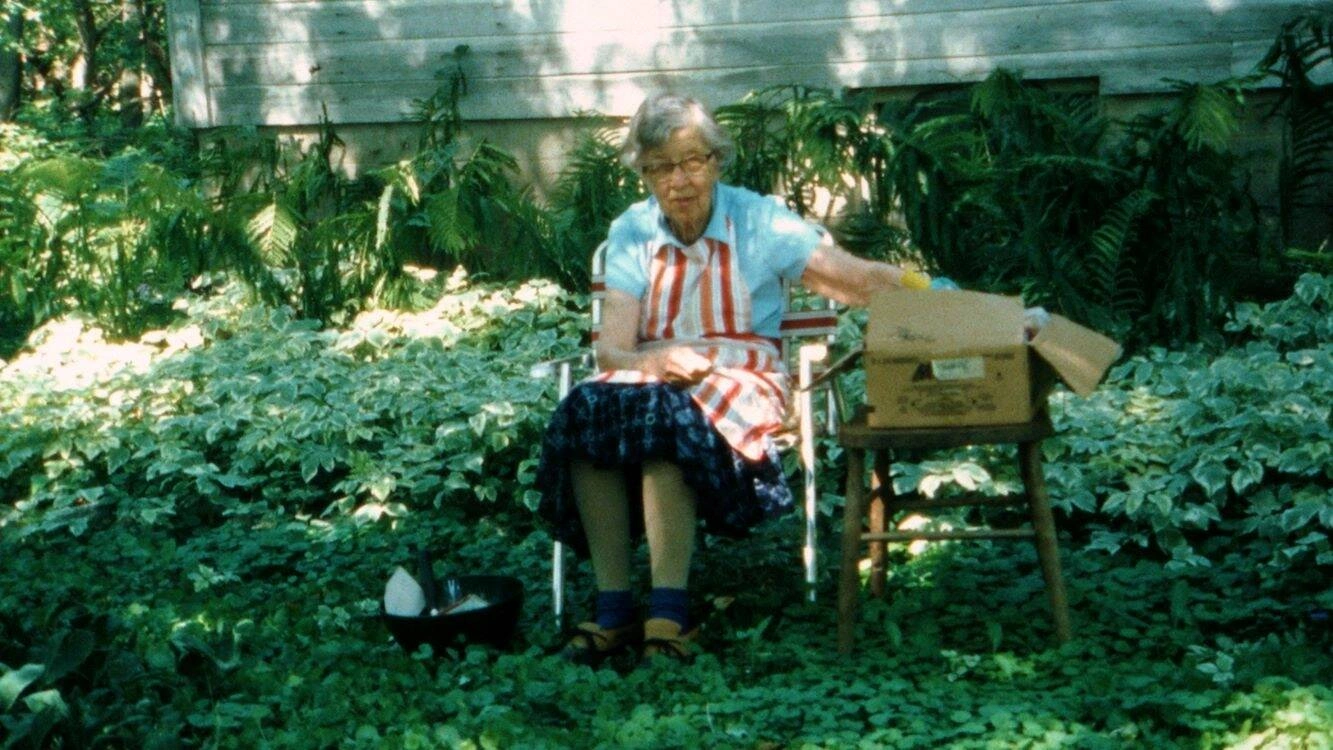
Color supplies the emotional grammar. Red strawberries burn against weathered wood. Pink watermelons split open with abrupt geometric force. Heavy shadows and expressionistic framing give the soil its own chiaroscuro, connecting this rural documentary to noir tradition through light, concealment, and moral weather.
Atkins and Bock coordinate wardrobe choices, setting Bock’s vivid personality against decay. Shot composition often treats her as both inhabitant and relic, placing the human figure inside a world of handmade order and slow collapse. The camera’s attention to jars, tools, tape, windows, and garden beds makes identity legible through surfaces. It is material psychology, itemized.
Sound design sharpens that psychology. A ticking motif mutates from clock to dripping water to the low buzz of insects, creating mechanical temporality that presses against the viewer’s nerves. The pacing manipulates perception through repetition and acoustic pressure. Time feels measured, then sticky, then faintly predatory. The audio ends with Bock singing gloriously out of tune, a raw sound that breaks the film’s formal distance with one cracked human note. Cinema, meet Aunt Agatha.
Formalist Friction and the Intergenerational Lens
Atkins builds the film around a camera that cannot pretend to be objective. Her voice enters the space, turning observation into intergenerational exchange. Bock addresses her niece directly and scolds her with perfect domestic authority, including a rebuke over washing strawberries before storage. The moment carries the sting of family knowledge. It also creates ethical gray zones around intimacy, authorship, and control. The observer belongs to the observed world, and the frame knows it.
A visible stylistic friction appears in the assembly. Atkins frequently uses avant garde editing techniques that clash with the farm’s organic stillness: fast paced montages, rapid fire compilations of labeled household items, and sudden needle drops. These aggressive, music video styled transitions can fracture the quiet intimacy of the homestead.
The formal ambition occasionally burdens the central figure’s magnetism, drifting into excess and accidental comedy. Still, the absence of talking head commentary and manufactured narrative markers gives the film a genuinely experimental structure. Fragmented answering machine messages and rambling phone monologues carry the narrative path, letting memory, habit, and recorded voice replace conventional exposition.
Agatha’s Almanac is a Canadian documentary film that originally premiered on March 23, 2025, at the CPH:DOX film festival. Directed by Amalie Atkins, it offers an intimate portrait of her 90-year-old aunt, Agatha Bock, who leads a completely self-sufficient and independent life centered around gardening on her ancestral farm in Manitoba. Following its successful festival run, where it captured the Best Canadian Feature Documentary award at Hot Docs 2025, the film has transitioned to selected theatrical runs and independent documentary streaming services handled via Lightdox and Films We Like.
Full Credits
Title: Agatha’s Almanac
Distributor: Films We Like, Lightdox
Release date: March 23, 2025
Running time: 87 minutes
Director: Amalie Atkins
Writers: Amalie Atkins
Producers and Executive Producers: Amalie Atkins
Cast: Agatha Bock
Director of Photography (Cinematographer): Rhayne Vermette
Editors: Amalie Atkins
Composer: Amalie Atkins
The Review
Agatha's Almanac
Agatha's Almanac succeeds as a sensory, formally experimental portrait of aging and independence. The friction between Amalie Atkins’ aggressive, avant-garde editing and the organic stillness of the Manitoba landscape creates an uneven but mesmerizing viewing experience. Rhayne Vermette’s stunning 16mm cinematography and Agatha Bock’s unflappable, eccentric magnetism carry the film through its minor stylistic excesses. It is an unpolished, deeply intimate piece of non-fiction cinema that lingers long after the final frame.
PROS
- Luminous, high-grain 16mm cinematography that beautifully textures the rural setting.
- A compelling, deeply memorable central figure with a rich, eccentric philosophy of self-sufficiency.
- Innovative sound design that effectively builds internal momentum and tension.
- An intimate, authentic intergenerational dynamic that breaks down the sterile wall of traditional documentary filmmaking.
CONS
- Frenetic, music-video-style editing choices that occasionally clash with the quiet intimacy of the subject.
- Moments of stylistic excess that generate unintended humor and pull the viewer out of the experience.