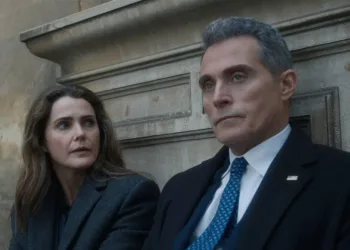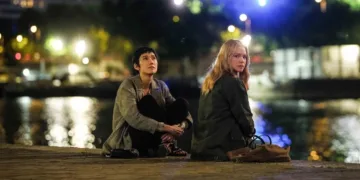











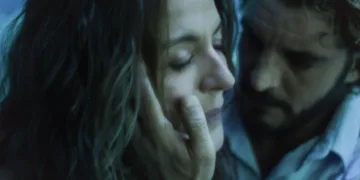
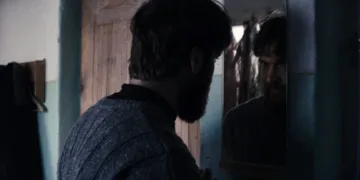
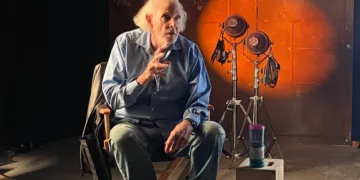













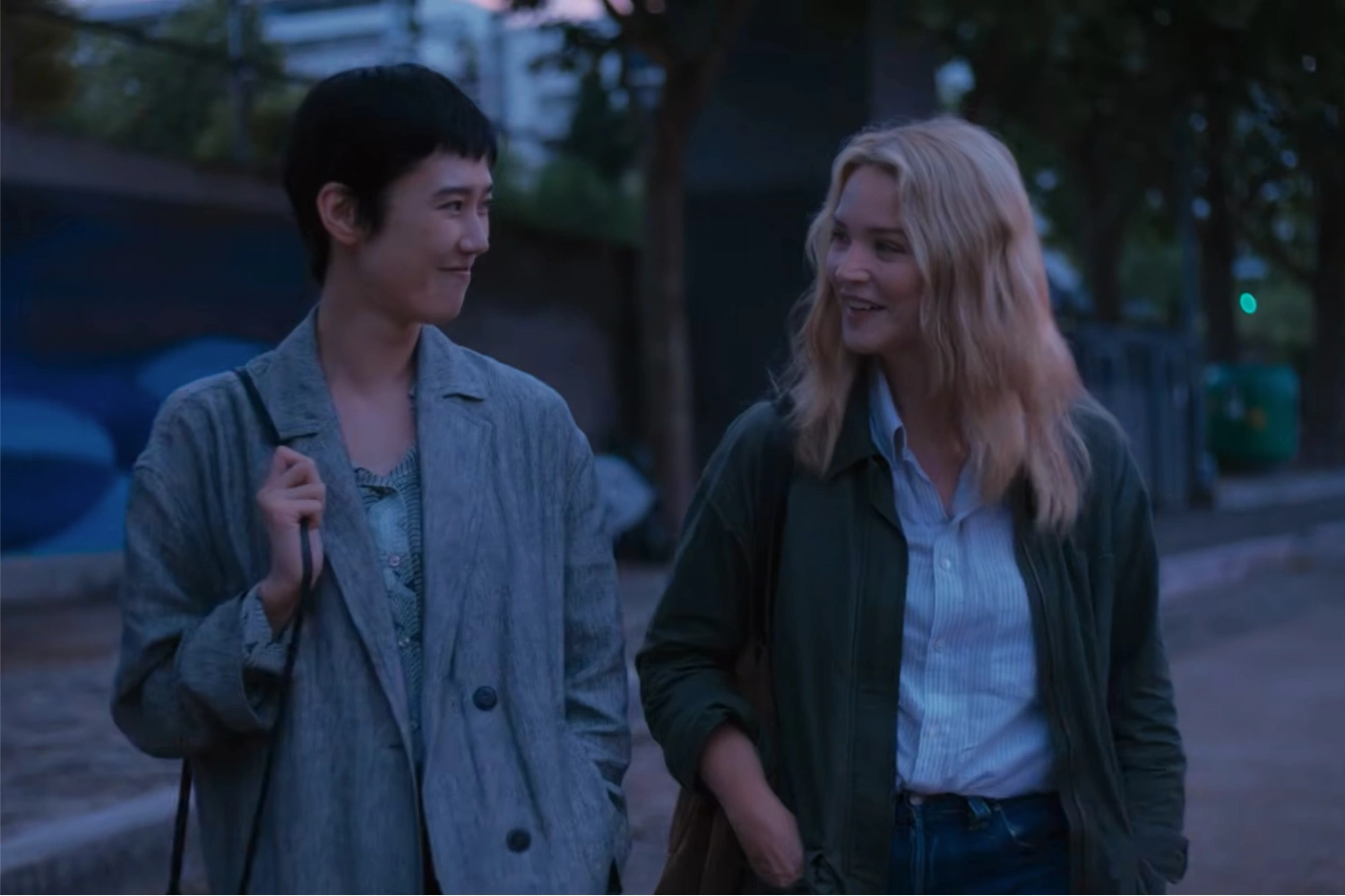
Ryusuke Hamaguchi returns with All Of A Sudden, a French-language feature co-written with Léa Le Dimna. Its narrative grows from the published letters between philosopher Makiko Miyano and medical anthropologist Maho Isono. Hamaguchi turns that intellectual spark into a film shaped around two distinct lives. Marie-Lou, played by Virginie Efira, is the deeply idealistic director of a senior care home in Paris. Her life crosses with Mari Morisaki, portrayed by Tao Okamoto, a Japanese experimental theater director living with a stage four terminal cancer diagnosis.
Their bond begins through an accidental encounter in a Parisian park involving Tomoki, an autistic youth left briefly unattended by Mari’s lead actor. From there, the film follows a month-long platonic friendship that resists the breathless pace many mainstream films chase. The story moves from crowded Paris streets to a quiet rural residence near Kyoto, Japan, shaping an artistic conversation about being fully alive.
Ideological Clashes and the Economics of Care
Much of the narrative unfolds inside the “Garden of Freedom” nursing home, a facility carrying the historical memory of its past as a psychiatric asylum. Marie-Lou tries to introduce a specialized patient care methodology called “Humanitude.” This framework values mobility, physical autonomy, and the inherent dignity of patients facing severe cognitive decline.
My own brief time volunteering in similar institutional spaces taught me how radical patient-first care can feel inside a rigid system. The method creates severe operational friction. An intense ideological clash forms between Marie-Lou’s unyielding idealism and the safety-first position of senior nurse Sophie, played by Marie Bunel, who sees these tedious procedures as an unrealistic demand placed on an already exhausted staff.
This localized dispute over medical ethics becomes a sharp study of modern labor trends. Hamaguchi expands the institutional portrait during an extended sequence in the staff breakroom, where Mari rolls out a physical whiteboard and lectures Marie-Lou on the way capitalistic structures devour human schedules, converting personal time into raw material for production. The scene works as bold political theater placed directly inside an independent drama, turning care work into a clear reflection of isolation under modern employment models.
Language, Sanity, and the Shift to the Physical
The onscreen partnership between Virginie Efira and Tao Okamoto rests on a beautiful symmetry. Their characters carry perfectly reversed educational histories: Marie-Lou previously studied in Japan, and Mari studied philosophy at the Sorbonne. That background feeds the screenplay’s linguistic design.
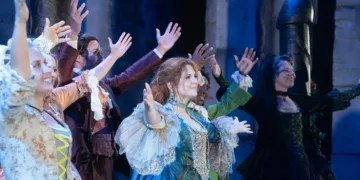
The characters move through fluid bilingual transitions between French and Japanese, turning language into a private sanctuary sheltered from external pressure. The choice fits the best impulses of contemporary independent cinema, giving deep internal connection the dramatic weight usually assigned to plot progression. Thematic force also comes from Mari’s stage production, titled “Up Close No One Is Normal,” performed with quiet intensity by Gorô, played by Kyōzō Nagatsuka.
This play-within-a-film borrows from the real-world teachings of Italian psychiatrist Franco Basaglia, directly challenging societal definitions of sanity and mental isolation. As the film progresses, Mari’s failing health forces both women to leave their high-minded academic debates behind.
Their connection shifts toward pure sensory presence. The film grounds this beautifully through minor subplots involving family identity tributes at the care home, where grieving relatives recount the life stories of dementia patients. Intellectual abstraction fades, leaving the immediate reality of touch, presence, and shared human warmth.
Visual Room and the Rhythms of Unhurried Time
On a technical level, the film succeeds by matching its heavy philosophical ideas with masterful formal execution. Cinematographer Alain Guichaoa uses spacious, deliberate framing throughout the runtime. That visual approach keeps the long, talkative dialogue sequences open and breathable, giving the actors room to inhabit each exchange. The structural pacing receives exceptional support from editor Azusa Yamazaki.
She inserts precise onscreen diary dates that track the brief temporal span of the narrative, setting the film’s massive scale against a plain sense of daily reality. This structural restraint shapes the sonic landscape. Composer Samuel Andreyev provides a minimal, carefully rationed musical score. By holding back the music, the audio design lets natural environmental sounds, such as distant birdsong, fill the theater space.
I found that sonic choice deeply comforting, reminiscent of peaceful afternoons spent in my own garden. Hamaguchi asks for a significant commitment from his audience with a 196-minute running time. This slow, patient temporal strategy deliberately avoids the quick-fix emotional beats of mainstream cinema. By taking its time, the film builds an honest, earned emotional payoff in the final chapter, bypassing cheap sentimentality and leaving an indelible mark on the viewer.
The feature film premiered at the Cannes Film Festival on May 15, 2026, receiving significant critical acclaim and an extensive standing ovation. Neon acquired the distribution rights for the United States market, while Diaphana Distribution will handle the theatrical release in France and Bitters End will manage the release in Japan. Because the project premiered very recently at a festival, it is currently unavailable to watch on home streaming platforms or in commercial cinemas. Audiences can look forward to seeing the movie in theaters later this year as individual regional rollout schedules are confirmed by the distributors.
Full Credits
Title: All of a Sudden
Distributor: Neon, Diaphana Distribution, Bitters End
Release date: May 15, 2026
Running time: 196 minutes
Director: Ryusuke Hamaguchi
Writers: Ryusuke Hamaguchi, Léa Le Dimna
Producers and Executive Producers: Renan Artukmaç, Bettina Brokemper, Charlotte Dauphin, Julien Deris, David Gauquié, Charles-Henri de La Rochefoucauld, Hiroko Matsuda, Jean-Luc Ormières, Kôsuke Oshida, Joseph Rouschop, Yûji Sadai
Cast: Virginie Efira, Tao Okamoto, Kyōzō Nagatsuka, Kodai Kurosaki, Marie Bunel, Marie Denarnaud, Gabriel Dahmani, Jean-Louis Garçon, Jean-Charles Clichet, Evelyne Istria, Jérôme Chappatte, Lazare Gousseau, Margot Maricot, Prescilia Follin
Director of Photography (Cinematographer): Alan Guichaoua
Editors: Yamazaki Azusa, Akimoto Minori
Composer: Samuel Andreyev
The Review
All Of A Sudden
All Of A Sudden stands as an extraordinary cinematic achievement that rewards patience with deep human truth. By rejecting conventional narrative pacing, Ryusuke Hamaguchi transforms a simple story of connection into a profound exploration of modern existence and institutional care. The film demands your time, yet it gives back a renewed appreciation for the immediate, sensory world around us. It balances sharp socio-political critique with immense emotional warmth, creating an unforgettable experience.
PROS
- Superb, naturalistic bilingual performances from Virginie Efira and Tao Okamoto.
- Thoughtful, spacious cinematography that keeps long dialogue scenes visually engaging.
- A sharp, articulate critique of capitalistic labor structures and institutional medical care.
CONS
- The 196-minute running time requires intense audience endurance.
- Certain academic arguments, like the whiteboard scene, can border on the didactic.