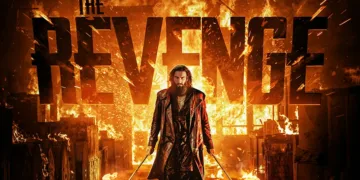



























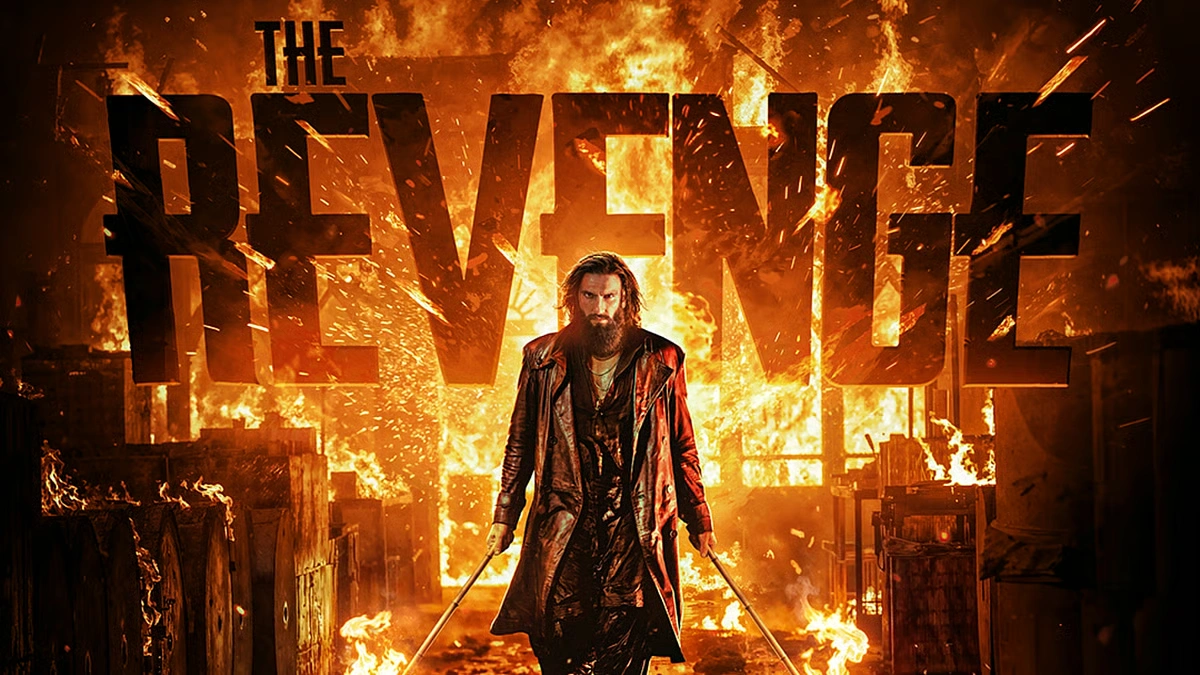

Aditya Dhar returns to the director’s chair with Dhurandhar: The Revenge, an expansive spy action follow-up extending the narrative established in his previous theatrical hit. Clocking in at just under four hours, this cinematic installment shifts from shadowy espionage thriller territory to a massive, loud exploration of retribution and state security.
The plot tracks Jaskirat Singh Rangi, an undercover Indian operative portrayed by Ranveer Singh, who maintains a deep cover identity as Hamza Ali Mazari within the treacherous Lyari crime syndicate of Karachi. This chapter charts his rise to dominance in the criminal underworld, with flashbacks revealing his dark origins as a military academy dropout driven by personal family tragedy.
As his clandestine mission expands, he targets international terror networks, matching wits with dangerous adversaries and entrenched deep-state operators. With an ensemble cast featuring R. Madhavan, Arjun Rampal, and Sanjay Dutt, the film balances heavy-handed spectacles of structural violence with aggressive political statements, aiming to captivate audiences through extreme sensory engagement and a hyper-masculine ethos of national sacrifice.
Cinema of Retribution: Character Evolution and the Broken Timeline
The narrative relies heavily on a fragmented timeline to reconstruct the psychology of its protagonist. Through sudden flashbacks, the audience witnesses the military academy exit of Jaskirat Singh Rangi. This sequence sets aside traditional patriotic devotion for raw personal trauma.
The inciting incident stems from a violent land dispute that decimates his family and results in the brutal confinement of his sister. This horrific origin story grounds his subsequent actions in a vendetta, which spymaster Ajay Sanyal, played by R. Madhavan, skillfully co-opts. Sanyal delivers a calculated, high-pitched speech that redirects the young man’s private rage into an instrument of state utility.
Once deployed in Pakistan, the story shifts to the immediate aftermath of the previous film’s climax. Jaskirat occupies the power vacuum left by the deceased gang lord Rehman Dakait. Assuming the underworld persona of Hamza Ali Mazari, he builds a vast criminal enterprise across Karachi’s Lyari district. His operational goal focuses entirely on freezing the financial assets that fund regional terror networks.
This rise to dominance brings him into sharp conflict with local power players. He faces constant opposition from the corrupt law enforcement official SP Chaudhary Aslam, played with trademark swagger by Sanjay Dutt, and the manipulative politician Jameel Jamali, portrayed by Rakesh Bedi with a sly, dark humor that provides rare moments of lightness.
Ranveer Singh anchors this sprawling narrative, shifting his performance from cold, tactical calculation to a state of unhinged ferocity. The production serves as an absolute showcase for his physical theater, though his heavily styled, loose curls sometimes feel incongruous with the gritty underworld setting. This performance echoes the hyper-macho archetypes of global action cinema, recalling western revisionist models like Sylvester Stallone’s later outings.
Opposing him is Major Iqbal, played by Arjun Rampal, who presents an icy, sneering counterweight representing the deep-state apparatus. This intense focus on male confrontation leaves the supporting ensemble significantly marginalized. Yalina, played by Sara Arjun, is isolated within a pristine luxury villa, reduced to a weeping archetype of domesticity while her husband orchestrates systemic slaughter. Similarly, the character of Uzair Baloch, played by Danish Pandor, remains neutralized inside a prison cell, existing as a narrative loose end with no active participation in the underworld power dynamic.
Maximalist Aesthetics: Pacing, Violence, and Sound Design
Spanning an unusually long three hours and fifty-five minutes, the film adopts a bloated architecture that mirrors the structural patterns of an extended streaming web series, far removed from the discipline of a theatrical release. Aditya Dhar segments the narrative using self-indulgent chapter headings. These grandiose title screens break narrative momentum and slow the cinematic flow.
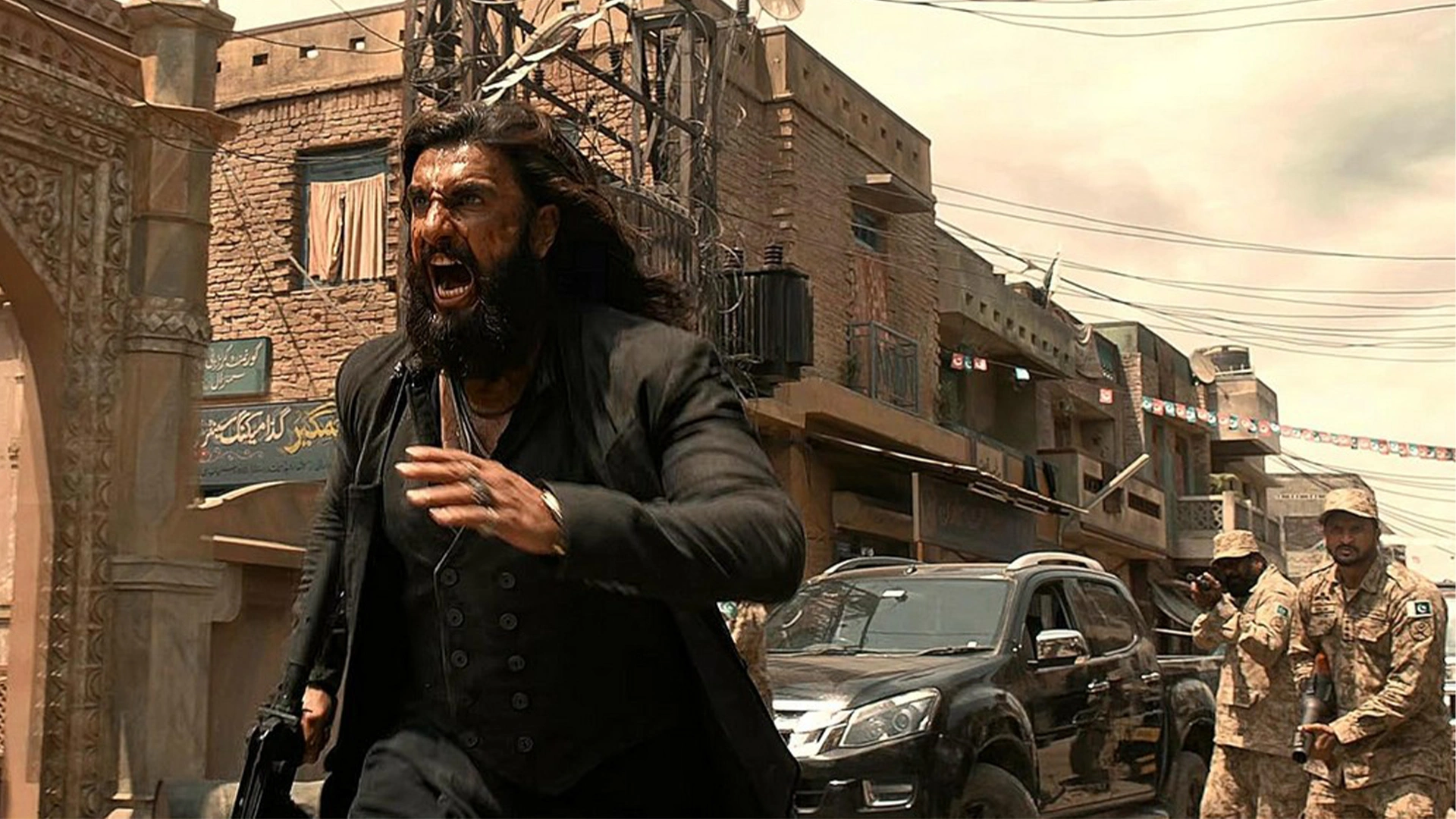
This pacing defect is exacerbated by a complete absence of narrative friction. The hyper-masculine protagonist moves through dangerous scenarios with an artificial ease, bypassing genuine logistical obstacles or tactical resistance, an execution choice that diminishes any sense of legitimate espionage thrill.
Visually, the director favors a maximalist aesthetic rooted in sensory overload. This approach emphasizes explosive fireworks and vast, stylized framing, prioritizing surface textures over interiority at the expense of substantive character development. The editing patterns favor rapid cuts that mirror modern music videos, aligning the film with global action trends that favor kinetic speed over spatial clarity.
The camera work frames the protagonist from low angles to exaggerate his physical dominance, turning him into a mythical figure. The visual vocabulary relies on graphic, gory action sequences. Audiences encounter a relentless assault of severed limbs, decapitations, and firearm executions staged at point-blank range.
This excessive violence threatens to desensitize the viewer, turning human conflict into an unfeeling technical exercise, and the emphasis on visceral impact over logic produces substantial credibility gaps in spy craft. In a particularly jarring sequence, the protagonist engages in a live FaceTime video call with his handler in India while simultaneously executing a target in a heavily stylized montage, a creative choice that fractures any grounded suspension of disbelief.
The auditory environment mirrors this uneven execution. Sashwat Sachdev’s original score fails to replicate the driving, cohesive energy that defined the music of the first installment. To compensate, the production leans heavily on repurposed musical nostalgia, injecting vintage tracks such as Boney M’s “Rasputin,” Bappi Lahiri’s “Tamma Tamma,” and Kalyanji Anandji’s “Tirchi Topiwala.”
These sonic selections feel abruptly pasted onto specific action set pieces, failing to grow organically from the scene dynamics. This reliance on classic compositions inadvertently highlights a lack of contemporary creative innovation, directing the viewer’s attention toward the historic artists and away from Sachdev’s current score.
Ideological Mechanics: Propaganda, Polarization, and Public Grief
The cinematic structure operates openly as a political manifesto, aligning itself directly with the ruling political establishment and the contemporary right-wing ecosystem. This orientation manifests through the explicit lionization of aggressive counter-terror operations, extra-judicial law enforcement actions, and targeted surgical strikes. By framing these state actions as absolute moral imperatives, the screenplay rationalizes unchecked security policies.
This tendency mirrors global historical precedents where high-scale fiction features are utilized to normalise partisan agendas, echoing the mechanics of classic mid-century political cinema. The political iconography becomes explicit through the prominent positioning of the Prime Minister’s political image. The dialogue mirrors state messaging directly, featuring foreign adversaries who openly reference a “tea-seller PM” to articulate the anxiety of opposing networks, a heavy-handed choice that positions current governance as a flawless shield.
This ideological framework depends on a severe simplification of complex international relations, reducing delicate regional diplomacy to highly polarized, black-and-white jingoism. This geopolitical reductionism is accompanied by a systematic conflation of national identity with specific religious demographics, blurring the distinctions between foreign actors and domestic minority communities.
The film presents citizenship as an uncritical, sacrificial contract, suggesting that true masculinity requires absolute deference to state directives. This clear-cut polarization serves to externalize complex internal systemic challenges. Long-standing domestic crises, including the narcotics epidemic in Punjab or civil militancy in Kashmir, are attributed entirely to foreign intelligence operations. By shifting the blame to external deep-state adversaries, the narrative completely absolves domestic institutions from policy failures or structural accountability.
A troubling aspect of this narrative strategy involves the systematic modification of public trauma for mass entertainment. The screenplay retroactively integrates genuine historical tragedies, citing the 2005 Delhi bombings, the 2006 train explosions, and the 2008 Mumbai terror attacks.
These painful historical realities are weaponized to validate the protagonist’s sociopathic violence, establishing a dangerous cinematic logic where national grief legitimizes lawless vigilantism. This pattern of systemic validation extends to controversial economic policies. The film incorporates the domestic policy of demonetisation, rewriting a highly contested fiscal decision as a brilliantly executed tactical maneuver designed to choke foreign terror financing.
This conversion of collective grief and manufactured social media anger into a highly stylized, profitable action vehicle turns historical wounds into commercial spectacle. The framework leaves no room for dissent, presenting a monolithic version of history that erases decades of diplomatic engagement between neighboring states, removing any space for quiet human reflection or systemic critique.
The film debuted in theaters across the globe on March 19, 2026, timed to align with multiple festive celebrations across India. Viewers seeking out this espionage action project can access the theatrical presentation worldwide, or watch the uncut digital edition on streaming channels including JioHotstar and Netflix.
Where to Watch Dhurandhar: The Revenge (2026) Online


Full Credits
Title: Dhurandhar: The Revenge
Distributor: Jio Studios
Release date: March 19, 2026
Rating: A
Running time: 229 minutes
Director: Aditya Dhar
Writers: Aditya Dhar, Ojas Gautam, Shivkumar V. Panicker
Producers and Executive Producers: Aditya Dhar, Jyoti Deshpande, Lokesh Dhar, Rahul H. Gandhi
Cast: Ranveer Singh, Arjun Rampal, Sanjay Dutt, R. Madhavan, Sara Arjun, Rakesh Bedi, Gaurav Gera, Danish Pandor
Director of Photography (Cinematographer): Vikash Nowlakha
Editors: Shivkumar V. Panicker
Composer: Shashwat Sachdev
The Review
Dhurandhar: The Revenge
Dhurandhar: The Revenge swaps narrative friction for loud, exhausting propaganda. While Ranveer Singh delivers a ferocious physical performance, the massive runtime and graphic excess turn a potential espionage thriller into a tiring political manifesto. It chooses visceral shock value over genuine human depth, flattening complex regional dynamics into basic jingoism. It functions efficiently as a technical spectacle, yet it lacks the storytelling discipline needed to justify its length.
PROS
- Ranveer Singh delivers an intense, physically demanding leading performance.
- Sanjay Dutt and Rakesh Bedi provide a charismatic, entertaining supporting presence.
- Slick technical assembly features high-scale visual design.
CONS
- The four-hour runtime introduces heavy pacing defects and structural bloat.
- Extreme, graphic violence functions to numb viewers instead of building tension.
- Heavy-handed political messaging reduces complex geopolitics to flat propaganda.
- Female and supporting characters face severe marginalization within the plot.
- Logistical absurdities in spy craft break basic suspension of disbelief.





A very biased review of an extraordinary movie almost perfect in the making. The reviewer’s biased political mindset is obvious in this intentionally disparaging review of a masterpiece. An almost 4 hours movie that makes you hold tight to your seat without even a single slow moment is an incredible achievement. The viewer feels like not to leave the theatre even after the post credit scene. Here the reviewer must have watched the movie in Netflix chit chatting with her friends. I feel sorry for her inability to appreciate great content