
















Floodland opens on Lismore, northern New South Wales, with the patience of a film that understands catastrophe cannot be measured by water height alone. This is Australia’s most flood-prone postcode, a town held together by affection, memory, habit, and stubborn local belonging.
In 2022, floodwaters reached a record 14.4 metres, leaving thousands displaced and turning thousands of homes into unsafe shells. Jordan Giusti’s documentary looks at that disaster through the long aftermath, where damage lingers in walls, streets, policy debates, nervous systems, and family decisions.
Giusti, making his first feature documentary, spent three years with the region. That time matters. Floodland resists the fast grammar of disaster coverage, the easy sequence of shock, tears, and exit. It stays after the cameras would usually leave. Mud dries.
Trauma settles. Buyback offers arrive. Activism grows. Love appears in unexpected places. Indigenous knowledge returns to the surface with the force of something ignored for too long. The film watches a town rebuild while facing a bleak truth: the river will rise again.
Living With the Waterline
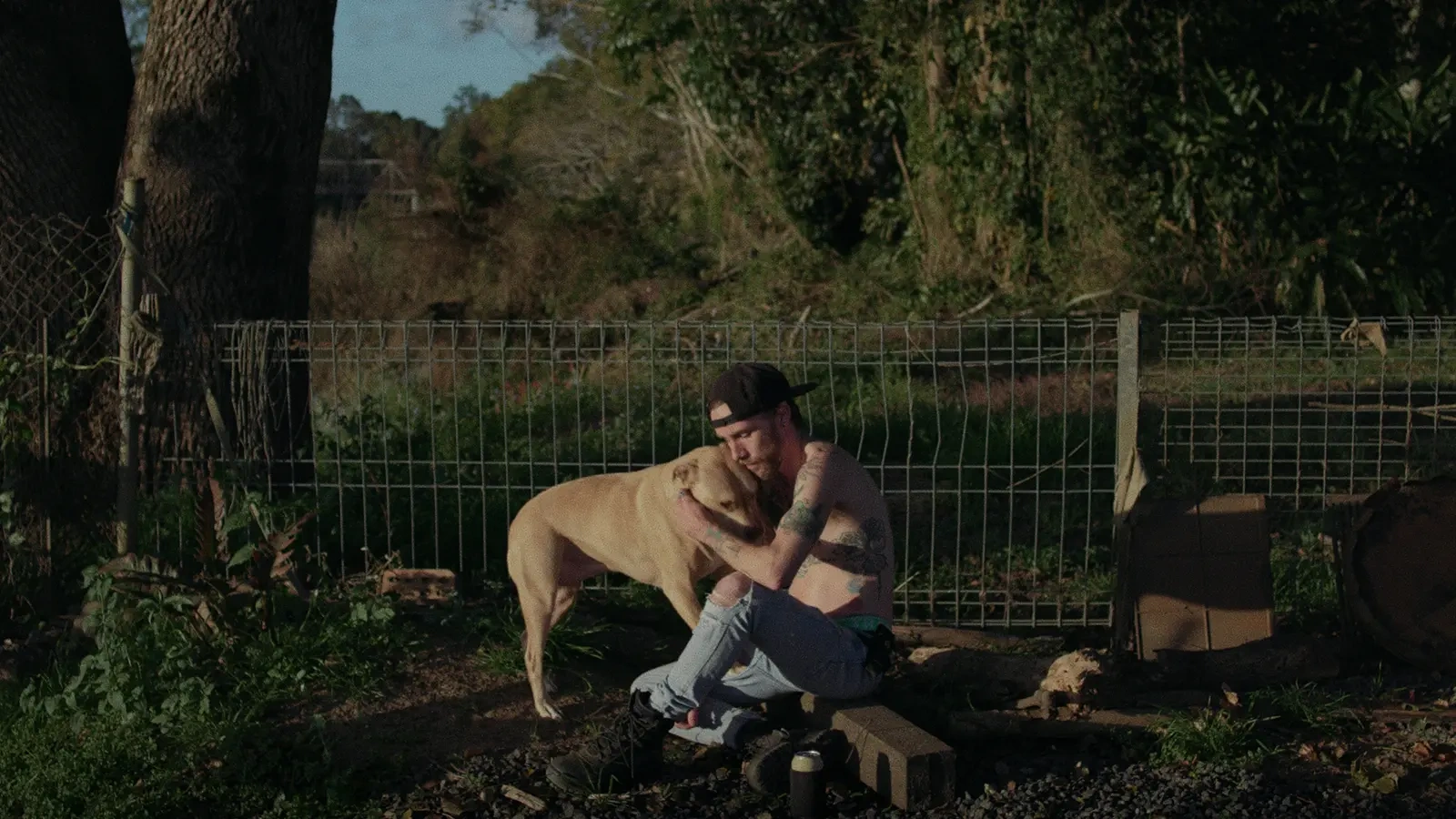
Eli gives Floodland its most immediate emotional shape. A lifelong Lismore resident, he speaks about the town with the frank tenderness of someone whose identity is tied to its soil, streets, and river bends. His dream of home ownership carries a painful irony.
He bought a house near the Wilsons River, raised nine metres above river level, trusting a local logic shaped by previous floods. Water came before, yet it had never crossed certain thresholds. Then 2022 shattered the threshold.
His story sharpens one of the film’s hardest questions: what does safety mean when it asks people to leave the place that made them? Eli’s government buyback offer gives him a possible exit, yet the offer is knotted with survivor’s guilt. A way out can feel like relief and betrayal at the same time. Giusti lets that contradiction sit without forcing it into neat moral language.
The relationship between Eli and Jess gives the film a soft pulse amid wreckage. Their bond formed after the flood, a reminder that renewal can appear without erasing grief. That detail could have become sentimental in clumsier hands. Here, it becomes part of the film’s moral texture: disaster changes lives by destroying, displacing, and sometimes connecting people who might never have met.
Harper, Eli’s friend, moves the film toward civic anger. His frustration with political complacency turns into grassroots activism, giving trauma a public vocabulary. Dr Carlie Atkinson, through her work with the Northern Rivers Community Healing Hub, brings another register entirely, one rooted in care, intergenerational pain, and First Nations healing. Floodland treats resilience as labor. It is cleaning, organizing, arguing, remembering, mourning, and trying again.
The River Remembers
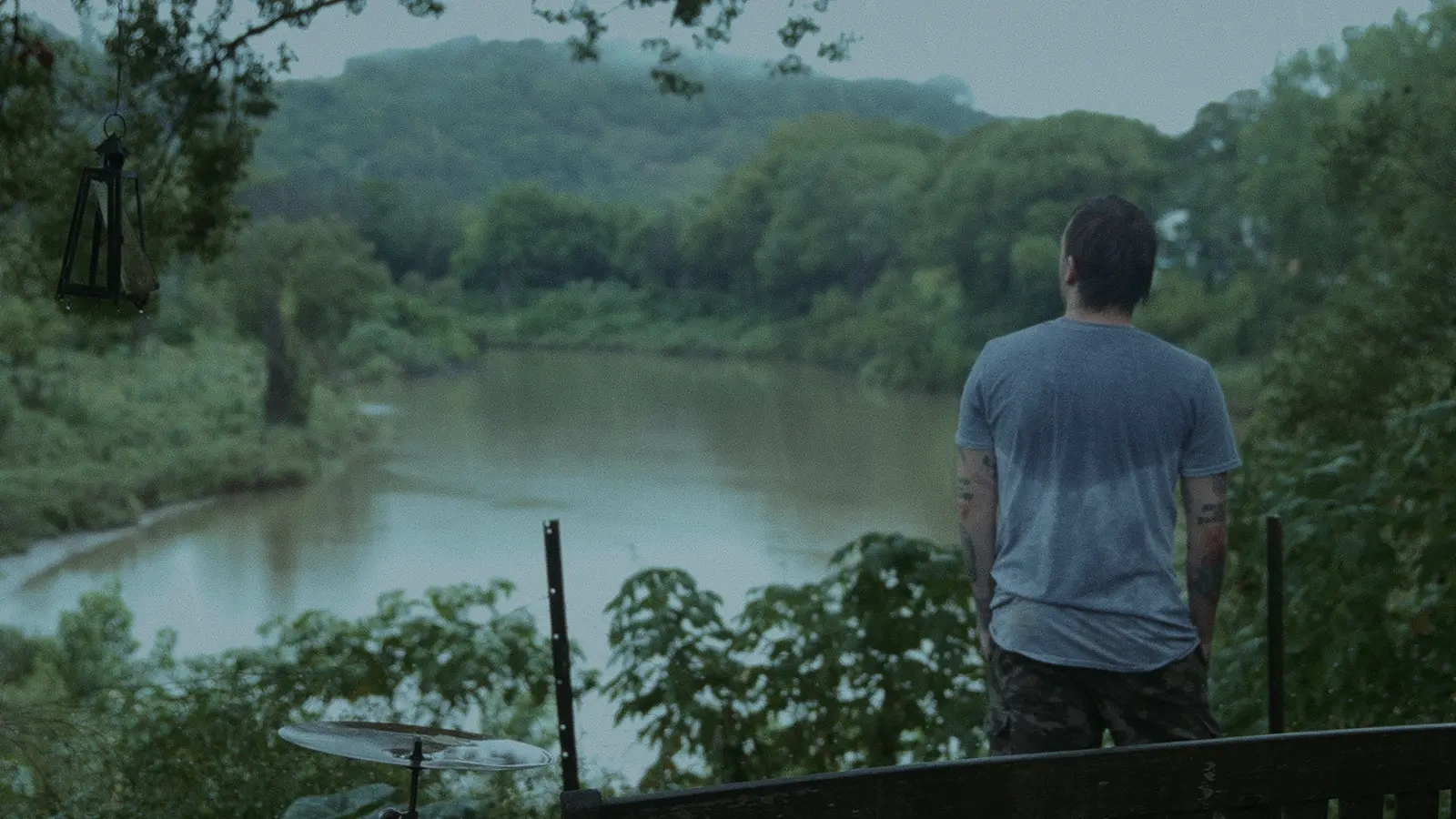
The Wilsons River is one of the film’s central presences. Giusti photographs it as a thing of quiet beauty, with rippling surfaces, green banks, and a calm that can look almost pastoral. Then the film turns, and that same water becomes a vast, brown force pressing against homes, swallowing streets, lifting cars, and pushing residents onto roofs. The river is never treated as evil. It is doing what rivers do. The disaster lies partly in the human insistence that permanence can be imposed on a basin built for water.
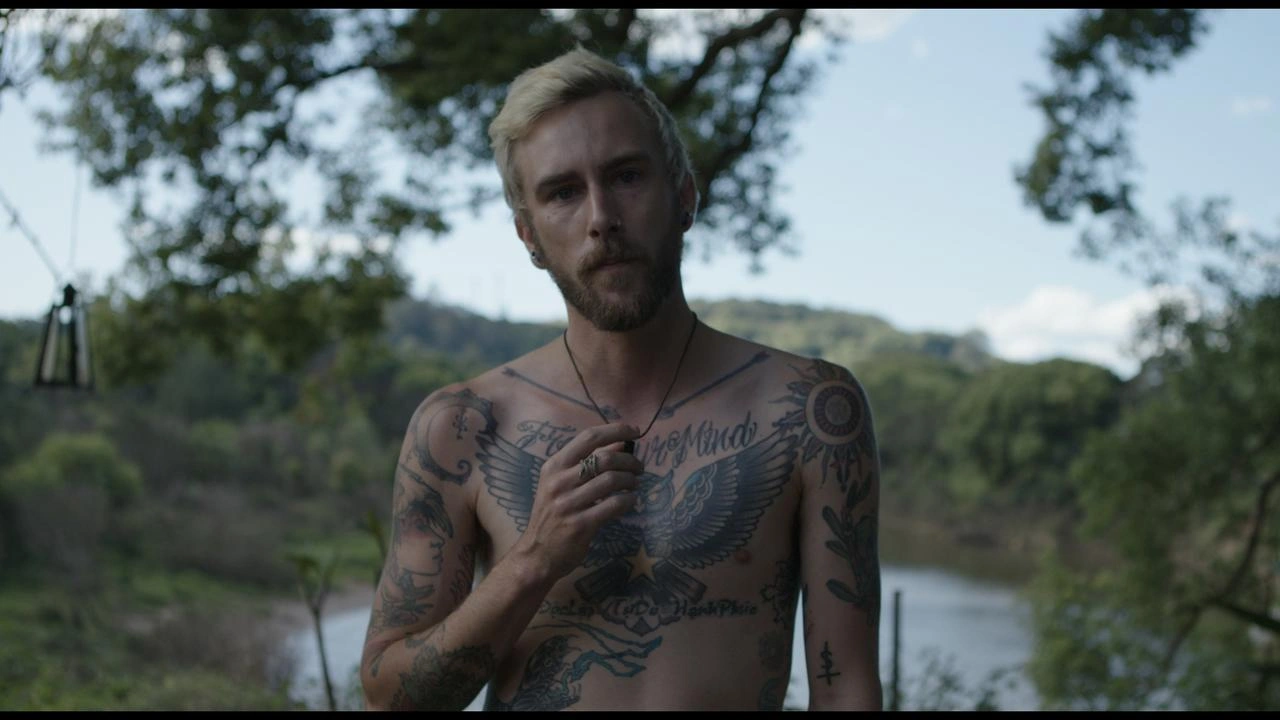
That idea gives Floodland its historical force. Bundjalung voices and First Nations perspectives cut through the false innocence of the town’s placement. The film draws attention to knowledge that existed long before colonial settlement: during heavy rain seasons, people moved higher into the hills. This was practical intelligence, carried through observation, memory, and respect for land. The colonial town ignored that intelligence, building fixed structures in a place that had already declared its conditions.
Giusti does not turn this into a lecture. He lets the evidence accumulate. Maps, testimony, ruined homes, and archival flood footage build a quiet indictment. The question is not simply why Lismore flooded in 2022. The deeper question is why so many people were left vulnerable after generations of warnings, earlier disasters, and failed debates about relocation.
The political critique is sharp because it stays close to lived consequence. Housing insecurity is not an abstract policy problem here. It is the sight of mud-covered belongings on footpaths, families waiting for answers, and residents measuring their future against another rain season.
The buyback scheme offers relief for some and frustration for others. Mental health strain becomes part of the landscape. Preparation arrives late, while memory fades too quickly between floods. Floodland makes Lismore feel specific, then lets its questions expand outward toward every community being asked to survive climate risk with outdated systems and partial remedies.
Mud, Silence, and the Shape of Aftermath
Giusti’s visual approach is calm without being passive. The opening images of lush greenery, bright skies, waterways, and quiet streets create a sense of place before disaster enters the frame. This matters because the film understands attachment before it shows loss. Lismore is not introduced as a warning sign. It is introduced as home.
The flood footage changes the film’s physical language. Thunderstorms bend trees. Water rises across floorboards. Residents move across roofs. Streets vanish under brown currents. Afterward, the camera finds ruined interiors, swollen walls, mud-caked rooms, destroyed possessions, and debris stacked along roads like the remains of interrupted lives. These images are striking, yet Giusti rarely frames them as spectacle. The camera lingers long enough for the viewer to read the damage as emotional information.
Sound plays a strong role in that effect. Cicadas, lapping water, scraping shovels, and stretches of silence give the film an attentive, grounded rhythm. The absence of constant explanation lets the material breathe. Archival footage deepens the work by showing that Lismore’s flood story stretches across decades. The past is not buried. It has been recorded, replayed, and somehow still inadequately answered.
The structure has a loose, drifting movement, shifting among residents, landscape, history, politics, and recovery. That looseness often suits the subject. A flood does not leave behind a single clean narrative; it leaves fragments, obligations, stains, decisions, and stories that keep changing shape.
Some threads feel thinner than others, and a leaner edit could have given the film a firmer dramatic line. The score, at times, presses emotion too heavily. These weaknesses remain modest beside the film’s larger achievement. Floodland is a compassionate, politically alert debut, made with visual sensitivity and deep regional care. It makes disaster personal without turning pain into display.
Floodland is an Australian documentary directed by Jordan Giusti. The film follows residents of Lismore, northern New South Wales, after the devastating 2022 floods, focusing on climate trauma, community recovery, First Nations knowledge, and the difficult choice between staying and leaving. It had its world premiere at the Sydney Film Festival on 14 June 2025 and opened in select Australian cinemas through Bonsai Films on 26 February 2026. As of 31 May 2026, the film’s official website lists online viewing for 1 to 7 June, along with upcoming Australian community and festival screenings.
Full Credits
- Title: Floodland
- Distributor: Bonsai Films
- Release date: 14 June 2025 at Sydney Film Festival, 26 February 2026 in select Australian cinemas
- Rating: M, coarse language
- Running time: 91 minutes
- Director: Jordan Giusti
- Writers: Jordan Giusti, Carlie Atkinson, Joseph Nizeti
- Producers and Executive Producers: Rachel Forbes, Gal Greenspan, Alice Burgin
- Cast: Carlie Atkinson, Judy Atkinson, Harper Dalton, Isabel Dickson
- Director of Photography: Bonita Carzino
- Editors: Daniel Wieckmann
- Composer: Samuel Pankhurst
The Review
Floodland
Floodland is a patient, humane documentary that turns a regional disaster into a layered study of home, memory, climate risk, and political neglect. Jordan Giusti’s debut has a few loose threads and moments where the score pushes too hard, yet its compassion and clarity give the film lasting force. It listens closely to Lismore’s people, honors First Nations knowledge, and captures the ache of loving a place that may no longer be safe.
PROS
- Compassionate and deeply human storytelling
- Strong focus on community resilience
- Beautiful, attentive cinematography
- Thoughtful use of archival footage
- Meaningful attention to Indigenous knowledge and climate risk
CONS
- Some story threads feel underdeveloped
- Pacing could have been tighter
- Score occasionally feels too sentimental