





























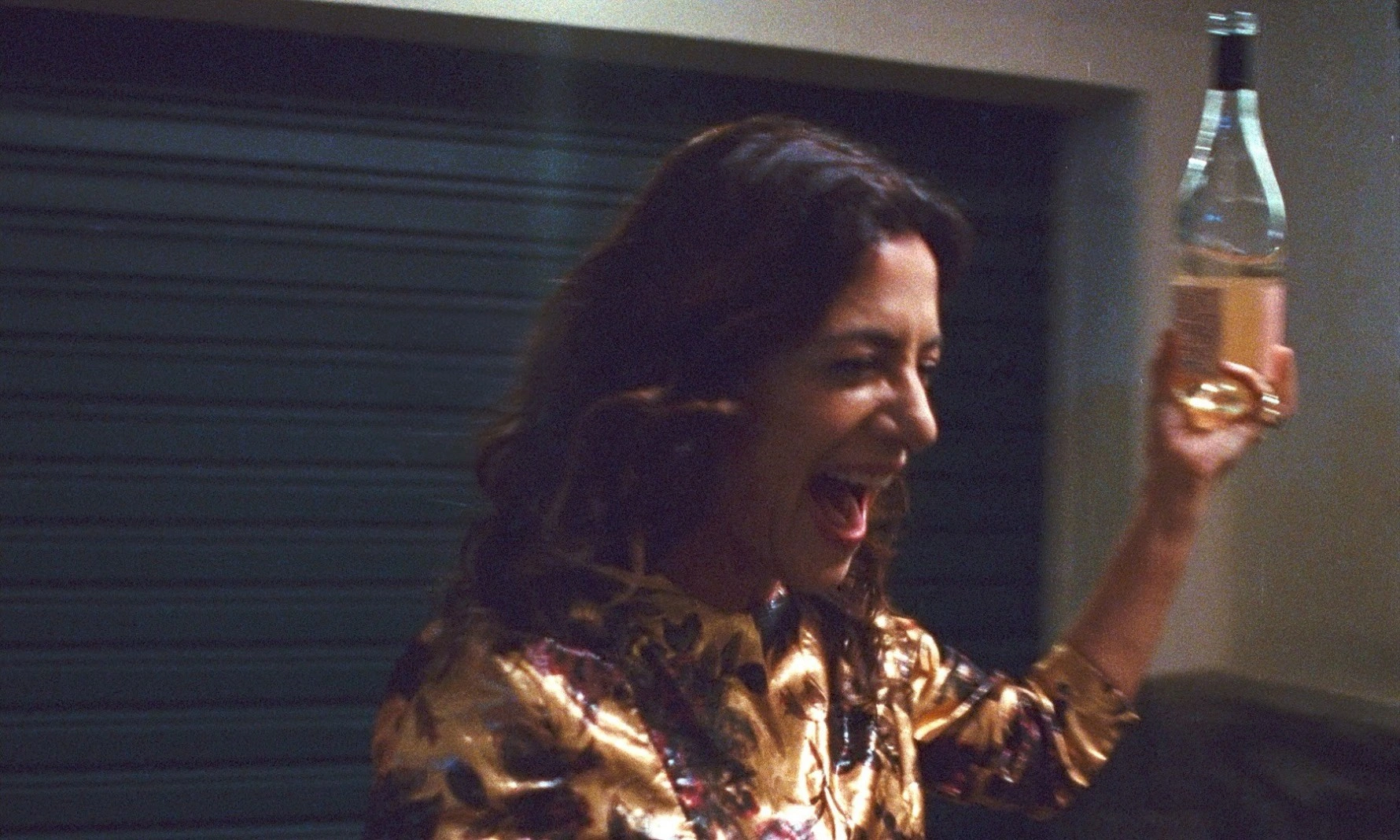

Isabel places its protagonist inside a very exact corner of São Paulo luxury dining. Marina Person plays Isabel, a sommelier whose calm professional surface covers a serious creative unease. At the Michelin-starred restaurant where she works, knowledge keeps running into the fixed logic of sales.
Tommaso, her boss, dismisses her interest in natural, rougher wines and favors safer labels with cleaner profit margins. The conflict gives the film its first clean narrative line: Isabel has taste, skill, and status, and none of them grants her real authority. Her dream is a place where curation can happen without surrender. Fred, her partner, gives that dream a gentler setting.
Their backyard winemaking scenes matter because they bring her craft back to touch, pressure, smell, and labor. Pat, an American investor, arrives as the possible door out. The script builds Isabel as a woman suspended between a career she has mastered and a venture that could finally belong to her. Her pursuit of agency takes shape inside a city drawn to polished prestige and wary of raw expression.
The Fragile Architecture of Ambition
Pat, played by John Ortiz, pushes the story toward the price tag attached to ambition. His first meeting with Isabel at the restaurant works as a quiet hinge in the drama. She asks about his musical taste before choosing his wine, and his punk preference gives her a reason to read him as a fellow rebel. It is a small scene, and a useful one. Their bond begins with taste. The financial power sits firmly on his side.
Later meetings carry the tension of a presentation deck without the mercy of slides. Isabel chooses outfits and locations with care, shaping herself into the version that might earn his money. In the cellar, she commands the room. Around capital, she has to wait for permission.
Nico gives the film a warmer support system. Caio Horowicz plays him as a loyal protégé, someone who absorbs her frustration and reflects her hunger. His choice to leave a stable job and follow her rests on Pat’s promised funding, which already feels dangerously soft.
The grape-stomping scenes turn shared labor into physical closeness. Their emotional ground is thinning. Fred’s trip to France for family needs leaves Isabel handling the business alone. The absence also makes their partnership feel increasingly distant. Isabel stands with ambition, talent, and an investor whose certainty changes like a difficult vintage.
Grainy Frames and Tactile Tastes
Flora Dias gives the film a dense sensory skin through grainy film and saturated color. São Paulo feels humid with style, every frame carrying the weight of modern interiors, late conversations, and carefully held glasses. The camera stays close to hands, faces, and liquid moving through glass, creating a public intimacy that can feel almost too near. Isabel seems to perform even within the field she knows best.
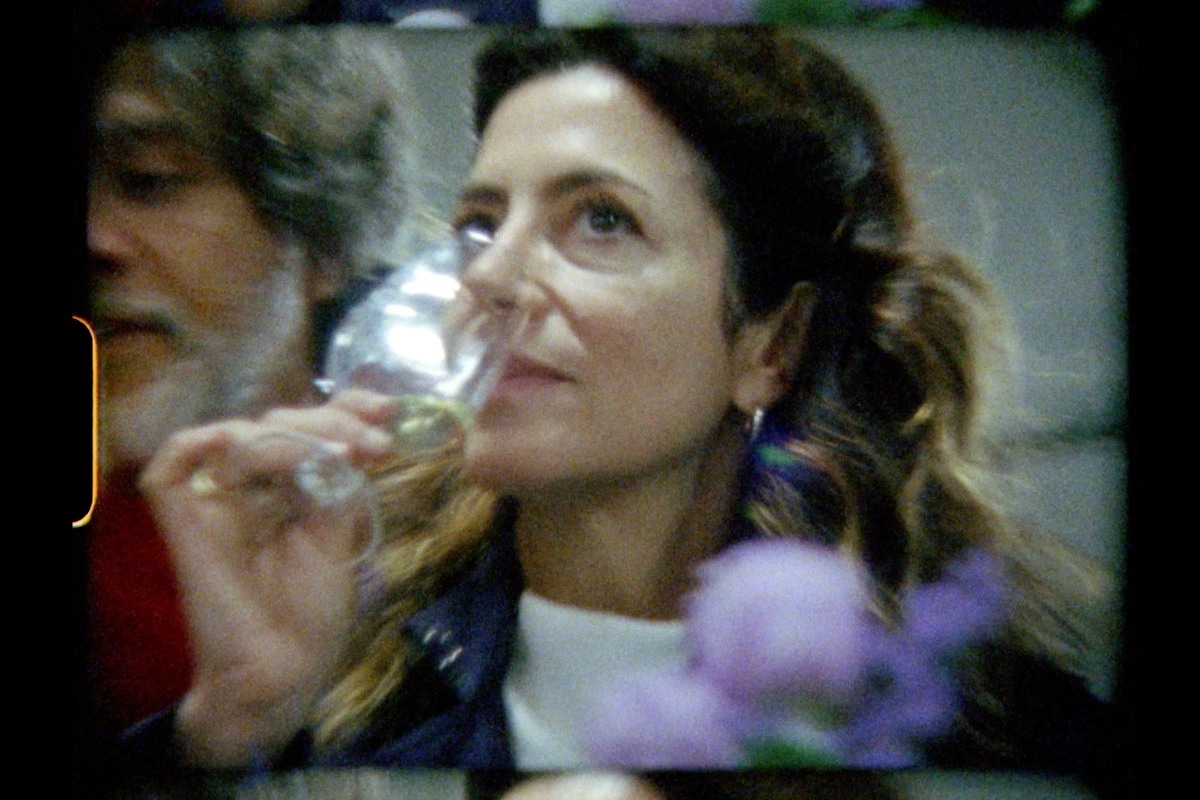
The soundtrack deepens that mood without crowding it. Soul ballads and Etta James tracks add warmth and a soft melancholy, guiding the film through long evenings of wine and talk. The domestic winemaking passages change the texture of the storytelling. The sleek restaurant gives way to physical effort: grapes, scent, pressure, and mess. These are the film’s most grounded scenes, since they return wine to raw material and human handling.
The direction gives sensory detail priority over heavy plot machinery. Bottles have weight. Sunsets have temperature. Grapes seem to have memory, which is a neat trick for fruit. This visual strategy makes Isabel’s internal conflict feel concrete. Her dissatisfaction becomes something that can be held, poured, and stained into the skin.
The Quiet Reality of Urban Dreams
The story gradually leaves the polished restaurant for the far less elegant mechanics of opening a bar. Isabel finds the space, then Pat’s expected investment fails to appear. The setback reveals a strange gap in her preparation. Given her years inside high-level dining, her innocence about commercial costs lands as a meaningful flaw in the character design. She has no formal plan and places too much faith in a verbal agreement.
São Paulo remains a stylish stage for this slow crisis, filled with cool cafes and minimalist apartments that define the film’s urban middle-class orbit. One image cuts through that polish with unusual sharpness. After a celebration, Isabel stands in a party dress beside hundreds of unbagged glass bottles as trash collectors move around her to clear the debris. The scene exposes the privilege built into her dream. Her aesthetic pursuit creates work for people she barely sees.
The film keeps the drama muted, favoring a serene rhythm close to an evening of steady drinking. That restraint suits the mood. It also softens the stakes. Conflicts lose force because consequences receive limited dramatic pressure. Financial ruin appears possible, yet Isabel seems cushioned by social position. The narrative closes without a conventional peak, settling into quiet compromise. Its final image of Isabel is dulled, a woman still fine after her grand ambition loses its edge.
Isabel premiered at the 76th Berlin International Film Festival on February 16, 2026, as part of the Panorama section. This Brazilian-French co-production explores the life of a dedicated sommelier in São Paulo who seeks independence by opening her own natural wine bar. As of May 2026, the film is making its way through the international festival circuit, having recently screened at the 16th Beijing International Film Festival. While a major streaming or wide theatrical release is still being finalized by its sales agents, Urban Sales is currently overseeing its global distribution.
Full Credits
Title: Isabel
Distributor: Urban Sales, RT Features, Urban Factory
Release date: February 16, 2026
Rating: Not Rated
Running time: 85 minutes
Director: Gabe Klinger
Writers: Gabe Klinger, Marina Person
Producers and Executive Producers: Rodrigo Teixeira, Michael Richter, Laila Pas, João Pedro Pereira-Webber, Berta Marchiori, Giovanni Labadessa, Taylor Waddell, Gill Holland, Aaron Linkow, James Cypress, Christian Todie, Piccolo Sood, Divya Thomas, Vikrant Chopra, Ashwani Chopra, Omri Cohen
Cast: Marina Person, Caio Horowicz, John Ortiz, Marat Descartes, Clarisse Abujamra, Gregory Chastang, Michelle Ellyse
Director of Photography (Cinematographer): Flora Dias
Editors: Gabe Klinger
Composer: Umberto Smerilli
The Review
Isabel
Gabe Klinger delivers a visually arresting portrait of professional restlessness that lacks the narrative bite to match its sensory richness. Marina Person provides a grounded performance as a woman caught between her passion for natural wine and the cold reality of entrepreneurship. While the film captures the textures of São Paulo with grace, it remains too polite to explore the deeper class tensions it introduces. It is a pleasant experience that prioritizes atmosphere over impact.
PROS
- Tactile and grainy cinematography by Flora Dias.
- Grounded and authentic lead performance by Marina Person.
- Rich sensory focus on the winemaking process.
- Stylish and evocative portrayal of contemporary São Paulo.
- Effective atmospheric score featuring classic soul ballads.
CONS
- Thin narrative stakes that fail to escalate.
- Unaddressed social privilege within the protagonist's journey.
- Naive approach to the commercial realities of business.
- Underdeveloped supporting characters.
- Absence of a transformative or high-impact emotional moment.