















![Kingdom Hearts Collection [I-III] Review](https://gazettely.com/wp-content/uploads/2026/10/Kingdom-Hearts-Collection-I-III-1-360x180.webp "Kingdom Hearts Collection [I-III] Review: KHII Holds Steady as Newer Entries Fluctuate 37")




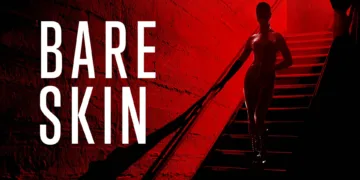
Mico Montes makes his directorial debut with Bare Skin, a psychological horror feature built around a narrow physical and social arena. The story takes place inside a dark, hostile rehabilitation facility, where six strangers assemble under the supervision of Dr. Hedonia, played by Rachel Alig.
Her treatment method depends on rigid protocols meant to peel away public identity. Participants stay seated. They avoid physical contact. They use first names to preserve anonymity. Hedonia frames the group as a synthetic family unit, a controlled social experiment shaped by discomfort, ritual, and obedience.
That space gives the film its claustrophobic force. With a 140-minute runtime, Montes lets dread gather slowly across the room, scene by scene, confession by confession. His style favors atmosphere and psychological weight over the fast rhythm often associated with modern genre filmmaking.
The facility becomes a sterile laboratory for extreme trauma, a place where personal history is examined through performance, memory, and controlled exposure. The result carries the feel of a chamber piece filtered through horror, where the architecture of therapy begins to resemble a trap.
Fractured Perspectives and Portmanteau Logic
Bare Skin works as a hybrid between a single narrative and a portmanteau anthology. The wraparound therapy-room material receives the same dramatic weight as the individual backstories, giving the film an unusually balanced structure for this kind of horror. Each participant’s history appears as a separate cinematic passage, turning confession into visual reconstruction.
Lenny, played by Torrey B. Lawrence, recounts a house fire that transforms grief into a fixation on pyromania. Dev’s section pushes the film into surreal terrain. Ryan Wayne plays a man hunted in a forest by a killer who attacks with a razor-edged violin bow.
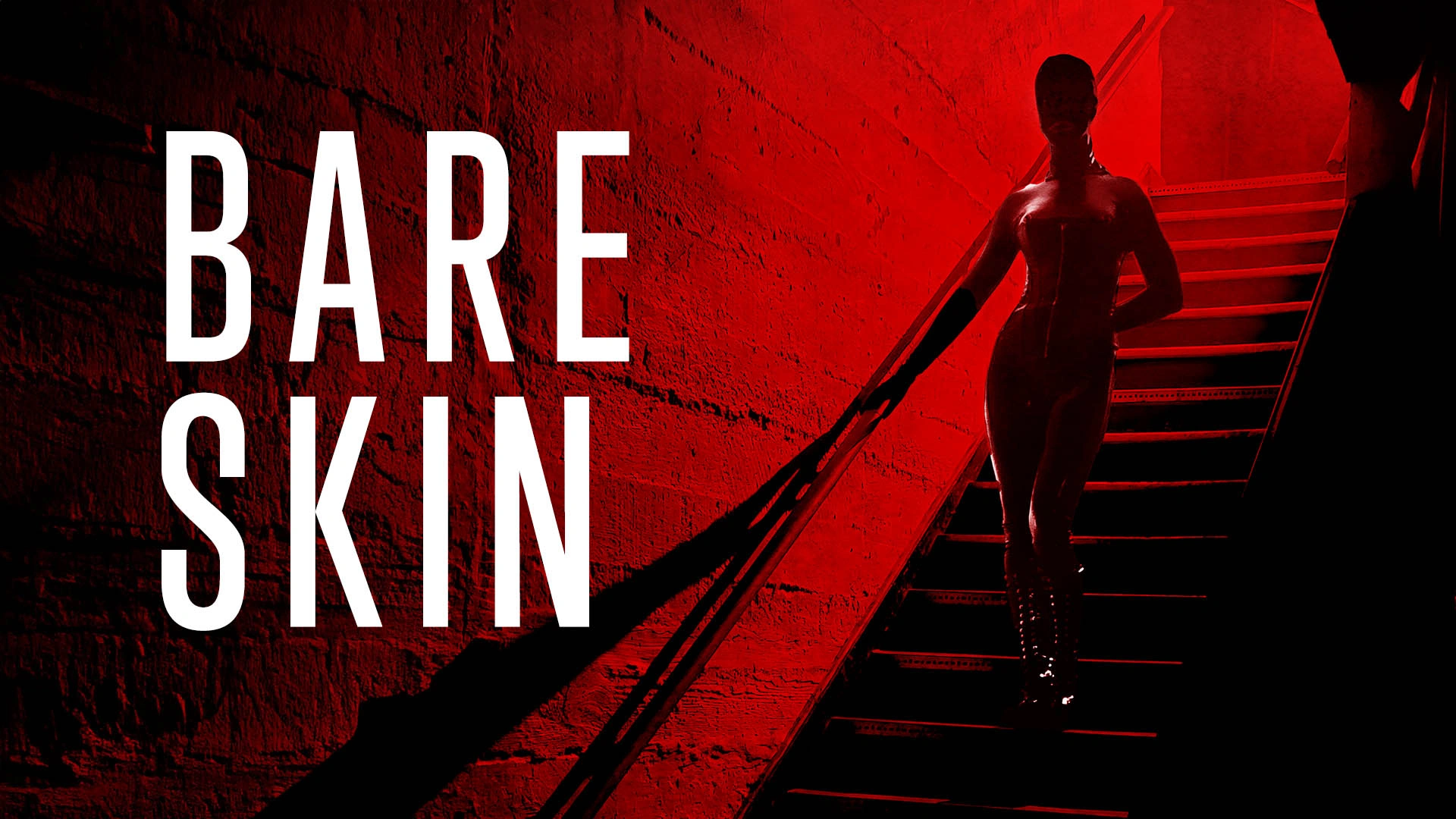
Claire’s story shifts the register again, with Ariana Livingston moving through a narrative involving a latex-clad dominatrix and the physical brutality of torture. Other segments include a kidnapping and a psychotic break involving a neighbor named Heidi.
These stories carry distinct visual identities. Some draw from classic European horror, with heightened style and ritualized menace. Others feel closer to gritty modern survival cinema. The cultural range matters because Montes treats trauma as a shared language across different genre traditions. The therapy scenes receive as much attention as the violent episodes, forcing the viewer to stay with the damage after each account has ended. The pacing mirrors the circular process of memory, where past events return through repetition, distortion, and emotional residue.
The Aesthetic of Clinical Observation
The film’s aesthetic identity depends heavily on Max Goldberg’s cinematography. His camera uses symmetry and slow zooms to create the feeling of clinical observation. That precision recalls the cold visual control often associated with contemporary South Korean thrillers, where composition can feel as threatening as action. Wide shots frequently make the characters appear small inside dark frames, reducing them to specimens within a carefully controlled environment.
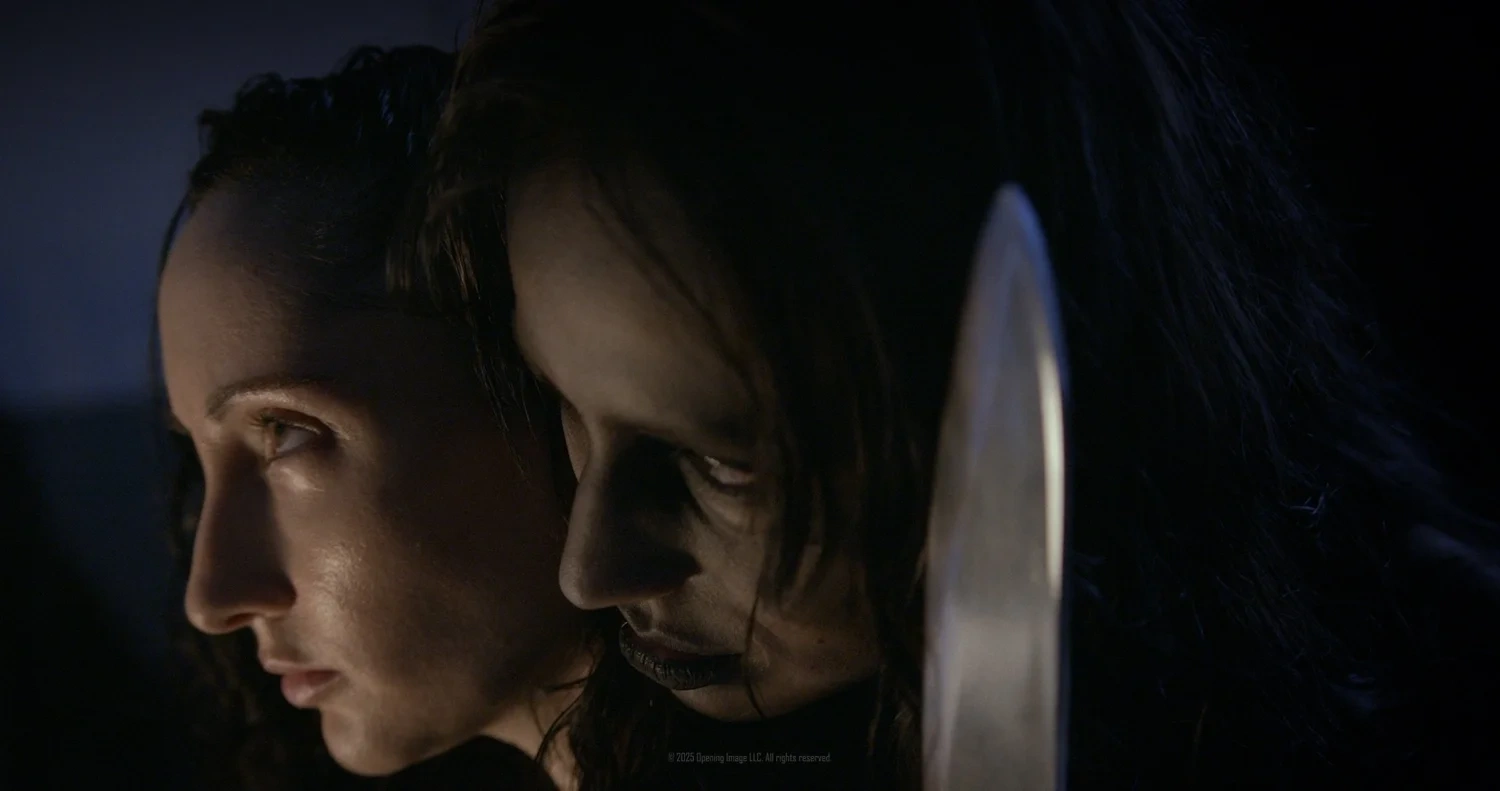
This visual discipline meets a script built around theatrical monologues. The dialogue leans into violet prose, with characters speaking in ornate, dramatic sentences. Their exchanges feel closer to staged storytelling than everyday conversation. That choice asks the audience to accept the film’s internal logic, where testimony becomes performance and therapy becomes a stylized ritual. The effect can feel artificial, yet that artificiality fits the film’s enclosed world.
The sound design remains one of the film’s more divisive elements. A loud score often competes with the dialogue, while the voices sit lower in the mix. The listener experiences unease through imbalance, which suits the psychological material while creating moments of strain. For the physical horror, Montes uses practical effects to ground the suffering. The film includes images of starvation, heavy scarring, and direct bodily violence. The gore has a gritty sincerity, giving the wounds a blunt texture.
Editing tightens the tension through close framing during vulnerable confessions. Moody lighting leaves much of the facility in shadow, turning the environment into an active threat. The visual storytelling aligns with the narrative design here: the room controls movement, the camera controls perspective, and the characters’ memories control the film’s fractured rhythm.
The Psychological Corrosion of Shared Trauma
Bare Skin studies how pain reshapes identity and how untreated trauma can become self-destructive. The film suggests a form of psychological corrosion, where the borders between personal histories begin to dissolve. As the characters speak, their stories develop links that bind them within the same emotional system. The final act reframes the material that came before, offering a chilling thematic payoff built around the group’s connection.
The 2025 Shock-a-Go-Go festival recognized Montes’ severe vision, awarding him Best Feature and Best Director. The film presents him as a significant new voice in indie horror. It also shows how low-budget filmmaking can use limitation as a creative engine. The narrow setting, long runtime, and controlled performances give the film a specific identity, one shaped by patience and discomfort.
Montes favors a slow cumulative impact. The film moves away from the quick shocks common in commercial horror and aligns itself with transgressive cinema, where the desired effect is psychological disturbance. Its interest in the vulnerable human psyche gives the work its atmospheric depth. The sincerity of the performances and the commitment to a fixed tonal register help Bare Skin hold its grip. It points toward genre work that expects attention, patience, and a willingness to sit inside unease.
Bare Skin premiered on digital platforms on February 23, 2026. This psychological horror anthology is a production of Opening Image Productions and is available through Miracle Media. The film uses a group therapy setting to explore the impact of extreme trauma on the human psyche. It is currently available for purchase or rental on digital services such as Prime Video and Apple TV.
Where to Watch Bare Skin (2025) Online









Full Credits
Title: Bare Skin
Distributor: Miracle Media, Opening Image Productions
Release date: February 23, 2026
Rating: R
Running time: 142 minutes
Director: Mico Montes
Writers: Mico Montes
Producers and Executive Producers: Shaiza Lalji, Cassandra Lesko, Mico Montes
Cast: Rachel Alig, Torrey B. Lawrence, Ariana Livingston, Ryan Wayne, Alberto Henriquez, Gabrielle Salinger, Avery Norris, Christina Kroell
Director of Photography (Cinematographer): Max Goldberg
Editors: Mico Montes
Composer: Clarence L. Keller
The Review
Bare Skin
Bare Skin is a demanding piece of genre filmmaking that prioritizes atmospheric weight over traditional pacing. Mico Montes delivers a dense study of psychological corrosion through a structured, clinical lens. While the theatrical dialogue and uneven sound design create barriers, the film maintains a gritty sincerity. It provides a rewarding experience for those who value thematic depth and an uncompromising creative vision. This debut establishes a strong foundation for a filmmaker willing to explore the darkest corners of the human psyche.
PROS
- Strong visual identity using symmetry and moody lighting.
- Creative integration of anthology segments within a cohesive narrative.
- Memorable, transgressive imagery.
- Authentic investigation into the impact of trauma.
CONS
- Excessive runtime that risks fatigue.
- Lower dialogue clarity due to the audio mix.
- Theatrical script style that lacks realism.