

























Yuri steps off the train with a severe bob and an architect’s spatial intelligence, a metropolitan silhouette placed against Nagi’s soft agricultural plain. The town sits roughly 630 kilometers from Tokyo’s electric glare, a distance that feels temporal, almost civilizational.
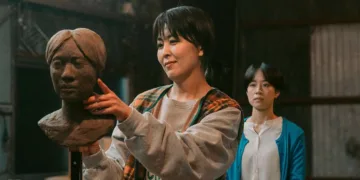
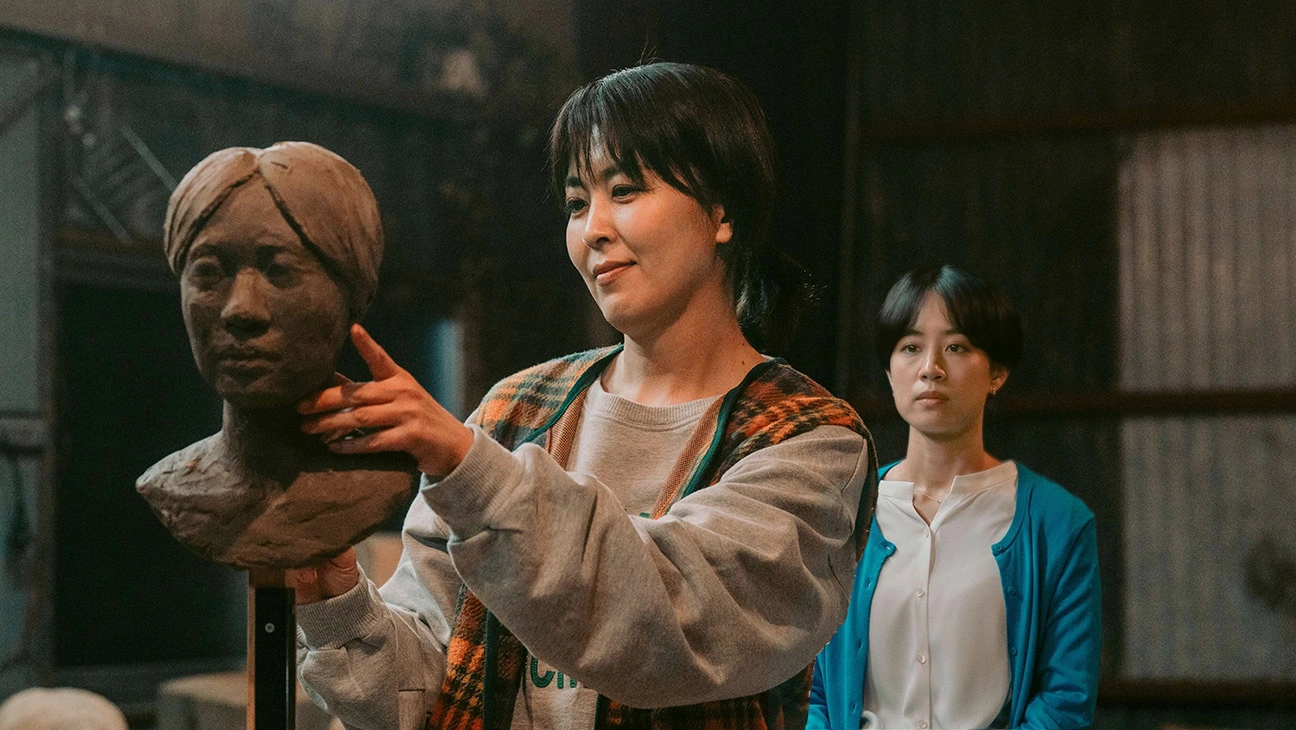
Director Koji Fukada treats the story with patient observation, letting the viewer acclimate to rural movement, rural silence, rural duration. Yuri has come to visit Yoriko, her former sister-in-law, who divides her days between dairy work and the precise carving of wooden busts.
The premise has the clean geometry of a parable. Yoriko asks Yuri to pose for a sculpture, and the barn becomes a chamber of looking, waiting, and psychic measurement. The film turns this request into bio-architectural reckoning, a useful little phrase for the way these women rebuild identity through bodies, material, and shared space. Keita, a young boy, greets Yuri after recognizing her from a sketch. Art meets flesh before anyone has had time to unpack a bag. From there, the film settles into a week of slow revelation and quiet thought about Japan’s rural interior.
Reclaiming the Familial Ghost
The connection between Yuri and Yoriko exists outside clean social categories. In a society shaped by patriarchal expectations, divorce often cuts a woman away from her husband’s lineage. She becomes a visitor to her own former life, a ghost with no shrine. Yuri and Yoriko refuse that erasure.
Their friendship becomes a mild scandal of persistence, a private correction to the traditional Japanese family structure. They meet as intellectual equals, an architect and a sculptor testing the shape of their continued relevance.
The barn conversations carry none of the polished warmth of domestic performance. They speak about aesthetics and the strain of being female practitioners in fields dominated by men. Yoriko’s return to the family farm reads as strategic withdrawal with teeth. She occupies the farmhouse that her brother, Masato, was expected to inherit under custom. By staying, she claims a space that primogeniture would have withheld from her.
These women serve as reference points for each other, coordinates in a social map that keeps trying to delete them. Their solidarity is practical, tender, and unsentimental. It recognizes the fractures created by self-determination under old codes. They create a familial intimacy washed clean of legal duty, replacing obligation with alert curiosity about the other’s spirit. A strange kinship remains. It has better bones than the official version.
The Sonic Dissonance of a Plywood Sanctuary
Yoriko’s art is a tactile study of presence. She works with camphorwood and clay, guided by a collaborative philosophy that treats subject and material as active agents. Her studio has the patience of old labor. Time gathers in wood shavings. The serenity keeps being pierced by the modern state. The dull, rhythmic thud of munitions drills from the nearby military base reminds the viewer that Nagi is a strategic site, no matter how pastoral the hills look.
This environmental friction gives the film its political charge. The local radio plays melancholic music to mark a resident’s death; the mountains answer with rehearsed warfare. The Nagi Museum of Contemporary Art sits in the landscape like a geometric alien, a government reward for the town’s tolerance of military presence. Yoriko moves through these pressures with grounded grace. She calls herself alone and still connected, a distinction rooted in her bond with the physical world.
She milks neighbors’ cows in the morning and carves souls in the afternoon. The film captures the chronos-static quality of rural life, where the world past the hills, including a far-off war in Ukraine, arrives like a transmission from another planet. The art museum and the military base become twin signs of state imposition. The creative act remains private, stubborn, and difficult to occupy. Call it plywood sovereignty, if one wants to be a little ridiculous. The phrase fits.
The Upside-Down Lens of Liberation
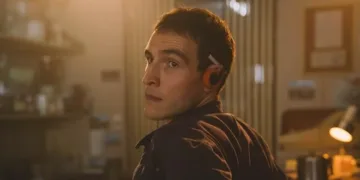
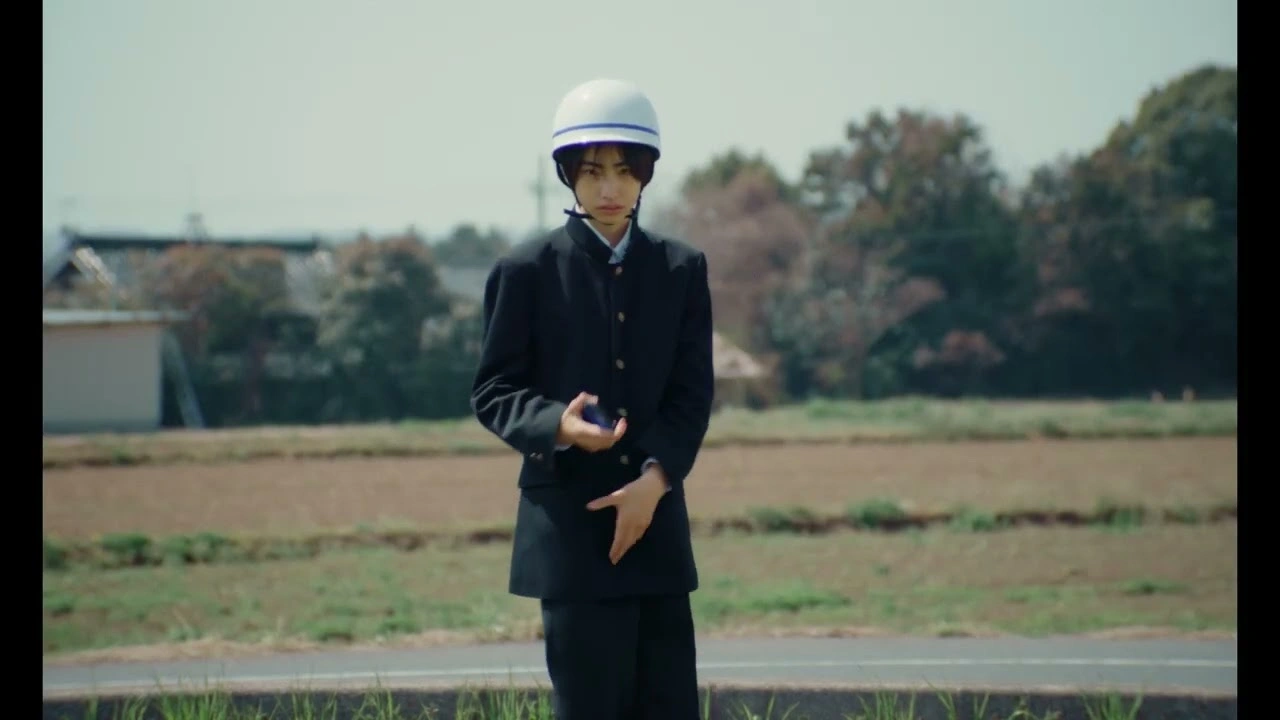
The subplot involving Keita and Haruki gives the film a tender, urgent countercurrent to the women’s measured reflections. As art students under Yoriko’s wing, the boys learn to see before they can speak their truths. A key moment arrives through a camera obscura, a device that flips the world upside down.
The metaphor is exact without becoming fussy. Their existence in a traditional agricultural society is already inverted, skewed, quietly disobedient. They are mapping an inchoate erotic landscape, searching for a masculinity apart from the military base and the rice paddy.
Yoriko’s own history, her past love for Haruki’s mother, haunts the margins of their discovery. The film moves toward a climax of wonderfully low stakes and real emotional force: three runaway cows escape during a storm. This bovine exodus mirrors the human wish to slip free from the herd logic of conformity. Fukada suggests that liberation can happen without flight to the city. Peace can be made by owning one’s space and naming one’s loneliness before it hardens into a prison.
Keita and Haruki appear headed toward the same freedom from social approval that Yoriko has cultivated. The story moves with a lulling, canoe-like rhythm, then reaches a place that feels genuinely hopeful. It encourages quiet, full-throated persistence for those made invisible by custom. Truth, like sculpture, emerges through repeated pressure: chip away at expectation, study the grain, keep working until the hidden form can breathe.
Nagi Notes premiered today, May 13, 2026, in the main competition of the Cannes Film Festival. This event marks the official world premiere of Koji Fukada’s latest work. Following its festival circuit, the film is scheduled for a theatrical release in Japan on September 25, 2026. Audiences can currently find it screening as part of the official selection at Cannes. International distribution is being handled by MK2 Films. Future streaming or domestic theatrical availability will follow the festival circuit.
Full Credits
Title: Nagi Notes
Distributor: MK2 Films
Release date: May 13, 2026
Running time: 110 minutes
Director: Koji Fukada
Writers: Koji Fukada
Producers and Executive Producers: Atsuko Ohno, Ryo Nagai, Michiaki Tsunoda, Terutaro Osanai
Cast: Takako Matsu, Shizuka Ishibashi, Kenichi Matsuyama, Waku Kawaguchi, Kiyora Fujiwara, Sawako Fujima, Ron Mizuma, Shin Seo-gye
Director of Photography (Cinematographer): Hidetoshi Shinomiya
Editors: Sylvie Lager
Composer: Lee Pei-Chin
The Review
Nagi Notes
This film is a quiet triumph of observational cinema. It captures the complex interplay between tradition and personal liberation with remarkable sensitivity. The tactile focus on the artistic process provides a rare window into the characters' inner worlds. While the pacing is intentionally slow, the emotional payoffs are rewarding. Fukada has crafted a nuanced portrait of modern Japan that lingers in the mind. It is a beautiful study of finding belonging in the spaces between people.
PROS
- Exquisite cinematography that captures the rural landscape with clarity.
- Nuanced and restrained lead performances.
- A profound exploration of creative labor as a means of communication.
CONS
- The deliberate pacing may feel slow for some viewers.
- Certain secondary subplots feel less integrated than the central narrative.