
























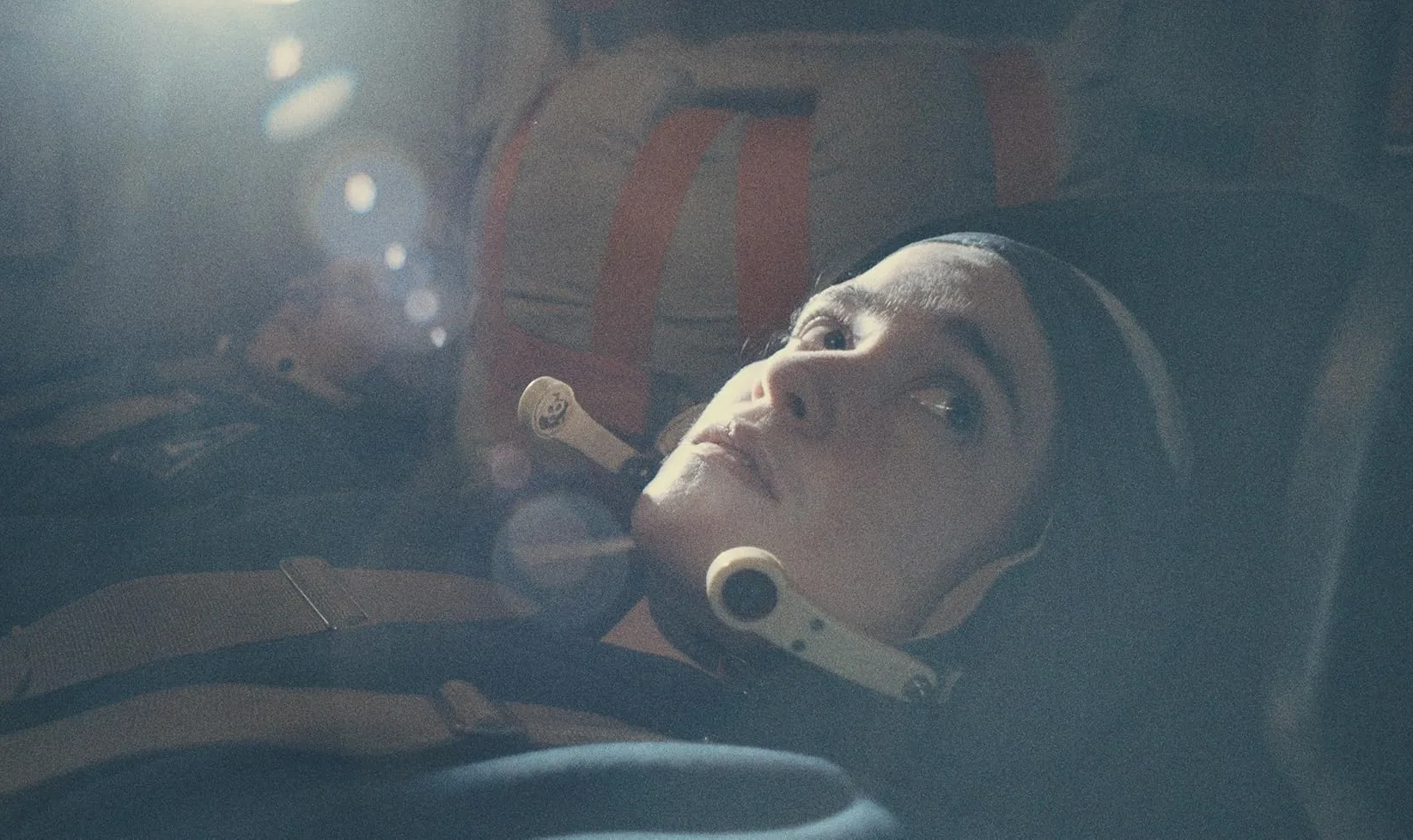

Star City begins where triumph should live. The Soviet Union has reached the moon first, history has tilted, and the great machinery of national pride should be roaring at full volume. Instead, Apple TV’s For All Mankind prequel turns celebration into unease. A man achieves the impossible, then receives his reward in secrecy, anonymity, and the reminder that genius is useful only so long as the state can keep it locked in a drawer.
Created by Ben Nedivi, Matt Wolpert, and Ronald D. Moore, the series shifts the franchise’s attention behind the Iron Curtain, into the military town that houses the cosmonauts, engineers, spies, handlers, and frightened spouses tied to the Soviet space program. This is a colder sibling to For All Mankind, swapping much of that show’s space-age hope for a paranoid Cold War thriller where the most dangerous room may be an office full of headphones.
The central contradiction is sharp: space promises escape, wonder, and human daring, while life on the ground is governed by secrecy, fear, and political obedience. In Star City, the sky is open. Everything else is bugged.
The Moon Landing as a Locked Door
The series makes smart dramatic use of its starting point. The Soviet lunar victory is not treated as pure glory. It is a trap with medals. The unnamed Chief Designer, played by Rhys Ifans with a neat mix of charm, calculation, and exhaustion, has altered history, yet he remains a man the world is not allowed to know. His brilliance has given the state a myth, and the state responds by tightening the leash.
That irony gives Star City its strongest structural engine. The show is less interested in reliving famous space-race milestones than in asking what happens after the propaganda photo has been taken. Victory does not free anyone. It creates a larger machine of suspicion.
Star City itself functions like a sealed habitat. Apartments, offices, marriages, friendships, and passing remarks can all become state property. The base is a pressure cooker disguised as a scientific community, a place where the walls have ears and the ears have supervisors. It gives the series a clean dramatic shape: every private choice risks public punishment.
The genre shift is decisive. For All Mankind often built tension from hardware, countdowns, orbital maneuvers, and the terrifying question of which bolt might fail next. Star City keeps some of that mission-based suspense, and its space sequences still have a brisk, palm-sweating kick. Yet the main suspense comes from surveillance, mole hunts, covert American interests, KGB oversight, and the Chief Designer’s secret plan to push toward Venus.
That pivot is refreshing. Television has no shortage of prestige sci-fi that treats space as a screensaver for philosophical speeches. Star City has bigger anxieties. It understands that a launch can fail in orbit, but a life can fail in a room where someone is quietly taking notes.
Performances Under Surveillance
Ifans makes the Chief Designer a fascinating figure because he never plays him as a simple visionary martyr. He has ambition, vanity, cunning, and a scientist’s impatience for bureaucrats who keep thinking in slogans. He wants the next destination, the next breakthrough, the next impossible thing. The tragedy is that his imagination needs the machinery that imprisons him.
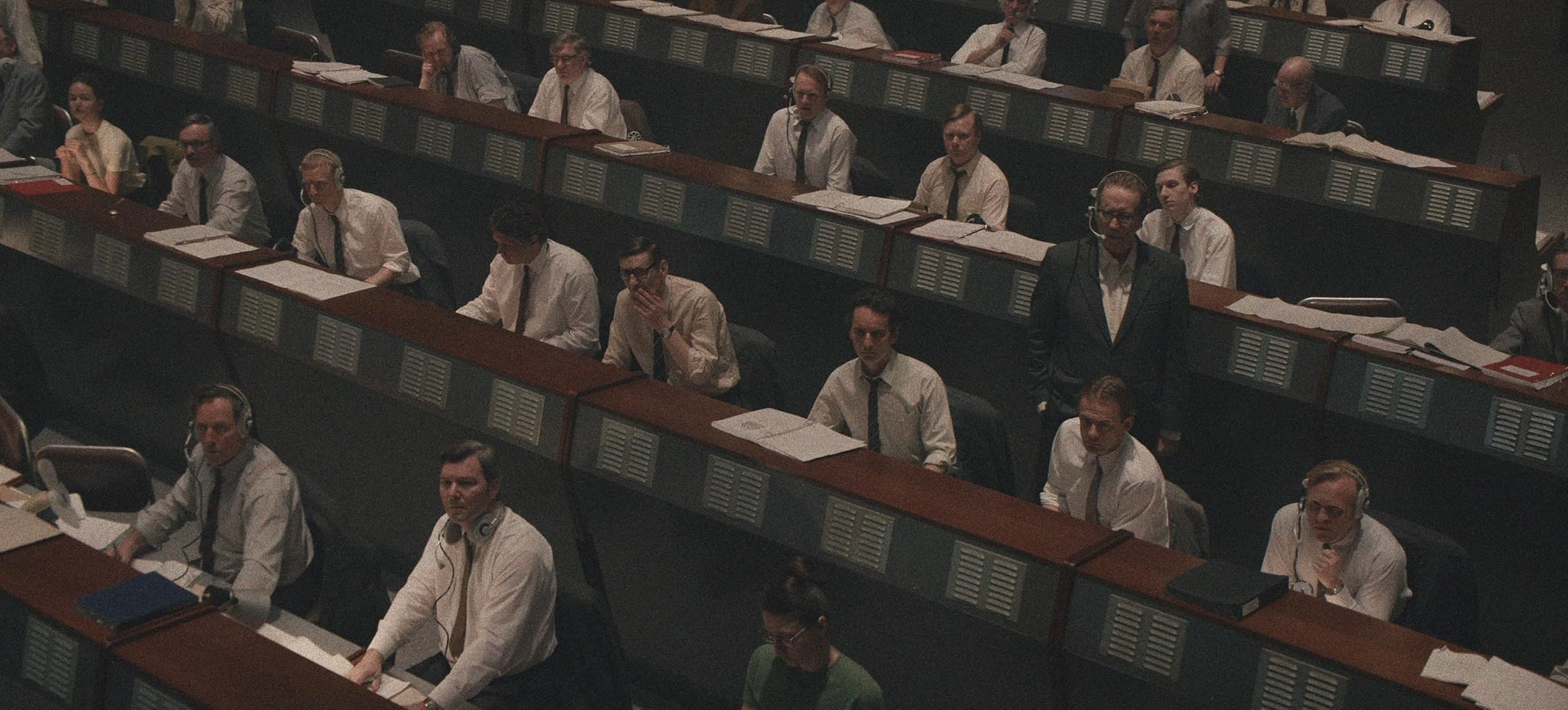
Anna Maxwell Martin’s Lyudmilla Raskova is the show’s sharpest blade. She is precise, severe, and frighteningly calm, the kind of administrator who can turn intrusion into paperwork. Martin does not overplay the menace. She barely needs to. Lyudmilla’s terror lies in how ordinary she makes cruelty feel. She treats surveillance as maintenance. Someone has to change the bulbs. Someone has to ruin a life before lunch.
The tension between Lyudmilla and the Chief Designer gives the series some of its best performance beats. They are both servants of the same system, both powerful within limits, both certain that the other is a liability. Their scenes have the clipped rhythm of a chess match played in a room where the board may also be listening.
Agnes O’Casey’s Irina Morozova offers the show its richest point of entry. As a junior surveillance recruit, she spends her days listening to private recordings, especially the home life of respected cosmonaut Valya and his restless wife Tanya. The setup could have turned mechanical, yet O’Casey makes Irina’s listening feel intimate, invasive, and quietly addictive. She is not merely collecting information. She is learning how people sound when they believe they are alone.
That matters because Star City treats surveillance as emotional trespass before it treats it as plot machinery. Irina begins as uncertain and watchful, then gradually becomes someone shaped by ambition, fear, and ethical compromise. Her arc gives the show a sly television irony: the person sitting outside the drama with headphones becomes one of its most endangered participants.
The cosmonaut ensemble is strong, though less evenly developed. Valya carries the posture of a decorated man with private cracks. Tanya’s frustration with restriction gives the domestic storyline its volatile charge. Sasha, warmer and less disciplined, brings welcome looseness to a cast that often moves as if joy has been rationed. His arranged marriage to Anastasia begins as political theater, then gains a fragile human texture.
Anastasia may be the most revealing figure in the space-program half of the story. She is inexperienced, watched, molded, and pushed into symbolic perfection. The state wants her to become an image of Soviet womanhood, which is a cruel assignment for anyone still trying to become herself. Yana’s removal from the mission, driven by suspicion, shows how quickly this world can rewrite a future.
The limitation is clear. Some characters are still defined by what they do in the machinery of the plot rather than by a fully lived inner life. The performances help fill the gaps, and several pairings spark nicely, especially Irina and her targets, Sasha and Anastasia, Lyudmilla and the Chief Designer. Still, the early episodes sometimes favor moving pieces over letting people breathe. In a show about oxygen, that is a tiny problem.
Gray Rooms, Dirty Audio, and the Sound of Fear
The strongest theme in Star City is surveillance as moral corrosion. Every private act can become evidence. Every confidence can be converted into leverage. Every ambition can curdle into complicity. Building 12, where women listen to recordings from across the base, becomes the show’s true command center. Rockets may leave the ground elsewhere, but this is where lives are redirected.
The series is especially good at showing how systems like this make cowards and opportunists of people who may have once imagined themselves principled. Characters inform, hide, lie, obey, and then explain themselves with the weary logic of survival. Truth becomes less a value than a hazard. Handle with care. Preferably with gloves.
The contrast between public heroism and private control gives the show its bitter flavor. Cosmonauts are treated as icons, then monitored like suspects. Marriages can be arranged. Careers can be destroyed. A person can be celebrated and erased at the same time. The Chief Designer’s secret honors and secret plans capture the absurdity of a state that needs genius but fears individuality. That is a very expensive way to run a space program, though apparently cheaper than trust.
Visually, Star City commits to the gloom. Grainy textures, muted colors, tight interiors, institutional corridors, and harsh offices create a world drained of comfort. The palette is so gray it sometimes feels like the show was developed in a filing cabinet. That austerity works because the setting demands it. Warmth would feel dishonest here.
There are moments, however, where the darkness risks becoming literal rather than atmospheric. Prestige television has spent years confusing murk with seriousness, and Star City occasionally wanders near that particular crater. Most of the time, though, the cinematography sustains a claustrophobic chill. Space may be vast, but the show’s Earthbound world feels cramped enough to bruise.
Sound design is one of its smartest tools. Recorded conversations shift texture. Audio becomes muddy, partial, edited, or suspiciously absent. The viewer is made to hear intimacy the way the state hears it: as data, threat, confession, and weapon. The score and direction keep pressure humming under the scenes, turning silence into a warning light.
Pacing is heavier than sleek. Early chapters introduce many threads before the connections fully tighten, and the show can feel dense in stretches. Its seriousness suits the material, yet the near-total lack of humor sometimes flattens the rhythm. A little human absurdity can make repression feel sharper. Even the KGB must have had bad coffee.
The drama works best when personal relationships and spy-thriller mechanics collide. A domestic secret becomes political evidence. A professional ambition becomes moral rot. A space mission becomes a test of loyalty before it becomes a test of engineering. That is where Star City finds its pulse.
A Prequel That Refuses to Chase the Same Orbit
Prior knowledge of For All Mankind deepens the experience, especially through younger versions of Irina, Sergei, and Anastasia, but Star City can stand alone. It does not depend on nostalgia as its main fuel. It uses franchise history as scaffolding, then builds a stranger, colder structure around it.
That choice matters. Many spin-offs behave like tour guides, pointing at familiar landmarks until the story forgets to move. Star City has a firmer sense of identity. It is a tonal departure, a structural pivot, and a reminder that the same alternate history can produce very different kinds of television depending on which side of the wall holds the camera.
The parent series often framed progress as a messy but inspiring human project. Star City views progress under authoritarian control as something compromised from birth. The rocket rises, but the people who built it remain trapped below, watched by colleagues, spouses, handlers, and the invisible state.
The show succeeds most when it treats space travel and surveillance as linked pressures. One tests the body. The other tests the soul. Its best scenes are not always the biggest ones. They come from wiretap revelations, intimate confrontations, bureaucratic humiliations, and power struggles conducted in voices barely raised above room temperature.
For a franchise founded on the thrill of looking upward, Star City keeps asking what happens to people who are ordered to reach the heavens while living under a ceiling made of fear.
Star City premiered globally on Apple TV on May 29, 2026, with the first two episodes of its eight-episode season, followed by one new episode every Friday through July 10, 2026. The series expands the world of For All Mankind from the Soviet perspective, following cosmonauts, engineers, and intelligence officers inside the Soviet space program after the USSR becomes the first nation to put a man on the moon. It is available to watch on Apple TV.
Where to Watch Star City Online


Full Credits
- Title: Star City
- Distributor: Apple TV, Sony Pictures Television
- Release date: May 29, 2026
- Rating: TV-MA
- Running time: 60–62 minutes per episode
- Director: Nick Murphy, Stefan Schwartz, Kasia Adamik, Jamie Payne
- Writers: Ben Nedivi, Matt Wolpert, Ronald D. Moore, Andrew Chambliss, Megan McDonnell, Liba Vaynberg, Gursimran Sandhu, George Mastras, KC Scott
- Producers and Executive Producers: Ben Nedivi, Matt Wolpert, Ronald D. Moore, Maril Davis, Andrew Chambliss, Steve Oster, KC Scott, Dia Dufault, Lineta Miseikyte, Gary Tuck, Seth Edelstein, Nicholas Fuentes, Huey M. Park, Bradley Thompson, David Weddle
- Cast: Rhys Ifans, Anna Maxwell Martin, Agnes O’Casey, Alice Englert, Solly McLeod, Adam Nagaitis, Ruby Ashbourne Serkis, Josef Davies, Priya Kansara, Eadie Johnson
- Director of Photography: Brendan Kuroki Uegama, Cort Fey
- Editors: David Bilow, Justin Bourret, Garret Donnelly
- Composer: Federico Jusid
The Review
Star City
Star City is a grim, stylish, and tense prequel that trades space-age optimism for Cold War paranoia with confidence. Its strongest moments come from surveillance, power games, and performances that make silence feel dangerous. Some characters still need sharper inner lives, and the early pacing can feel dense, yet the series carves out a strong identity within the For All Mankind universe.
PROS
- Strong performances from Rhys Ifans, Anna Maxwell Martin, and Agnes O’Casey
- Gripping surveillance-state tension
- Distinct visual and tonal identity
- Smart genre shift into spy thriller territory
- Rich thematic contrast between space exploration and political control
CONS
- Some supporting characters feel thinly drawn
- Early episodes can feel crowded
- Grim tone leaves little room for levity
- Dark visuals occasionally risk murkiness
- Emotional stakes take time to fully land