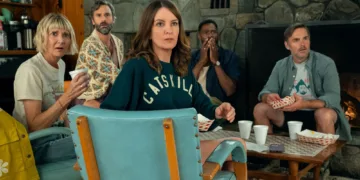






















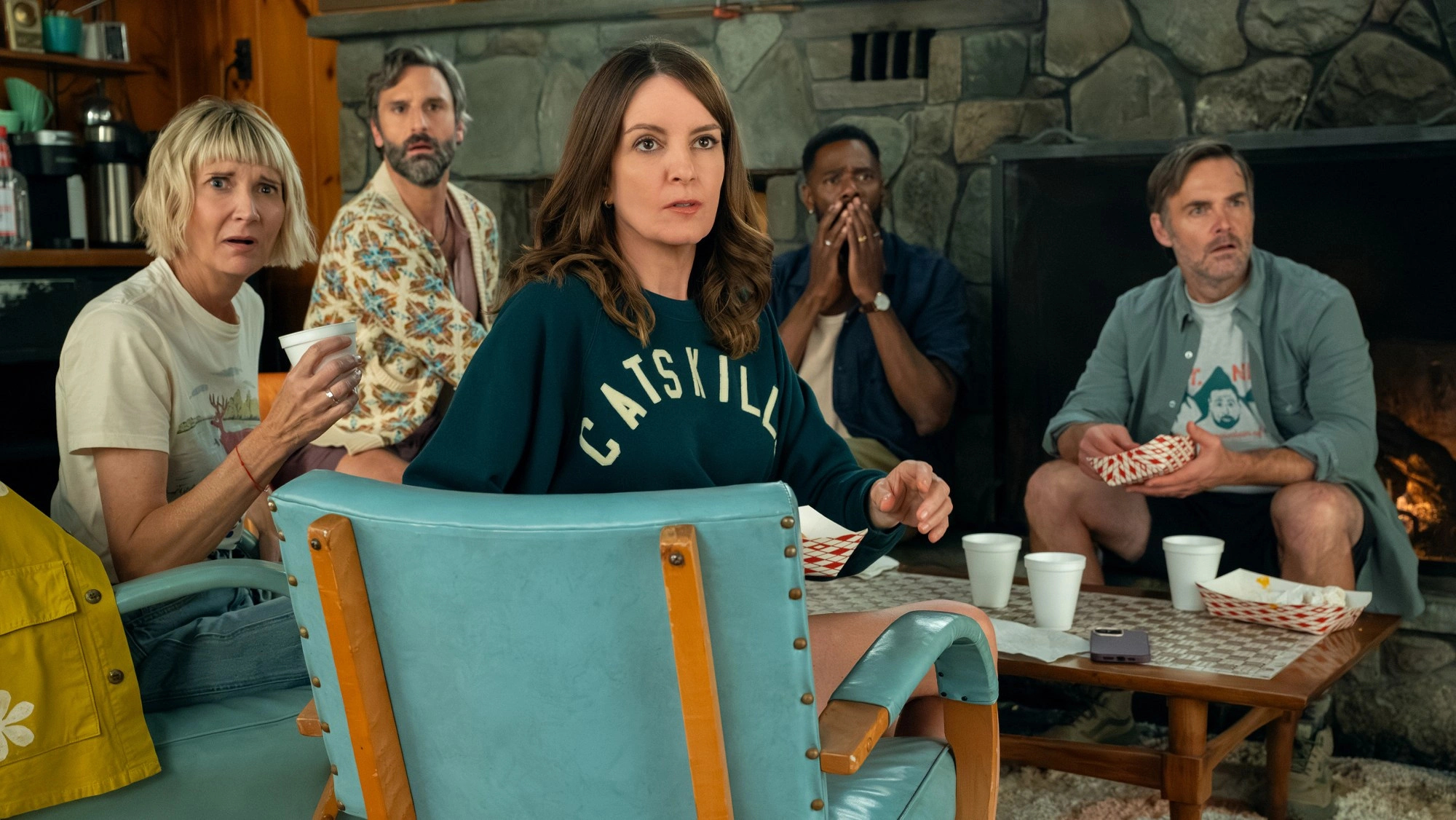

The Four Seasons Season 2 returns to a group of friends who still believe in the ritual of escape. Four trips, four seasons, eight episodes, and one emotional absence that changes the temperature of every room. Nick’s death has left Kate, Jack, Danny, Claude, Anne, and Ginny trying to preserve an old tradition while quietly admitting that nothing about it feels quite the same.
The show remains a midlife ensemble dramedy, warm and acerbic in the same breath, with its comedy drawn from vacation mishaps, domestic fatigue, and the small humiliations of people who have lived long enough to know better. Ginny’s pregnancy, then motherhood, brings a younger rhythm into a group shaped by routine and regret. Her presence keeps Nick alive in the most inconvenient way possible, through responsibility.
What makes the season culturally sharp is its focus on people in their fifties without treating them as finished. Streaming television has spent years chasing youth, scale, and spectacle. The Four Seasons chooses middle-aged uncertainty instead, which may sound less glamorous until someone ruins a trip with unresolved grief and bad emotional timing.
A Streaming Sitcom Built Around Ritual
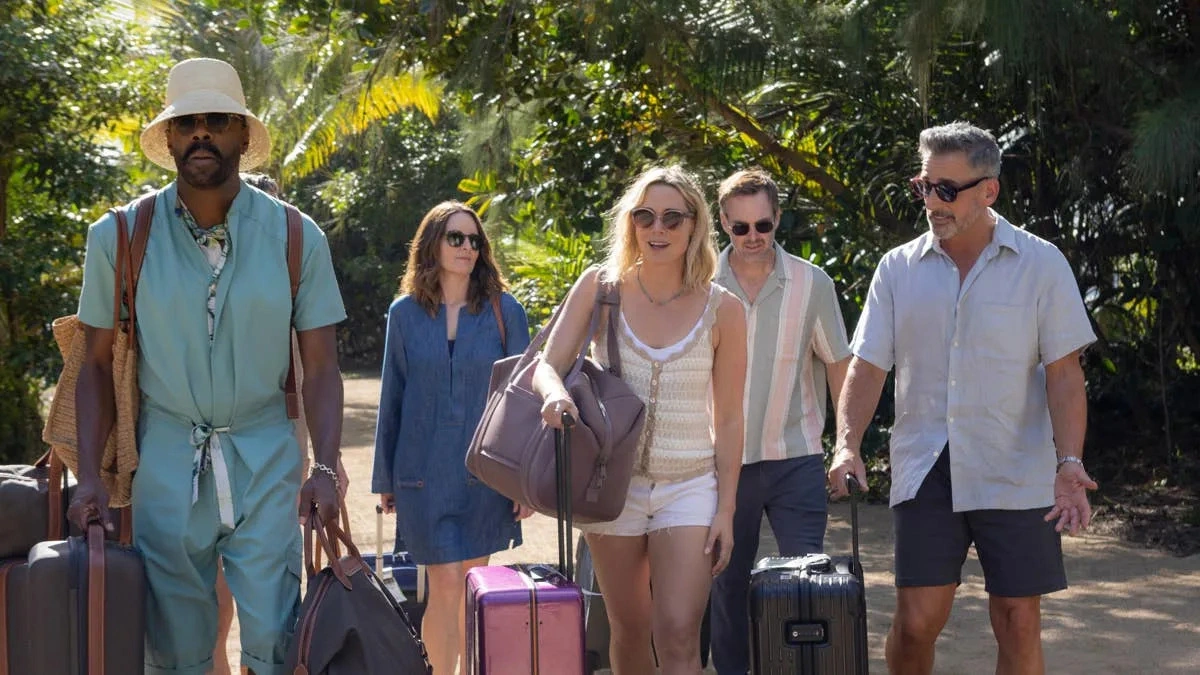
The season’s structure remains simple and effective: spring, summer, fall, winter, with two episodes assigned to each trip. The format gives the show a clean rhythm, almost like scheduled emotional maintenance. Every vacation becomes a pressure chamber where private tensions become public, because nothing says healing like forcing grieving adults into scenic locations with too much wine and too little personal space.
The seasonal design also speaks to a larger shift in streaming comedy. Rather than build every episode around a standalone sitcom engine, The Four Seasons uses recurrence as structure. The trips are funny because they repeat, and painful because repetition exposes change. Scattering Nick’s ashes, heading to the beach, gathering for Thanksgiving, and traveling to Italy all become ways of measuring what the group can no longer ignore.
There is a fantasy here, of course. These people have the money, time, and flexibility to travel every few months. That privilege can make their crises feel cushioned. Their problems are real, yet the surroundings are often suspiciously beautiful. The show occasionally risks becoming a postcard from the land of emotionally articulate affluence, where every breakdown comes with good lodging.
Still, the structure works because friendship is treated as labor. These people keep showing up. That matters. In a culture where adult loneliness has become one of the quieter social epidemics, the show’s insistence on planned togetherness feels oddly radical. The early episodes can feel uneven as the group adjusts to Nick’s absence, and the joke density sometimes dips under the weight of grief. Episode four offers the clearest example of the show at its best, with sharper pairings, tighter dialogue, and a willingness to let darker conversations breathe.
Couples, Outsiders, and the Politics of Who Gets Centered
Kate remains the show’s sardonic observer, a woman whose emotional restlessness often hides inside a perfectly timed insult. Tina Fey plays her with weary precision, giving Kate the air of someone who sees every social absurdity except the ones keeping her own marriage stuck. Her friendship with Danny becomes one of the season’s richest dynamics, built on banter, mutual recognition, and the relief of being understood without having to perform happiness.
Jack, played by Will Forte, is still sweet and goofy, yet the season wisely complicates him. His grief curdles into insecurity and passive aggression. His attempts at reinvention are funny, then faintly sad, then funny again. His marriage to Kate feels affectionate and strained, like two best friends who stayed married long enough to confuse loyalty with momentum.
Danny and Claude give the season much of its emotional charge. Danny is charming, theatrical, and terrified that every decision now carries the weight of a final exam. His anxiety about children, aging, and life choices turns one line into a thesis for the season: every decision feels like trying to stick the landing on an entire life. Colman Domingo gives Danny charisma without sanding down his self-absorption.
Claude, meanwhile, feels fuller this season. Marco Calvani gives him warmth, confidence, and sharper emotional clarity, especially once the story reaches Italy. The shift matters from a representation standpoint. Claude could easily have remained the flamboyant European spouse orbiting Danny’s neuroses. Instead, the season gives him cultural grounding and a stronger point of view. His frustrations with Danny become clearer, and his love feels sturdier because it has limits.
Anne gets the season’s most satisfying arc. She is handling Nick’s estate, his death, his betrayal, Ginny’s presence, and the baby he left behind. Her attempts to remake herself after divorce and grief create a middle-age coming-of-age story, one that refuses to frame reinvention as graceful. Anne is brittle, awkward, self-protective, and frequently chaotic. Her pain does not excuse every choice, yet it explains the emotional static behind them.
Ginny is the trickiest figure. She is the outsider who cannot be removed, the younger woman whose baby ties everyone to Nick’s choices. She brings youth, new parenthood, and future possibility into a room full of people measuring what they have lost. The season understands her symbolic function better than her inner life. That imbalance limits the character’s impact. A show this interested in social dynamics should be more curious about the woman carrying the consequence of everyone else’s unresolved history.
Midlife as a Cultural Fault Line
The Four Seasons treats midlife as a social condition rather than a punchline. The characters are not simply afraid of aging. They are afraid of discovering that comfort has been mistaken for fulfillment. Marriages stall. Bodies change. Careers lose their shine. Parenthood becomes either a memory, a regret, or a question that arrives late and refuses to leave.
Nick’s absence gives these anxieties shape. Grief attaches itself to practical details: ashes, estate work, trip planning, childcare, old stories, shared rituals. The season is strongest when it understands mourning as administrative, ridiculous, and intimate at once. Death does not arrive with clean dramatic lighting. It arrives with paperwork and awkward group decisions.
The show also reflects a broader streaming trend: the rise of adult ensemble comedy with a dramatic spine. This is not the old network model of reset-button sitcom comfort. It is serialized, emotionally cumulative, and designed for viewers who want laughter without pretending life resets after 30 minutes. That shift matters because it makes room for stories about later adulthood, queer marriage, divorce, grief, and friendship without turning any single issue into a lecture.
Its social insight is clearest in the friendship scenes. The group can be privileged, irritating, and deeply self-involved. Yet their loyalty has value because it creates a place where honesty can happen. In an era of fractured communities and digitally maintained intimacy, the show argues for the awkward, expensive, inconvenient work of being physically present.
The irony, of course, is that these people flee their regular lives to understand them. The vacations look like escapes, but every destination becomes a mirror. Anne learns freedom can be frightening. Jack learns niceness can hide resentment. Danny and Claude face the question of what kind of future a couple can build when time feels limited. Ginny stands for the beginning of adult life crashing directly into middle-age regret.
Comedy, Craft, and the Uneven Promise of Season 2
The comedy works best when it grows from character. Caustic group exchanges, physical embarrassment, vacation disasters, and dry observations about aging give the season its texture. The jokes land hardest when the characters are being petty, loving, selfish, generous, and absurd in the same scene. That is where the writing feels lived-in.
The ensemble remains the show’s strongest asset. Fey brings Kate a familiar snark, but she also lets fatigue creep into the edges. Forte makes Jack’s childishness feel human rather than merely silly. Domingo gives Danny both theatrical sparkle and emotional weight.
Calvani gives Claude a deeper presence, especially through his longing for Italy and his clearer frustration with Danny. Kerri Kenney-Silver brings Anne comic bite and aching vulnerability. Erika Henningsen gives Ginny a lighter energy that unsettles the group’s established rhythm, even when the writing does not fully meet her halfway.
The locations help, too. The scenery is part of the fantasy and part of the joke. These characters can run from routine, yet they cannot outrun themselves. Italy adds freshness by shifting Claude’s position inside the group and allowing the show to treat him as someone with a world beyond Danny.
There are limits. Nick’s absence leaves a clear comic and narrative gap. Ginny remains underwritten. Some of the dilemmas are so protected by privilege that the emotional stakes can feel softened. The season also hovers between sitcom comfort and darker drama without always choosing how deep it wants to cut.
Still, The Four Seasons Season 2 has moments of real clarity. Its best scenes suggest a sharper, stranger, more emotionally direct series hiding inside the pleasant one. That may be its most revealing quality: like its characters, the show is still deciding how much truth it can handle before the next trip begins.
The Four Seasons Season 2 premiered on Netflix on May 28, 2026, with eight episodes available to stream. The comedy-drama series, created by Tina Fey, Lang Fisher, and Tracey Wigfield, continues the story of a longtime friend group whose seasonal vacation tradition is reshaped by Nick’s death and Ginny’s new motherhood. The season brings back Tina Fey, Will Forte, Colman Domingo, Marco Calvani, Kerri Kenney-Silver, and Erika Henningsen, with Steve Carell appearing in flashback and new Season 2 appearances from Steven Pasquale and David Tennant.
Where to Watch The Four Seasons Season 2 Online


Full Credits
- Title: The Four Seasons Season 2
- Distributor: Netflix
- Release date: May 28, 2026
- Rating: TV-MA
- Running time: 27 to 35 minutes per episode
- Director: Tina Fey, Robert Pulcini, Shari Springer Berman, Oz Rodriguez, Jeff Richmond, Colman Domingo, Lang Fisher
- Writers: Tina Fey, Lang Fisher, Tracey Wigfield, Vali Chandrasekaran, Lisa Muse Bryant, Matt Whitaker, Josh Siegal, Dylan Morgan, John Riggi
- Producers and Executive Producers: Tina Fey, Lang Fisher, Tracey Wigfield, David Miner, Eric Gurian, Jeff Richmond, Alan Alda, Marissa Brennan, Bill Sell
- Cast: Tina Fey, Will Forte, Colman Domingo, Marco Calvani, Kerri Kenney-Silver, Erika Henningsen, Steve Carell, Steven Pasquale, David Tennant, Julia Lester, Alan Alda, Ashlyn Maddox, Toby Huss, Tommy Do, Taylor Ortega, Simone Recasner, Chloe Troast, Cole Tristan Murphy, Jack Gore
- Director of Photography: Tim Orr
- Editors: Kyle Gilman, Ken Eluto
- Composer: Jeff Richmond
The Review
The Four Seasons Season 2
The Four Seasons Season 2 is a warmer, sharper, and more emotionally assured return, using grief and midlife restlessness to deepen its ensemble comedy. It can feel too cushioned by privilege, and Ginny remains underwritten, but the cast keeps the season alive with wit, tenderness, and beautifully awkward honesty. At its best, the show turns adult friendship into a survival ritual, funny because it hurts and moving because everyone keeps showing up.
PROS
- Strong ensemble chemistry
- Sharper emotional focus after Nick’s death
- Excellent work from Colman Domingo, Marco Calvani, and Kerri Kenney-Silver
- Smart use of the seasonal vacation structure
- Funny, perceptive writing about midlife anxiety
- Richer treatment of Claude this season
- Kate and Danny’s friendship gives the show real warmth
CONS
- Ginny’s perspective feels underdeveloped
- Nick’s absence leaves a noticeable comic gap
- Some conflicts feel softened by the characters’ privilege
- Early episodes take time to find momentum
- The season sometimes hesitates between sitcom comfort and darker drama