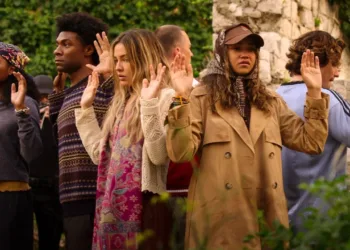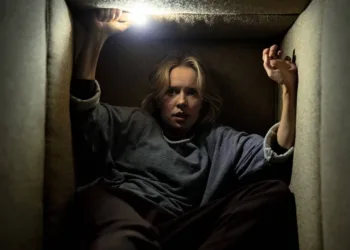






























Deli Boys Season 2 returns with the confidence of a show that knows its own comic machinery. The Hulu series brings Mir Dar and Raj Dar back into Philadelphia’s criminal underworld, where their late father’s cocaine business has grown from a secret inheritance into a thriving mess. The brothers are no longer complete amateurs, yet they remain far from natural kingpins. That gap between ambition and ability gives the season much of its spark.
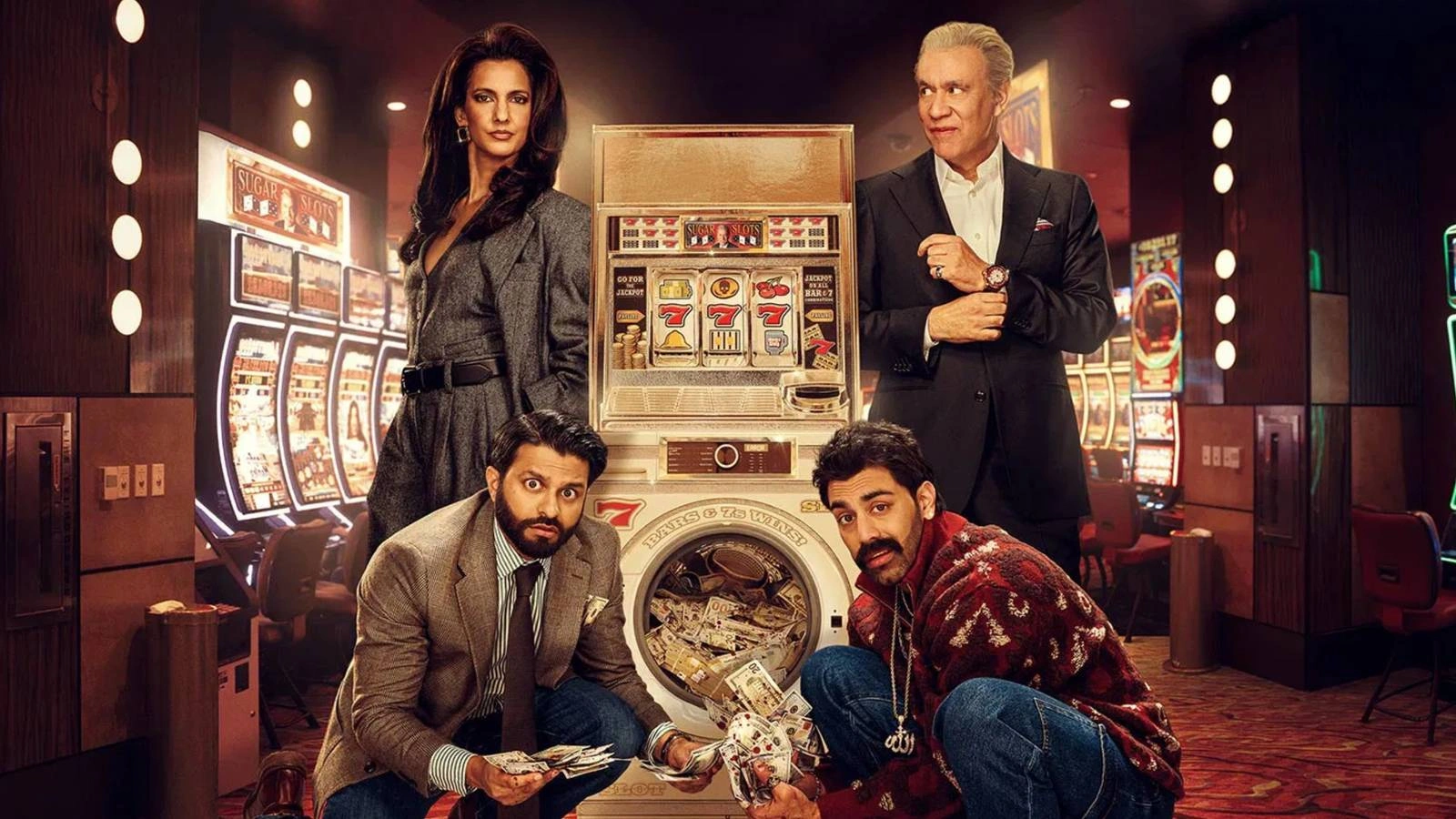
The new six-episode run begins with a simple problem: DarCo has too much dirty money. Cash is hidden across ABC Deli in food containers, freezers, and corners that turn criminal success into a storage crisis. Lucky Auntie, still the sharpest operator in the family, pushes Mir and Raj toward a practical solution. Enter Max Sugar, a casino owner whose laundering network promises access to a bigger criminal stage.
The season is faster, tighter, and louder than the first. It keeps the family dynamic intact while giving the story a stronger forward motion. The result is a compact crime comedy that treats danger as a workplace problem and family loyalty as its most reliable punchline.
Success Becomes the New Disaster
Season 2 smartly shifts the Dars from survival to expansion. In the first season, Mir and Raj were scrambling to understand what their father had left behind. Here, they have made the machine run, which creates a fresh kind of pressure. Their problem is no longer how to stay alive in the business. Their problem is what to do now that the business works.
That is a sharp premise because it gives the season a clean narrative engine. The sight of money crammed into every possible deli hiding spot works as both joke and metaphor. DarCo has grown beyond the small spaces that shaped it. The family is still rooted in the ABC Deli, yet the story keeps pulling them toward larger arenas, especially Max Sugar’s casino.
The casino plot expands the show’s visual and narrative scale. Max represents a higher tier of organized crime, dressed in the strange calm of a man who can be polite and horrifying within the same breath. For Mir and Raj, he offers access to legitimacy, or at least a criminal imitation of it. For Lucky, he becomes a business partner and romantic complication, which gives the season one of its most entertaining emotional tangles.
Also Read






The revenge thread involving Ahmad keeps the past alive, while District Attorney Andrew Chadwater brings public pressure through his anti-drug campaign and mayoral ambition. Raj being framed for murder adds another twist, especially once his prison image turns into viral fame. The season piles on danger, politics, romance, and revenge, yet the pacing rarely buckles.
The six-episode structure helps and hurts. The episodes move with impressive speed, often landing like one extended crime farce cut into sharp half-hours. Few scenes feel wasted. Still, some supporting characters and side plots clearly needed extra space. The ABC Deli also loses some of its presence as the casino takes over. A longer season could have allowed the family’s small-business absurdity to sit beside the bigger criminal plot with greater texture.
Slapstick in the Shadow of the Mob
The show’s genre identity is one of its strongest qualities. Deli Boys borrows the shape of mob drama and drug-empire storytelling, then filters that material through sitcom panic, South Asian family banter, and physical comedy. The series understands the appeal of criminal mythology, but it has no interest in treating Mir and Raj like tragic antiheroes.
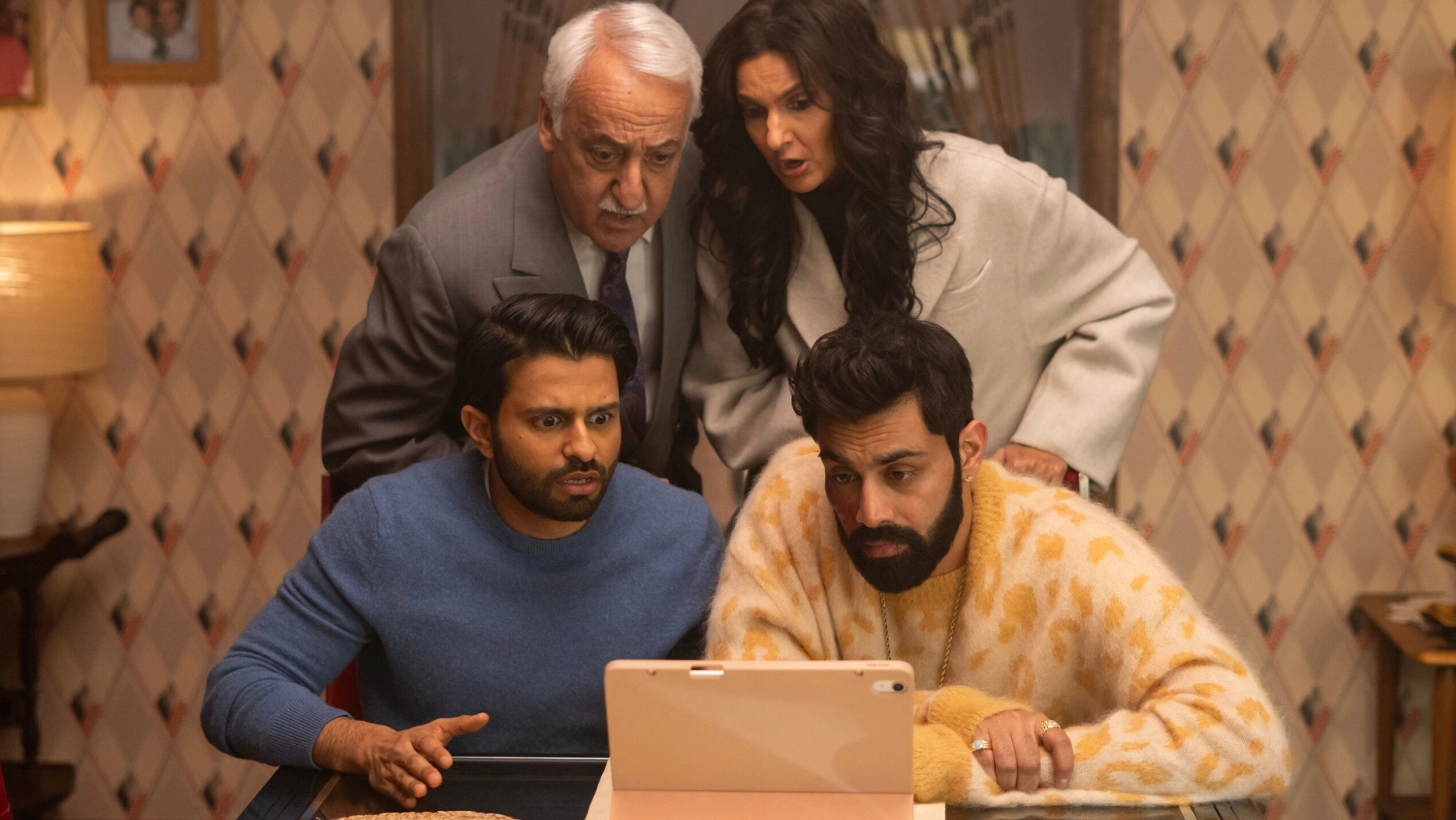
The comedy comes from a precise imbalance. The brothers are dangerous enough to survive, foolish enough to ruin almost every plan, and sincere enough to remain likable. Booby-trapped coke exploding in their faces, robbers in Benjamin Franklin masks, Lucky’s “emotional support gun,” and Raj’s prison persona all show a series that loves absurd escalation. Violence appears often, but the timing belongs to farce.
Mir and Raj work because their stupidity has shape. Mir tries to think like a strategist, usually with limited results. Raj acts first and turns the aftermath into performance art. Their brotherly rhythm keeps the crime plot warm. They argue, panic, posture, and recover with a shared instinct that feels recognizably familial.
Lucky gives that chaos a center of gravity. She can be affectionate, terrifying, practical, and theatrical in the space of a single scene. Her romance with Max opens a softer side of her, yet the show never dulls her edge. She remains the person most capable of reading the room, ending the threat, and insulting everyone while doing it.
This is where the series connects with a wider global trend in crime comedy. Across international television, crime stories have become less tied to masculine solemnity and moral collapse. Deli Boys joins that movement through a specifically Pakistani-American comic lens, turning inherited crime into a family business comedy where incompetence is almost a cultural language of affection.
Lucky, the Brothers, and a Stronger Ensemble
Poorna Jagannathan’s Lucky Auntie dominates Season 2 without overwhelming it. She is ruthless, stylish, protective, and deeply funny because she treats criminal insanity as basic household management. Her costumes sharpen the performance: animal prints, leather, silk, metallic accents, and elegant bags turn Lucky into a femme fatale with auntie authority. She looks glamorous, but never decorative. Every outfit suggests command.
The season gives Lucky romance, jealousy, vulnerability, and comic violence. Her dynamic with Max Sugar works because she sees through him and still enjoys the danger. Her scenes with Danyal carry a different charge, shaped by past affection and verbal play. The use of ghazal-like phrasing with Hindi and Urdu profanity gives their relationship a cultural and emotional texture that plain exposition could never achieve.
Asif Ali and Saagar Shaikh also feel more settled as Mir and Raj. Their performances have loosened in the right way. Mir’s attempts at executive control are funnier because he almost believes in himself. Raj’s impulsiveness remains ridiculous, but his loyalty keeps him from becoming empty comic noise. The brothers now think they belong in the underworld, which makes their mistakes richer than before.
Fred Armisen’s Max Sugar is mild, strange, and dangerous, though the character sometimes feels less volatile than the world around him. His calmness creates amusing friction with Lucky, yet his menace can feel slightly softened. Andrew Rannells, by comparison, brings a bright comic edge to Andrew Chadwater, whose public morality and political hunger make him a useful foil for the Dars.
Kumail Nanjiani’s Danyal adds quick romantic and legal chaos. Nandika, Raj’s wife and social media manager, turns oversharing into a weapon. Ali and Aisha’s domestic conflict widens the comic world by showing that the show’s family energy extends beyond the main trio. The guests add color without stealing the engine from Mir, Raj, and Lucky.
Cultural Specificity as Style, Sound, and Story
The best thing about Deli Boys Season 2 is how casually specific it feels. Its Pakistani-American characters are messy, greedy, loyal, scared, stylish, horny, foolish, and dangerous. The show does not pause to explain them for an imagined outside viewer. It lets their habits, insults, food references, music, clothing, and family rhythms build the world.
That approach has a history in South Asian screen culture. Parallel cinema often sought authenticity through social observation and lived detail, while Bollywood turned family conflict, music, and heightened emotion into large-scale entertainment. Deli Boys pulls from both energies in comic form. It has the texture of everyday family argument and the heightened pleasure of performance. Lucky calling Raj “gajar halwa” in prison is funny because the tenderness is real and the image is absurd. It is also a perfect example of cultural language doing emotional work.
The music deepens that identity. Wendy Wang’s score, with stronger tabla presence, gives the comedy rhythmic bounce and cultural grounding. The flashback using “Chaap Tilak” brings a classical Sufi echo into a show filled with crime gags and dirty money. That contrast gives the season its richest symbolic register: inheritance here is criminal, familial, musical, and emotional all at once.
The editing favors speed, but the production design and costumes keep the world legible. Lucky’s wardrobe speaks in danger and glamour. The brothers’ styling suggests men halfway between deli sons and aspiring kingpins. The casino offers scale, while the deli remains the emotional base the season could have used slightly more.
Season 2 works because it understands that cultural authenticity is not a speech. It is rhythm, timing, food, music, profanity, clothing, and the way family members can insult each other with precision while still showing up when the room catches fire. Deli Boys turns that truth into one of streaming comedy’s sharpest current pleasures.
Deli Boys Season 2 premiered on Hulu on May 28, 2026, with all six episodes released at once. The Hulu crime comedy follows Mir and Raj Dar as they try to manage the cocaine empire left behind by their late father, while Lucky Auntie remains the family’s most capable and dangerous operator. Season 2 raises the stakes by bringing in Max Sugar, a casino owner and money launderer played by Fred Armisen, along with new comic pressure from Andrew Rannells, Kumail Nanjiani, Lilly Singh, and Robin Thede. The series is available to stream on Hulu in the United States and on Disney+ in select international markets.
Where to Watch Deli Boys Season 2 Online


Full Credits
- Title: Deli Boys Season 2
- Distributor: Hulu, Onyx Collective, 20th Television, Disney+
- Release date: May 28, 2026
- Rating: TV-MA
- Running time: Six episodes, approximately 21 to 26 minutes per episode
- Creator: Abdullah Saeed
- Director: Fawzia Mirza, Nisha Ganatra, Maureen Bharoocha
- Writers: Abdullah Saeed, Michelle Nader, Mehar Sethi, Sudi Green, Feraz Ozel Ellahie, Nikki Kashani, Kyle Lau, Ekaterina Vladimirova
- Producers and Executive Producers: Abdullah Saeed, Michelle Nader, Jenni Konner, Nora Silver, Vali Chandrasekaran, Nisha Ganatra
- Cast: Asif Ali, Saagar Shaikh, Poorna Jagannathan, Alfie Fuller, Brian George, Fred Armisen, Andrew Rannells, Kumail Nanjiani, Lilly Singh, Robin Thede, Tan France, Amita Rao, Shahjehan Khan
- Director of Photography: Nathan Ray Salter, Andrew Wehde
- Editors: Taichi Erskine, David Dean, Varun Viswanath, Libby Cuenin, Matt McBrayer
- Composer: Wendy Wang
The Review
Deli Boys Season 2
Deli Boys Season 2 is a sharper, faster, and funnier return that turns criminal success into a new kind of family disaster. The six-episode run leaves a few supporting threads wanting more room, yet its speed, cultural texture, and cast chemistry keep the chaos alive. Poorna Jagannathan remains the show’s strongest weapon, while Mir and Raj’s foolish confidence gives the season its comic pulse. It is compact, stylish, and proudly strange.
PROS
- Excellent chemistry between Asif Ali and Saagar Shaikh
- Poorna Jagannathan delivers a standout performance as Lucky Auntie
- Fast pacing keeps the season energetic
- Strong use of Pakistani-American cultural detail
- Smart mix of crime plotting, family comedy, and absurd physical humor
- Wendy Wang’s score and tabla-driven touches add flavor
- Guest stars bring fresh comic energy
CONS
- Six episodes feel too short
- Some supporting characters need more screen time
- The ABC Deli has less presence than before
- Max Sugar’s menace feels slightly muted at times
- A few emotional beats could use more breathing room