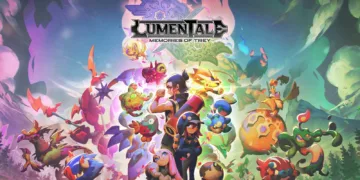



























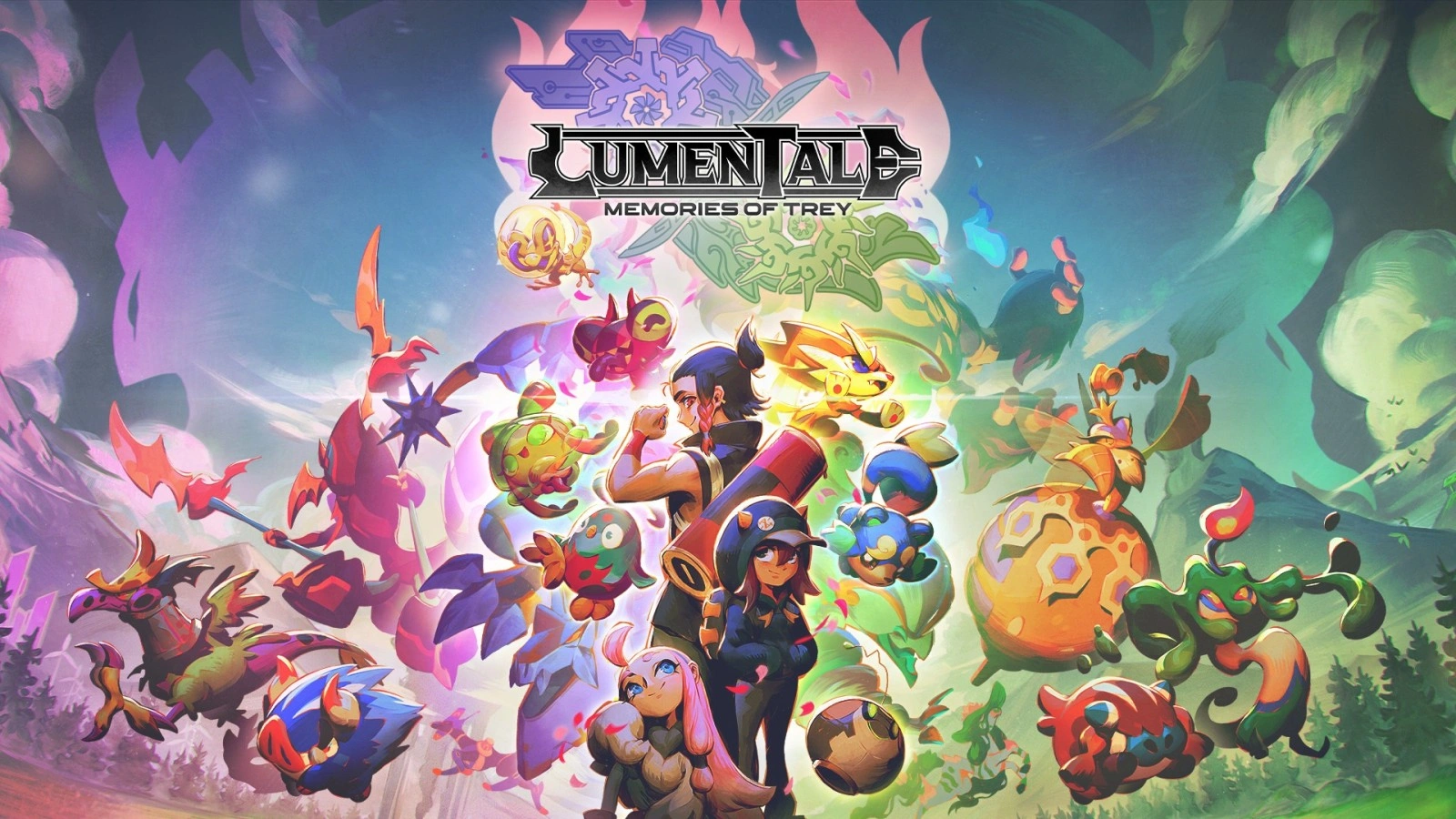

Beehive Studios and Team17 step into creature-collecting RPGs with LumenTale: Memories of Trey, a role-playing game built around familiar genre foundations and a clear thematic identity. The story takes place in Talea, a fractured continent marked by a historic civil war. That conflict left the land split into two ideologically opposed territories. Logos, the northern region, pursues rapid technological development, and Mythos, the southern realm, remains tied to ancient traditions.
That cultural divide frames the introduction of Trey, an amnesiac half-human, half-cyborg protagonist who wakes in a mysterious forest. His high-tech metallic arm and missing memories make him a living bridge between these two societies.
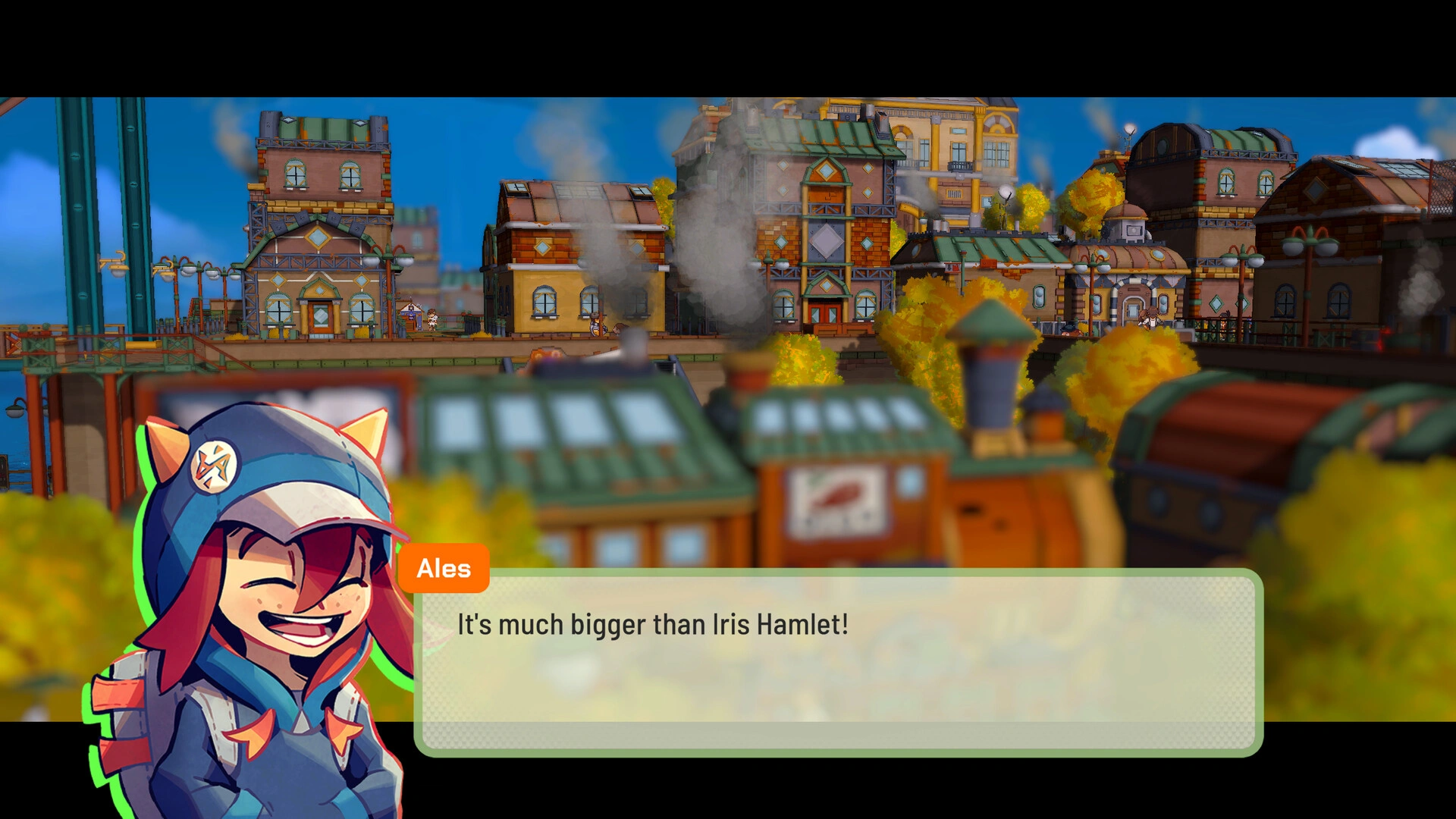
To recover the truth behind his identity, Trey works toward becoming a Lumen, a specialized guardian and trainer who bonds with creatures called Animon. With the researcher Kapan and his nephew Ales accompanying him, Trey begins competing in regional tournaments, using his natural connection with Animon to move through a divided world.
Exploring the Visual Contrast and Environmental Puzzles of Talea
Talea has a strong visual identity built from 2D pixel-art character sprites placed inside fully 3D-rendered environments. The style recalls the high-resolution nostalgia of classic handheld games, especially the aesthetic shift seen in the fifth generation of Pokémon, then gives that look modern lighting and added depth.
The world map uses named cities and villages connected by designated wilderness corridors such as Area 01 and Area 03. This structure reinforces Talea’s social split. Logos is filled with rusty industrial spaces packed with gears and machinery, and Mythos favors calmer, classic landscapes.
Environmental interaction depends heavily on the Holoken, a flexible tool with two main modes. In Bilia mode, it fires a blue, wisp-like projectile used to start creature captures through responsive quick-time events. In Animon mode, the device becomes a mechanical yo-yo carrying the elemental qualities of the player’s active party. That setup gives the overworld puzzles a clear mechanical language. Geo-type Animon can break boulders blocking key routes, and Data-type creatures can redirect security lasers.
The campaign gives players early agency by letting them choose between challenging the four local Lumen captains of Logos or Mythos first. The pacing varies sharply across that path. A puzzle-heavy infiltration of a ninja hideout builds cleanly from layered Holoken mechanics and hidden routes, creating one of the stronger uses of the game’s exploration systems.
Other sections lose momentum through repetitive city fetch quests built around hidden children, plus cave segments where fast-moving wild entities charge forward and explode on contact, sending players back to distant checkpoints.
Tactical Innovation in Turn-Based Combat
Combat shifts the familiar creature-dueling format into large-scale 4v4 turn-based battles. Players still maintain a traditional party of six Animon, and placing four active fighters on the field gives each encounter a denser tactical shape.
Turn order follows individual agility stats, creating a moving rhythm where type matchups need steady attention. The strategy grows through a dual-layered classification system made up of 13 elemental types and 5 emotion attributes, along with hidden secondary elements and regional variants that differ between Logos and Mythos.
The main mechanical pressure comes from a shared resource pool. Force Points or Special Points are used by the entire active team to perform actions. Stronger attacks consume a large portion of that pool, so careless spending can drain it early in a round and leave slower party members unable to defend themselves before the gauge refills on the next turn.
Elemental weaknesses and critical hits reward the player with Tactical Points. Once the player gathers enough points to match the number of active team members, the system grants an immediate bonus action with zero energy cost. The idea recalls mechanics from modern tactical RPGs such as Shin Megami Tensei, and enemy teams have access to the same feature, which allows battles to swing quickly after a mistake.
Growth and customization are handled with a welcome level of flexibility. Core attributes such as HP, Attack, Special Attack, Defense, Special Defense, and Agility can be shaped through a progression system that lets players manually assign earned stat points.
Those points can also be reset freely outside battle with no currency cost or resource penalty. That design removes much of the pressure found in games with rigid build paths. The combat loop still has small optimization issues, including slow post-defeat animations and enemy health bars that sometimes appear empty before the creature has actually fallen.
Auxiliary Gameplay Loops and Technical Execution
Away from the main story climb, players frequently use overworld fountains as important resting hubs. These checkpoints heal the party, move time forward, and open access to a detailed crafting system for meals, status potions, and specialized capture devices. The crafting loop adds useful mechanical texture, yet its introduction feels rough. The game gives limited early guidance and presents a crafting quest that leaves players working out ingredient acquisition through trial and error.
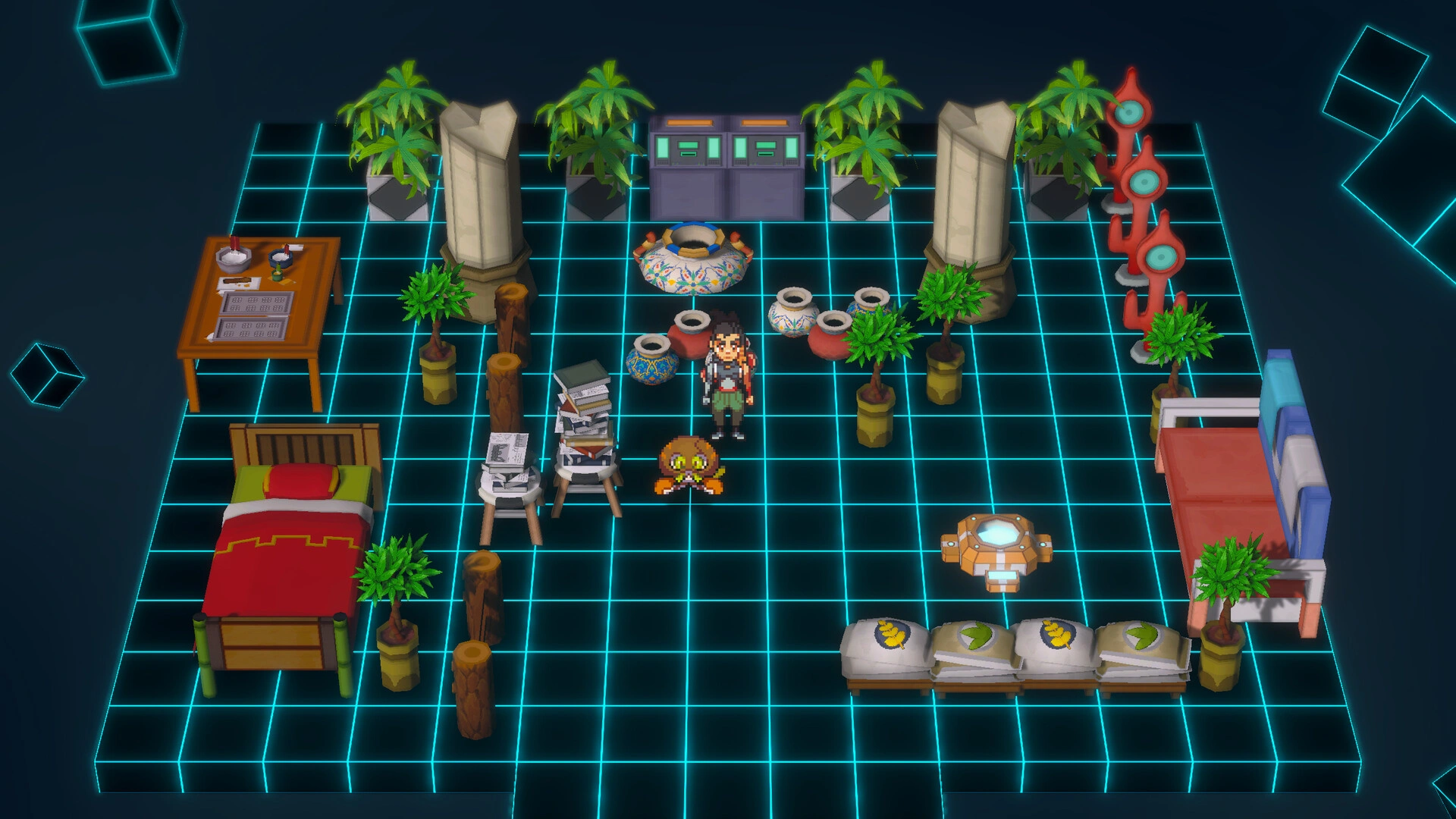
Players who want relief from progression friction can use Anispace, a dedicated pocket dimension. This customizable area serves as a personal sanctuary where collected furniture and aesthetic themes can be arranged into relaxing rooms for Trey and his Animon partners. The game also offers optional civilian side quests and booster packs tied to an in-game trading card collection.
On PC, the world map runs with enough stability to avoid game-breaking glitches, yet the technical execution feels under-optimized. The visual presentation is unexpectedly demanding, causing sporadic stutters and noticeable fan-speed spikes during heavier graphical effects.
The control setup creates added friction through restrictive key-binding options and awkward controller support that makes menu movement feel unintuitive. The localization also has jarring inconsistencies, with text blocks often defaulting to English or Italian phrases outside the selected language profile.
The Review
LumenTale: Memories of Trey
LumenTale: Memories of Trey delivers a visually enchanting journey that moves the monster-collecting genre forward through tactical innovation. The 4v4 combat setup and flexible stat customization inject genuine strategy into standard turn-based loops, beautifully framed by a nostalgic pixel-on-3D aesthetic. However, uneven campaign pacing, poorly explained mechanics, and technical optimization flaws hinder the experience from matching its narrative and mechanical ambitions. It remains a deeply competent alternative for genre enthusiasts willing to brave its rougher edges.
PROS
- The 4v4 battle format and shared resource pool demand careful tactical planning
- Players can redistribute Animon stat allocations at any time without resource penalties.
- The charming fusion of 2D character sprites and 3D landscapes creates a vibrant aesthetic
- The Holoken tool seamlessly integrates overworld puzzles with creature collection.
CONS
- Slow text-heavy sequences, excessive city tracking, and frustrating cave layouts disrupt momentum.
- Critical secondary loops like item crafting suffer from a lack of clear initial explanations.
- Minor stutters, demanding GPU utilization, and janky controller configurations mar the PC experience.
- Dialogue frequently slips into untranslated text strings from alternate languages.