



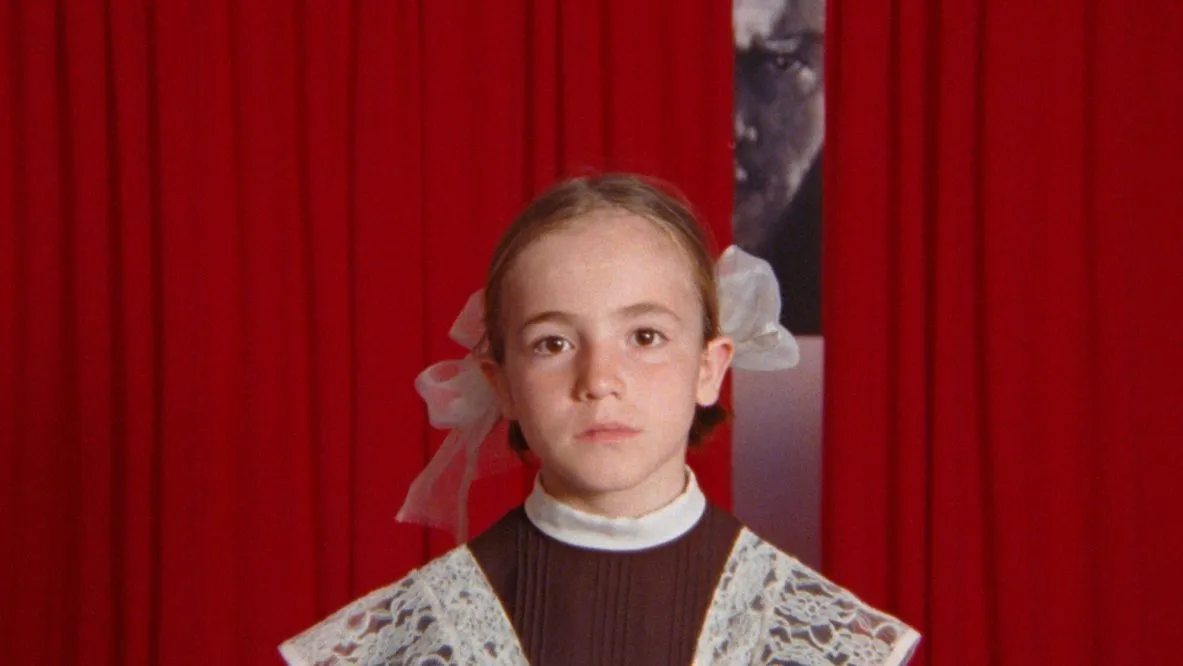

Filmmaker Vladlena Sandu’s Memory is less a documentary and more an act of cinematic excavation. It sifts through the rubble of a childhood spent in 1990s Crimea and Grozny, picking through the debris of a collapsed Soviet empire to assemble a portrait of a life shaped by the First Chechen War. This is not a film that offers simple testimony.
Instead, it presents itself as a profoundly personal, often difficult reflection on how history’s violence infects the family unit. Sandu positions her own story as a case study in generational trauma, an inherited sickness that passes from grandparent to parent to child with the grim inevitability of a genetic flaw.
The film is a demanding watch, a poetic and unflinching meditation that asks the viewer to bear witness to the reconstruction of a shattered past. It is an attempt to map the internal damage left behind when a country, and a family, devours itself.
The Grammar of a Nightmare
Sandu rejects the linear comfort of traditional narrative, and for good reason: memory, especially traumatic memory, is not a straight line. Her film is a cinematic collage, a mosaic of grainy, theatrical reenactments, stark archival news footage, and weathered family photographs. The effect is deliberately disorienting, mirroring the psychological state of a person whose world has lost its foundational logic.
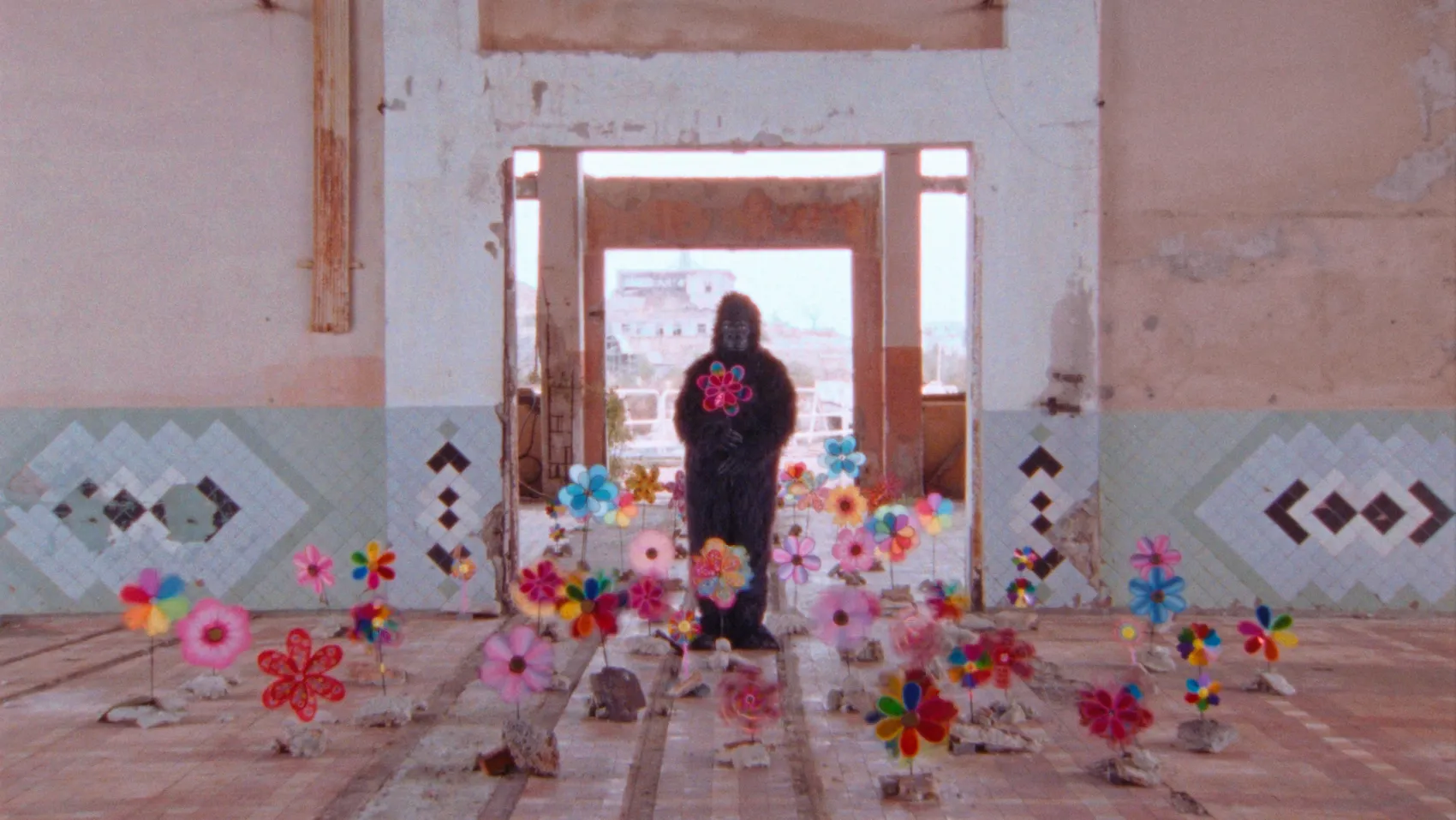
The visual grammar is built on potent, often surreal symbolism. A recurring figure in a gorilla suit appears as an imaginary protector, a borrowed piece of cinematic mythology (a nod to the misunderstood King Kong) offering silent comfort in a world devoid of it. This is a child’s logic at its purest, finding a guardian in a monster because the supposed human guardians have failed.
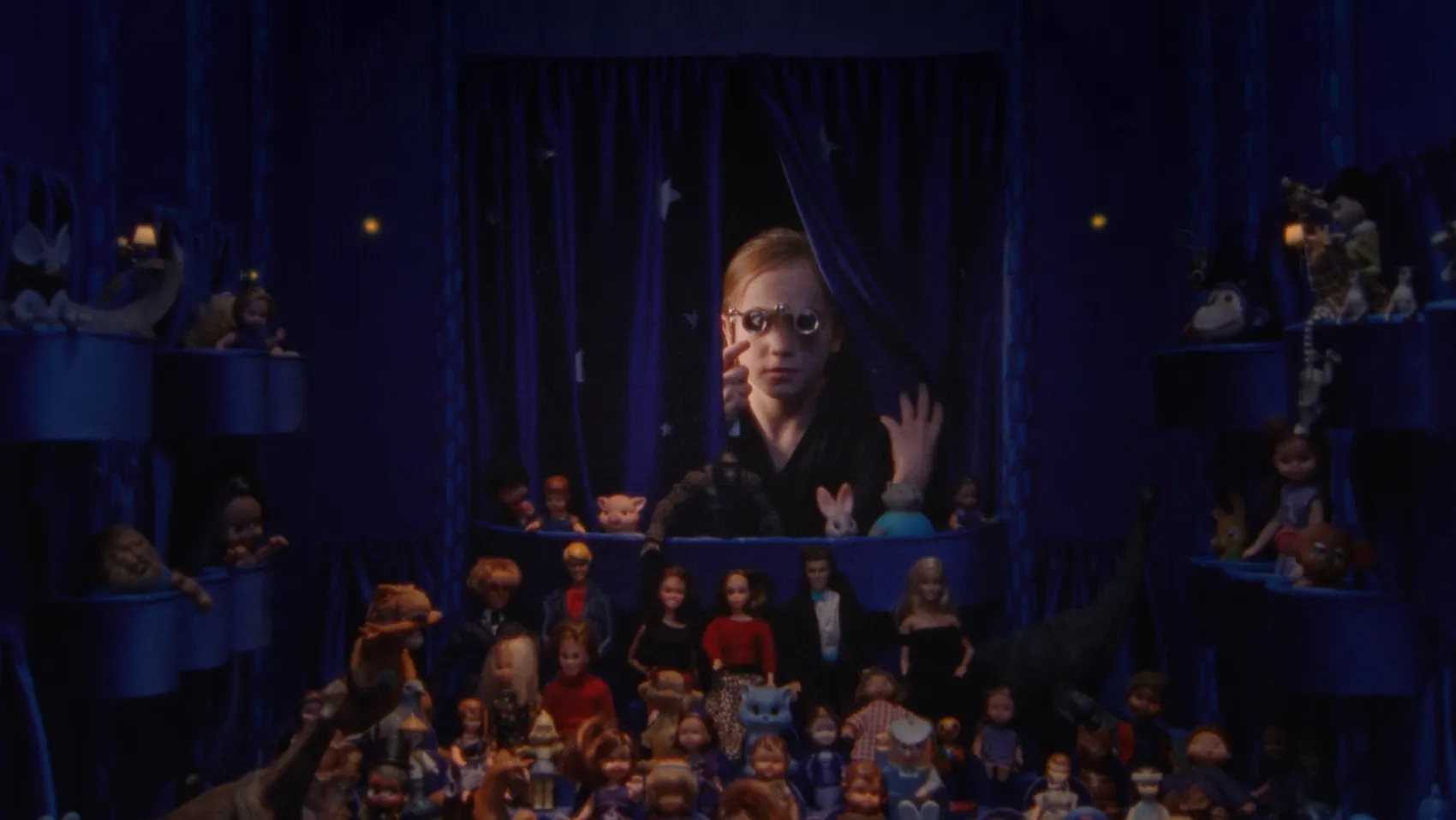
More disturbing is the film’s use of what one might call “trauma-theater,” where dolls and puppets are used to stage unspeakable acts. A doll’s decapitation stands in for a human one, externalizing a child’s processing of horror into the controllable realm of play. It’s a ritualistic attempt to gain mastery over events that offer none.
Even moments of beauty are deceptive; a lovely field of red poppies is later revealed as the source of the opium that fuels her father’s addiction, another beautiful lie in a landscape of them. This fragmented style is the film’s greatest strength, a method that immerses the viewer in the chaos of a mind trying to assemble a coherent self from broken pieces.
The Inheritance of Wounds
The narrative, as it is, revolves around the figures who populated Sandu’s youth, each a personification of a different kind of ruin. Her grandfather is a terrifying figure, a stern disciplinarian and rigid Communist Party loyalist whose cruelty is presented as a direct product of his own wartime past. He isn’t just a mean old man; he is the state’s ideology made flesh, enforcing its punitive logic at the dinner table.
He becomes the agent through which the public violence of the state becomes the private violence of the family. Her estranged father surfaces later, a fugitive and heroin addict, another casualty of the state’s collapse. His personal implosion serves as a small-scale mirror to the societal disintegration happening outside. These are not simply characters; they are vessels for historical trauma, each passing their damage down the line.
Sandu’s voice-over narration, delivered with a cool, clinical detachment, amplifies the horror. She recalls bodies freezing on the pavement and the daily struggle for water with an unnerving calm that feels more authentic than any performance of grief.
This tone is the sound of dissociation, a psychological scab formed over a wound too deep to be left open. The juxtaposition between this flat narration and the chaotic imagery suggests that her emotional response was a luxury she couldn’t afford at the time. The family curse is not supernatural; it is historical, a cycle of violence reenacted in the home with devastating precision.
Collateral Innocence
The film takes its intensely specific story and, in its final moments, makes a devastating turn toward the universal. Sandu abandons her own history for a closing montage of children from conflict zones across the globe. Some hold toy guns, others the real thing, their faces blank.
The distinction between play and warfare dissolves, suggesting that the script for violence is taught long before the weapon is real. With this sequence, the film’s argument becomes clear: the most meaningful division in any war is between the adults who wage it and the children who endure it. Nationalities and politics become irrelevant background noise.
Memory presents itself as an “act of acknowledging the past,” a painful but necessary first step toward understanding. In a world of contested histories, this act of personal remembrance is a form of resistance. That Sandu has stated this is the first installment of a planned tetralogy is telling.
It is a quiet admission that one film cannot possibly contain such a wound. It suggests that recovery is not a single story with a neat ending, but a landscape of memory that must be revisited again and again. The process of healing, like the trauma itself, is a long and arduous inheritance.
Memory, which opened Venice Days in August 2025, is a feature film blending documentary and fiction. It draws on the director Vladlena Sandu’s experiences growing up in war-torn Grozny in the 1990s. The Dutch-French production was made by Mimesis, Limitless, and Revolver Amsterdam. It premiered at the Venice International Film Festival. International sales are handled by Loco Films.
Full Credits
Director: Vladlena Sandu
Writers: Vladlena Sandu, Yana Sariadi
Producers and Executive Producers: Yanna Buryak, Ludovic Henry, Raymond van der Kaaij
Cast: Amina Taisumova, Selima Agamirzaeva, Vladlena Sandu
Director of Photography (Cinematographer): Liza Popova
Editors: Vladlena Sandu
The Review
Memory
Memory is a masterful piece of cinematic archaeology. It is a difficult, demanding, and profoundly important film that refuses to offer easy answers or emotional comfort. Director Vladlena Sandu crafts an unflinching look at the cyclical nature of historical violence and its impact on the individual soul. This is not entertainment; it is an essential, artfully constructed confrontation with the ghosts of the past, recommended for those prepared for its somber, challenging vision.
PROS
- Extraordinarily inventive visual style that blends archival, staged, and symbolic imagery.
- A deep and intelligent exploration of generational trauma and its roots in historical conflict.
- Powerful and layered use of symbolism that rewards close viewing.
- A vital first-hand account of a significant, often overlooked, historical period.
CONS
- Its fragmented, non-linear structure can be disorienting and challenging for viewers.
- The subject matter is intensely grim and emotionally taxing.
- The unconventional, highly artistic approach may not appeal to all audiences.