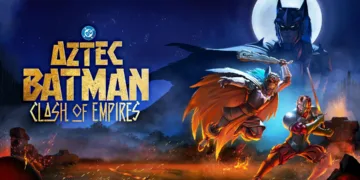













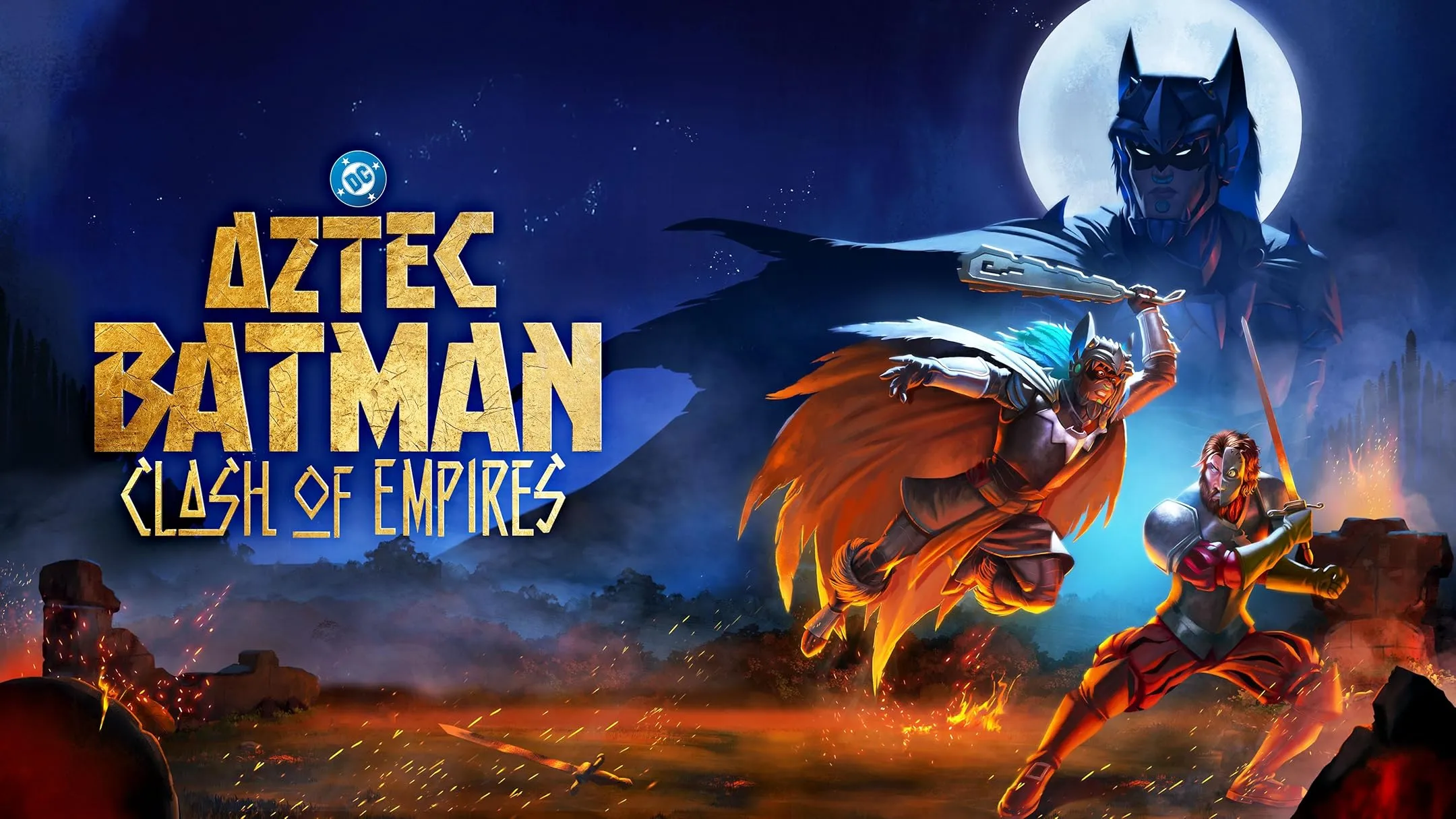

What happens when a modern myth, one we know by heart, is shattered and rebuilt using the materials of a lost history? Aztec Batman: Clash of Empires poses this question, taking the well-worn tragedy of a murdered family in a dark alley and transposing it onto the vibrant, brutal world of the 1500s Aztec Empire. The film asks us to forget Gotham and instead walk the stone causeways of Tenochtitlán.
Our hero is not Bruce Wayne, but Yohualli Coatl, a young man of noble birth whose world is not just broken but invaded. His father, a respected chieftain, is slain not by a common criminal, but by the steel and gunpowder of the first Spanish conquistadors to reach his shores.
This single creative decision propels the film into a fascinating space, somewhere between a superhero story and a historical epic. It is an animated feature that dares to blend the archetypes of DC Comics with the stark, tragic reality of colonial conquest, grounding its hero’s journey in the spiritual beliefs and cultural fabric of a civilization on the brink of annihilation.
The World of the Bat God: Cultural and Mythological Reinvention
The film’s greatest success is its profound sense of place. The creative team has constructed a vision of the Aztec world that feels both magnificent and tangible. From the imposing geometry of Tenochtitlán’s temples to the intricate designs of ceremonial clothing and the wicked functionality of obsidian-bladed weapons, the setting is a character in its own right.
This is not a generic fantasy kingdom; it is a world built on a foundation of historical research. By integrating real figures like Hernán Cortés and King Moctezuma, the story anchors its superhero elements in the soil of a genuine and devastating historical conflict. The social and political structures of the empire, its rituals, and its internal tensions are all present, creating a rich canvas upon which the drama unfolds. This commitment to cultural specificity prevents the concept from feeling like a simple gimmick.
The most significant and compelling narrative innovation is how it redefines Batman’s origin. Bruce Wayne’s transformation is a psychological one; he weaponizes a childhood fear to create a symbol. Yohualli Coatl’s journey is mythological. He is not creating a symbol, he is answering the call of one. His visions of Tzinacan, the ancient Aztec bat god representing death, sacrifice, and rebirth, are presented as divine communications. This shift is fundamental to the story’s identity.
Also Read




It reframes the hero’s purpose, moving it away from one man’s obsessive quest for order and toward the acceptance of a sacred duty. Yohualli becomes less of a self-made vigilante and more of a divinely chosen warrior, the avatar of a god acting through him. This spiritual foundation gives his quest a different texture, one tied to the destiny of his entire people.
This immersive world is brought to life through its exceptional soundscape. A film’s score is often the invisible architecture of its world, and here it is masterful. The soundtrack grounds the listener with the percussive power of tribal drums and the organic tones of indigenous instrumentation, creating an atmosphere that feels ancient and authentic.
I’ve always believed a great score can do half the work of a visual effects team, and this film is a perfect example. What makes the music particularly smart is its subtle integration of familiar Batman motifs. Faint echoes of Danny Elfman’s iconic theme flicker within the Mesoamerican soundscape, a clever auditory nod that connects this new hero to a long cinematic legacy without compromising his unique cultural identity.
A Pantheon Reimagined: Allies and Antagonists
An Elseworlds story is only as strong as its reinterpreted characters, and the film is often brilliant in this regard. Yohualli’s arc is the story’s anchor. While it follows the familiar template of a young man driven to war by his father’s murder, the stakes are exponentially higher. His internal battle is not just between vengeance and justice, but between his personal grief and the impending destruction of his civilization.

He must learn to channel his rage into becoming a symbol of hope for a people facing an existential threat. The voice performance compellingly charts his transformation from an earnest youth to a hardened warrior, his tone eventually settling into that low, deliberate growl we associate with the Dark Knight.
The film’s masterstroke is its conception of its villains. The decision to cast the historical Hernán Cortés as a version of Two-Face is a chillingly effective piece of narrative engineering. This is not a man scarred by chance, but a conqueror whose very identity is built on a duplicitous nature. He presents a face of diplomacy and enlightenment to the Aztecs while privately plotting their destruction.
This grounds the villain’s duality in the real-world horrors of colonialism, making him a far more insidious and resonant antagonist than a common supervillain. The performance captures this perfectly, shifting from disarming charisma to cold-blooded cruelty in an instant.
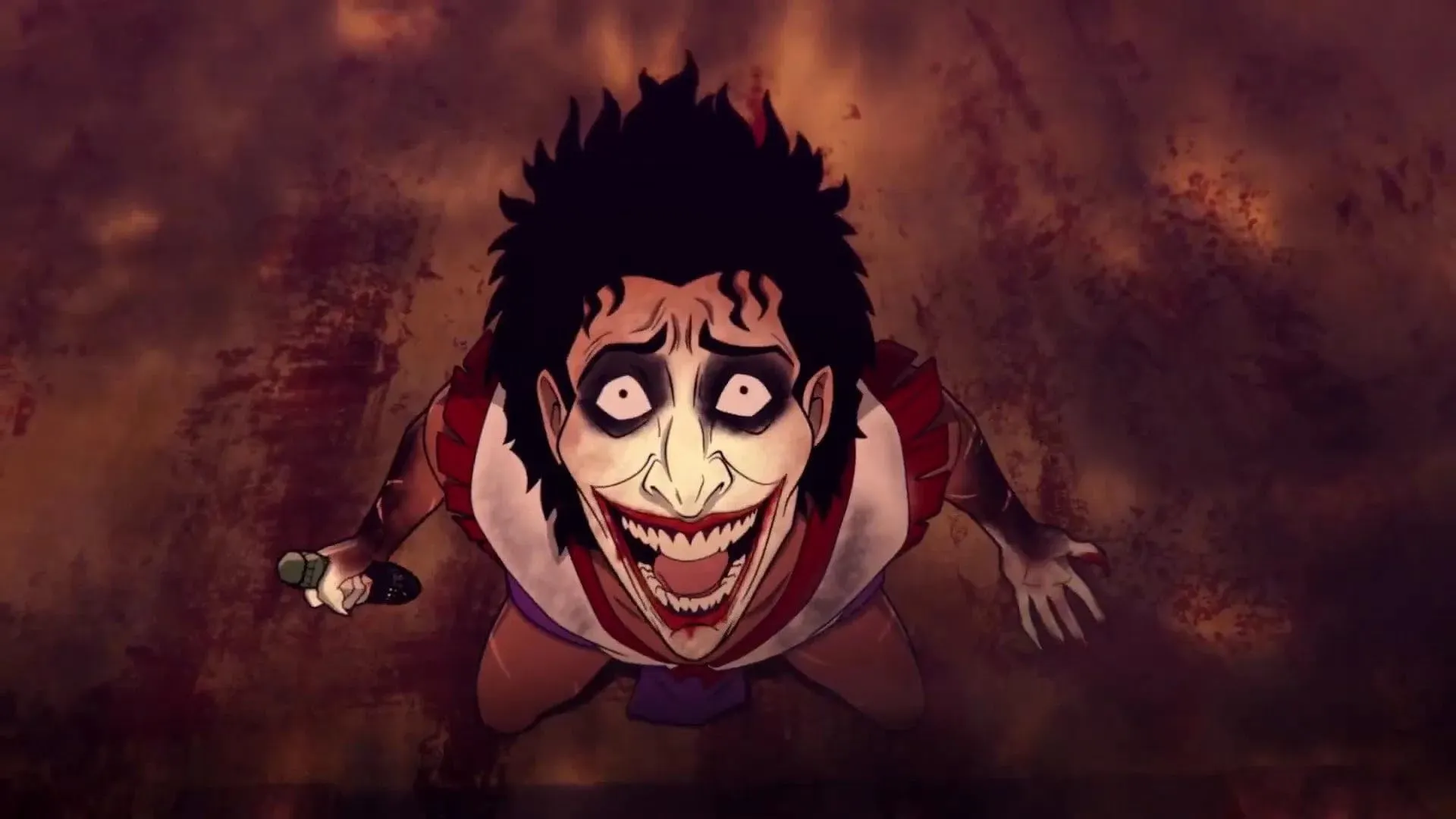
Just as impressive is the film’s handling of The Joker. Reimagined as Yoka, a high-ranking shaman in the king’s court, his fall from grace is given a rare and genuinely tragic origin. He is not a nihilist who simply wants to watch the world burn; he is a man of faith who is corrupted and manipulated by a malevolent supernatural entity.
His descent into madness is a dark reflection of Yohualli’s own divine connection, showing how contact with the gods can lead to ruin as easily as it can to heroism. This haunting backstory is a standout element, offering a fresh and thoughtful take on a character who is often defined by his lack of a clear past, even if his role in the immediate plot feels somewhat contained.
The Clash of Styles: Animation and Action
From a technical standpoint, the film is a mix of the conventional and the inspired. Much of the character animation adheres to a functional “house style,” competent and clear in its storytelling but rarely breathtaking. It services the plot without taking many artistic risks. However, this functional approach is frequently interrupted by flashes of startling creativity.

The visual representations of the Aztec gods and the ethereal nature spirit, Forest Ivy, are rendered in a distinct, stylized manner that draws heavily from Mesoamerican art. These moments are visually arresting, offering a glimpse of a more ambitious and culturally specific aesthetic that makes the more standard animation feel a bit plain by comparison. The richly detailed backgrounds of Tenochtitlán and the surrounding rainforest also provide a constant, beautiful visual anchor.
Where the film consistently excels is in its action. The combat is fluidly choreographed and unapologetically brutal, fully justifying its R-rating. The violence here is not gratuitous; it is a deliberate choice to reflect the savage reality of the Spanish conquest.
This is a story about a war for survival, and the fight scenes depict it with grim honesty. Obsidian-edged clubs shatter bone, and Spanish blades find their mark with bloody finality. The action sequences have genuine weight and consequence, effectively communicating the desperation of the Aztec resistance and the incredible danger Yohualli faces in his one-man war.
Narrative Stumbles and a Fractured Empire
Despite its brilliant concept and strong character work, the film’s narrative structure is its greatest weakness. The story is dense with ideas, but its lean 80-minute runtime forces a rushed pace that leaves little room for reflection.
The film feels like it is in a constant sprint, moving from one major plot point to the next without allowing dramatic moments to land with their full emotional impact. This sense of narrative whiplash means some of the reinterpreted DC characters feel more like brief cameos than fully integrated parts of the story. The pacing also delays Yohualli’s full transformation into Batman, a choice that may test the patience of viewers waiting for the iconic hero to emerge.
The most significant structural flaw, however, is the film’s ending. The central conflict with Hernán Cortés, the primary villain, is left entirely unresolved, positioning the movie as a prologue for a sequel that may never arrive. This “to be continued” approach is a frustratingly common trend in modern franchise filmmaking, and here it does a disservice to the story.
It denies the audience the satisfaction of a complete narrative arc, making the entire film feel like an elaborate and expensive setup. This lack of closure feels particularly unsatisfying for a story rooted in such a definitive and tragic historical event, a commercial decision that clashes with the film’s otherwise bold artistic ambitions.
Aztec Batman: Clash of Empires is an adult animated historical superhero film that boldly reimagines the Batman mythology within the vibrant culture of 16th-century Mesoamerica, following a young Aztec boy named Yohualli Coatl who becomes the Dark Knight after his father is murdered by Spanish conquistadors. The film premiered on September 18, 2025, in Mexico and September 19, 2025, in the United States. It is a collaboration between Warner Bros. Animation, Ánima, and Chatrone, and is available to watch on the streaming service Max (formerly HBO Max).
Full Credits
Director: Juan Meza-León
Writers: Ernie Altbacker, Alfredo Mendoza, Juan Meza-León
Producers and Executive Producers: José C. García de Letona, Fernando De Fuentes, Carina Schulze, Aaron D. Berger, Jim Krieg, Kimberly S. Moreau, Daniel Stellan Kendrick, Sam Register, Tomás Yankelevich, Michael Uslan
Cast: Horacio García Rojas, Omar Chaparro, Álvaro Morte, Raymond Cruz, Jay Hernandez, José Carlos Illanes, Jorge R. Gutierrez
Editors: Diego Denardi
Composer: Ego Plum
The Review
Aztec Batman: Clash of Empires
Aztec Batman: Clash of Empires is a brilliant concept hampered by flawed execution. Its thoughtful integration of Mesoamerican culture and mythology, combined with inspired villain reinterpretations, makes for a fascinating watch. The film is at its best when exploring the spiritual and historical weight of its setting. However, a rushed pace and an unsatisfying, incomplete ending designed to set up a sequel prevent this bold reimagining from reaching its full potential. It’s an ambitious, often stunning prologue to a story we may never get to see finished.
PROS
- An ambitious and creative reimagining of the Batman mythos.
- Deep and respectful integration of Aztec history, culture, and spirituality.
- Inspired villain adaptations, particularly Hernán Cortés as a historically potent Two-Face.
- A unique and haunting origin story for its version of The Joker.
- An immersive musical score that blends cultural authenticity with classic heroic themes.
CONS
- Rushed pacing within a short runtime leads to an overstuffed and underdeveloped narrative.
- The animation is functional but stylistically inconsistent.
- The story ends on a cliffhanger, functioning more as a sequel setup than a self-contained film.
- Key thematic ideas feel explored only at a surface level.