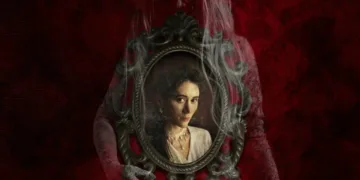











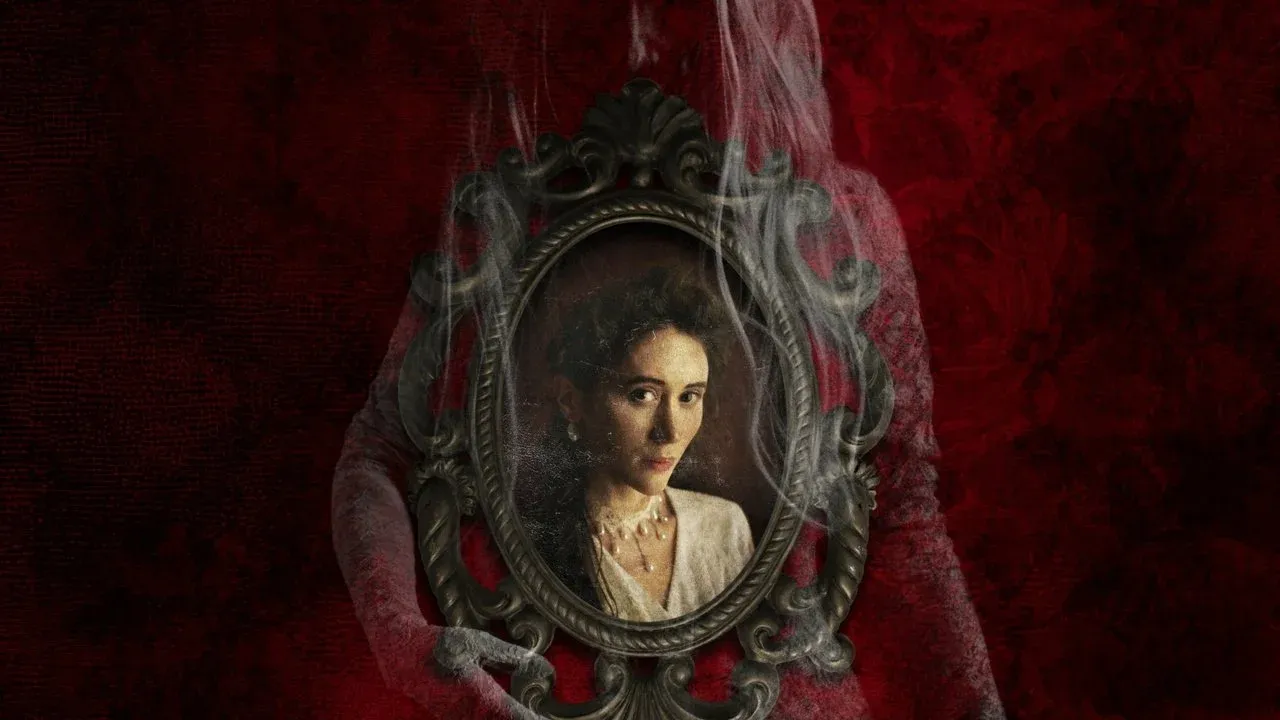

There is a unique challenge in taking a piece of literature as brief as a whisper and trying to give it the voice of a feature film. Edgar Allan Poe’s “The Oval Portrait” is barely a fragment, a haunting idea about the terrible cost of art. To adapt it is not merely to translate but to invent, to build a world around a single, chilling image. Adrian Langley’s film of the same name is precisely this act of invention.
It is a movie that feels like an artifact from another time, less a product of 2025 and more a relic discovered in the back of a forgotten cinema. It moves with a quiet, melancholic grace, prioritizing the slow cultivation of mood over the immediate gratification of modern horror. This is a gothic tale that dresses itself in contemporary clothes, using the simple premise of a haunted painting to ask larger questions about art, loneliness, and our connection to the past in a world that seems desperate to forget it.
Three Figures, One Canvas
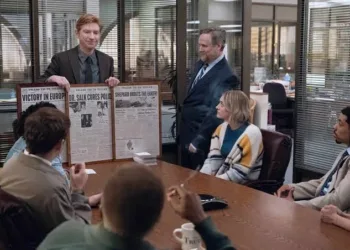
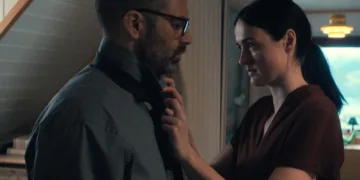
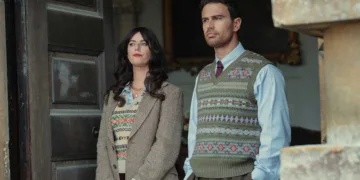
The film’s architecture rests on the lives of three individuals, each drawn to the portrait for different reasons, their narratives orbiting the central mystery before finally colliding. At the story’s heart is Ambrose Whitlock, the proprietor of the antique shop that houses the painting. Michael Swatton portrays him with a profound stillness, a man whose elegance and measured speech barely conceal a lifetime of sorrow.
His performance is one of physicality; the careful way he handles an object or the weight in his posture suggests a history far deeper than the script explicitly states. He is a man out of time, and Swatton makes that displacement feel achingly real. He is contrasted by Ava, an aspiring artist whose defining trait is a complete rejection of modern technology. This choice feels a bit forced, a screenplay’s shortcut to labeling her an “old soul,” and it strains the film’s credibility.
Pragya Shail’s performance sometimes shares this uncertainty, her delivery feeling tentative in key moments. Yet, her character functions as the audience’s entry point into this strange, sad world. The third figure, Julian, provides a necessary disruption. A low-level criminal tasked with stealing the portrait, he injects a nervous, almost comic, energy into the otherwise somber proceedings.
Paul Thomas plays him as a man whose ambition is constantly being undone by his cowardice, a performance that successfully punctures the film’s gothic self-seriousness. Langley’s decision to braid these three distinct viewpoints together creates a layered, if sometimes imbalanced, narrative.
Painting with Light and Music
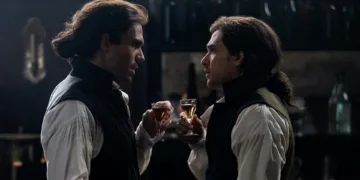
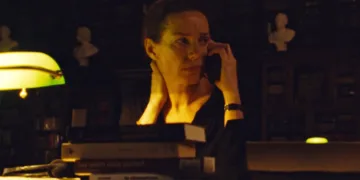
Where The Oval Portrait truly finds its voice is in its masterful creation of atmosphere. This is a film that understands the power of aesthetics. The cinematography bathes the antique shop in a palette of warm, dusty ambers and deep shadows, transforming the location into a character itself. It is both a cozy refuge from the cold outside world and a labyrinthine space where secrets feel trapped in the air.
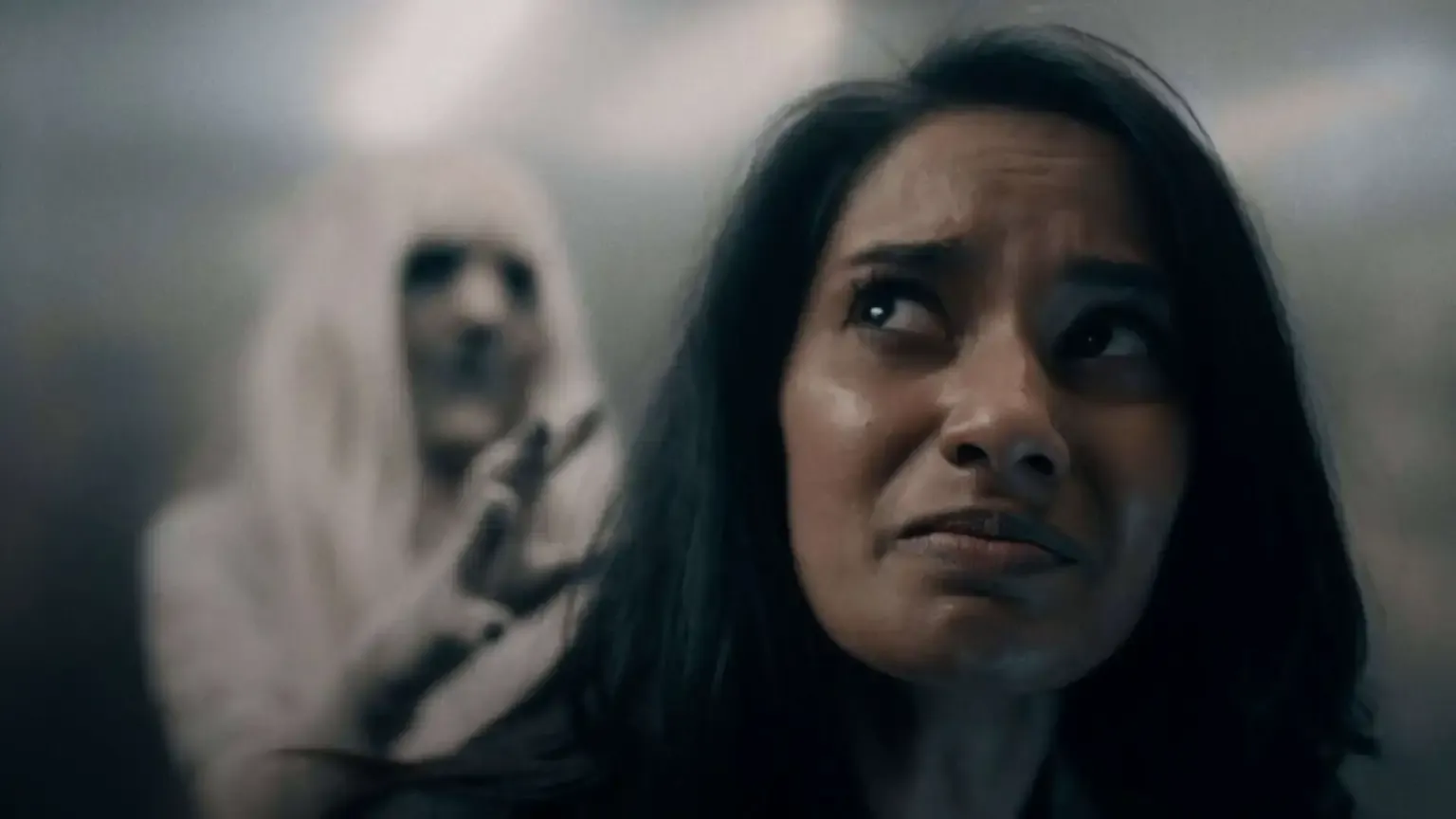
I was reminded of the photography in classic ghost stories, where the camera remains patient and observant, allowing dread to build in the stillness of a room. This visual language is powerfully amplified by Andrew Morgan Smith’s magnificent orchestral score. It is a bold, unapologetic throwback to the era of Hammer horror and the lush compositions of Franz Waxman. The music is not simply background; it is an active participant in the storytelling, often carrying the emotional weight of entire scenes without a single word of dialogue.
While its constant presence might feel overbearing to some, it is the film’s most distinct and successful element. Langley uses these tools to build suspense slowly, letting the quiet creak of a floorboard or a shift in the light do the work. The actual appearances of the spirit are used sparingly, which makes them genuinely unsettling when they finally arrive, brief flashes of horror in a beautifully rendered world of sorrow.
A Beautiful Frame, A Flawed Canvas
A film so committed to its aesthetic vision can sometimes neglect the mechanics of its own story. The Oval Portrait is admirable in its ambition, but the narrative design reveals several flaws. The screenplay struggles with dialogue that often feels overly formal and stilted, a quality that clashes with its modern setting.
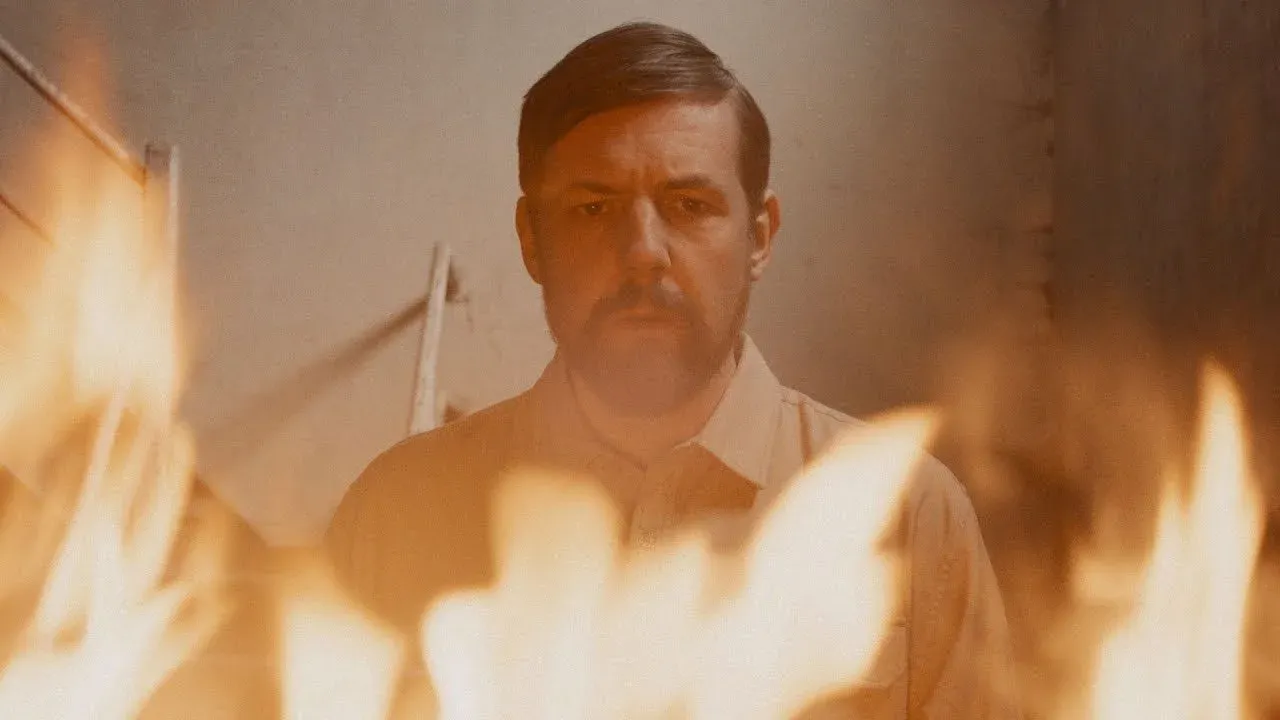
The most significant structural weakness is the attempt to merge a gritty crime subplot with a delicate supernatural romance. The two threads feel as if they belong to different films. The machinations of Julian and his threatening boss introduce a kind of mundane conflict that sits awkwardly alongside the ethereal mystery of the painting and its keeper. This collision of genres never quite gels, leaving the heist plot feeling like a narrative engine bolted onto a story that did not need one.
The film’s pacing is also a considerable hurdle. In its quest for atmosphere, the editing is incredibly deliberate. The first act takes nearly an hour to unfold, a choice that will undoubtedly alienate viewers accustomed to more forward momentum. While this slowness serves the mood, it hinders the plot, causing certain sequences to feel repetitive.
The challenge of expanding Poe’s brief text is evident in these additions. For those who appreciate emotionally resonant ghost stories and have a patience for lyrical, melancholic filmmaking, the movie offers a rich and rewarding experience. It succeeds beautifully as a mood piece, a somber tribute to a bygone style of storytelling.
Edgar Allan Poe’s The Oval Portrait is a gothic ghost story, a modern adaptation of the classic Edgar Allan Poe short story. Written and directed by Adrian Langley, the film follows a petty thief, an aspiring artist, and an enigmatic antique shop owner whose lives become intertwined by a cursed painting in a haunted shop. The movie had its world premiere at the H.P. Lovecraft Film Festival and was released in limited theaters and on Digital/VOD platforms in the US and Canada on October 10, 2025. It is distributed by Blue Fox Entertainment.
Full Credits
The Review
The Oval Portrait
The Oval Portrait is a beautifully crafted ghost story that succeeds more as a mood piece than a compelling narrative. Its greatest strengths are a stunning orchestral score and a potent, melancholic atmosphere that perfectly captures a bygone era of horror. While a powerful central performance anchors the film, the deliberate pacing and an awkward mix of gothic romance and crime thriller weaken its overall impact. This is a rewarding watch for patient viewers who value style and tone, but its narrative flaws are too significant to ignore.
PROS
- Masterful creation of a gothic, melancholic atmosphere.
- A lush, evocative orchestral score reminiscent of classic Hammer films.
- A strong, captivating central performance from Michael Swatton as Ambrose Whitlock.
- Beautiful, patient cinematography with a rich, warm visual palette.
CONS
- Extremely slow pacing that will test the patience of many viewers.
- An awkward crime subplot that feels underdeveloped and clashes with the main story.
- Dialogue that can feel stiff and unnatural.
- An uneven narrative structure that becomes repetitive.