






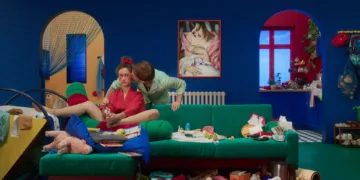











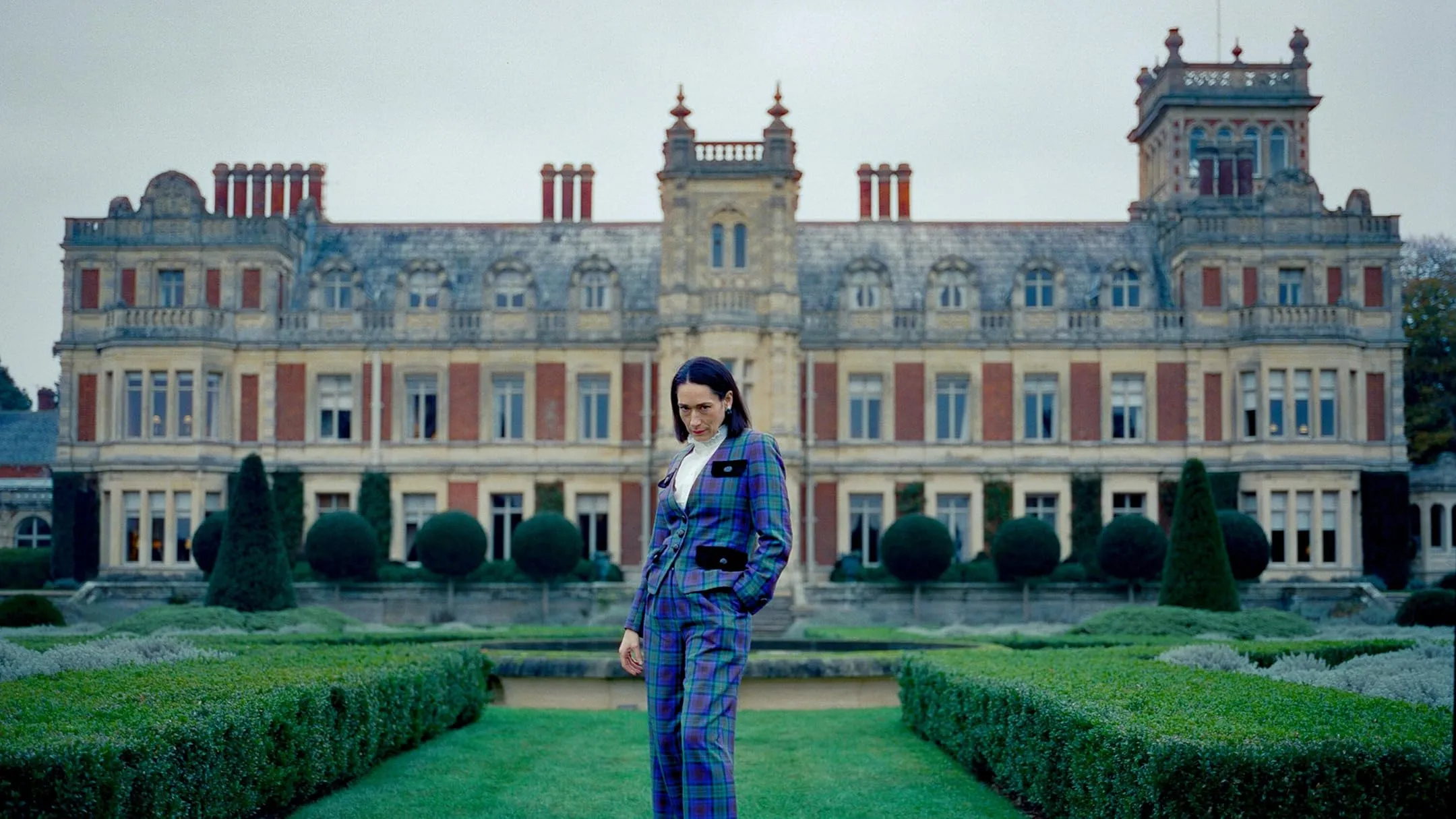

Samuel Abrahams’ debut feature, Lady, opens with the bitter tang of contemporary satire. Lady Isabella Ravenhyde, played with relentless, absorbing force by Sian Clifford, mistakes inherited privilege for earned artistic stature. She commissions a documentary on her epic artistic journey, a mirror polished for the “Stately Stars” talent show and for her own self-regard. Laurie Kynaston’s Sam arrives with a camera and a hunger for prestige, imagining a Netflix deal waiting just beyond the gates.
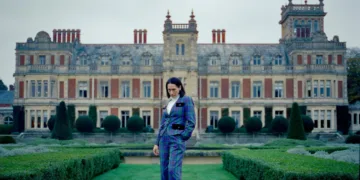
Ravenhyde Hall spreads out in baroque decay, a monument to wealth that isolates the people inside it. Reality television echoes through the premise, and the comedy bites at a soft “eat the rich” target, setting a charged distance between observer and observed. The film soon changes tempo and temperature. It swings with emotional violence and lets pockets of surrealism bloom, and those strange blooms deepen the narrative. The form insists that honest reflection sometimes needs a warped glass to catch the face.
The Mask and the Mirror
The film’s dynamic supplies the pulse. Clifford gives a barnstorming turn, distilling Isabella’s aristocratic affectations, flashy taste, and bottomless self-absorption. She first reads as deluded, a grotesque portrait of fame-chasing entitlement. Across from her, Kynaston plays Sam as the self-appointed straight man whose sneer covers unease. His documentary ethic bends toward careerism.
He treats Isabella like material to feed Baumeister’s terror of not mattering, a private fear he tries to outpace with ambition. Their pairing crackles, an uncomfortable, stage-ready coupling. Tension grows from a relationship built on transaction.
As the story moves, the masks loosen. Clifford lets fissures show in Isabella’s theatrics, and a deep wound surfaces: loneliness shaped by a tragic past. Her most frightening thought is plain. She feels unseen. Sam faces the shaky ground of his own intentions and the insecurities he buried. The film proposes that connection asks for the breaking of public armor until both parties stand without it.
The Disappearing Self and the Search for Proof
Abrahams and co-writer Miranda Campbell Bowling build a philosophical inquiry inside a deceptively simple mockumentary frame. A distant camera heightens the absurdity, catching candid fragments of delusion and exploitation. Then the film alters its method. Isabella begins to vanish in literal terms.
The magical realist turn lands as a physical sign of how invisible she feels, a body acting out a crisis of identity. The device drives the piece forward, steering it from caustic comedy toward meditations on what makes a self. Loss presses in, and loneliness opens a vacuum around the characters.
The story studies the need to be recognized, the way a person seeks proof of existence in the eyes of another. The media machine appears in that mirror. The TV commissioning world comes in for a sly critique, and the ethics of the documentarian are weighed, with vulnerability treated as currency for career gain. A demand for authenticity curdles into performance.
Sound, Space, and Specter
Abrahams guides this blend of farce and grief with control. Ravenhyde Hall matters on every surface. Agnieszka Dębska’s production design turns opulence into a gilded cage, a grand interior that multiplies Isabella’s solitude. Korsshan Schlauer’s cinematography starts with surveillance distance and then edges closer as the characters drop their guard, the visual path tracing the fragile tie that forms between them.
Sound seals the spell. Jonny Woodley’s intense, arresting score leans on human voices and dramatic tones. It carries weight, amplifying the comic excess of Isabella’s performance art and the raw ache of her backstory. Form, space, and sound move together. The strange, the absurd, and the tender sit almost on the same line, separated by a membrane so thin it feels like breath.
The film Lady is a 2025 British satirical mockumentary and feature-length debut for director Samuel Abrahams. Starring Sian Clifford as the narcissistic Lady Isabella, the film follows her attempt to secure fame by hiring a filmmaker to document her life, which takes a surreal turn with the introduction of magical realism. The film premiered in 2025 at the BFI London Film Festival. As of the current date, it is a recent independent film and information on its general theatrical release or wide streaming availability is not yet confirmed.
Credits
Director: Samuel Abrahams
Writers: Samuel Abrahams, Miranda Campbell Bowling
Producers and Executive Producers: Anna Mohr-Pietsch, Stewart Le Maréchal, Sam Payne (Co-Producer)
Cast: Sian Clifford, Laurie Kynaston, Juliet Cowan, Olisa Odele
Director of Photography (Cinematographer): Korsshan Schlauer
Editors: Josh Mallalieu
Composer: Jonny Woodley
The Review
Lady
This film is a remarkable transformation of superficial satire into a piercing study of existential dread. Sian Clifford's magnetic performance anchors the script’s bizarre, magical realist twist, successfully navigating the character's delusions and deep vulnerability. The film dissects the pathology of the desire to be witnessed, showing how identity dissolves when external validation is denied. It is an unnerving, tender, and deeply strange inquiry into the performance of self and the terror of ultimate invisibility. A daring feature debut.
PROS
- Sian Clifford's barnstorming, magnetic central performance.
- The unexpected, successful blend of initial satire with profound magical realism.
- Deeply compelling exploration of existential themes: identity, loneliness, and the need to be seen.
- Electric, evolving dynamic between the two lead characters.
- Strong technical elements, especially the intense and immersive score.
CONS
- Some moments strain the credibility of the mockumentary format.
- The narrative shifts and occasional bizarre elements may test some audience expectations.