














![Kingdom Hearts Collection [I-III] Review](https://gazettely.com/wp-content/uploads/2026/10/Kingdom-Hearts-Collection-I-III-1-360x180.webp "Kingdom Hearts Collection [I-III] Review: KHII Holds Steady as Newer Entries Fluctuate 37")



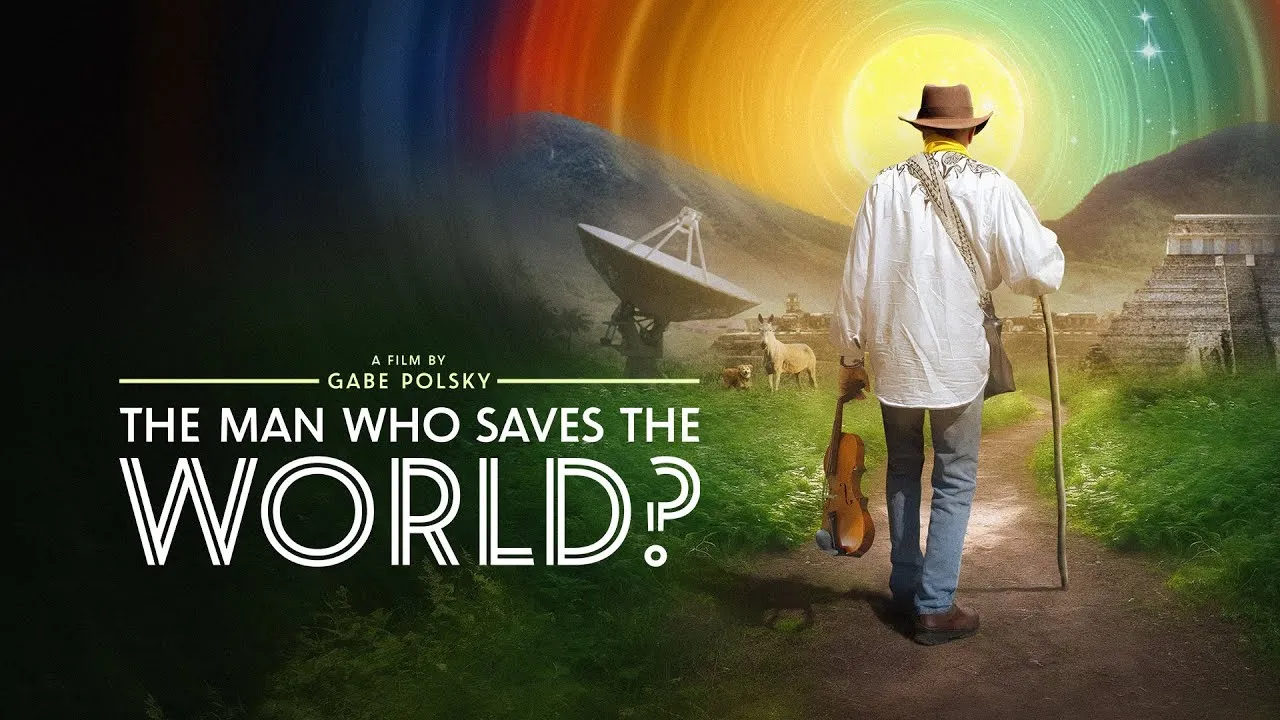

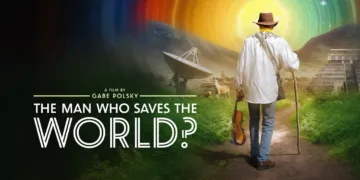
A half-built mansion rises from the desert, its unfinished tower angled toward a pale sky. The house belongs to Patrick McCollum, subject of Gabe Polsky’s documentary, a spiritual leader and activist whose story courts disbelief. Polsky presents McCollum as a peace worker who believes he serves an ancient prophecy.
According to the film, four South American elders identified him as a solitary figure appointed to unite the world’s Indigenous peoples, protect the Amazon, and by extension the planet. Across 87 minutes, the portrait maintains a steady tension between McCollum’s certainty and the seeming extravagance of his charge. The question mark in the title operates as a motor for the film, inviting viewers to test the possibility of a savior against the presence of an unconventional man pursuing a colossal aim.
The Accidental Oracle
McCollum appears like a character sprung from a picaresque, a man who has moved through an improbable range of lives. His résumé lists work as a jewelry-maker and service as an interfaith minister, experiences that precede his current mission.
He lives with modest means and channels resources into a global effort while building an impractical desert home with his own hands. The film sketches an offbeat personality shaped by resolve, by a habit of compassion, and by clear courage. He recounts emotional trauma with a candor that arrests the viewer. Admiration arrives from notable quarters. Jane Goodall, the primatologist and activist, calls him the most remarkable man she has encountered.
The film records his acceptance of spiritual phenomena, including UFO sightings and a near-death experience, yet it tracks him undertaking work that belongs to the ground. He listens, he organizes, and he labors in the jungle. The image is not of a mystic giving speeches from a distant perch; it is of a planner in motion, using conversation and presence as tools.
The Filmmaker as Inquisitor
Polsky builds the documentary as a hunt for corroboration. He steps into the frame as the audience’s stand-in, speaking the doubt that naturally gathers around the prophecy’s origin. Over time the film marks a shift in the director’s stance, from an early assumption that McCollum counts as a crank to a posture that asks harder questions without closing its mind.

Verification becomes procedure. Polsky brings in a private investigator. He seeks out the Indigenous elders said to have named McCollum “the one.” The investigation shapes the film’s second half and concentrates on the hazards of translation and interpretation. Pressure reaches its peak in Colombia, where Polsky confronts McCollum with the holes in the story.
McCollum replies without ornament. The prophecy, he says, promised unity. Proof arrives in a field where tribes from North and South America gather together. The film gives the number: roughly 150 people. The scene reads as an answer inscribed in bodies and voices, a visible statement of purpose that does not require celestial spectacle.
Action as Its Own Truth
From there the documentary turns to belief and intention. It asks whether the origin of an idea holds decisive weight once concrete action begins to shape communities and land. The film frames a circular problem. The status conferred by the prophecy grants McCollum the authority and momentum to act.
The actions then produce unification and support conservation work, which in turn confirm the faith that set the movement in motion. Polsky acknowledges the comic edge that clings to the situation, yet the film keeps its regard steady and declines to mock its subject.
The work becomes the argument. Pursuit of an improbable aim generates a coalition around ecological care. The sight of people from distant territories standing together places hope within reach, not as a slogan but as a practice. The large Indigenous gathering carries the film’s most forceful claim. Belief, when channeled into disciplined effort, can organize communities and carve out a practical path toward protecting a living world.
The Man Who Saves the World? had its limited theatrical release starting around October 17, 2025, distributed by Area 23a. The film follows the spiritual journey of Patrick McCollum, an eccentric peace activist who believes he is destined to fulfill an ancient Indigenous prophecy to unite tribes and save the Amazon rainforest. Directed by Gabe Polsky, the film blends spiritual themes and environmental urgency with an absurdist, quest-like narrative. As of its release, the documentary is primarily available in select theaters through a hybrid distribution model featuring special events and post-screening Q&A sessions. It is not yet available for streaming.
Credits
Director: Gabe Polsky
Writers: Gabe Polsky
Producers and Executive Producers: Gabe Polsky, Peter Farrelly, Danny McBride, David Gordon Green, Jody Hill
Cast: Patrick McCollum, Jane Goodall, Chief Phil Lane Jr., Joey Nittolo
Editors: Philip Owens
Composer: Leo Birenberg, Ramiro Rodriguez Zamarripa, Helkin Rene Diaz
The Review
The Man Who Saves the World?
This film is a sharp, nuanced meditation on the power of belief to drive meaningful action in a skeptical world. Gabe Polsky’s documentary is a compelling examination of conviction versus reality, presenting a portrait of Patrick McCollum, a fascinating figure whose improbable mission leads to tangible, positive outcomes. The film expertly maintains ambiguity, questioning the prophetic claim while honoring the dedicated, hands-on work of unification. This thoughtful structure makes the viewing experience deeply engaging and provocative.
PROS
- Features a genuinely compelling and complex central figure in Patrick McCollum.
- The directorial approach is balanced and non-judgmental, maintaining intellectual rigor while exploring the spiritual.
- Successfully investigates profound themes regarding faith, skepticism, and the importance of action over absolute truth.
- Presents a brisk, tightly edited narrative that keeps the tension between the absurd and the profound.
- Includes high-profile validation of McCollum's character and work, notably from Jane Goodall.
CONS
- The ambiguity regarding the prophecy's authenticity may leave viewers desiring a more definitive narrative conclusion.
- The director's on-screen presence, while serving a narrative purpose, could feel intrusive to some audience members.
- The eccentric nature of the subject's personal life and claims might challenge initial viewer acceptance.