







Evi Kalogiropoulou’s feature debut, Gorgona, lands as a visceral, highly stylized dystopian drama. The film revives the ancient Greek polis model in a grim, post-apocalyptic future where a decaying city-state survives on petrol refining alone. Power belongs to a male ruling class, a hyper-masculine patriarchy that trades its oil for necessities, including women.
The central conflict grows from a looming vacuum created by the ailing leader, Nikos (Christos Loulis), who suffers from a terminal disease. He stages games to choose a successor, then faces a surprise entrant, Maria (Melissanthi Mahut), his clandestine partner. Maria’s presence challenges the clan’s entrenched misogyny and sets a clear line of confrontation.
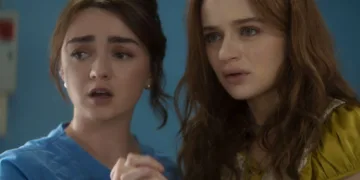
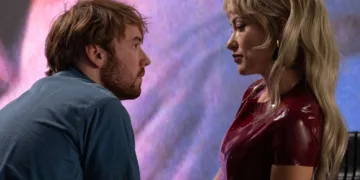
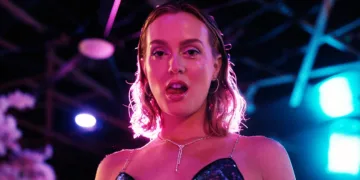
The balance shifts again with the arrival of Eleni (Aurora Marion), a fiery singer and sex worker exchanged for resources, whose connection with Maria forms an alliance that threatens the city’s order. The film fixes a neon-lit, grimy, sensual tone, reshaping derelict shipyards into a vulgar aesthetic that carries the narrative’s heat.
The Mechanics of a Broken World
Kalogiropoulou sketches the operating rules quickly. The patriarchal structure runs on oil, muscle, and public displays of dominance. Men appear as shirtless, heavily built figures, their bodies and guns functioning as props for toxic masculinity. Scarcity defines daily life, food is limited, and women are treated as commodities, a direct sign of moral and economic collapse.
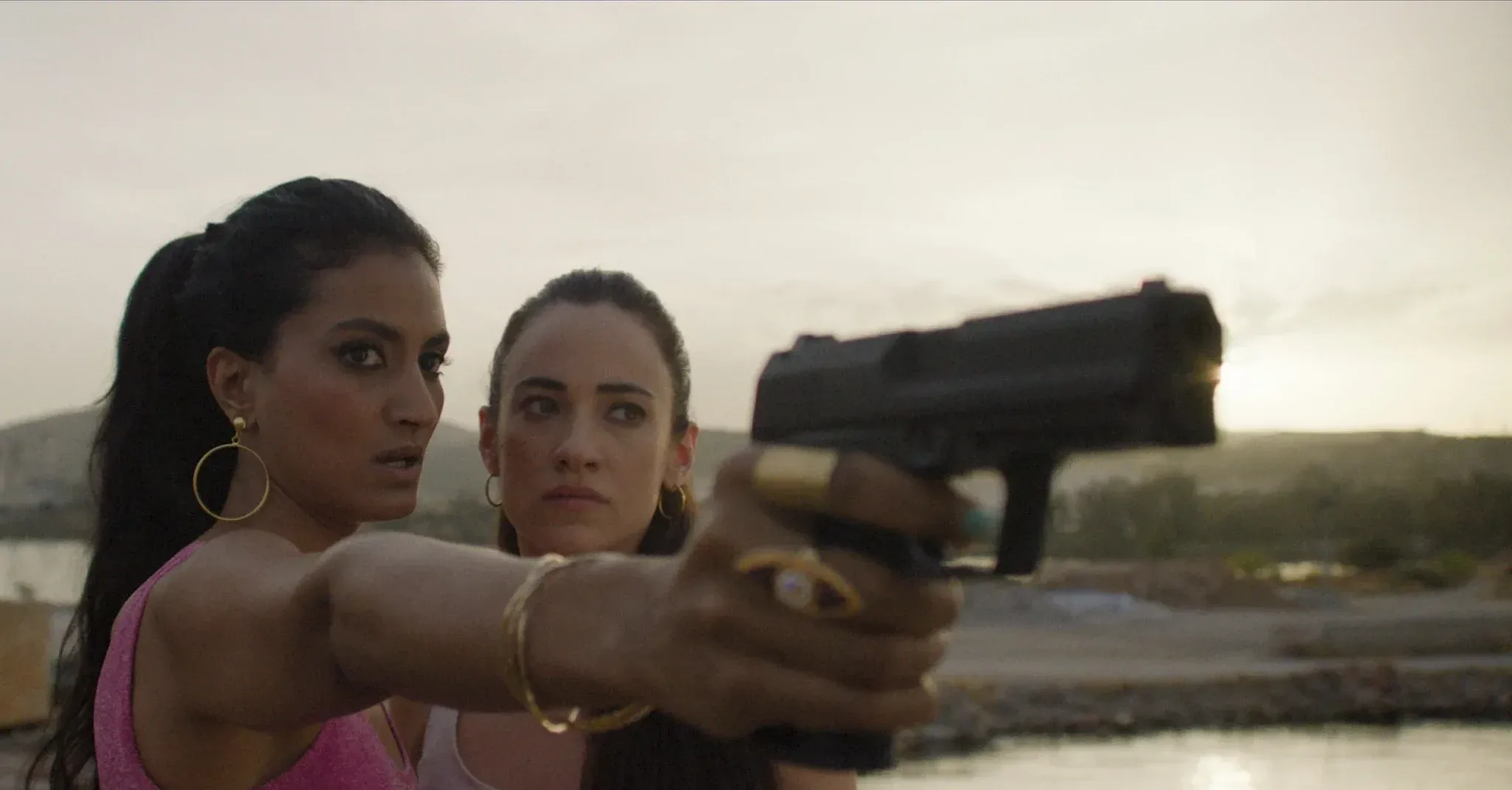
The thematic aim is plain: a story of queer female empowerment and a direct challenge to this hierarchy. The film positions traditional, brutish male power, focused on training and marksmanship, against the quiet, subversive strength of Maria and Eleni. The music-video lineage shows in the ravishing surface. DP Giorgos Valsamis frames a seductive yet grotesque neon world.
Also Read



Costumes with golden chains, snakeskin, and glitter lean into deliberate gaudiness, a surface shine that mirrors the city’s rot. Sentimental Greek ballads add a mournful pulse that cuts through the harsh imagery. The story also teases mythic force, linking Maria’s telekinetic bond with fire to her mother’s fate, the Gorgona idea signaling destruction as a cleansing act.
Character Architecture and Tonal Blending
The plot turns on a rigged succession. Nikos’s games provide a familiar action scaffold, then buckle when Maria insists on competing. Male clan members respond with open contempt, an expected narrative hurdle that frames the stakes. The tension carries a personal charge, since Nikos bears guilt for the violent death of Maria’s mother.
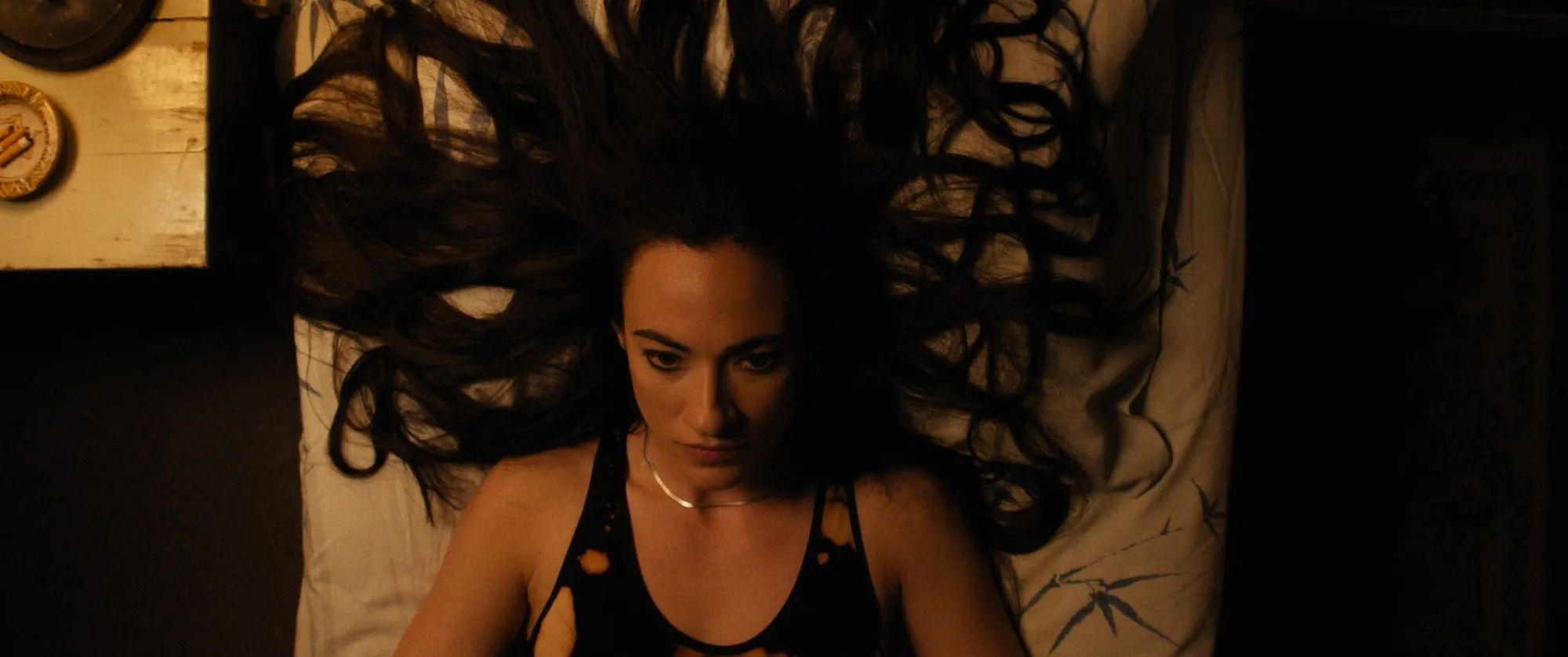
The drama leans on the pairing of Maria, resilient and hawk-eyed, and Eleni, fiery and initially resigned. Their romance is meant to propel both destiny and resistance. The idea has force. The execution wavers. The connection on screen often feels underdeveloped, strong as theme yet thin as intimate drama. The effect resembles works that prioritize surface elements while leaving private beats short on texture.
The script reaches for a demanding tonal mix, pairing a serious love story with a genre-driven feminist critique. The fusion rarely clicks. The power struggle has charge and delivers the satisfactions of a modest dystopian fable. The structure repeats familiar beats, which makes the finish feel predictable. Characters frequently read as carriers of aesthetic and political ideas, which trims emotional depth and shifts energy toward spectacle and plot mechanics. The cost is felt at the point of payoff, where revenge and catharsis land with less weight.
The Double Edge of Aesthetic Intent
Gorgona’s most challenging feature is its use of style. The film leans into the fetish of power, with muscular bodies, eroticized violence, and an assertive language of dominance. This “fascist aesthetic” signals critique, a satirical exposure of authoritarian habits. The movie sits with a current wave of stylized genre work that braids myth and action.
There is a risk built into that approach. The critique of patriarchy can vanish inside the spectacle that stages it. Violence arrives steadily and without pause, especially against women, and the emotional return does not always match the volume. The execution shows a fierce loyalty to its chosen style, which can flatten the meaning to a simple charge. At times the film edges toward the exploitation it aims to dissect. For a critique like this to strike, self-awareness has to thread the whole fabric, scene by scene. When the surface grows louder than the drama, the feminist argument can feel unearned, a backdrop for a hyper-charged genre piece rather than a core that shapes every choice.
Gorgona still maps its world with clarity. The rules of power are legible. The hierarchy is blunt. The visual language seduces by design. The romance, which should deepen the stakes, does not always carry that burden. The succession plot holds the spine of the narrative and gives the action its rhythm, even as familiar beats guide the final stretch. Performances serve the conception of the world, with Maria and Eleni positioned as agents of a counter-order, though their inner lives appear trimmed to fit the film’s drive toward image and assaultive mood.
Kalogiropoulou’s choices mark a consistent method. Build a system. Lock the characters inside it. Stage contests that test strength and resolve. Layer in musical cues that mourn what the city traded away. Point to myth as an ignition source for change. The camera affirms this plan, finding allure in rust, neon, and sweat. The production design and costumes amplify that plan, gilding the ruin until it glitters with intent.
The film’s argument about power remains visible. The patriarchy feeds on scarcity, spectacle, and fear. The counter-force grows out of solidarity and desire. That argument, though, competes with the magnetism of the images that present it. The movie often prefers the charge of style over the work of building private moments where trust forms and breaks. The result is a drama that moves with purpose and looks hypnotic, while leaving the central relationship short on felt accumulation.
Gorgona’s critique still arrives in unmistakable terms. Oil buys survival. Men police status with bodies and guns. Women bear the cost. The alliance between Maria and Eleni threatens that ledger and hints at fire as reckoning. The film frames that reckoning with a taste for excess, which can blur its point even as it sharpens the edges of its world. The method is coherent, the ambition clear, and the images memorable. The emotions lag behind the light and the smoke, which gives the final sparks less heat than the setup promises.
The movie Gorgona is the feature film debut of Greek director Evi Kalogiropoulou. It premiered at the Venice International Film Critics’ Week in late August 2025. The film is a dystopian drama set in an impoverished Greek city-state dominated by a petrol refinery, where a patriarchal gang holds absolute power. The narrative focuses on Maria, who challenges the male hierarchy by competing to become the new leader, and her relationship with the newly arrived singer, Eleni. As of the time of this writing, the movie is not generally available on major streaming platforms like MUBI and is continuing its run through various international film festivals.
Credits
Title: Gorgonà
Distributor: Playtime (International Sales), Neda Film (Production Company)
Release date: August 30 or 31, 2025 (World Premiere at Venice Critics’ Week)
Running time: 1h 35m (95 minutes)
Director: Evi Kalogiropoulou
Writers: Evi Kalogiropoulou, Louise Groult
Producers and Executive Producers: Amanda Livanou, Bertrand Gore, Nathalie Mesuret, Alexandre Perrier, Fenia Cossovitsa, Anna Zografou (Line Producer)
Cast: Melissanthi Mahut, Aurora Marion, Christos Loulis, Kostas Nikouli, Stavros Svigos, Errika Bigiou, Niki Vakali, Ksenia Dania, Erifili Kitzoglou, Myrto Kontoni, Nayla Gougni, Hercules Tsuzinov, Vasilis Mihas
Director of Photography (Cinematographer): Giorgos Valsamis
Editors: Yorgos Zafeiris
Composer: Aggela Kollia (Music Supervisor), Ilias Kampanis, Nick Athens, Karolos Berahas (Music Department)
The Review
Gorgona
The film's strength lies in its ability to construct a stunning, hyper-stylized dystopian world, fueled by a fierce feminist premise. Director Kalogiropoulou demonstrates masterful control over visual language, delivering ravishing cinematography and provocative aesthetics. However, the film's devotion to spectacle often overshadows its narrative core. The central relationship feels underdeveloped, and characters serve primarily as thematic props rather than authentic individuals. Gorgona is a work of great ambition and visual fire, yet the narrative struggles to sustain the weight of its style, resulting in a critique that is both alluring and structurally clumsy.
PROS
- asterful cinematography and a provocative, highly original neon-lit look.
- A fierce, focused critique of patriarchy and toxic masculinity.
- Effective creation of a decaying, desperate Greek polis.
- The film carries a high-value aesthetic despite being a modestly budgeted fable.
CONS
- The key relationship is often underdeveloped and unconvincing.
- Characters feel more like visual concepts than fully realized people.
- The film struggles to integrate the love story with the feminist action plot.
- The heavy use of fascist imagery risks overshadowing the intended critical message.