















Slide, the latest feature from independent animation icon Bill Plympton, co-written with Jim Lujan, feels like a project that announces its own playbook from the first frames. It abandons conventional film logic in favor of a zany, satirical and darkly comic rhythm. The movie fuses Western grit with abrupt bursts of action and sudden musical breaks, and the result is a viewing experience that constantly undercuts expectations. Plympton’s distinct style has long been an acquired taste, and here he commits completely to his anarchic sensibility.
The story follows a mysterious slide-guitar player, Slide, who drifts into the isolated town of Sourdough Creek. The town strains under the greedy control of Mayor Jeb and his brother Zeke. Their attention is fixed on building a massive resort and locking in a deal with film producer J. Lyle Pendergrass for a movie location. That aggressive development plan threatens local fishermen and the community that already lives there. Slide lands right in the middle of this clash. A lurking, monstrous creature called the Hell Bug prowls around the edges of the story and keeps the stakes both surreal and physical.
Pencil Scratches and Kinetic Chaos
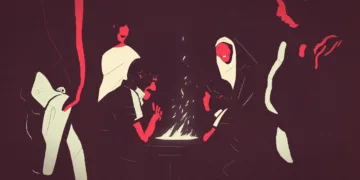
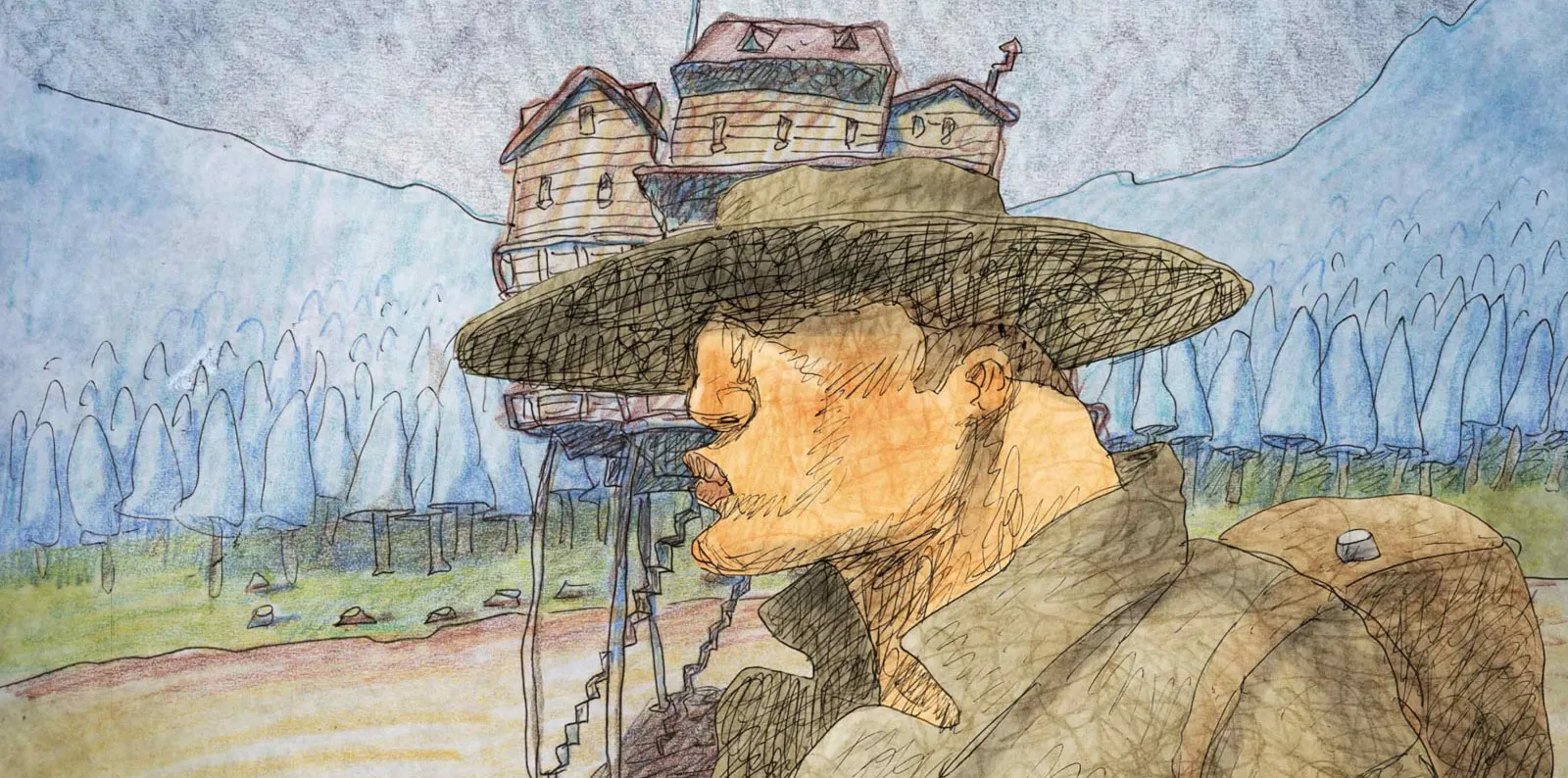
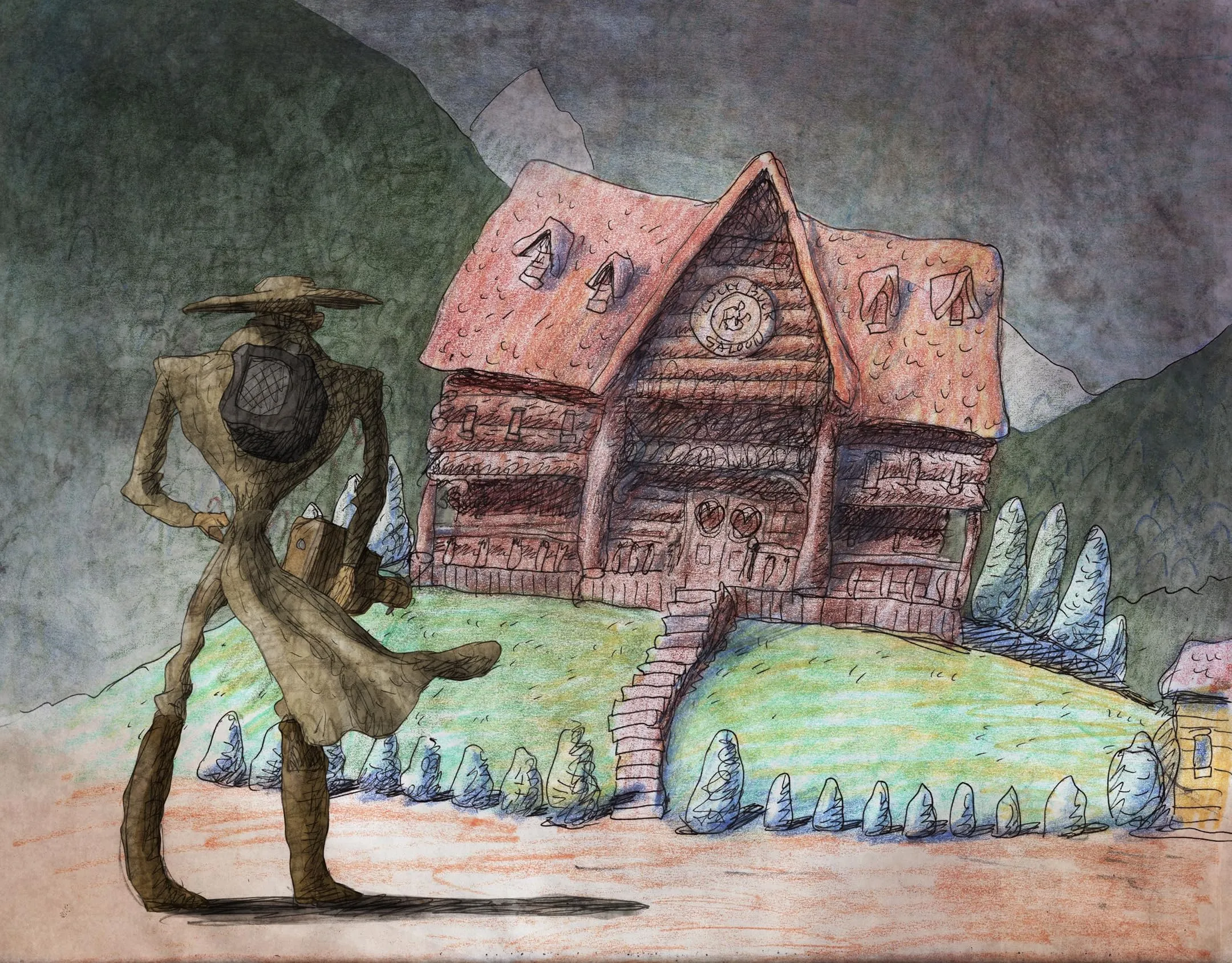
Slide endures in memory through its visual design, which shows how cinematic technique can carry a story even when the narrative itself feels narrow. The animation functions as the primary performer. Plympton supplies meticulous hand-drawn work that keeps the medium’s roots visible on screen. Viewers can read the tactile quality of each drawing in the visible pencil scratches and dense cross-hatching, and that labor gives every frame a rough, physical surface. This sense of visible effort pins the world in place in a way that sleek, contemporary digital work rarely attempts.
The film uses Plympton’s familiar, heightened visual language, filled with characters built from grotesque cartoon exaggerations. That choice pairs with his recurring method of skipping tiny pieces of motion, which produces an intentionally jerky movement that feeds the film’s manic energy. The images feel engineered for motion and impact. The cinematography leans into “impossible angles,” placing the camera in surreal, illogical positions that still feel coherent within this cartoon reality.
Color takes on a structural role in shaping mood. The world opens with a sepia palette that recalls old Western photographs, and then color erupts into wild, unstable life during fantasy interludes, dream passages or moments of extreme chaos. In purely visual terms, the film argues that a fully committed style can reshape what feels logical on screen.
Thematic Rhythms and Pacing
At just over an hour, the running time feels efficient, yet the dense, convoluted plot sometimes strains to keep pace with the nonstop rush of visual invention. The strength of the film sits in the raw charge of its imagery, which carries Plympton’s sensibility from scene to scene.
The core narrative engages with present-day concerns: the damage of unchecked power, environmental abuse and a fight against odorous eminent domain. These heavy ideas sit inside a broad parody that pits an Old West setting against the manipulative machinery of Hollywood.
The tone of the movie swings hard, shifting from broad satire to musical numbers to eruptions of crude, scatological humor. That restless pacing means the emotional reactions sparked by the imagery often move faster than the plot can track. The story tries to mirror the emotional chaos produced by the visuals, and it does not always reach full narrative depth.
Central to the emotional line is an idea that Plympton often returns to, the belief that music can resolve conflict. The hero is a musician, and his slide guitar becomes an instrument of resistance and expression. This musical idea threads through the personal arc of Rosalita (Delilah), who dreams of leaving her current life in the town brothel through singing.
The Indie Fight and Legacy
Independent animation always involves a steep production climb, and Slide wears the marks of that effort. The film occasionally reveals the strain of its creation, with unfinished moments, static elements and rough digital editing choices that make sections play closer to an animatic than a fully polished feature.
Certain stretches look as if they were assembled from different phases of the production process, which leads to small continuity bumps. The rough-hewn pencil art has presence, but the abrupt reliance on digital layering as a shortcut briefly pulls attention away from the integrity of the hand-drawn craft.
Watching Slide can feel like being dropped into a whirl of anarchic invention, an experience that will likely connect most with longtime fans of Plympton’s earlier cult work, where unconventional logic is the basic ticket price. The film has technical flaws, yet it still secures Plympton’s status as a legendary figure in countercultural animation. Slide plays like a defiant extension of his career and a clear victory for the survival of adult, hand-drawn independent feature animation. It earns attention for the sheer, unrestrained artistic force on display.
Slide is the most recent feature film from independent animation legend Bill Plympton, an adult animated Western that premiered at various film festivals in late 2023 and early 2024. The film secured a limited theatrical release via Plymptoons starting in 2024. As of today, November 29, 2025, the film’s availability for home viewing is dependent on local distribution and digital platform releases, often following its initial festival run. The movie offers Plympton’s signature hand-drawn style combined with a satirical, chaotic narrative about a guitar-playing stranger challenging corrupt developers in a small town.
Full Credits
Title: Slide
Distributor: Plymptoons
Release date: 2024 (Limited theatrical release began in early 2024, exact date varies by country/festival)
Running time: 1 hour 12 minutes
Director: Bill Plympton
Writers: Bill Plympton, Jim Lujan
Producers and Executive Producers: Bill Plympton, Sandrine Flament, James C. Taylor (Co-Producer)
Cast: Daniel Kaufman, Jim Lujan, Tom Racine, Ana Sophia Colón, Ken Mora, Maureen McElheron, John Holderried, David Holt
Editors: Bill Plympton, Tom Myers
Composer: Nicole Renaud, Jim Lujan
The Review
Slide
Slide is a relentless visual spectacle that sacrifices narrative polish for pure, unadulterated artistic vision. Plympton delivers a signature blend of biting political satire and surreal humor, powered by his unmistakable hand-drawn aesthetic. While the story struggles with erratic pacing and visible production roughness, the film remains an essential, chaotic, and energetic piece of independent animation. It is a testament to imagination pushing past constraint, demanding attention from those willing to embrace its unique, jarring rhythm.
PROS
- Exceptional, detailed hand-drawn animation with unique textures (pencil scratches, cross-hatching).
- Boldly unconventional, subversive, and genre-blending (Western, satire, musical).
- Strong focus on relevant themes like environmental corruption and unchecked power.
- A vital work for preserving the medium of adult, independent, hand-drawn film.
CONS
- Visible signs of unfinished sequences, still elements, and rough digital editing (animatic feel).
- The narrative feels thin and struggles to keep up with the emotional chaos of the images.
- The crude humor and highly stylized visuals may alienate casual viewers.
- Erratic changes in tone from satire to crude comedy can feel jarring.