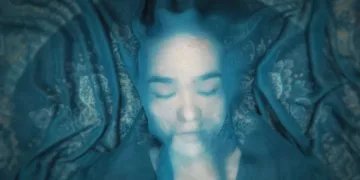










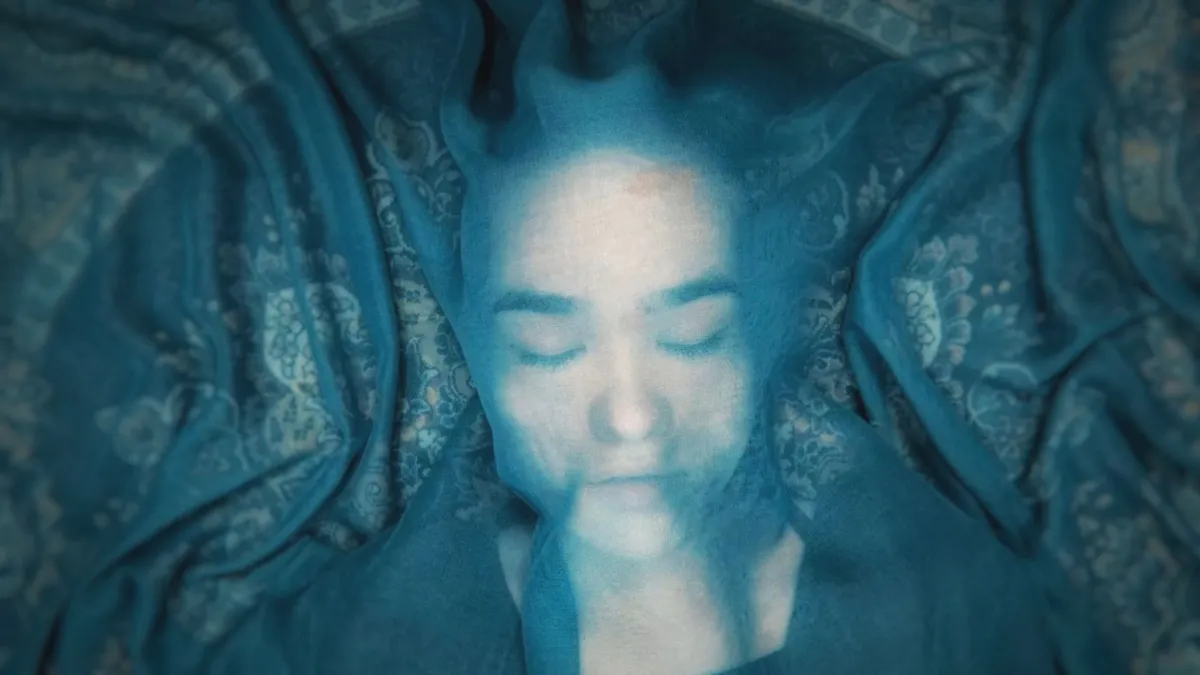

A Fox Under A Pink Moon, co-directed by documentarian Mehrdad Oskouei and his subject, Soraya Akhalaghi, lands as an immediate, sharply focused cinematic experience. The film introduces Soraya, a young Afghan artist living in Iran, and traces her years-long struggle for personal freedom and a path to Europe, which gives the story its tight, anxious spine. From the first moments, the form shapes the emotional impact: every live-action image comes from Soraya’s own cell phones, recorded over a four-to-five-year span.
That choice creates a level of proximity that feels raw and unfiltered, as if the viewer is pulled straight into her daily routine and private thoughts. The film shifts between modes, combining urgent documentary observation with the mood and structure of a dark fable or thriller. This fluid identity grows out of its mixed-media animated sequences, drawn directly from Soraya’s artwork. These animated passages open a direct route into her inner world and let the film move between harsh physical reality and the mental strategies she relies on for survival.
The Scars of Survival
The film’s impact depends on Soraya’s presence and voice. From the outset, the viewer enters her difficult life as an Afghan who grew up in Tehran, and the sense of displacement sits heavily over her scenes. The camera tracks her through upscale condos where she works as a cleaner, and that setting exposes a stark visual gap between the Iranian upper-middle class and her own precarious existence, with an atmosphere that echoes a Cinderella figure trapped with an ogre. The revelation that she is only seventeen at the beginning of the story hits hard, highlighting how much hardship she has already faced before adulthood.
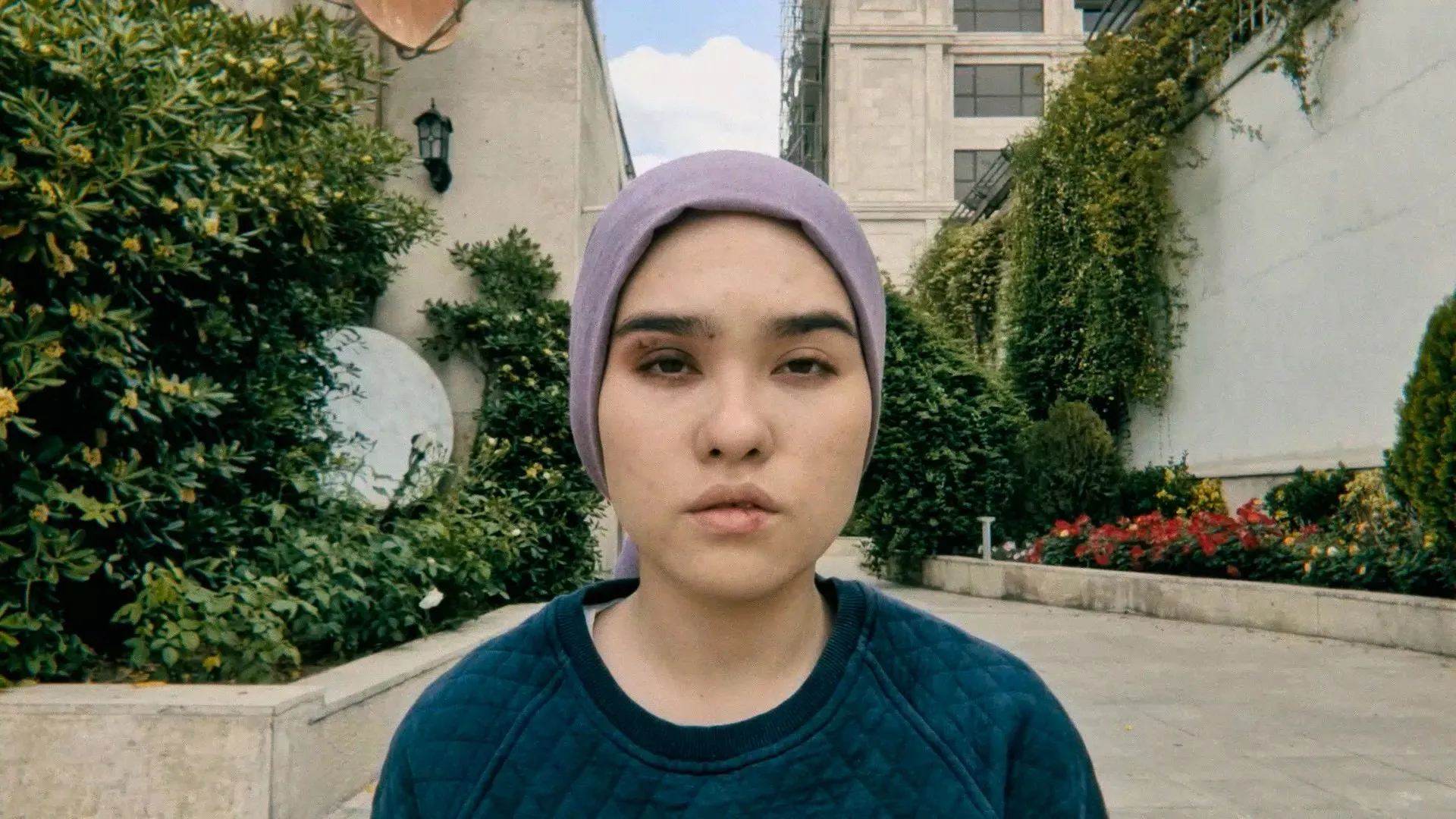
The film records Soraya’s volatile and often abusive domestic life with her older husband, and this material powers her urgent desire to rejoin her mother in Austria. The footage of these confrontations feels jagged and painful to watch. Soraya describes her attempts to cross illegally into Greece with the help of Turkish smugglers as “playing the game,” a phrase that wraps a dangerous crossing in a tone of bitter playfulness.
That language captures a rhythm of fatalism and stubborn hope that runs through the narrative. Her art clearly functions as her main coping strategy. She reshapes found materials, forming “demons” out of soggy eggboxes and pressing mud into murals. She says she simply “paints her pains.” By filming her own “selfie confessionals” and curating these images of herself, she turns the camera into a tool of resistance against her circumstances. The result reads as a direct, fearless statement of courage.
Also Read





Aesthetic and Narrative Interplay
The film’s formal design supports the story with the same care that strong game systems use their mechanics to intensify the player’s emotional link to a character. Soraya’s co-directing credit signals that the cell phone material comes from her vantage point and confirms that this first-hand view of the migrant crisis is central, not incidental.
Oskouei assembles this footage remotely across five years, and that long-range collaboration shapes the structure. Time and place occasionally remain unclear, yet this haziness keeps the viewer grounded in Soraya’s unsettled perspective rather than in clear geography or linear progress. The audience shares her sense of never quite knowing where she stands.
The film’s boldest formal choice appears in the Animated Mythscape based on Soraya’s designs, brought to life by animator Mohammad Lotfali. These watercolor-like sequences do more than decorate the story; they extend and clarify her psychological state. Her recurring figures, including the guiding Fox, the sorrowful Sad Clown that serves as her alter ego, the observing Pink Moon, and the sculpted Demons, build an essential symbolic vocabulary.
Much like a carefully designed environmental narrative in a game that offers hidden clues for players to interpret, these animated figures provide a secondary text that viewers can read alongside the live-action footage. The animations reveal the “islands of refuge” she constructs in her mind. Through this art in motion, her internal resistance gains a visible, textured shape.
Resilience and Emotional Pacing
A Fox Under A Pink Moon draws its emotional strength from its commitment to difficult, widely recognizable themes: displacement, endurance, and the urgent hunger for personal liberation. The film’s structure manages a careful emotional rhythm.
The viewer witnesses the severe conditions of Soraya’s life, including domestic abuse, failed smuggling attempts, and constant exposure to potential violence. These scenes often sit next to a dreamlike, melancholic score and sudden entries into her animated interior world. This alternation keeps the film from becoming numbing and creates space for quiet, reflective beats to emerge.
Soraya’s skill with language, both blunt and poetic, shapes how the film lands. Her description of the fox, the clown, and the demon forming a “complete family” inside her offers a striking picture of how she organizes and survives her inner conflicts.
The film operates as a timely portrait of the human side of the migrant crisis and the oppression that young women endure. By tracing Soraya’s later movements toward a freer life, the film underlines its central idea: her art functions as the key instrument of her survival. The creative process keeps her alive from the inside, and the camera places the authority to tell this story in her hands.
A Fox Under a Pink Moon is a poignant documentary feature that centers on Soraya Akhalaghi, a young Afghan artist attempting to escape Iran for Europe. Directed remotely by Mehrdad Oskouei, the film’s footage was shot entirely by Soraya herself on cell phones over five years. The documentary premiered internationally at the IDFA Festival in November 2025, where it won the award for Best Film in the International Competition. It has been picked up by distributors such as CAT&Docs and is listed as available on platforms like MUBI, depending on your region. The film is a co-production spanning multiple countries including Iran, France, the United Kingdom, the United States, and Denmark.
Full Credits
Title: A Fox Under a Pink Moon
Distributor: CAT&Docs, MUBI (UK)
Release Date: March 31, 2022 (Earliest reported release), November 2025 (IDFA Festival Premiere)
Running Time: 76 minutes (1 hour 16 minutes)
Director: Mehrdad Oskouei, Soraya Akhalaghi
Writers: Mehrdad Oskouei, Amir Adibparvar (Screenplay)
Producers and Executive Producers: Mehrdad Oskouei, Siavash Jamali, Tony Tabatznik, Rebecca Lichtenfeld, Chandra Jessee, Soraya Akhalaghi
Cast: Soraya Akhalaghi
Director of Photography (Cinematographer): Soraya Akhalaghi
Editors: Amir Adibparvar
Composer: Afshin Azizi
The Review
A Fox Under A Pink Moon
A Fox Under A Pink Moon is a profound and essential piece of visual storytelling. It transforms urgent, cell-phone documentary footage into a powerful personal epic about resilience and self-authorship. The seamless integration of Soraya’s expressive artwork into the narrative provides a rare, unflinching psychological portrait of a young woman's struggle against overwhelming systemic and domestic forces. The film honors her bravery and artistic spirit, proving that creativity can be a definitive survival mechanism. It is a unique, emotionally layered experience that demands attention.
PROS
- Brilliant integration of self-shot realism and expressive animation.
- Soraya Akhalaghi is an unforgettable, compelling, and resilient protagonist.
- Direct, first-hand cell phone footage delivers an unmatched, visceral sense of urgency.
- Effective use of metaphor and allegory through her artwork (Fox, Clown) as a survival tool.
CONS
- Occasional structural choices leave time/location sparse, which may cause minor confusion.
- The subject matter (abuse, peril) is consistently harrowing and difficult to watch.
- Focuses almost entirely on the subject's immediate experience, offering less broad political context.