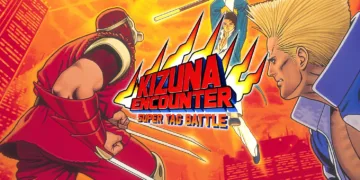



















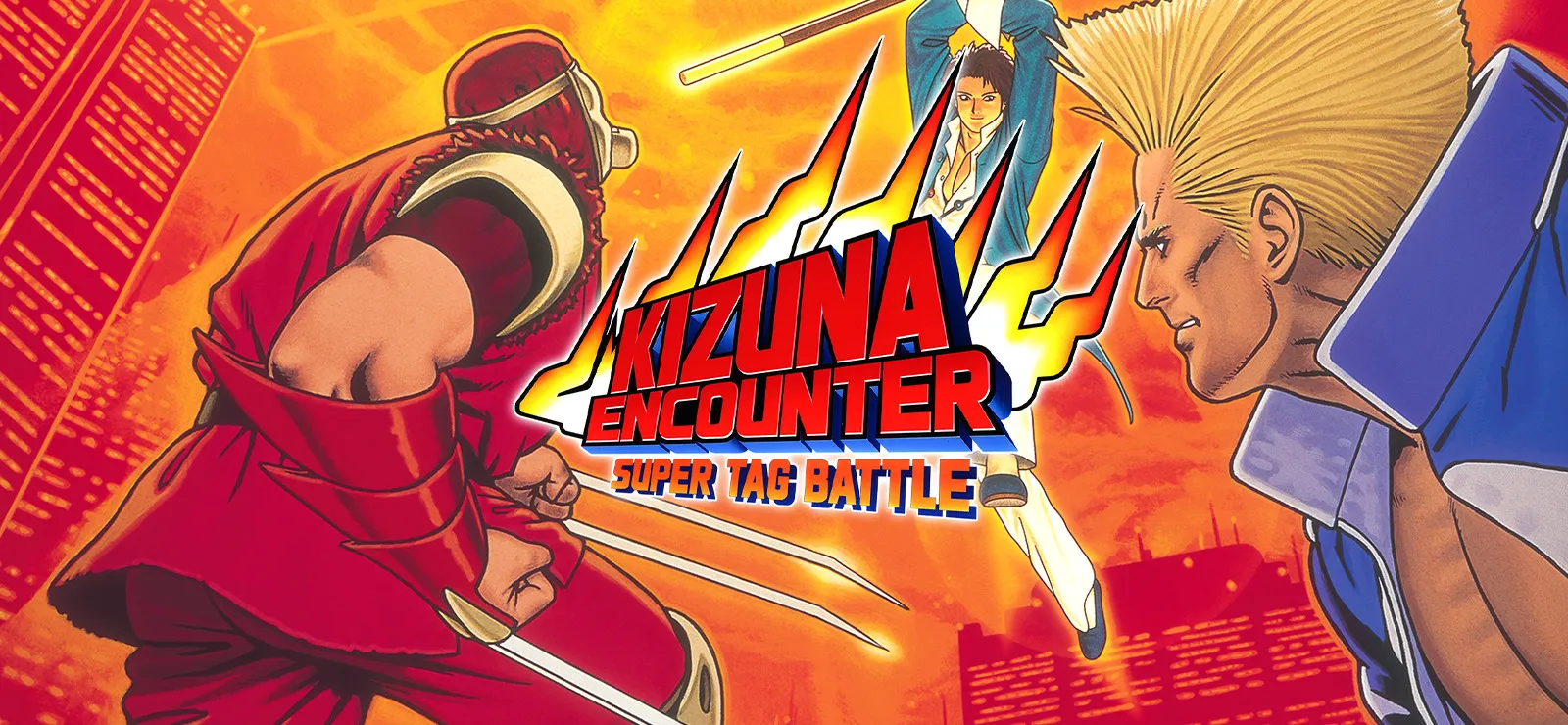

The arcades of 1996 ran on novelty, and SNK felt that pressure as sharply as anyone. With traditional one-on-one fighters crowding the floor, the company released Kizuna Encounter: Super Tag Battle (originally Fūun Super Tag Battle) for the Neo Geo MVS. The game marked a deliberate shift for the studio. As the direct sequel to the commercially disappointing Savage Reign, Kizuna Encounter dropped its predecessor’s signature dual-plane mechanic, rebuilt itself around a new hook, and came with a full rebrand to match.
That mechanical reset carries into the game’s tone and setup. The fights take place in Zipang City, a gritty futuristic metropolis framed as a cosmopolitan arena where martial arts from around the world collide. The story follows the second edition of the “Battle of the Beast God” tournament, staged by the vengeful King Leo as he tries to reclaim his pride after an earlier defeat.
His key rule change forces entrants into two-person teams, and that rule shapes every part of the game’s identity. Kizuna Encounter lands as an early example of active, mid-match tag-team combat in 2D fighters, arriving almost at the same time as Capcom’s genre-shaping X-Men Vs. Street Fighter. Within SNK’s own lineage, it draws on the visual punch of Art of Fighting, the quick tempo associated with The King of Fighters, and the weapon emphasis tied to Samurai Shodown.
Core Gameplay Mechanics and Combat Dynamics
Kizuna Encounter builds its fighting system around clean inputs that still leave room for planning. Attacks run through a three-button layout: Punch (A), Kick (B), and a dedicated Weapon attack (C). A fourth button (D) handles tagging, which turns into the system’s most important decision point. Dropping heavy and light strength distinctions keeps the entry barrier low and makes the basics easy to absorb, while tag rules and positioning demands keep the match from becoming autopilot.
Tag play is the defining structure, and the game’s win condition makes every mistake expensive. A round ends as soon as one member of a team loses all health, so there is no “second life” moment where the partner tries to salvage the round after the first character drops. That single rule creates constant urgency. Offense needs to be sharp, defense needs to be alert, and taking avoidable damage carries a bigger price than it does in tag games that let a surviving partner keep fighting.
The Tag Zone adds a strong spatial layer on top of that pressure. Swapping is tied to a designated area in the arena, and tagging out matters because it lets the resting partner recover their health bar. Since healing and access to a tag share the same requirement, control of the stage becomes a real resource. Matches often tilt toward whoever can steer the opponent away from their Tag Zone and pin them near the corner. Cutting off tag access stops recovery and forces the active character to survive under sustained pressure. In practice, that positional squeeze tends to decide rounds at least as often as raw combo damage.
Also Read




The pace matches SNK’s faster mid-90s rhythm, with energy similar to The King of Fighters and Real Bout Fatal Fury. The Universal Chain Combo system helps keep the action flowing across the full roster, letting players link basic strikes into meaningful strings without demanding strict character-specific routes just to feel competent. Weapons add another layer of identity. Each of the ten main fighters carries a distinct tool, including Sho Hayate’s boomerang and the police grappler Gordon Bowman’s baton. The game even accounts for weapon safety during chaos: if a weapon gets knocked down, the tag-in partner automatically retrieves it.
Defense gets real tools to answer the game’s pushy offense. Dodge with Dash (A+B) provides evasive movement with a sidestep flavor comparable to the Extra mode in KOF. Air blocking and a Guard Cancel option round out the kit, giving players ways to resist momentum swings and keep a round from spiraling after one bad exchange. Taken together, the simplified controls, the harsh round-ending rule, and the Tag Zone’s positional demands create a fighting game that rewards planning as much as execution.
Visual Style, Roster, and Atmosphere
The game’s presentation commits to its brutal setting with confidence. Kizuna Encounter leans into a dark, post-apocalyptic look, built from large, carefully detailed sprites set against gritty environments. Bright color choices pop against that grime, and the characters carry a heft that calls back to the imposing feel associated with Art of Fighting.
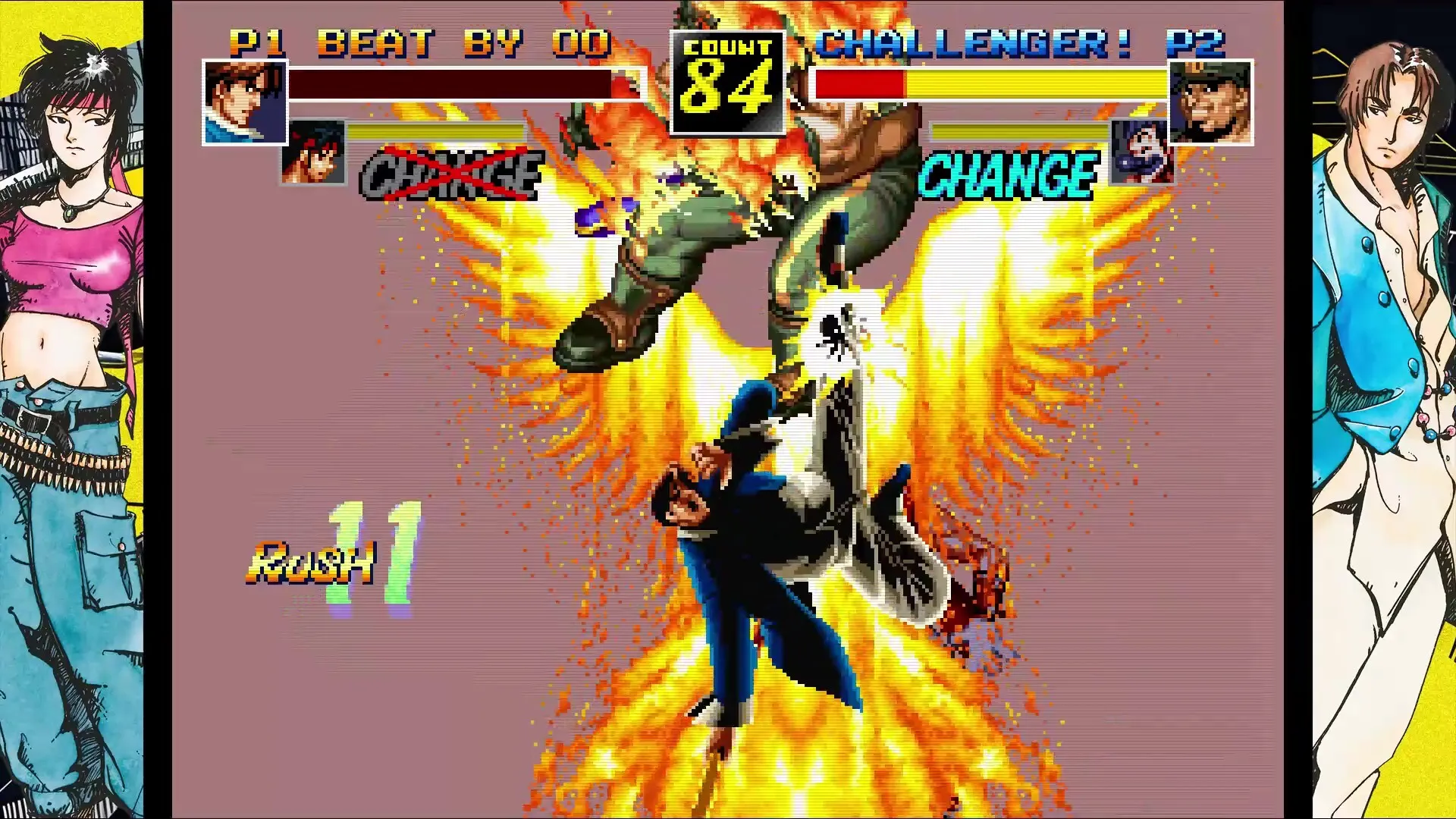
Stages do a lot of work for mood. Backgrounds show rundown urban spaces, including slums and abandoned structures, and the scenery supports the tournament’s harsh tone. The game also uses time-of-day shifts, a technique SNK had already refined in the Samurai Shodown series. Another classic Neo Geo touch is the screen-zoom feature, which adjusts the camera based on the distance between fighters. When characters close in, the frame tightens and the sprites read as larger and more detailed, making clashes feel heavier.
The playable roster sits at ten fighters, with hidden bosses King Lion (Kage Shishioh) and Jyazu waiting beyond them. For a mid-90s fighter, that count is on the modest side, yet the cast aims for variety through fighting styles and weapons. Nearly all characters return from Savage Reign, with newcomers added into the mix. Rosa arrives as a determined Amazonian resistance leader, while Kim Sue Il is a detective driven by a strong sense of justice.
Even with the high technical quality of the art and animation, character design remains a sticking point for many players. Compared with the internationally recognized faces from SNK’s flagship series, several designs, especially among returning Savage Reign fighters, have drawn the “odd” or “uninspired” label.
Sound holds up its end of the experience. The music fits the high standard expected from 1990s SNK productions, delivering a rich retro tone, and modern players get a dedicated Jukebox feature to revisit tracks. Sound design also helps define the game’s identity, particularly the announcer’s “Beat Up” call at the start of a match. Swapping out the usual “Fight” for that phrase fits the setting’s grime and frames the action as something closer to a back-alley brawl than a clean sporting event.
The Modern Re-release Standard
The Code Mystics re-release, available on platforms such as Steam, plays like the definitive modern way to access Kizuna Encounter. The conversion runs with strong stability in local play, and the performance stays consistent without frame drops or crashes, which matters a lot for a fast fighter built on tight exchanges.
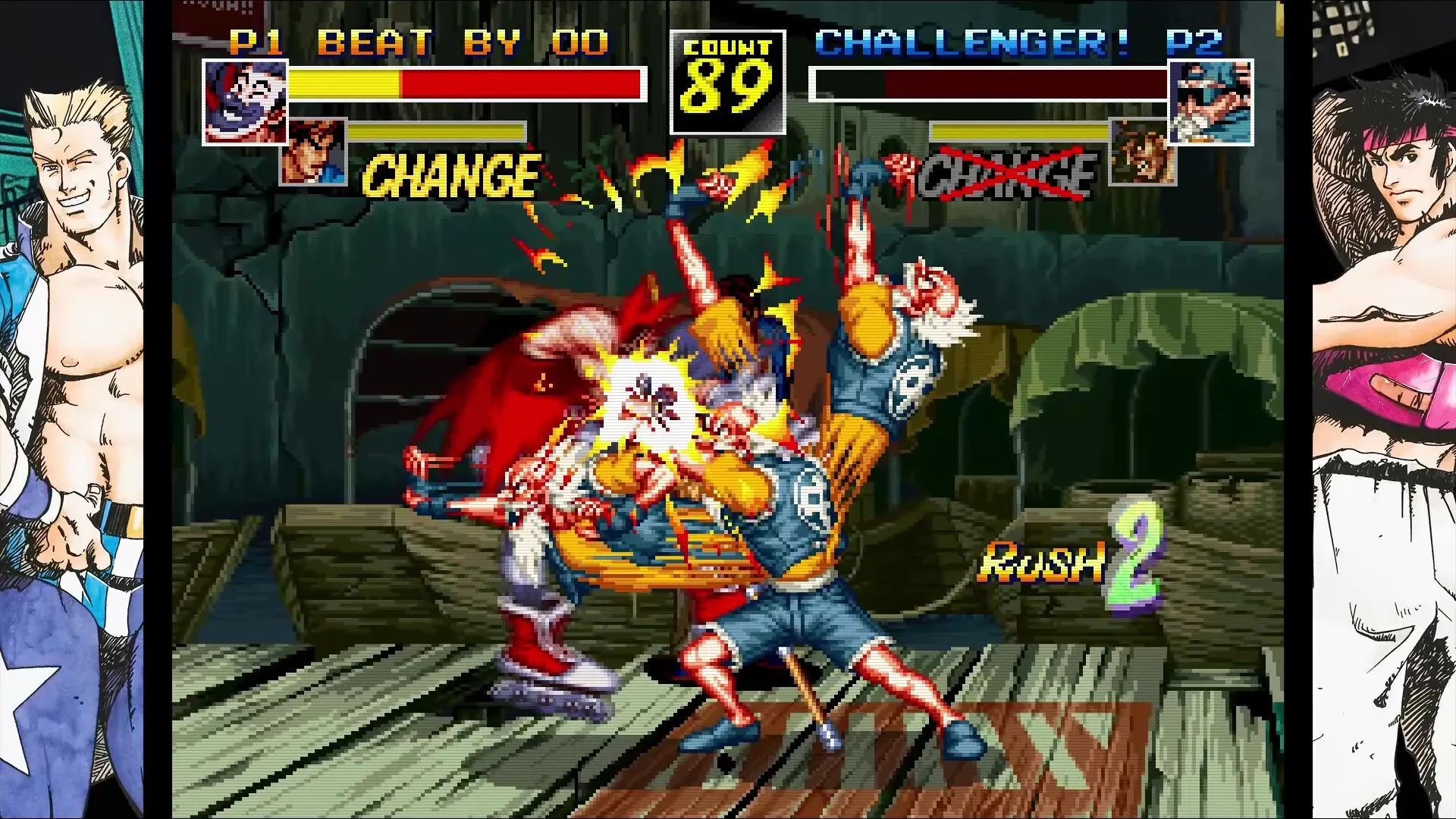
Online features meet modern expectations through rollback netcode, the baseline requirement for contemporary competitive play. The result is smoother online matches that aim to mirror local responsiveness. The release also includes the specific 4Way Battle Version, letting up to four players compete at once in two-on-two battles. That option is rare for this kind of package, and it adds real value for both couch play and community sessions, especially for players who treat fighting games as group events.
The extras focus heavily on player utility. Practice Mode supports deep customization, with adjustable settings like game speed and health alongside many other parameters, turning training into a controlled lab for testing matchups and setups.
Hitbox visualization stands out as the most important tool for serious players, since it makes move properties easier to study and helps tighten execution and spacing choices. The re-release also softens a familiar SNK arcade pain point: the punishing final boss fights against King Leo and Jyazu. Difficulty settings allow players to tune that challenge, opening the game to people who are not dedicated veterans.
A Gallery and Jukebox round out the package, and the achievement list stays simple while avoiding online-dependent tasks, which keeps full completion on the table for everyone. The original arcade release offered limited dedicated single-player content, while the modern port gains strength from its polish, its rollback implementation, and its four-player support.
The Review
Kizuna Encounter: Super Tag Battle
Kizuna Encounter is a pivotal, high-stakes 2D fighter defined by its innovative tag mechanics and tactical stage control. Its condensed roster and short matches are offset by deep strategic necessity, where mastery of the Tag Zone and health management determine survival. The modern port is exemplary, providing essential rollback netcode, extensive training options, and unique four-player support. It successfully revives an overlooked classic, offering an agile, weapon-focused combat system that still feels distinct within SNK’s library.
PROS
- Single-KO condition creates intense, short matches.
- Tag Zone control is vital for survival and healing.
- Creates fast, accessible combo flow.
- Excellent rollback netcode and 4-player support.
- Features highly customizable modes with hitbox viewing.
CONS
- Only 10 playable characters (plus two bosses).
- Some character aesthetics feel "odd" compared to SNK icons.
- Original arcade release was sparse on single-player modes.