

















Hossein Keshavarz and Maryam Ataei directed The Friend’s House Is Here. The film follows underground artists in Tehran. It reached the Sundance Film Festival after being shot in secret. The reels traveled across borders in the dark, carrying the story like contraband memory. The focus rests on Hana and Pari. Hana dances and posts videos of her performances on social media. Pari runs a small theater group. They inhabit a place where art functions as survival, a daily method of staying human.
For much of its running time, the film keeps its tone light on the surface. It watches friends eat together. It lingers on laughter in the mall. That ease sits beside uncertainty. Joy rises from the work they make, and the threat of the state stays close enough to feel like a hand near the throat. The narrative turns on the choice to live openly. Community takes the shape of a shield. Art appears as a natural act, beyond permission. The film looks at a generation that refuses to stay hidden.
The Radical Geometry of Friendship
The friendship between Pari and Hana plays like a sanctuary built out of ordinary hours. Their bond reads as sincere. A shared history shows itself in quiet glances, in the ease of moving together through the city. They cross Tehran with a grace that seems to ignore the shadows hanging nearby. Hana dances in public squares for her followers, and each movement claims space with a kind of calm insistence. Pari directs her troupe with a focus that suggests the stage holds her life in its hands.

The first hour stays with casual joy. They walk through the mall. An older woman scolds them for their lack of hijabs, and the two keep going, letting the moment pass without surrendering their mood. Their laughter becomes a shield that they carry openly, like a bright object they refuse to hide. Back at home, they smoke, flirt, and eat tahdig. The film treats these domestic minutes as essential. They show how normal life can be maintained under pressure, and how that maintenance becomes its own stance.
Their daily existence registers as protest, expressed through routine and closeness. Beauty lives inside their community, and the political threat sits out at the edges, waiting for a chance to step in. Living this way refuses fear as an identity. They keep choosing a view of the world shaped by their own creativity. Being ordinary in an extraordinary landscape becomes their most defiant act, and the film holds that defiance with a tenderness that feels earned.
Also Read





The Slow Contraction of the World
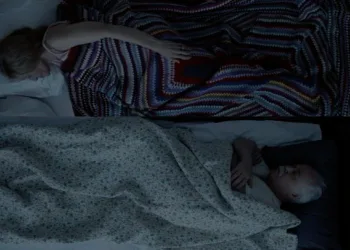
Safety appears as a fragile illusion, the kind that breaks without a sound. After a performance, an encounter with a government official shifts the air in the room. He speaks politely. He offers a remark about underground spaces being dark and cold. The words arrive with the mildness of casual advice, and the film treats them as a deathly threat. The warmth built in earlier scenes evaporates, as if someone opened a door and let winter inside.
Cinematographer Ali Ehsani uses fixed takes to observe their lives, letting moments sit long enough to reveal their pressure points. During the agent’s threat, he uses a slow zoom that makes the walls feel closer with each inch of movement. The image begins to suggest a trap forming in real time, a world tightening its grip.
The play within the movie starts to mirror the characters’ own disappearance. Reality and fiction fuse into a single nightmare, as if performance and life share the same corridor and the same locked door. The apartment layout echoes that trap. The partitioned kitchen and dining room suggests a lack of privacy, a home arranged in segments that still cannot protect a secret. The film shows a state that recognizes no separation between the personal and the political. The architecture becomes an extension of the regime. The space that once held dancing shifts into the shape of a cage.
The Inherent Right to Exist
A ransacked apartment becomes a silence that speaks in the language of violence. The group needs bail money. Panic replaces the earlier laughter, and the change feels brutal in its speed, like a light switched off mid-sentence. Hana faces a moral choice. She carries a dream of moving to Paris, and now she stands between that future and her loyalty to Pari. The decision lands with real weight, the kind that presses on the chest and alters the rhythm of breath.
She meets with Pari’s mother. The mother pleads for her daughter’s safety. She wants them to stop making art, as if art can be set down like an object and left behind. Pari refuses to abandon her identity. The conflict opens the gap between survival and living, and the film sits with that gap without smoothing its edges.
The story suggests that art exists wherever people gather. Community becomes the only real protection against the dark. Living out loud reads as necessity. Creative expression arrives as natural as breathing, and it carries the force of defiance that cannot be taken away. They refuse to let the state define who they are. Their lives remain their own, and the spirit of their work persists in the quiet moments between the screams.
The Friend’s House Is Here premiered on January 24, 2026, at the Sundance Film Festival, where it received critical acclaim and the U.S. Dramatic Special Jury Award for Ensemble Cast. The film was shot clandestinely in Tehran and smuggled out of Iran to reach international audiences. It offers a poignant look at the lives of underground artists navigating the complexities of modern Iranian society. Currently, the film is primarily available through limited festival screenings and specialized online platforms authorized by the Sundance Institute, such as the Sundance Festival Player, while it seeks broader theatrical and streaming distribution for the remainder of the 2026 season.
Full Credits
Title: The Friend’s House Is Here
Distributor: Alma Linda Films, PLSL Film LLC, WME (International Sales)
Release date: January 24, 2026
Running time: 97 minutes
Director: Hossein Keshavarz, Maryam Ataei
Writers: Hossein Keshavarz, Maryam Ataei
Producers and Executive Producers: Hossein Keshavarz, Maryam Ataei, Maryam Keshavarz
Cast: Mahshad Bahram, Hana Mana, Farzad Karen, Zohreh Pirnia
Director of Photography (Cinematographer): Ali Ehsani
Editors: Hossein Keshavarz
Composer: Arian Saleh
The Review
The Friend's House Is Here
The film remains a stark meditation on the fragility of light. It finds beauty in the shadow of state control. The directors create a space where the act of living becomes a stubborn defiance. Through the eyes of Hana and Pari, we witness the quiet terror of a vanishing safety. This work stands as a visceral defense of the human spirit. It argues that creativity is a vital pulse. The absence of a traditional structure allows the film to breathe. It captures the jagged rhythm of life.
PROS
- Authentic performances capture the gravity of the central bond.
- Observational cinematography creates a deep sense of intimacy.
- The merging of performance and reality feels raw and necessary.
CONS
- The shift toward a plot-driven structure feels sudden.
- Wide shots can create an emotional distance from the characters.