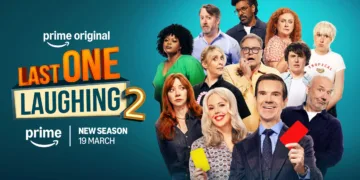











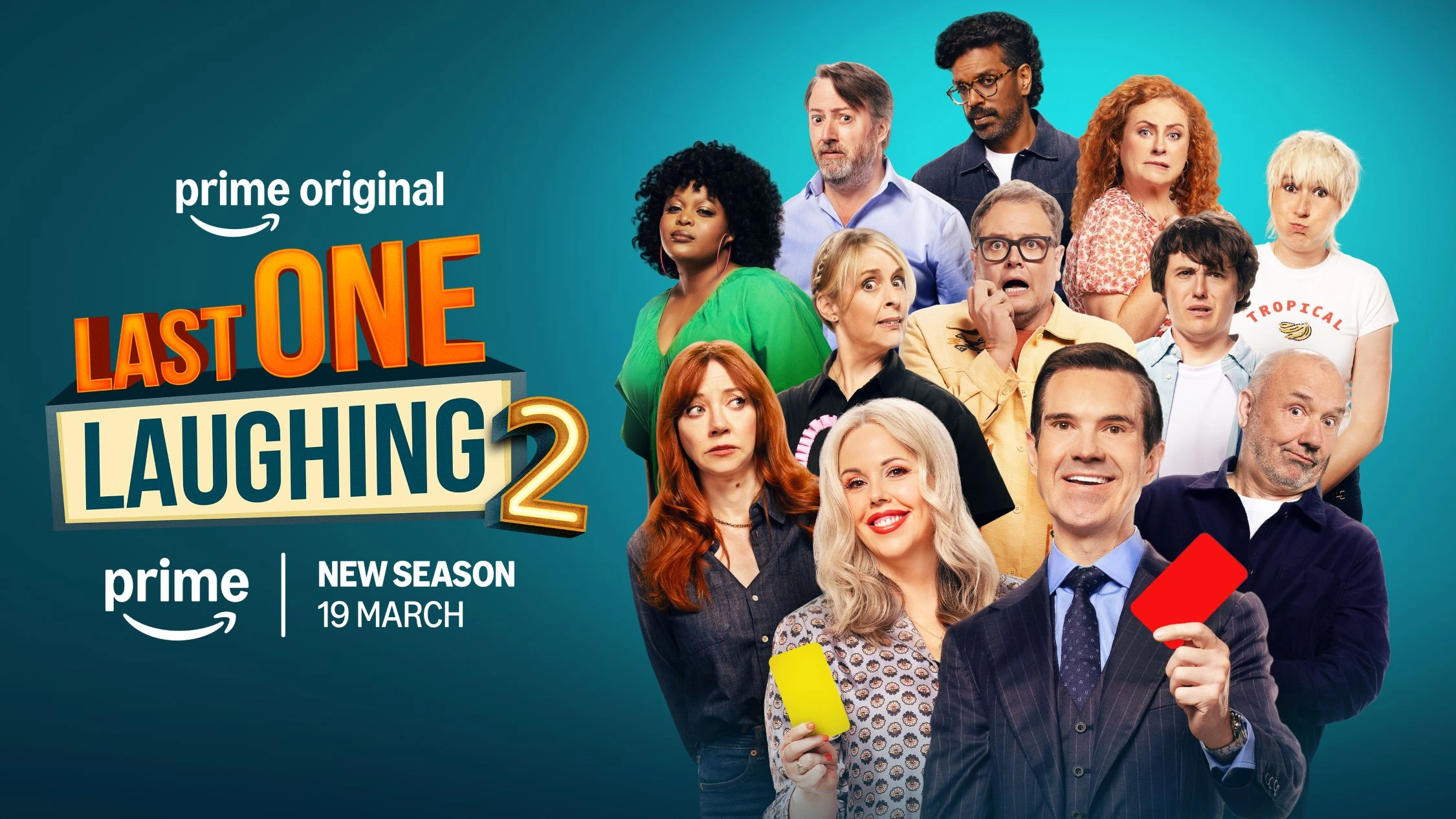

Last One Laughing UK returns to Prime Video for a second season, keeping the beautifully simple setup that made its debut a sleeper hit. The series places ten accomplished comedians inside one brightly decorated room for six hours. The mission is brutally clear: nobody can laugh or crack a smile. A visible slip earns a yellow card. A second offense brings instant elimination. Jimmy Carr is back as the coolly detached watcher, studying every twitch and smirk from a control room with his co-host, Roisin Conaty.
The show works as an endurance trial built around comic self-denial. The comedians can perform bits and provoke one another, yet the room often falls into a strange rhythm of frantic variety turns and crushing silence. Season 2 carries forward the energy of the first British version, which adapted a Japanese format.
Its humor comes from the primal discomfort of trapped laughter, the same awful pressure felt in a school assembly or formal event where one giggle could ruin everything. This season wants to prove the format’s success came from smart design, with its traps laid out like a tiny comic pressure cooker.
The Clock and the Control Room
The rules are direct and merciless. The comedians get six hours to break their opponents while keeping their own faces under control. A yellow card gives them a warning. A second mistake sends them out. The room itself becomes a tool of psychological combat.
The set resembles a large, brightly lit apartment, complete with a kitchen and lounge. That ordinary domestic space sits oddly against the professional intensity of the challenge, which gives the show some of its strange texture.
The Joker card adds a planned disruption, allowing a comic to perform a mini-set. These routines can be bizarre, partly because they play to absolute silence. They reveal the performer’s technical skill while exposing the absurd nature of the format. Jimmy Carr supervises everything with crisp detachment.
Also Read





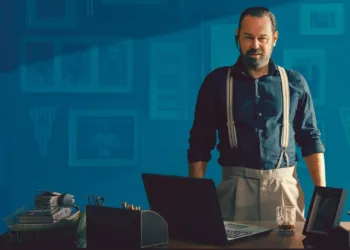
He hands out cards with glee and sharp puns. Roisin Conaty connects the control room to the chaos below. Her presence gives the audience a welcome breather during the thickest silences. The cameras hunt for every tiny facial shift, turning a twitch into a dramatic event. That attention to small physical detail makes the whole game feel oddly cinematic, like close-up editing applied to a panic attack.
Tacticians of Tension
Bob Mortimer returns as the reigning champion. He uses a strategy he calls his safety face, pushing out his bottom teeth to lock his expression in place. His material remains wonderfully surreal. Laptop songs and odd anecdotes become weapons meant to unsettle the room.

His grounded strain of absurdity works because it feels impossible to predict. David Mitchell brings his irate pedant persona into a setting where logic keeps getting shoved aside for the sake of a gag. Diane Morgan holds a deadly poker face. Her admission that she finds elderly people falling over funny gives her presence a dark little spark.
Romesh Ranganathan shifts from defensive play into an aggressive Joker routine that nearly sends his peers to the hospital. Alan Carr is a dangerous contestant because his high-energy wit keeps attacking the room while his own composure remains fragile. Sam Campbell acts like a spanner tossed straight into the machinery. His strange behavior rattles the veterans.
Mel Giedroyc leans into clownish buffoonery and physical comedy. Younger performers such as Amy Gledhill, Maisie Adam, and Gbemisola Ikumelo bring a fresh angle, handling the established names through their own distinct styles. Sam Campbell’s casting signals a move toward international talent inside the British branding. Together, these archetypes create a lively field of comic tension.
Arm Wrestling and Musical Mania
The strongest moments often come from physical or conceptual stand-offs. The arm-wrestling match between Bob Mortimer and David Mitchell is a highlight, pairing bodily strain with the mental labor of keeping a straight face. Another memorable sequence has Mitchell and Campbell walking slowly toward each other while shouting. That level of absurdity has a childish purity that is hard to resist. A face-off between Maisie Adam and Romesh Ranganathan turns their biggest regrets into ammunition, making personal history part of the contest.
Special guests bring a fresh burst of pressure. Richard Madeley appears as a guest interviewer, using his familiar earnestness to push the comedians into uncomfortable silence. His casting is a very smart move. Seasoned character actors enter the fray too, bringing unexpected absurdity.
David Mitchell also delivers a surprising musical theatre performance during his Joker set. Those musical moments linger in the mind. I thought of trying to stay silent with friends during a library study session, where every tiny sound suddenly felt hilarious. The series captures that precise light-headed madness. These interventions keep the six-hour marathon from losing momentum.
The Psychology of the Pro
The early episodes carry a touch of second-series syndrome. The comedians understand the traps, so they hold defensive positions and wait for openings. That creates stretches of heavy silence. The show still works because it gives a clear view of comedy as a social craft. These professionals do not collapse with embarrassment when a bit dies. They can survive silences that would flatten most people.
The six-hour structure wears down bodies and minds until the room reaches a manic state. The floodgates open, and the humor grows increasingly infantile. That shift in energy is fascinating to watch. The production stays tight, with six 30-minute episodes that move at a brisk pace. The balance between flat material and sudden explosions of laughter feels true to the experience of a comedy room.
The series plays like a psychological experiment wearing the clothes of light entertainment. It offers escape through a shared human battle against the urge to laugh. The game’s design makes cracking feel inevitable, even for the most stoic performer.
LOL: Last One Laughing UK returned for its second season on March 18, 2026. This British comedy challenge is available to stream on Prime Video. The series pits ten famous comedians against each other in a six-hour battle of stoicism. Participants try to make their rivals laugh while maintaining a perfectly straight face themselves. This season features the return of the previous winner and a fresh group of established British talent. The environment creates intense pressure as the clock counts down and the comedians use increasingly absurd tactics to win.
Where to Watch Last One Laughing UK season 2 Online


Full Credits
Title: LOL: Last One Laughing UK
Distributor: Amazon Prime Video
Release date: March 18, 2026
Rating: TV-MA
Running time: 32 minutes per episode
Director: Ben Hardy
Writers: Hitoshi Matsumoto, Dominic English, James Farmer, Geoff Norcott, Shaun Pye, Christine Rose, Ian Smith, Aiden Spackman
Producers and Executive Producers: Richard Cohen, Ruth Phillips, Peter Holmes, Cally Haycox, Adam Hutchinson
Cast: Alan Carr, Amy Gledhill, Bob Mortimer, David Mitchell, Diane Morgan, Gbemisola Ikumelo, Maisie Adam, Mel Giedroyc, Romesh Ranganathan, Sam Campbell, Jimmy Carr, Roisin Conaty
Director of Photography (Cinematographer): Capture Team, Bradley Stearn, Ben Bailey
Editors: Hilary O’Hare, John Twomey, Envy Post
Composer: Molecular Sound
The Review
Last One Laughing UK season 2
Last One Laughing UK season 2 proves the format is a durable engine for comedic tension. It strips professional performers of their primary weapon. It forces them into a state of vulnerable absurdity. While early moments lean on defensive silence, the later chaos is infectious. This is a fascinating study of human endurance and the power of suppressed joy. It succeeds as a psychological experiment and a piece of high-energy escapism.
PROS
- Exceptional casting that balances deadpan masters with chaotic energy.
- Surreal interventions like Bob Mortimer’s laptop songs.
- Tight editing that maintains a brisk and engaging pace.
- Insightful look at how professional comedians handle silence and failure.
CONS
- Initial episodes feel slow due to defensive strategies.
- Occasional "Joker" sets fall flat without the relief of an audience.
- Brief six-episode run leaves viewers wanting more depth.