
























![Kingdom Hearts Collection [I-III] Review](https://gazettely.com/wp-content/uploads/2026/10/Kingdom-Hearts-Collection-I-III-1-360x180.webp "Kingdom Hearts Collection [I-III] Review: KHII Holds Steady as Newer Entries Fluctuate 37")





ITV stages a high-altitude social experiment in the Southern Alps of New Zealand, sending fourteen ordinary British strangers across 100 kilometers of punishing terrain. The route is built for attrition, with jagged peaks and weather that can turn hostile with alarming speed.
Their target is one distant peak, and the clock gives them fourteen days to reach it. Ben Shephard oversees the format, giving viewers a steady point of contact while the contestants are pushed into isolation. The premise lands quickly because the rules are clean and severe.
Each person carries part of the £200,000 prize pot in a backpack, turning the group into a hiking cash reserve. If they fail to reach the summit, the money remains on the mountain. The production leans into scale, using the Alps to make the contestants appear small, exposed, and fragile against the terrain. The story’s first move is simple: set a destination, set a deadline, then let human weakness do the plotting.
The Currency of Alpine Survival
The competition mechanics are designed to generate social strain before exhaustion finishes the job. Each contestant carries roughly £14,000, making every hiker a literal piece of the prize structure. If someone quits or gets eliminated, the group must decide the fate of that money.
The pace rule tightens the drama further, since the team can move at the speed of its slowest member. That choice gives the story an immediate source of resentment, especially toward anyone faltering on the climb. Then there is the Mountain’s Keeper, a black helicopter that circles like a predator and drops yellow duffel bags with instructions or punishing choices. Any stable alliance can be interrupted from above.
The vote-offs provide the sharpest narrative turn, forcing the group to name the people they view as liabilities. Strategy and conscience collide in plain sight. A contestant may help a friend, protect the prize fund, or try to do both with a straight face. Good luck with that. The mountain matters, yet the interpersonal politics become the main obstacle. The format works as a pressure chamber, watching social agreements weaken once money, fear, and fatigue begin sharing the same tent.
Archetypes on the Ascent
The cast offers a broad slice of British life, filtered through familiar reality-TV archetypes. Dockers, an ex-army construction manager, steps quickly into the self-appointed leader role. His military background shapes a hard-edged manner, marked by blunt impatience with anyone he sees as weak. Warren, an Anglican minister who once competed as a Gladiator, gives the story its clearest counterweight.
He acts as the group’s moral guide, pushing back against Dockers’ colder reasoning during eliminations. Their conflict becomes the show’s central narrative engine, framed around ruthlessness and empathy. Afton, a fitness coach with a reality TV connection, brings a separate kind of tension.
Her opening persona and pink clothing seem ill-suited to the mud, yet her fight against the terrain gives the ascent a more accessible emotional register. Thomas, a tour guide with a fear of heights, and Colleen, a former steel worker, help fill out the ensemble. Their fears and motives keep the series from turning into a dry exercise in uphill suffering. The characters work best when their worldviews clash under pressure, since those clashes give the format its shape.
The Aesthetics of Exhaustion
The series is built with polished production values. Wide drone shots stress the vastness of the Southern Alps, reducing the contestants to small figures against ice and rock. That visual approach sharpens the gap between the landscape’s grandeur and the hikers’ grime. Heavy percussion and dramatic narration keep danger close, sometimes a little too eagerly.
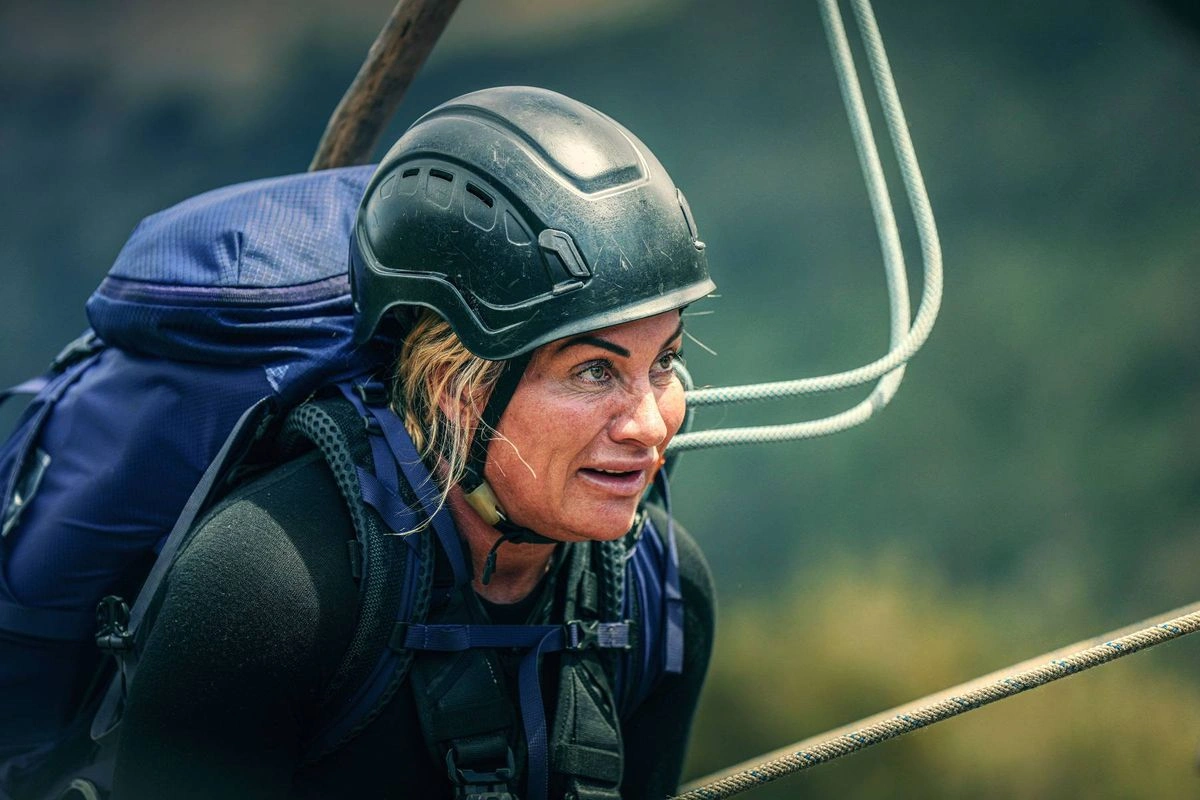
These choices support the larger dramatic idea of decision fatigue. The participants carry physical weight while making choices tied to safety, loyalty, and money. The show becomes a controlled study of behavior under stress. Some of the drama feels engineered, especially during the set-piece challenges. A rickety rope bridge over a deep gorge is a classic reality-TV device, and the series uses it with clear purpose.
It exposes phobias, makes loyalty visible, and turns private fear into group business. The cast must decide how much support a terrified peer deserves when progress is also at stake. The storytelling depends on these tense set pieces to keep the plot moving. The structure follows recognizable beats, yet the mix of isolation, cash pressure, and moral calculation gives the series a steady narrative pull.
The Summit premiered on ITV1 and ITVX on February 10, 2026. This reality competition series follows fourteen strangers as they attempt to climb a mountain in the Southern Alps of New Zealand. You can watch the show on ITVX or catch it on STV in specific regions. The series features a 14 day timeline and a cash prize carried by the contestants themselves.
Full Credits
Title: The Summit
Distributor: ITV1, ITVX, STV, STV Player
Release date: February 10, 2026
Rating: TV-14
Running time: 60 minutes
Director: Marc Sigsworth, Martha Elwell
Writers: Shine TV Story Team
Producers and Executive Producers: Matt Bennett, Mandy Morris, Marc Sigsworth, Martha Elwell, Paul Mortimer, Amanda Stavri
Cast: Ben Shephard, Afton McKeith, Warren Furman, Dockers, Miranda, Thomas, Colleen, Tyra, Patrick, Jenny, Charlett, Drew, Sean, Joel
Director of Photography (Cinematographer): Shine TV Production Team
Editors: Enda Mullen, Marco Ruffatti
Composer: Uncanny Valley
The Review
The Summit
The Summit serves as a brutal study of social erosion under pressure. The production utilizes the harsh New Zealand terrain to expose the fragility of human alliances. While some tropes feel familiar, the financial stakes and the Mountain Keeper mechanic provide enough friction to maintain interest. The show remains a cynical, visually arresting entry in the genre.
PROS
- Striking visual presentation of the Southern Alps.
- Financial mechanics that force difficult ethical choices.
- Strong contrast between cast personalities.
CONS
- Early episodes suffer from inconsistent pacing.
- Some reliance on traditional reality television tropes.
- Physical challenges occasionally feel overproduced.







