






























Kilcairn arrives as a bleak, soot-stained monument to industrial ambition and old sorcery, a fictional Scottish metropolis from the 1910s where early twentieth-century machinery collides with dark mysticism. Its cultural identity comes through that friction: factory grit, guild politics, haunted policing, and a civic elite whose wealth seems inseparable from occult secrecy. The player enters this urban order as a nameless petitioner seeking admission to the local Thieves’ Guild. Membership carries a severe initiation fee: steal the Vistara Diamond from a heavily fortified luxury boutique.
The theft changes the instant the stone is secured. The diamond acts as an arcane sensory lens, projecting the outlines of security traps, patrolling guards, and hidden riches through solid walls. That single mechanical turn gives the robbery a journalistic shape, turning property crime into an inquiry into the secrets guarded by Kilcairn’s ruling class. The game remains entirely first-person, stressing quiet infiltration, wealth gathering, and fast exits under strict time pressure. At a five-dollar price point, the campaign offers a compact, systems-led experience running about four to twelve hours.
Technical Tools and the Geometry of the Theft
The interactive structure depends on environmental feedback, with spatial reading acting as the main language of survival. Visibility and acoustic presence determine exposure, so crouching becomes the basic grammar of movement. Rooms must be shaped by hand: candles are blown out, wall switches are thrown, and shadow becomes a temporary political shelter inside mansions built to protect ownership.
The sound design takes a spare approach to surface acoustics, so footsteps retain the same character across polished hardwood, cold stone slabs, and damp floorboards. Success requires repeated use of the Vistara Diamond, whose wall-piercing sight lets players study guard vectors before entering open space.
Character selection changes the player’s relationship to these designed environments, giving two separate approaches to spatial problems. The Spider brings a high-mobility kit built around a mechanical climbing hook, letting players rise into rafters and cross large halls above the sightlines of ground patrols. The Chameleon steers play toward social stealth, allowing the player to temporarily assume the physical likeness of a standard guard and pass through restricted military zones.
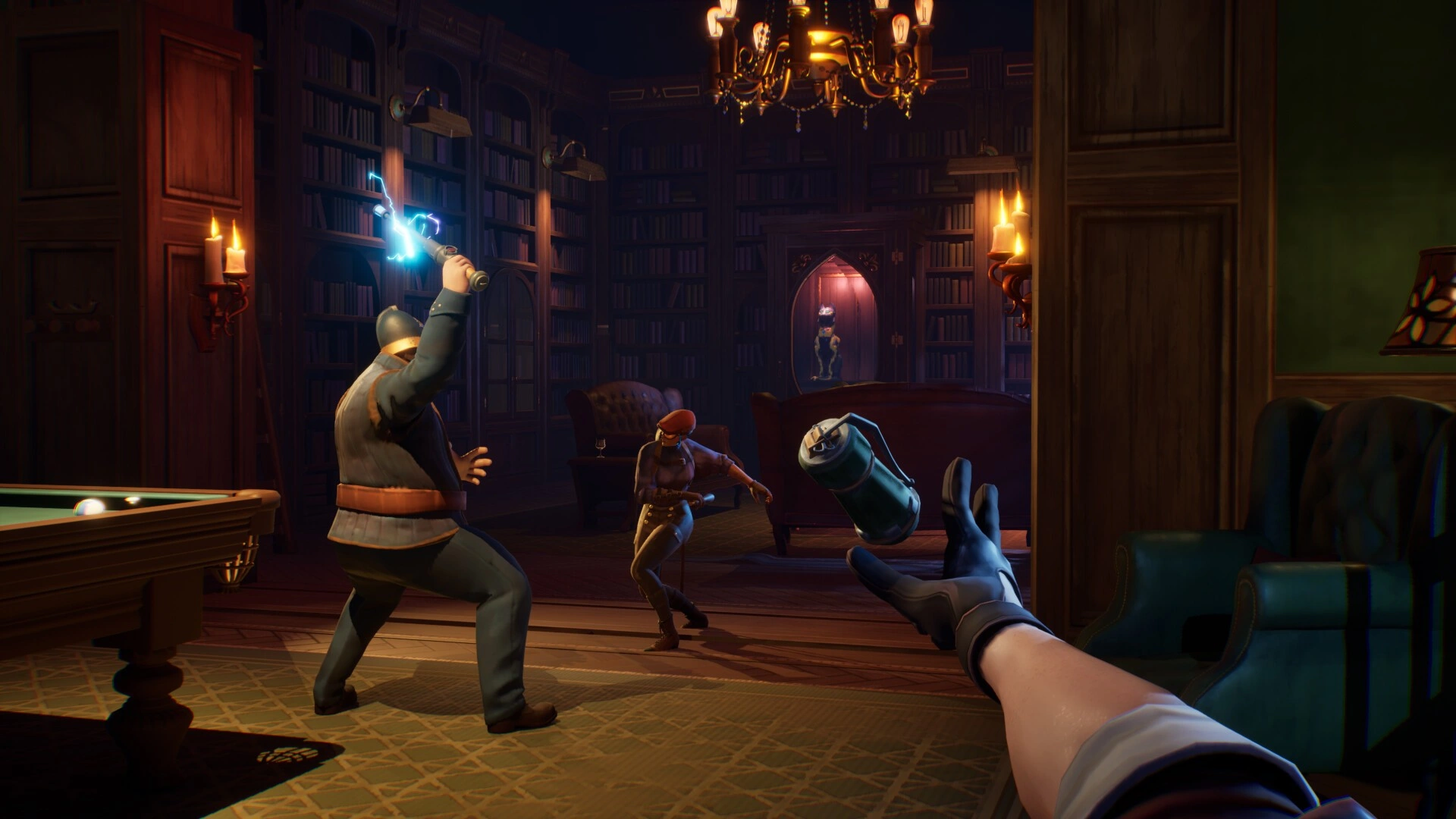
These archetypes connect with secondary equipment purchased from the guild through black-market funds earned during prior runs. Smoke bombs act as emergency measures, filling hallways with thick clouds to break enemy sightlines or escape tight corners after a patrol catches poor positioning.
Also Read






The Pickpocket Fairy works as a remote retrieval tool, flying across rooms to lift iron keys from a guard’s belt with no close physical contact. For misdirection, the Insult Fairy clings to vertical surfaces and emits loud verbal abuse, pulling nearby sentries from their posts to investigate. Securing high-value objects inside estates also requires an active lockpicking minigame, asking players to manipulate tumblers under pressure to open locked doors and iron security safes.
Cops of Flesh and Phantoms in the Great Manors
Kilcairn’s security system fuses human routine with mechanical and supernatural control. Organic sentries follow fixed, readable patrol routes, yet they react sharply to unusual noises and small lighting shifts in peripheral vision. These guards share space with automated defensive turrets, floor pressure plates, electrical tripwires, and floating magical orbs that trap players inside isolated rooms and activate every automated weapon in the immediate sector.
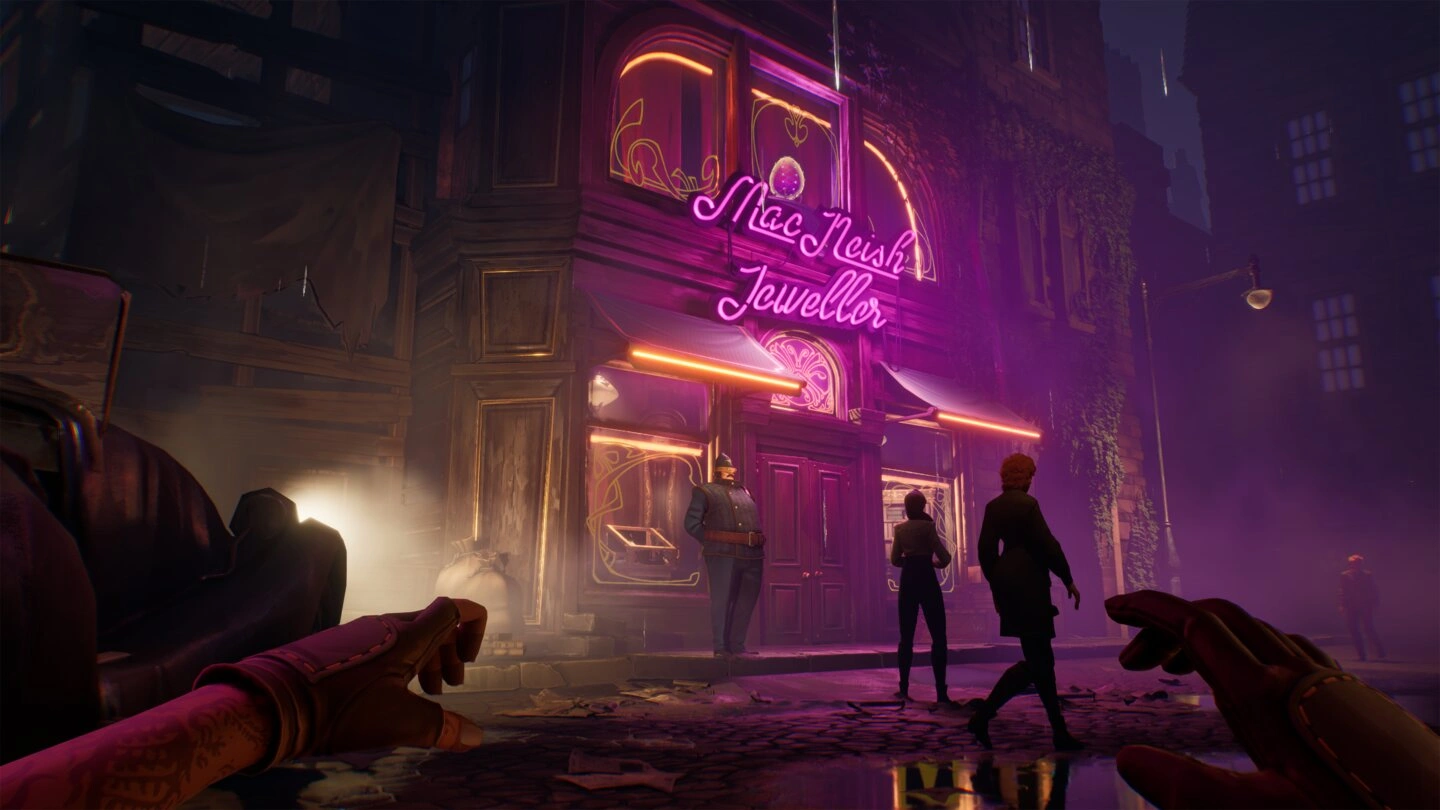
The supernatural layer grows with the Hauntstables, spectral police officers cursed to perform patrol duties for eternity. These incorporeal figures drift through solid ceilings, floors, and walls. Physical knockouts cannot affect them, and simple proximity drains the player’s health pool. The countermeasure draws on local cultural history: vintage gramophones playing traditional bagpipe music leave the spirits briefly stunned.
That detail gives the encounter a sly cross-cultural charge, since regional sound becomes a tool against undead authority. The ghostly AI also displays a strange behavioral flaw, sometimes entering infinite loop cycles where it freezes in place and reacts again and again to an unconscious human guard, never returning to patrol.
These defensive networks spread across two huge, multi-tiered spaces, the Constable Guildhall and Elway Manor. Both maps privilege verticality and architectural density, with interlinked service corridors, secret tunnels, and entry thresholds that open or close between missions.
Failure has a softer penalty than permanent defeat. Getting caught or losing all health drops the current inventory at the defeat site and respawns the thief inside a safe room on the map perimeter. To shield collected wealth from that loss, players search for reality rifts, magical anomalies that serve as mid-mission deposit boxes, banking treasure back to headquarters before a final escape attempt.
Temporary Contracts, Variable Friction, and Collaborative Shadow Work
Each heist runs on a strict countdown, giving players 45 minutes to meet objectives before an 8-minute final rush toward randomized magical exit doors. Missions use a dual objective structure that ties narrative discovery to mechanical greed.
The primary contract asks players to find specific plot items, text-based messages, or hidden telegrams that expand the regional lore. A second monetary target demands the collection of a set value in loose gold, statues, and historical relics. The structure links story and systems cleanly: reading the city and robbing it become parts of the same act.
Replay value comes through higher difficulty tiers, scaling from Rookie to the demanding Thief mode. Higher settings add friction by raising guard numbers, scrambling essential item placement, adding traps, and increasing enemy damage. Successful exits at these settings pay out greater financial rewards, turning risk into a harsher market logic.
The dynamics change in online two-player cooperative mode, which reveals the maps’ latent design roots. Partners can split labor by clearing separate wings of an estate at the same time, revive fallen teammates at the place of death to preserve dropped loot, or coordinate elaborate distractions, with one player triggering an alarm to clear a route for the other to reach a secure vault.
Visually, the title uses a stylized, painterly look tied to classic dark stealth properties. Its cast uses expressive proportions and caricatured physical features, giving the world a theatrical quality suited to its haunted civic satire. The palette leans on cold, muted industrial gray, deep brown, and dark green, reinforcing the oppressive character of the city. Audio supports that atmosphere through immediate environmental signals: the distinct whir of mechanical turrets and the steady thud of approaching footsteps build tension without a continuous musical score.
The Review
Thick As Thieves
Thick as Thieves succeeds as a focused, mechanical stealth experience that trades grand scale for intricate level design. While its two-map campaign feels brief, the synergy between the Vistara Diamond and distinct character toolkits creates an engaging tactical loop. The alternate Scottish setting provides strong atmosphere, even if the text-driven narrative remains thin. At its accessible price, it offers a satisfying, polished heist loop.
PROS
- Deep, vertical level design
- Creative thief toolkits
- Enjoyable cooperative mechanics
CONS
- Limited map variety
- Sparse text-only narrative
- Occasional AI behavior glitches