



























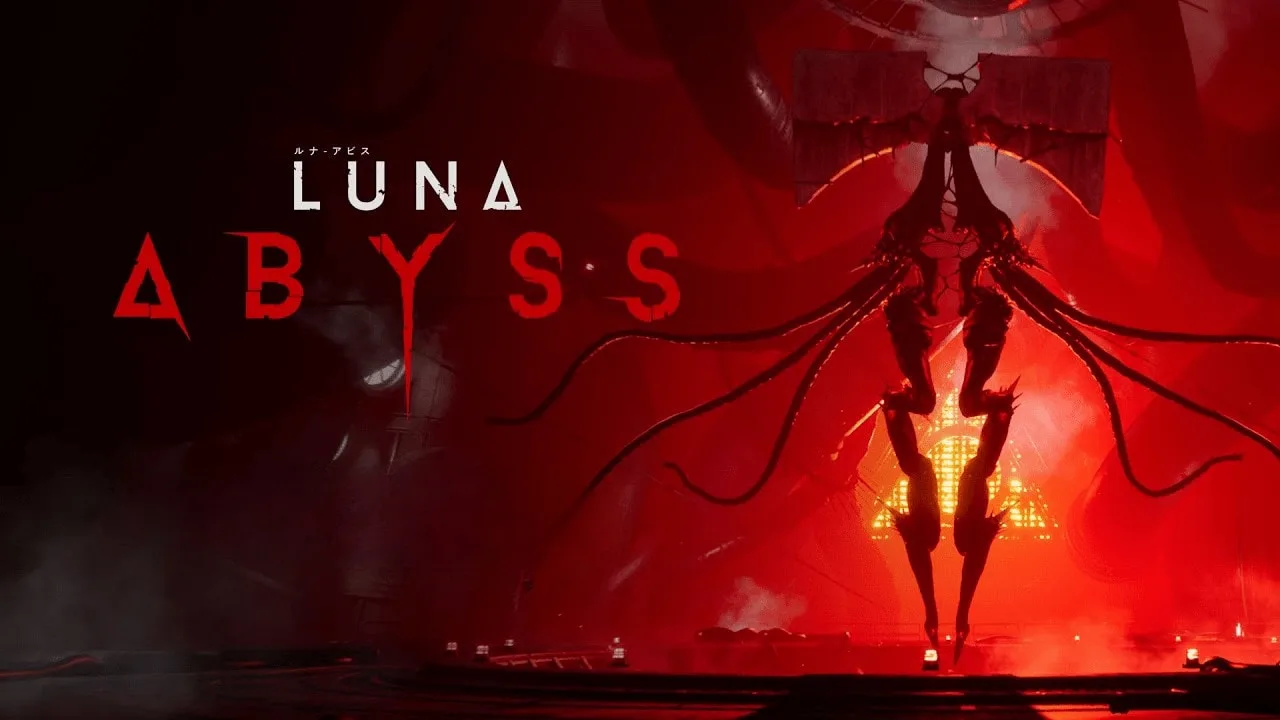

Luna Abyss is a first-person shooter from Kwalee Labs that arrives with a clear sense of what it wants to be: a focused, atmospheric descent into sci-fi cosmic horror, built on bullet hell combat and brutalist dread. From the moment its opening cinematic places a blood-red moon above a corrupted Earth, the game signals its intentions with confidence. The tone is dark and oppressive, the architecture vast and industrial, and the shadows deep enough to give even quiet corridors an unsettling weight.
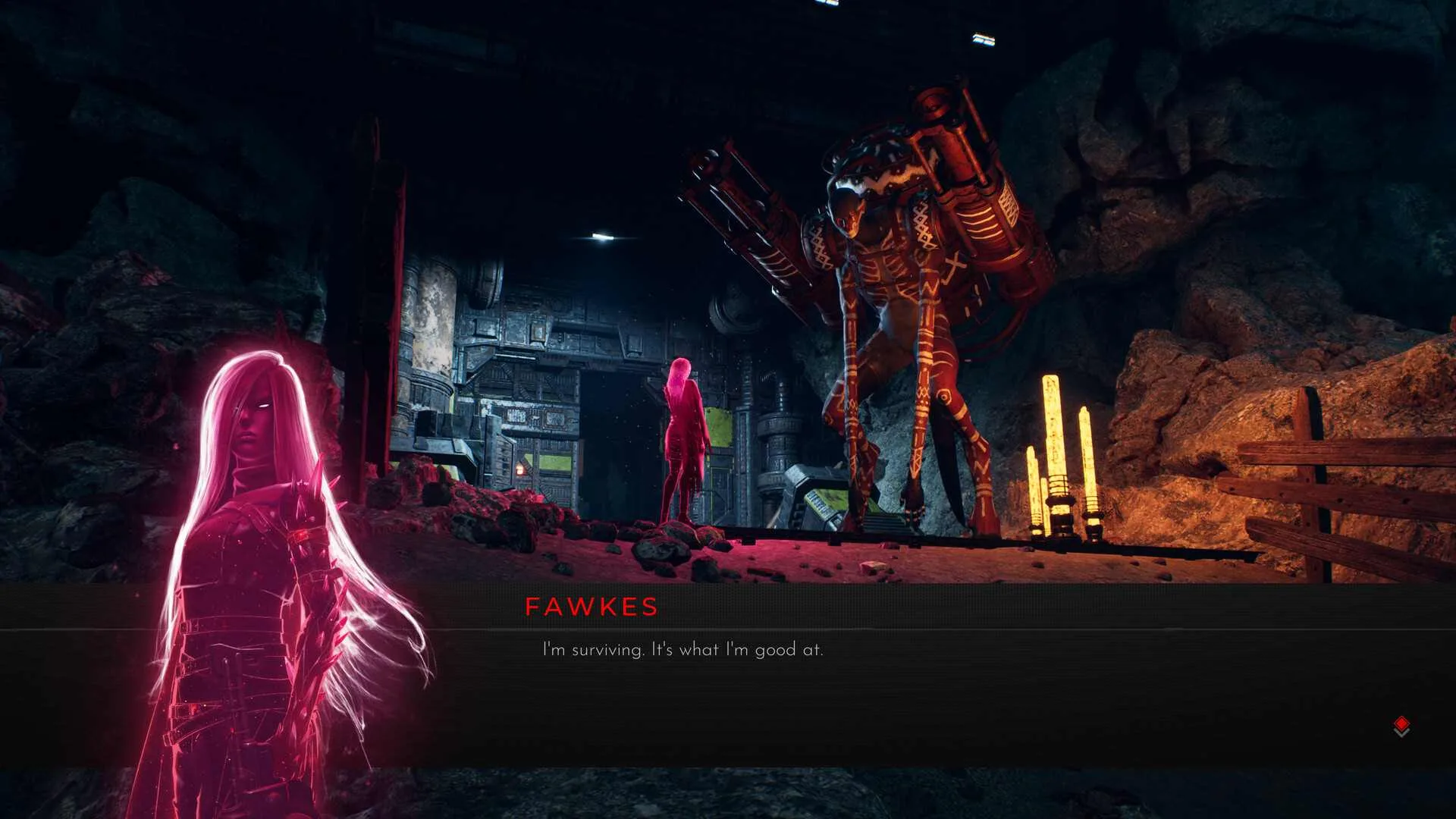
Players take on the role of Fawkes, a prisoner on Luna’s moon, sentenced to thousands of years for crimes left deliberately vague. Her path to freedom runs through the Abyss, a labyrinthine subterranean megastructure accessible only through a synthetic body called a Warden shell. Overseeing her assignments is Aylin, a grotesquely elongated prison warden whose design sits somewhere between Tim Burton and cold mechanical nightmare. The game draws visibly from a lineage that includes DOOM, Returnal, Metroid Prime, and BioShock, and it wears those influences without apology. At six to ten hours, it is a short experience, designed to be lean and purposeful rather than sprawling.
The Weight of the Abyss
Fawkes’s prison sentence ticks down on-screen as she completes objectives, an initially clever mechanic that frames progression as earned freedom. The novelty fades as the story finds its footing, and the sentence counter quietly becomes background noise. What takes over is a far more absorbing pull: the desire to understand what happened to the Abyss, the colony that once inhabited it, and the strange figures Fawkes encounters along the way.
The story deals in betrayal, regret, and buried history. It is told through NPC conversations, environmental audio logs in the tradition of BioShock, scattered data entries, and brief animated cutscenes. None of these methods are new, but Luna Abyss uses them with care. The voice acting is a genuine surprise, with performances that carry real emotional texture across a cast of deliberately unsettling designs. Characters have elongated limbs, facial stitching, and that peculiar fusion of biology and metal that suggests a darker origin beneath their often-casual delivery.
Side quests are minimal, asking little more than returning to NPCs at different points in the game. They are worth completing anyway, because the writing gives each character a distinct voice and a backstory that expands the world’s lore in ways the main path alone cannot.
The world itself is one of the game’s most striking achievements. The Abyss resists easy description: vast pipe networks, suspended platforms, brutalist corridors, and subterranean voids that feel carved from something ancient rather than designed. Neon light cuts through industrial shadow, and the art direction leans heavily into horror-adjacent moods without crossing into genre pastiche. The soundscape earns its place too, moving between slow piano, layered strings, and harder electronic cues as the environment shifts from quiet exploration to combat. Some visual motifs, particularly the recurring concrete tunnels and pipe systems, do begin to blur together across the game’s six chapters. The sense of descending into something genuinely unknowable, however, holds.
Also Read






Heat, Shields, and the Art of Switching
Luna Abyss arms Fawkes with four weapons: an assault rifle, a shotgun, a sniper rifle, and a rocket launcher. None of them reload. Instead, the game runs on a heat management system that forces constant cycling mid-fight. Push a weapon too hard and it locks out temporarily, so aggression needs to be measured against the risk of losing access to a key tool at the wrong moment. It is a cleaner solution than traditional ammo management, keeping attention on the fight rather than resource counting.
A magnetic lock-on handles targeting, letting the player focus on dodging projectile patterns rather than precision aiming. The assist works well in the game’s densest encounters, though in standard fights it occasionally reduces tension, removing the satisfaction that comes from handling both movement and accuracy simultaneously. Doom Eternal, for comparison, trusts the player to manage all of that at once, and the pressure of doing so is part of what makes that game’s combat so rewarding. Luna Abyss takes a more guided approach, which suits its bullet hell ambitions better than it suits its quieter encounters.
Regular enemies carry coloured energy shields matched to specific weapons: shotgun for blue, sniper for purple, rocket launcher for grouped targets. The system creates tactical structure by demanding rapid mid-fight weapon swaps, though in smaller encounters it can feel closer to solving a colour-coded puzzle than engaging in genuine combat. Later fights stack multiple shield types and threat patterns simultaneously, which is where the system justifies itself most fully.
Boss fights are the game at its best. Arenas fill with dense, multi-coloured projectile barrages, and each encounter has a distinct identity that demands pattern recognition and timed movement. Several bosses fold traversal mechanics directly into the fight, requiring grapple hooks or aerial manoeuvring to avoid attacks that cannot simply be jumped over. Most bosses sit at a moderate difficulty, with only the final two offering a real test, and multiple difficulty settings allow for adjustment in either direction.
Learning to Fall Further
Fawkes begins with a basic jump and nothing else. Traversal abilities arrive steadily across the game: double jump, dash, grapple hook, and an Eye possession mechanic that lets her inhabit floating surveillance units to cross gaps or access hidden routes. Each new tool arrives just as the environments begin to demand it, maintaining a sense of momentum without front-loading complexity.
Platforming sections grow more intricate as the ability set expands, with later sequences chaining jumps, grapples, dashes, and possessions in tight succession. They remain forgiving throughout, rarely threatening a death, which makes them function better as pacing intervals than as standalone challenges. For players who find a section frustrating, ghost checkpoints offer the option to skip ahead without penalty, a respectful design choice that acknowledges different player priorities.
Backtracking is woven into the structure with genuine craft. Paths and platforms that were inaccessible early on become reachable once the correct ability is unlocked, rewarding players who took mental notes. Hidden Drift Crystals, weapon upgrades, health increases, and lore entries sit off the main route, requiring experimentation with traversal routes to find. The game runs cleanly throughout, with smooth frame rates reported even on modest hardware.
Luna Abyss is a single-player, story-driven action-adventure game that blends fast-paced, fluid first-person platforming with intense “bullet hell” combat. Players take on the role of Fawkes, a prisoner sentenced to explore a derelict, biomechanical megastructure deep beneath the surface of the mimic moon, Luna. As you navigate this eerie, brutalist environment to recover forgotten technology and uncover the mysteries of a lost colony, you are monitored by an artificial prison guard named Aylin. The game was released on May 21, 2026, and is available on PC (via Steam), PlayStation 5, and Xbox Series X|S.
The Review
Luna Abyss
Luna Abyss is a tight, atmospheric first-person shooter that delivers more than its short runtime might suggest. Its combat system rewards adaptation, its world carries a persistent sense of dread, and its story earns genuine emotional investment through strong writing and voice performances. Boss fights stand as clear highlights, and the level design communicates its alien setting with impressive consistency. Repetitive environments and formulaic standard encounters hold it back from the upper tier of the genre, but as a focused, confident indie shooter, it is well worth the time.
PROS
- Striking, horror-adjacent art direction and atmosphere
- Heat-based weapon system keeps combat engaging
- Boss fights are spectacular and demanding
- Strong voice acting and character writing
- Traversal abilities unfold at a satisfying pace
- Clean technical performance
CONS
- Standard enemy encounters feel formulaic
- Lock-on system reduces tension in smaller fights
- Environments grow visually repetitive
- Platforming rarely challenges experienced players
- Prison sentence mechanic never reaches its potential